Episode 17 | Talkspace on the end of static marketing funnels
Learn how Talkspace uses AI SDR agents and agentic marketing to replace static funnels and turn website traffic into qualified pipeline.

Sarah McConnell
No items found.
.jpg)


Learn how Talkspace uses AI SDR agents and agentic marketing to replace static funnels and turn website traffic into qualified pipeline.



This episode features an interview with Katie Hurst, Director of Enterprise Marketing at Talkspace where she shares how Talkspace is using agentic marketing and AI SDRs to move beyond static funnels and turn website traffic into real pipeline. She explains how her team engages high-intent visitors in real time, personalizes buyer experiences across multiple audiences, and books meetings directly from the website without increasing headcount.
Katie also discusses what it takes to bring AI into a modern marketing organization, from securing leadership buy-in to aligning marketing and sales around shared pipeline goals. She highlights how AI agents can help remove friction from the buyer journey while giving teams better visibility into how prospects interact with content and convert into opportunities.
Key Takeaways:
The future of marketing is responsive, not static. As AI becomes standard across B2B marketing, the teams that win will be the ones using it to remove friction and create better buyer experiences.
TRANSCRIPT
Sarah McConnell – Qualified
Alright, Katie. Thank you so much for joining us on The Agenetic Marketer, where we're taking a peek in today's leaders' tech stacks and AI strategies and how you're using AI agents to hit your pipe targets.
So before we jump into the episode, Katie, I'd love to just learn a little bit more about you and the work that you're doing over at Talkspace.
Katie Hurst – Talkspace
Awesome.
Thank you, Sarah. Thank you for having me. Very excited to have this conversation today.
So I'm the director of enterprise marketing at Talkspace. Been here for five years now.
And prior to that, I worked for a decade in sales and marketing at a Ben admin tech company.
And prior to that, I was in media buying for a large national agency. So I've been in various different roles across marketing on the b to b side. And here at Talkspace, my team is really focused on turning that buyer interest into real pipeline. So not just passing, you know, low quality leads over to our sales team, but really generating that revenue.
And over the last year, we've really embraced AI as a growth engine. So yep, especially on our website, right? Engaging those high intent visitors in real time and immediately connecting them with our sales team. So we've had a lot of success.
I'm excited to share more about that.
Sarah McConnell – Qualified
Amazing. I love hearing your focus on, like, high intent and not just passing low intent leads over. I know I feel like there's been such a shift in that from a demand gen and enterprise marketing perspective.
So to set a little bit of context for listeners, I always like to have our guests share, like, what does AgenTik marketing mean to you, or what does it mean to be an AgenTik marketer in your mind?
Katie Hurst – Talkspace
Sure. So it's honestly a term I didn't know twelve months ago. So it's something that we're really leaning into at Talkspace. But I think in its simplest form, I would say it's marketing that doesn't just generate interest, but also is able to take immediate action.
So whether that's autonomously following up and, you know, qualifying leads or routing those leads to their correct reps, even doing immediate follow-up for email.
We've even used it to be able to create content on the fly, ensuring that those buyers are getting the information that they need at the moment that they're asking for it. It's something that is super exciting over here.
Sarah McConnell – Qualified
Now how do you feel like that's different from traditional marketing? Because you kinda mentioned it. Like, traditional marketing is generating interest. That's something that marketers have always done. We've all been good at it, regardless of any role that you're in.
So how do you see that delineation between that old school, like, traditional marketing and the shift that we've done into being agentic marketers?
Katie Hurst – Talkspace
Well, traditional marketing in the simplest form is, you know, following those steps. The one through one has to follow those rigid workflows, the gated forms. Maybe there's days between follow-up, or you're really leaning into, like, a batch and blast email blast.
Agentic marketing is something that we're really able to lean into from a personalization standpoint for the prospect wherever they are in their journey and when they decide to show that intent.
So whether that's from the awareness phase, maybe they can get moved to the decision phase like that using agentic marketing and taking them out of that archaic static workflow.
And maybe they need a little bit more nurturing, and the agentic marketing approach allows us to do that. So yeah, absolutely.
I feel like you talked about there's, like, it's static this old school way.
Sarah McConnell – Qualified
And we were at our kickoff a couple weeks ago. One of our sales reps described this like marketers really love their upside down triangles. We love our funnels. We love our forms.
And I was like, oh my gosh. You really hit the nail on the head. That is the way we've—well, B2B marketing—that's just always been the way.
And you mentioned, like, a year ago, twelve months ago, this term meant nothing. Like, agentic marketing wasn't a thing. We were still really reliant on these forms and nurture rules-based journeys.
But over at Talkspace, you've made this transition in the past year, obviously, and that's why you're joining us today. I would love to hear from you. Like, what did it take for you to make that shift?
What is some advice that you have? What was that move like from the traditional marketing to this agentic marketing first motion?
Katie Hurst – Talkspace
Sure. So I think the first step is to get leadership buy-in and even an executive sponsor to start. You need to have them back your ability to be able to integrate AI from the get-go. Otherwise, it's not gonna be successful, and they're gonna continue to question why you're doing it.
And then secondly, I would say, you know, make it part of your daily workflow. It's not just a tool that gets added here and there, but it needs to become part of your overall strategic priorities. Create KPIs that are tied back to it so that you can really use it every day from start to finish.
Sarah McConnell – Qualified
Yep. I really love that. I think the leadership buy-in is so crucial. And it sounds so simple, but it is really difficult to then do that next step you mentioned, which is like this has to be part of your day to day.
And if you're spending a part of your day to day using something that your leadership is not on board with, it becomes really hard to justify that time spent.
So I totally agree, Katie. I think that leadership buy-in, using it day to day, it will start to become just a more regular part of your process and not feeling like you're experimenting. It's actually starting to feel like a part of your team.
Which, you know, speaking of your team, I'm curious. Where do you feel like agentic marketing is showing up right now on your team most visibly?
Like, where are you getting the most value? How have you started to incorporate that in your day to day as a team?
Katie Hurst – Talkspace
Yeah, sure. So as I mentioned, we started using this probably March of last year, the very end of March, and it was one of our biggest growth enablers of the year.
Really, we use it all over the website, obviously. So it helps us to turn that traffic into those real conversations, the real opportunities, real revenue without having to increase our headcount. So that is, like, the biggest key for us.
And so on the site, if you think of the AI SDR, we call Piper Jill.
Prior to Jill, we did have a chat on our site, but it was, you know, those archaic closed-ended prescriptive workflows. It did not allow us to have any type of buyer segmentation, qualification, or routing.
And so, as you can imagine, we had very low engagement and no conversion. So we have really leaned into pulling Jill in twenty four seven, right? She's working across the board for us, and we have seen our engagement go up 3Xacross the board.
So we have new conversations through qualifying those leads, routing them, booking the meetings right within that chat on the reps' calendars. It has been so valuable for us, and we have seen that impact in true ROI.
Sarah McConnell – Qualified
That's incredible. I love hearing those results, and I like that you renamed your Piper Jill.
Now I always—it's interesting to have guests on the show because I'm always curious to hear from them. You mentioned you had an archaic chatbot.
What was it about Piper, who you've now obviously renamed Jill? What was it about Piper in particular that made you lean into the concept of an AI SDR?
Because to your point, a year ago this wasn't really a thing. There was a lot of doubt around it. So I always love to hear from guests. What stood out to you as the biggest area of opportunity for your team to lean into this concept?
Katie Hurst – Talkspace
Sure. So as I mentioned, we were able to do that without adding headcount, and that's huge. We are a very lean sales and marketing team.
And so in order to hit our growth goals, we needed something like Jill to help us scale that effort. And on the b to b side, we target many different buyer audiences.
And with the old chat, we weren't able to personalize any type of outreach or serve up the correct content for that buyer. And with Jill, we're really able to lean into that personalization and ensure that she's having those conversations based on knowing if they're, you know, an employer or someone from a school district or even a health plan.
An example could be we have primary care doctors come to our site all the time looking to refer their patients to us for mental health care.
And so we were able to coach Jill through the back end on the scorecards and account guides and snippets on how to refer those doctors to the correct patient referral flow and have been able to minimize that friction and capture those patient referrals that we probably would have missed had we not introduced Jill.
Sarah McConnell – Qualified
I love that. And you talked about scale, which I think is so big, the area of opportunity.
And even our CEO has kind of explained it like in a perfect world, you would have a one to one interaction for an SDR to prospect or press on your website, which is just not a fathomable number that anyone could pay for, even at the biggest enterprise organizations.
So being able to give that experience to those visitors.
You know, I know from my standpoint, you talked about people coming to your website, having those conversations. Like, we had a lot of people come in that weren't quite ready yet for conversations that we were wasting our human SDRs' time on.
So being able to then put Piper, or in your case Jill, towards those potential prospects and nurture them and get them the answers that they're looking for without having to add headcount.
And like our headcount, we would promote SDRs or they would move into a BDR role, and then we just have these gaps to fill. We're always in this constant backfilling and retraining, which was really difficult.
So I think that was something early on when we were looking at this product, obviously internally building and I get to test first. That was similar to you.
The thing that stood out to me most was like, oh my gosh, I can add to this team without having to retrain and add headcount, which was imperative with budgets tightening and things like that.
Katie Hurst – Talkspace
Now even just adding new audiences as they arise, you know? You don't have to go through the massive go to market.
You can just go into the back end of Qualified, coach her through scorecard, QA some of the queue questions and answers, and you're good.
The efficiency is amazing.
Sarah McConnell – Qualified
I think, yeah, as we have—every fiscal year we have a new go to market motion. We might shift who we're targeting and who we wanna focus on.
The enablement we would have had to do before and the amount of time to bring in all the reps and make sure everyone's up to speed and you have all the assets that you need.
I feel like with an AI SDR, you can do that one time.
You can go into your guides and then you can test it in scorecard and say, are they responding to this the way that I would want?
Now with that in mind, is there anything that was unexpected that Jill brought to your team?
You know, obviously scaling and booking more meetings, but was there something that you weren't expecting that Jill brought?
Katie Hurst – Talkspace
Maybe not necessarily unexpected, but really exciting for us in the beginning was just having that real time visibility into what these buyers were doing on our site, right?
What pages are they looking for? How are they interacting with our content?
That was so incredibly valuable for us and even helped us uncover some SEO blog content opportunities.
We had a blog that continuously ranked in the top five month over month. I think it's mental health days, the importance of mental health days for students.
We're like, why does this keep ranking?
And then we used Qualified, dug into it, and realized it's actually students going to the blog using it for research and not actually the buyer we're intending it for.
So we were able to go work with our content agency, refine our topic clusters for the EDU audience, and tweak that content strategy just because of introducing Qualified.
Sarah McConnell – Qualified
I have two things to that that are very similar.
Well, one very similar story, but early days before we had Piper is we used to have a blog post that was like a day in the life of a Salesforce SDR because we sold to SDRs and we were built for Salesforce.
And it would always rank the highest of any of our traffic, and we could not figure out why.
And then it dawned on us it's all the SDRs interviewing that were using it. It's like a brief documentation.
And we're like okay, that wasn't really our intent of it, but that's okay.
We also saw content being a huge thing when we first started to onboard Piper in two ways.
One, we found a lot of old content that we would see in our scorecard and we'd be like oh that's not something we want them referencing.
We didn't even realize that post was still in existence on our website.
But two, to give to our content person, we were able to see questions that were being asked and the content that was being served up.
And it really helped me identify gaps in our content.
Before I would do some matrix for ABM and be like based on where you are in your buyer's journey and your persona, here's the content I think you would need.
But then I was like, oh, with the back end of this AI SDR I can actually see the content that is missing based on the questions being asked and what's being served up.
And it really helped us hone our content strategy, which was a very unexpected thing that I was not anticipating our team would be able to utilize.
So totally in agreeance that was an unexpected and surprising thing for us.
Sarah McConnell – Qualified
Now for you, the last question I would like to ask about Jill or Piper is how are you measuring success? Obviously, some of the stuff we've talked about with content and scale is all really great but can feel a little nebulous as far as performance goes.
So what are the metrics that you're looking at on a day to day to make sure Jill is doing what you hired her to do?
Katie Hurst – Talkspace
Yeah, sure. So obviously we brought Jill on to help us with our pipeline growth.
So the metrics that we hone in on every week are the meetings booked to open opportunity conversion rate because that tells us are the conversations she's having high quality.
Do we need to go fine tune some things? Are we bringing the correct traffic to the site? How long does it take her to get down the funnel and book that meeting?
So that is the metric that we really hone in on every week.
Sarah McConnell – Qualified
Amazing. We're the same. It's like pipeline is what drives all.
I want to shift forward looking a little bit and just get your take because obviously I think that some of the stuff you shared about Jill is really incredible, and a lot of teams are looking for that ability to scale without having to raise headcount.
So if you were advising another marketing leader on where they should start with adopting AI, even if it's not like Jill or that version of agentic marketing, I'm curious your take as a leader who is obviously very much leaned into AI.
Where would you tell them to start?
Katie Hurst – Talkspace
I would say probably start just general education on why you want to bring AI into the fold, how it's going to help your team, what opportunities is it gonna bring, what gaps is it gonna close.
And then once you have that, maybe you get a lot less pushback on adopting it.
And then from there, really define what that success metric will look like by bringing the AI tool inbound so that you know upfront what you need to achieve in order to show that ROI.
Sarah McConnell – Qualified
Yep, I totally agree.
I think one of the things I know I misjudged in this process is I'm sure—I don't know if it's the same for you at Talkspace—but if it is for our listeners, there's a big push top down for how are you using AI, how are you adopting AI.
So that upwards communication wasn't as hard of saying like oh we're using AI.
It was convincing the team and the downward communication of why this is worthwhile for you because it is a new process and it does take a lot of time.
So I like where you anchor that in the why we're doing this, what this is gonna impact.
It really helps not only leadership who are pushing you to do it but also helps get the rest of the team on board with why this is an imperative for our team.
And it's not just because our board told us to do it.
It's like no, these are actual metrics that this is going to impact, and let's anchor in that and get people bought into that process.
So I totally agree.
Katie Hurst – Talkspace
Yeah. And in a B2B marketing organization, we need to be able to have sales in alignment with everything that we're doing because we are joined at the hip.
So we want them to be brought in and bought in at the front too so that we can share those common pipeline goals.
So totally. They were very receptive and also very, very much loved Jill.
Sarah McConnell – Qualified
Yes. Usually for sales, if it's gonna help them close more deals, it's pretty easy to get.
And once you can prove that, they get on board.
Sarah McConnell – Qualified
Now from a buyer expectation standpoint, do you think there's anything that we are really underestimating as marketers?
Like we talk a lot about buyers expecting personalization, but I think even what personalization is over time has really changed.
So from your take as someone adopting AI pretty frequently and you mentioned you're in the back end of your agentic marketing platform with Jill and you're looking at how buyers are interacting with your site, what do you think we're underestimating that you would flag to marketers like hey, you need to stay on top of this?
Katie Hurst – Talkspace
I mean I think you called it out—personalization—but how can you get the right personalization at the right time.
So right now prior to AI it's a very generic outreach.
Using AI it's still personalized, but is it personalized to the benefit of the buyer? Are they feeling that it's a one to one email even though it's being generated via AI?
And also the immediate follow up.
Someone who form fills will not talk to a sales rep who waits five days to reach out and complete that meeting.
They want it within two seconds.
So I think just making sure that there's that tool that you can use to really hone in on getting the right personalization and time to lead is key.
And that's obviously what we're really leveraging Qualified for.
Sarah McConnell – Qualified
Totally.
I think the instant gratification and instant follow up is so important.
And I know obviously working with Qualified every single day as an end user and I get to pilot it, but I've just become so accustomed to yeah, if I'm gonna fill out a form, someone's gonna follow up with me or I can get my questions answered right away.
And I know in my personal life I'll go if I'm looking for something online and if I fill out a form and ask someone—we're doing some work in our house, I was looking for a plumber—and they didn't get back to me right away, I'm like what is the deal?
I've been trained now to expect that instant gratification.
And when you don't have it, we lose interest fast.
Katie Hurst – Talkspace
Or you lose trust that they're there to deliver because they're not putting you first.
Sarah McConnell – Qualified
Yep. Totally.
Now looking ahead in the next twelve months, what do you think the single biggest change for B2B marketing will be?
Katie Hurst – Talkspace
I guess I could say probably twelve months from now everyone will use AI in marketing.
So how are you going to use it in the correct way to differentiate yourself from your competitors by really removing that friction from the buyer experience and making that human experience from a client to client perspective better.
So I think that is the change for the next twelve months.
Sarah McConnell – Qualified
Yep.
And if everyone is going to be using AI in the next twelve months, I feel like there is potentially a skill gap.
If you're listening to this and you're like man if everyone needs to be using AI, my whole team whether myself or my direct reports—if you could give advice Katie to any of those people who are listening that are a little bit nervous that they're going to be expected in the next twelve months to be utilizing AI across the board.
Do you think there are particular skills that we can be focusing on to make sure we are prepped for that shift?
Katie Hurst – Talkspace
I think at least in my team we are really focused on what you can call orchestration.
We have a lot of different platforms that offer various AI tools.
So how are we going to integrate that across the whole marketing team, the sales team, our sales operations team so that we can really align that tech stack, clean that data, design intentional handoffs between those systems so that they're talking.
We're not overriding each other, and we're not duplicating efforts.
Even including the human handoff there so that you're leveraging all of the tools you have at your disposal to really maximize your ROI.
Sarah McConnell – Qualified
Totally.
And now my last question for you before we move into my favorite section which is our lightning round.
Besides this agentic marketing inbound pipeline, are there any other emerging agentic use cases or AI agents that you think are going to be impactful for marketing in the coming twelve months?
Katie Hurst – Talkspace
So we're really excited to start using agentic marketing to run more of those targeted motions upfront at the top of funnel leads.
So expanding those email campaigns, moving away from those static workflows, really leaning into those AI agents that will decide the timing, decide the messaging, and decide what action to take next based on the behavior of that buyer.
So that we're moving more into that responsive system and moving our pipeline forward versus scaling out.
Sarah McConnell – Qualified
Yeah. The agentic nurture is super exciting.
And I know our sales team has heard me on many an enablement call getting very heated about building nurture journeys because I've done that a lot in my career, and I don't love them.
They're cumbersome and hard to maintain, and we've run into a lot of human errors.
So to your point of having something where I don't have to do that anymore and it can be responsive in real time to what is happening and how someone's interacting and the signals they're giving versus a human having to build these very old crusty static nurture journeys is very exciting and something I'm also very much looking forward to.
Katie Hurst – Talkspace
Yes. It's the new era of marketing.
Sarah McConnell – Qualified
Thank God.
Okay. I like to wrap with a few lightning round questions. These are more fun quick hits.
The first question is besides ChatGPT, because that tends to be everyone's answer, what was the first AI tool that you started experimenting with?
Katie Hurst – Talkspace
I would say Gong AI Insights, which I probably used before ChatGPT.
I was a late bloomer on ChatGPT, but Gong AI Insights was super helpful for us at work.
So definitely my answer there.
Sarah McConnell – Qualified
Okay. And then the most overrated buzzword in Martech right now.
Katie Hurst – Talkspace
I've used it a hundred times in the conversation already.
I would say personalization.
Sarah McConnell – Qualified
So funny.
I always ask this question to guests, and everything we say we're like you know what, it is a buzzword and I still use it all the time.
And I find myself saying it and I'm like damn, that was a buzzword.
It's overused, but it's ingrained.
I can't get rid of it.
So yes, personalization is one of them.
Someone else said narrative, and I was like man those are almost in every sentence I use.
So I like that response. That's good.
Who is a marketer that you think is ahead of the curve on AI or someone that you like to follow on LinkedIn to learn more from that our guests should go pay attention to?
Katie Hurst – Talkspace
When thinking of this I would say the CMO of Vimeo, Charlie Ungashick.
I think that's how you pronounce his last name.
He's doing some really cool things over at Vimeo, so give him a follow.
Sarah McConnell – Qualified
I love that.
And then my last one.
If you could use AI to automate any part of your life outside of work, what would it be?
Katie Hurst – Talkspace
Oh, this is easy.
Definitely meal planning and having groceries just show up.
Tell me what to take on what night so my family is fed and goes to bed happy.
That would give me a lot of time back in my weekends.
Sarah McConnell – Qualified
I think if I did a chart of the most common answers, that is the most common.
And now we have a ten month old at home, and we're just starting to figure out what to feed a baby.
And I'm like oh man, now it really hits.
If you told me I could use AI to figure out what to feed that child every day and have food delivered.
Again, if anyone's listening to this and they have an idea, I feel like eighty percent of the answers have been that.
So there's obviously a market for it.
Katie Hurst – Talkspace
I think by the time your ten month old is ten years old and in sports after school, you will have this done for you.
So you're good.
Sarah McConnell – Qualified
Something to look forward to.
Well Katie, thank you so much for joining us on The Agentic Marketer.
It was great getting a chance to chat with you.
Katie Hurst – Talkspace
Thank you so much.
Highspot’s hot take is that AI costs time upfront. Learn how leaders who invest early are the ones who gain clarity, leverage, and profound competitive advantage.
Most teams stop at faster and better. Discover why the agentic marketing maturity curve demands a bigger leap.
Flexera CMO Leslie Alore shares how agentic AI is reshaping B2B marketing, from content and research to AI SDR agents, buyer expectations, and building modern marketing teams.
.jpg)
Brightly Software’s Whitney Rosa explains why B2B marketing is shifting from campaign-centric to system-centric, powered by AI agents that automate decisions, optimize in real time, and scale marketing impact.
.jpg)
Our show The Agentic Marketer interviews today's leading B2B marketers to discover how they're actually using agentic AI day to day to hit their pipeline goals. Learn the 7 things agentic marketers are doing right now to stay ahead of the curve.
Highspot’s hot take is that AI costs time upfront. Learn how leaders who invest early are the ones who gain clarity, leverage, and profound competitive advantage.
Learn how Talkspace uses AI SDR agents and agentic marketing to replace static funnels and turn website traffic into qualified pipeline.
This episode features an interview with Katie Hurst, Director of Enterprise Marketing at Talkspace where she shares how Talkspace is using agentic marketing and AI SDRs to move beyond static funnels and turn website traffic into real pipeline. She explains how her team engages high-intent visitors in real time, personalizes buyer experiences across multiple audiences, and books meetings directly from the website without increasing headcount.
Katie also discusses what it takes to bring AI into a modern marketing organization, from securing leadership buy-in to aligning marketing and sales around shared pipeline goals. She highlights how AI agents can help remove friction from the buyer journey while giving teams better visibility into how prospects interact with content and convert into opportunities.
Key Takeaways:
The future of marketing is responsive, not static. As AI becomes standard across B2B marketing, the teams that win will be the ones using it to remove friction and create better buyer experiences.
TRANSCRIPT
Sarah McConnell – Qualified
Alright, Katie. Thank you so much for joining us on The Agenetic Marketer, where we're taking a peek in today's leaders' tech stacks and AI strategies and how you're using AI agents to hit your pipe targets.
So before we jump into the episode, Katie, I'd love to just learn a little bit more about you and the work that you're doing over at Talkspace.
Katie Hurst – Talkspace
Awesome.
Thank you, Sarah. Thank you for having me. Very excited to have this conversation today.
So I'm the director of enterprise marketing at Talkspace. Been here for five years now.
And prior to that, I worked for a decade in sales and marketing at a Ben admin tech company.
And prior to that, I was in media buying for a large national agency. So I've been in various different roles across marketing on the b to b side. And here at Talkspace, my team is really focused on turning that buyer interest into real pipeline. So not just passing, you know, low quality leads over to our sales team, but really generating that revenue.
And over the last year, we've really embraced AI as a growth engine. So yep, especially on our website, right? Engaging those high intent visitors in real time and immediately connecting them with our sales team. So we've had a lot of success.
I'm excited to share more about that.
Sarah McConnell – Qualified
Amazing. I love hearing your focus on, like, high intent and not just passing low intent leads over. I know I feel like there's been such a shift in that from a demand gen and enterprise marketing perspective.
So to set a little bit of context for listeners, I always like to have our guests share, like, what does AgenTik marketing mean to you, or what does it mean to be an AgenTik marketer in your mind?
Katie Hurst – Talkspace
Sure. So it's honestly a term I didn't know twelve months ago. So it's something that we're really leaning into at Talkspace. But I think in its simplest form, I would say it's marketing that doesn't just generate interest, but also is able to take immediate action.
So whether that's autonomously following up and, you know, qualifying leads or routing those leads to their correct reps, even doing immediate follow-up for email.
We've even used it to be able to create content on the fly, ensuring that those buyers are getting the information that they need at the moment that they're asking for it. It's something that is super exciting over here.
Sarah McConnell – Qualified
Now how do you feel like that's different from traditional marketing? Because you kinda mentioned it. Like, traditional marketing is generating interest. That's something that marketers have always done. We've all been good at it, regardless of any role that you're in.
So how do you see that delineation between that old school, like, traditional marketing and the shift that we've done into being agentic marketers?
Katie Hurst – Talkspace
Well, traditional marketing in the simplest form is, you know, following those steps. The one through one has to follow those rigid workflows, the gated forms. Maybe there's days between follow-up, or you're really leaning into, like, a batch and blast email blast.
Agentic marketing is something that we're really able to lean into from a personalization standpoint for the prospect wherever they are in their journey and when they decide to show that intent.
So whether that's from the awareness phase, maybe they can get moved to the decision phase like that using agentic marketing and taking them out of that archaic static workflow.
And maybe they need a little bit more nurturing, and the agentic marketing approach allows us to do that. So yeah, absolutely.
I feel like you talked about there's, like, it's static this old school way.
Sarah McConnell – Qualified
And we were at our kickoff a couple weeks ago. One of our sales reps described this like marketers really love their upside down triangles. We love our funnels. We love our forms.
And I was like, oh my gosh. You really hit the nail on the head. That is the way we've—well, B2B marketing—that's just always been the way.
And you mentioned, like, a year ago, twelve months ago, this term meant nothing. Like, agentic marketing wasn't a thing. We were still really reliant on these forms and nurture rules-based journeys.
But over at Talkspace, you've made this transition in the past year, obviously, and that's why you're joining us today. I would love to hear from you. Like, what did it take for you to make that shift?
What is some advice that you have? What was that move like from the traditional marketing to this agentic marketing first motion?
Katie Hurst – Talkspace
Sure. So I think the first step is to get leadership buy-in and even an executive sponsor to start. You need to have them back your ability to be able to integrate AI from the get-go. Otherwise, it's not gonna be successful, and they're gonna continue to question why you're doing it.
And then secondly, I would say, you know, make it part of your daily workflow. It's not just a tool that gets added here and there, but it needs to become part of your overall strategic priorities. Create KPIs that are tied back to it so that you can really use it every day from start to finish.
Sarah McConnell – Qualified
Yep. I really love that. I think the leadership buy-in is so crucial. And it sounds so simple, but it is really difficult to then do that next step you mentioned, which is like this has to be part of your day to day.
And if you're spending a part of your day to day using something that your leadership is not on board with, it becomes really hard to justify that time spent.
So I totally agree, Katie. I think that leadership buy-in, using it day to day, it will start to become just a more regular part of your process and not feeling like you're experimenting. It's actually starting to feel like a part of your team.
Which, you know, speaking of your team, I'm curious. Where do you feel like agentic marketing is showing up right now on your team most visibly?
Like, where are you getting the most value? How have you started to incorporate that in your day to day as a team?
Katie Hurst – Talkspace
Yeah, sure. So as I mentioned, we started using this probably March of last year, the very end of March, and it was one of our biggest growth enablers of the year.
Really, we use it all over the website, obviously. So it helps us to turn that traffic into those real conversations, the real opportunities, real revenue without having to increase our headcount. So that is, like, the biggest key for us.
And so on the site, if you think of the AI SDR, we call Piper Jill.
Prior to Jill, we did have a chat on our site, but it was, you know, those archaic closed-ended prescriptive workflows. It did not allow us to have any type of buyer segmentation, qualification, or routing.
And so, as you can imagine, we had very low engagement and no conversion. So we have really leaned into pulling Jill in twenty four seven, right? She's working across the board for us, and we have seen our engagement go up 3Xacross the board.
So we have new conversations through qualifying those leads, routing them, booking the meetings right within that chat on the reps' calendars. It has been so valuable for us, and we have seen that impact in true ROI.
Sarah McConnell – Qualified
That's incredible. I love hearing those results, and I like that you renamed your Piper Jill.
Now I always—it's interesting to have guests on the show because I'm always curious to hear from them. You mentioned you had an archaic chatbot.
What was it about Piper, who you've now obviously renamed Jill? What was it about Piper in particular that made you lean into the concept of an AI SDR?
Because to your point, a year ago this wasn't really a thing. There was a lot of doubt around it. So I always love to hear from guests. What stood out to you as the biggest area of opportunity for your team to lean into this concept?
Katie Hurst – Talkspace
Sure. So as I mentioned, we were able to do that without adding headcount, and that's huge. We are a very lean sales and marketing team.
And so in order to hit our growth goals, we needed something like Jill to help us scale that effort. And on the b to b side, we target many different buyer audiences.
And with the old chat, we weren't able to personalize any type of outreach or serve up the correct content for that buyer. And with Jill, we're really able to lean into that personalization and ensure that she's having those conversations based on knowing if they're, you know, an employer or someone from a school district or even a health plan.
An example could be we have primary care doctors come to our site all the time looking to refer their patients to us for mental health care.
And so we were able to coach Jill through the back end on the scorecards and account guides and snippets on how to refer those doctors to the correct patient referral flow and have been able to minimize that friction and capture those patient referrals that we probably would have missed had we not introduced Jill.
Sarah McConnell – Qualified
I love that. And you talked about scale, which I think is so big, the area of opportunity.
And even our CEO has kind of explained it like in a perfect world, you would have a one to one interaction for an SDR to prospect or press on your website, which is just not a fathomable number that anyone could pay for, even at the biggest enterprise organizations.
So being able to give that experience to those visitors.
You know, I know from my standpoint, you talked about people coming to your website, having those conversations. Like, we had a lot of people come in that weren't quite ready yet for conversations that we were wasting our human SDRs' time on.
So being able to then put Piper, or in your case Jill, towards those potential prospects and nurture them and get them the answers that they're looking for without having to add headcount.
And like our headcount, we would promote SDRs or they would move into a BDR role, and then we just have these gaps to fill. We're always in this constant backfilling and retraining, which was really difficult.
So I think that was something early on when we were looking at this product, obviously internally building and I get to test first. That was similar to you.
The thing that stood out to me most was like, oh my gosh, I can add to this team without having to retrain and add headcount, which was imperative with budgets tightening and things like that.
Katie Hurst – Talkspace
Now even just adding new audiences as they arise, you know? You don't have to go through the massive go to market.
You can just go into the back end of Qualified, coach her through scorecard, QA some of the queue questions and answers, and you're good.
The efficiency is amazing.
Sarah McConnell – Qualified
I think, yeah, as we have—every fiscal year we have a new go to market motion. We might shift who we're targeting and who we wanna focus on.
The enablement we would have had to do before and the amount of time to bring in all the reps and make sure everyone's up to speed and you have all the assets that you need.
I feel like with an AI SDR, you can do that one time.
You can go into your guides and then you can test it in scorecard and say, are they responding to this the way that I would want?
Now with that in mind, is there anything that was unexpected that Jill brought to your team?
You know, obviously scaling and booking more meetings, but was there something that you weren't expecting that Jill brought?
Katie Hurst – Talkspace
Maybe not necessarily unexpected, but really exciting for us in the beginning was just having that real time visibility into what these buyers were doing on our site, right?
What pages are they looking for? How are they interacting with our content?
That was so incredibly valuable for us and even helped us uncover some SEO blog content opportunities.
We had a blog that continuously ranked in the top five month over month. I think it's mental health days, the importance of mental health days for students.
We're like, why does this keep ranking?
And then we used Qualified, dug into it, and realized it's actually students going to the blog using it for research and not actually the buyer we're intending it for.
So we were able to go work with our content agency, refine our topic clusters for the EDU audience, and tweak that content strategy just because of introducing Qualified.
Sarah McConnell – Qualified
I have two things to that that are very similar.
Well, one very similar story, but early days before we had Piper is we used to have a blog post that was like a day in the life of a Salesforce SDR because we sold to SDRs and we were built for Salesforce.
And it would always rank the highest of any of our traffic, and we could not figure out why.
And then it dawned on us it's all the SDRs interviewing that were using it. It's like a brief documentation.
And we're like okay, that wasn't really our intent of it, but that's okay.
We also saw content being a huge thing when we first started to onboard Piper in two ways.
One, we found a lot of old content that we would see in our scorecard and we'd be like oh that's not something we want them referencing.
We didn't even realize that post was still in existence on our website.
But two, to give to our content person, we were able to see questions that were being asked and the content that was being served up.
And it really helped me identify gaps in our content.
Before I would do some matrix for ABM and be like based on where you are in your buyer's journey and your persona, here's the content I think you would need.
But then I was like, oh, with the back end of this AI SDR I can actually see the content that is missing based on the questions being asked and what's being served up.
And it really helped us hone our content strategy, which was a very unexpected thing that I was not anticipating our team would be able to utilize.
So totally in agreeance that was an unexpected and surprising thing for us.
Sarah McConnell – Qualified
Now for you, the last question I would like to ask about Jill or Piper is how are you measuring success? Obviously, some of the stuff we've talked about with content and scale is all really great but can feel a little nebulous as far as performance goes.
So what are the metrics that you're looking at on a day to day to make sure Jill is doing what you hired her to do?
Katie Hurst – Talkspace
Yeah, sure. So obviously we brought Jill on to help us with our pipeline growth.
So the metrics that we hone in on every week are the meetings booked to open opportunity conversion rate because that tells us are the conversations she's having high quality.
Do we need to go fine tune some things? Are we bringing the correct traffic to the site? How long does it take her to get down the funnel and book that meeting?
So that is the metric that we really hone in on every week.
Sarah McConnell – Qualified
Amazing. We're the same. It's like pipeline is what drives all.
I want to shift forward looking a little bit and just get your take because obviously I think that some of the stuff you shared about Jill is really incredible, and a lot of teams are looking for that ability to scale without having to raise headcount.
So if you were advising another marketing leader on where they should start with adopting AI, even if it's not like Jill or that version of agentic marketing, I'm curious your take as a leader who is obviously very much leaned into AI.
Where would you tell them to start?
Katie Hurst – Talkspace
I would say probably start just general education on why you want to bring AI into the fold, how it's going to help your team, what opportunities is it gonna bring, what gaps is it gonna close.
And then once you have that, maybe you get a lot less pushback on adopting it.
And then from there, really define what that success metric will look like by bringing the AI tool inbound so that you know upfront what you need to achieve in order to show that ROI.
Sarah McConnell – Qualified
Yep, I totally agree.
I think one of the things I know I misjudged in this process is I'm sure—I don't know if it's the same for you at Talkspace—but if it is for our listeners, there's a big push top down for how are you using AI, how are you adopting AI.
So that upwards communication wasn't as hard of saying like oh we're using AI.
It was convincing the team and the downward communication of why this is worthwhile for you because it is a new process and it does take a lot of time.
So I like where you anchor that in the why we're doing this, what this is gonna impact.
It really helps not only leadership who are pushing you to do it but also helps get the rest of the team on board with why this is an imperative for our team.
And it's not just because our board told us to do it.
It's like no, these are actual metrics that this is going to impact, and let's anchor in that and get people bought into that process.
So I totally agree.
Katie Hurst – Talkspace
Yeah. And in a B2B marketing organization, we need to be able to have sales in alignment with everything that we're doing because we are joined at the hip.
So we want them to be brought in and bought in at the front too so that we can share those common pipeline goals.
So totally. They were very receptive and also very, very much loved Jill.
Sarah McConnell – Qualified
Yes. Usually for sales, if it's gonna help them close more deals, it's pretty easy to get.
And once you can prove that, they get on board.
Sarah McConnell – Qualified
Now from a buyer expectation standpoint, do you think there's anything that we are really underestimating as marketers?
Like we talk a lot about buyers expecting personalization, but I think even what personalization is over time has really changed.
So from your take as someone adopting AI pretty frequently and you mentioned you're in the back end of your agentic marketing platform with Jill and you're looking at how buyers are interacting with your site, what do you think we're underestimating that you would flag to marketers like hey, you need to stay on top of this?
Katie Hurst – Talkspace
I mean I think you called it out—personalization—but how can you get the right personalization at the right time.
So right now prior to AI it's a very generic outreach.
Using AI it's still personalized, but is it personalized to the benefit of the buyer? Are they feeling that it's a one to one email even though it's being generated via AI?
And also the immediate follow up.
Someone who form fills will not talk to a sales rep who waits five days to reach out and complete that meeting.
They want it within two seconds.
So I think just making sure that there's that tool that you can use to really hone in on getting the right personalization and time to lead is key.
And that's obviously what we're really leveraging Qualified for.
Sarah McConnell – Qualified
Totally.
I think the instant gratification and instant follow up is so important.
And I know obviously working with Qualified every single day as an end user and I get to pilot it, but I've just become so accustomed to yeah, if I'm gonna fill out a form, someone's gonna follow up with me or I can get my questions answered right away.
And I know in my personal life I'll go if I'm looking for something online and if I fill out a form and ask someone—we're doing some work in our house, I was looking for a plumber—and they didn't get back to me right away, I'm like what is the deal?
I've been trained now to expect that instant gratification.
And when you don't have it, we lose interest fast.
Katie Hurst – Talkspace
Or you lose trust that they're there to deliver because they're not putting you first.
Sarah McConnell – Qualified
Yep. Totally.
Now looking ahead in the next twelve months, what do you think the single biggest change for B2B marketing will be?
Katie Hurst – Talkspace
I guess I could say probably twelve months from now everyone will use AI in marketing.
So how are you going to use it in the correct way to differentiate yourself from your competitors by really removing that friction from the buyer experience and making that human experience from a client to client perspective better.
So I think that is the change for the next twelve months.
Sarah McConnell – Qualified
Yep.
And if everyone is going to be using AI in the next twelve months, I feel like there is potentially a skill gap.
If you're listening to this and you're like man if everyone needs to be using AI, my whole team whether myself or my direct reports—if you could give advice Katie to any of those people who are listening that are a little bit nervous that they're going to be expected in the next twelve months to be utilizing AI across the board.
Do you think there are particular skills that we can be focusing on to make sure we are prepped for that shift?
Katie Hurst – Talkspace
I think at least in my team we are really focused on what you can call orchestration.
We have a lot of different platforms that offer various AI tools.
So how are we going to integrate that across the whole marketing team, the sales team, our sales operations team so that we can really align that tech stack, clean that data, design intentional handoffs between those systems so that they're talking.
We're not overriding each other, and we're not duplicating efforts.
Even including the human handoff there so that you're leveraging all of the tools you have at your disposal to really maximize your ROI.
Sarah McConnell – Qualified
Totally.
And now my last question for you before we move into my favorite section which is our lightning round.
Besides this agentic marketing inbound pipeline, are there any other emerging agentic use cases or AI agents that you think are going to be impactful for marketing in the coming twelve months?
Katie Hurst – Talkspace
So we're really excited to start using agentic marketing to run more of those targeted motions upfront at the top of funnel leads.
So expanding those email campaigns, moving away from those static workflows, really leaning into those AI agents that will decide the timing, decide the messaging, and decide what action to take next based on the behavior of that buyer.
So that we're moving more into that responsive system and moving our pipeline forward versus scaling out.
Sarah McConnell – Qualified
Yeah. The agentic nurture is super exciting.
And I know our sales team has heard me on many an enablement call getting very heated about building nurture journeys because I've done that a lot in my career, and I don't love them.
They're cumbersome and hard to maintain, and we've run into a lot of human errors.
So to your point of having something where I don't have to do that anymore and it can be responsive in real time to what is happening and how someone's interacting and the signals they're giving versus a human having to build these very old crusty static nurture journeys is very exciting and something I'm also very much looking forward to.
Katie Hurst – Talkspace
Yes. It's the new era of marketing.
Sarah McConnell – Qualified
Thank God.
Okay. I like to wrap with a few lightning round questions. These are more fun quick hits.
The first question is besides ChatGPT, because that tends to be everyone's answer, what was the first AI tool that you started experimenting with?
Katie Hurst – Talkspace
I would say Gong AI Insights, which I probably used before ChatGPT.
I was a late bloomer on ChatGPT, but Gong AI Insights was super helpful for us at work.
So definitely my answer there.
Sarah McConnell – Qualified
Okay. And then the most overrated buzzword in Martech right now.
Katie Hurst – Talkspace
I've used it a hundred times in the conversation already.
I would say personalization.
Sarah McConnell – Qualified
So funny.
I always ask this question to guests, and everything we say we're like you know what, it is a buzzword and I still use it all the time.
And I find myself saying it and I'm like damn, that was a buzzword.
It's overused, but it's ingrained.
I can't get rid of it.
So yes, personalization is one of them.
Someone else said narrative, and I was like man those are almost in every sentence I use.
So I like that response. That's good.
Who is a marketer that you think is ahead of the curve on AI or someone that you like to follow on LinkedIn to learn more from that our guests should go pay attention to?
Katie Hurst – Talkspace
When thinking of this I would say the CMO of Vimeo, Charlie Ungashick.
I think that's how you pronounce his last name.
He's doing some really cool things over at Vimeo, so give him a follow.
Sarah McConnell – Qualified
I love that.
And then my last one.
If you could use AI to automate any part of your life outside of work, what would it be?
Katie Hurst – Talkspace
Oh, this is easy.
Definitely meal planning and having groceries just show up.
Tell me what to take on what night so my family is fed and goes to bed happy.
That would give me a lot of time back in my weekends.
Sarah McConnell – Qualified
I think if I did a chart of the most common answers, that is the most common.
And now we have a ten month old at home, and we're just starting to figure out what to feed a baby.
And I'm like oh man, now it really hits.
If you told me I could use AI to figure out what to feed that child every day and have food delivered.
Again, if anyone's listening to this and they have an idea, I feel like eighty percent of the answers have been that.
So there's obviously a market for it.
Katie Hurst – Talkspace
I think by the time your ten month old is ten years old and in sports after school, you will have this done for you.
So you're good.
Sarah McConnell – Qualified
Something to look forward to.
Well Katie, thank you so much for joining us on The Agentic Marketer.
It was great getting a chance to chat with you.
Katie Hurst – Talkspace
Thank you so much.
Learn how Talkspace uses AI SDR agents and agentic marketing to replace static funnels and turn website traffic into qualified pipeline.
This episode features an interview with Katie Hurst, Director of Enterprise Marketing at Talkspace where she shares how Talkspace is using agentic marketing and AI SDRs to move beyond static funnels and turn website traffic into real pipeline. She explains how her team engages high-intent visitors in real time, personalizes buyer experiences across multiple audiences, and books meetings directly from the website without increasing headcount.
Katie also discusses what it takes to bring AI into a modern marketing organization, from securing leadership buy-in to aligning marketing and sales around shared pipeline goals. She highlights how AI agents can help remove friction from the buyer journey while giving teams better visibility into how prospects interact with content and convert into opportunities.
Key Takeaways:
The future of marketing is responsive, not static. As AI becomes standard across B2B marketing, the teams that win will be the ones using it to remove friction and create better buyer experiences.
TRANSCRIPT
Sarah McConnell – Qualified
Alright, Katie. Thank you so much for joining us on The Agenetic Marketer, where we're taking a peek in today's leaders' tech stacks and AI strategies and how you're using AI agents to hit your pipe targets.
So before we jump into the episode, Katie, I'd love to just learn a little bit more about you and the work that you're doing over at Talkspace.
Katie Hurst – Talkspace
Awesome.
Thank you, Sarah. Thank you for having me. Very excited to have this conversation today.
So I'm the director of enterprise marketing at Talkspace. Been here for five years now.
And prior to that, I worked for a decade in sales and marketing at a Ben admin tech company.
And prior to that, I was in media buying for a large national agency. So I've been in various different roles across marketing on the b to b side. And here at Talkspace, my team is really focused on turning that buyer interest into real pipeline. So not just passing, you know, low quality leads over to our sales team, but really generating that revenue.
And over the last year, we've really embraced AI as a growth engine. So yep, especially on our website, right? Engaging those high intent visitors in real time and immediately connecting them with our sales team. So we've had a lot of success.
I'm excited to share more about that.
Sarah McConnell – Qualified
Amazing. I love hearing your focus on, like, high intent and not just passing low intent leads over. I know I feel like there's been such a shift in that from a demand gen and enterprise marketing perspective.
So to set a little bit of context for listeners, I always like to have our guests share, like, what does AgenTik marketing mean to you, or what does it mean to be an AgenTik marketer in your mind?
Katie Hurst – Talkspace
Sure. So it's honestly a term I didn't know twelve months ago. So it's something that we're really leaning into at Talkspace. But I think in its simplest form, I would say it's marketing that doesn't just generate interest, but also is able to take immediate action.
So whether that's autonomously following up and, you know, qualifying leads or routing those leads to their correct reps, even doing immediate follow-up for email.
We've even used it to be able to create content on the fly, ensuring that those buyers are getting the information that they need at the moment that they're asking for it. It's something that is super exciting over here.
Sarah McConnell – Qualified
Now how do you feel like that's different from traditional marketing? Because you kinda mentioned it. Like, traditional marketing is generating interest. That's something that marketers have always done. We've all been good at it, regardless of any role that you're in.
So how do you see that delineation between that old school, like, traditional marketing and the shift that we've done into being agentic marketers?
Katie Hurst – Talkspace
Well, traditional marketing in the simplest form is, you know, following those steps. The one through one has to follow those rigid workflows, the gated forms. Maybe there's days between follow-up, or you're really leaning into, like, a batch and blast email blast.
Agentic marketing is something that we're really able to lean into from a personalization standpoint for the prospect wherever they are in their journey and when they decide to show that intent.
So whether that's from the awareness phase, maybe they can get moved to the decision phase like that using agentic marketing and taking them out of that archaic static workflow.
And maybe they need a little bit more nurturing, and the agentic marketing approach allows us to do that. So yeah, absolutely.
I feel like you talked about there's, like, it's static this old school way.
Sarah McConnell – Qualified
And we were at our kickoff a couple weeks ago. One of our sales reps described this like marketers really love their upside down triangles. We love our funnels. We love our forms.
And I was like, oh my gosh. You really hit the nail on the head. That is the way we've—well, B2B marketing—that's just always been the way.
And you mentioned, like, a year ago, twelve months ago, this term meant nothing. Like, agentic marketing wasn't a thing. We were still really reliant on these forms and nurture rules-based journeys.
But over at Talkspace, you've made this transition in the past year, obviously, and that's why you're joining us today. I would love to hear from you. Like, what did it take for you to make that shift?
What is some advice that you have? What was that move like from the traditional marketing to this agentic marketing first motion?
Katie Hurst – Talkspace
Sure. So I think the first step is to get leadership buy-in and even an executive sponsor to start. You need to have them back your ability to be able to integrate AI from the get-go. Otherwise, it's not gonna be successful, and they're gonna continue to question why you're doing it.
And then secondly, I would say, you know, make it part of your daily workflow. It's not just a tool that gets added here and there, but it needs to become part of your overall strategic priorities. Create KPIs that are tied back to it so that you can really use it every day from start to finish.
Sarah McConnell – Qualified
Yep. I really love that. I think the leadership buy-in is so crucial. And it sounds so simple, but it is really difficult to then do that next step you mentioned, which is like this has to be part of your day to day.
And if you're spending a part of your day to day using something that your leadership is not on board with, it becomes really hard to justify that time spent.
So I totally agree, Katie. I think that leadership buy-in, using it day to day, it will start to become just a more regular part of your process and not feeling like you're experimenting. It's actually starting to feel like a part of your team.
Which, you know, speaking of your team, I'm curious. Where do you feel like agentic marketing is showing up right now on your team most visibly?
Like, where are you getting the most value? How have you started to incorporate that in your day to day as a team?
Katie Hurst – Talkspace
Yeah, sure. So as I mentioned, we started using this probably March of last year, the very end of March, and it was one of our biggest growth enablers of the year.
Really, we use it all over the website, obviously. So it helps us to turn that traffic into those real conversations, the real opportunities, real revenue without having to increase our headcount. So that is, like, the biggest key for us.
And so on the site, if you think of the AI SDR, we call Piper Jill.
Prior to Jill, we did have a chat on our site, but it was, you know, those archaic closed-ended prescriptive workflows. It did not allow us to have any type of buyer segmentation, qualification, or routing.
And so, as you can imagine, we had very low engagement and no conversion. So we have really leaned into pulling Jill in twenty four seven, right? She's working across the board for us, and we have seen our engagement go up 3Xacross the board.
So we have new conversations through qualifying those leads, routing them, booking the meetings right within that chat on the reps' calendars. It has been so valuable for us, and we have seen that impact in true ROI.
Sarah McConnell – Qualified
That's incredible. I love hearing those results, and I like that you renamed your Piper Jill.
Now I always—it's interesting to have guests on the show because I'm always curious to hear from them. You mentioned you had an archaic chatbot.
What was it about Piper, who you've now obviously renamed Jill? What was it about Piper in particular that made you lean into the concept of an AI SDR?
Because to your point, a year ago this wasn't really a thing. There was a lot of doubt around it. So I always love to hear from guests. What stood out to you as the biggest area of opportunity for your team to lean into this concept?
Katie Hurst – Talkspace
Sure. So as I mentioned, we were able to do that without adding headcount, and that's huge. We are a very lean sales and marketing team.
And so in order to hit our growth goals, we needed something like Jill to help us scale that effort. And on the b to b side, we target many different buyer audiences.
And with the old chat, we weren't able to personalize any type of outreach or serve up the correct content for that buyer. And with Jill, we're really able to lean into that personalization and ensure that she's having those conversations based on knowing if they're, you know, an employer or someone from a school district or even a health plan.
An example could be we have primary care doctors come to our site all the time looking to refer their patients to us for mental health care.
And so we were able to coach Jill through the back end on the scorecards and account guides and snippets on how to refer those doctors to the correct patient referral flow and have been able to minimize that friction and capture those patient referrals that we probably would have missed had we not introduced Jill.
Sarah McConnell – Qualified
I love that. And you talked about scale, which I think is so big, the area of opportunity.
And even our CEO has kind of explained it like in a perfect world, you would have a one to one interaction for an SDR to prospect or press on your website, which is just not a fathomable number that anyone could pay for, even at the biggest enterprise organizations.
So being able to give that experience to those visitors.
You know, I know from my standpoint, you talked about people coming to your website, having those conversations. Like, we had a lot of people come in that weren't quite ready yet for conversations that we were wasting our human SDRs' time on.
So being able to then put Piper, or in your case Jill, towards those potential prospects and nurture them and get them the answers that they're looking for without having to add headcount.
And like our headcount, we would promote SDRs or they would move into a BDR role, and then we just have these gaps to fill. We're always in this constant backfilling and retraining, which was really difficult.
So I think that was something early on when we were looking at this product, obviously internally building and I get to test first. That was similar to you.
The thing that stood out to me most was like, oh my gosh, I can add to this team without having to retrain and add headcount, which was imperative with budgets tightening and things like that.
Katie Hurst – Talkspace
Now even just adding new audiences as they arise, you know? You don't have to go through the massive go to market.
You can just go into the back end of Qualified, coach her through scorecard, QA some of the queue questions and answers, and you're good.
The efficiency is amazing.
Sarah McConnell – Qualified
I think, yeah, as we have—every fiscal year we have a new go to market motion. We might shift who we're targeting and who we wanna focus on.
The enablement we would have had to do before and the amount of time to bring in all the reps and make sure everyone's up to speed and you have all the assets that you need.
I feel like with an AI SDR, you can do that one time.
You can go into your guides and then you can test it in scorecard and say, are they responding to this the way that I would want?
Now with that in mind, is there anything that was unexpected that Jill brought to your team?
You know, obviously scaling and booking more meetings, but was there something that you weren't expecting that Jill brought?
Katie Hurst – Talkspace
Maybe not necessarily unexpected, but really exciting for us in the beginning was just having that real time visibility into what these buyers were doing on our site, right?
What pages are they looking for? How are they interacting with our content?
That was so incredibly valuable for us and even helped us uncover some SEO blog content opportunities.
We had a blog that continuously ranked in the top five month over month. I think it's mental health days, the importance of mental health days for students.
We're like, why does this keep ranking?
And then we used Qualified, dug into it, and realized it's actually students going to the blog using it for research and not actually the buyer we're intending it for.
So we were able to go work with our content agency, refine our topic clusters for the EDU audience, and tweak that content strategy just because of introducing Qualified.
Sarah McConnell – Qualified
I have two things to that that are very similar.
Well, one very similar story, but early days before we had Piper is we used to have a blog post that was like a day in the life of a Salesforce SDR because we sold to SDRs and we were built for Salesforce.
And it would always rank the highest of any of our traffic, and we could not figure out why.
And then it dawned on us it's all the SDRs interviewing that were using it. It's like a brief documentation.
And we're like okay, that wasn't really our intent of it, but that's okay.
We also saw content being a huge thing when we first started to onboard Piper in two ways.
One, we found a lot of old content that we would see in our scorecard and we'd be like oh that's not something we want them referencing.
We didn't even realize that post was still in existence on our website.
But two, to give to our content person, we were able to see questions that were being asked and the content that was being served up.
And it really helped me identify gaps in our content.
Before I would do some matrix for ABM and be like based on where you are in your buyer's journey and your persona, here's the content I think you would need.
But then I was like, oh, with the back end of this AI SDR I can actually see the content that is missing based on the questions being asked and what's being served up.
And it really helped us hone our content strategy, which was a very unexpected thing that I was not anticipating our team would be able to utilize.
So totally in agreeance that was an unexpected and surprising thing for us.
Sarah McConnell – Qualified
Now for you, the last question I would like to ask about Jill or Piper is how are you measuring success? Obviously, some of the stuff we've talked about with content and scale is all really great but can feel a little nebulous as far as performance goes.
So what are the metrics that you're looking at on a day to day to make sure Jill is doing what you hired her to do?
Katie Hurst – Talkspace
Yeah, sure. So obviously we brought Jill on to help us with our pipeline growth.
So the metrics that we hone in on every week are the meetings booked to open opportunity conversion rate because that tells us are the conversations she's having high quality.
Do we need to go fine tune some things? Are we bringing the correct traffic to the site? How long does it take her to get down the funnel and book that meeting?
So that is the metric that we really hone in on every week.
Sarah McConnell – Qualified
Amazing. We're the same. It's like pipeline is what drives all.
I want to shift forward looking a little bit and just get your take because obviously I think that some of the stuff you shared about Jill is really incredible, and a lot of teams are looking for that ability to scale without having to raise headcount.
So if you were advising another marketing leader on where they should start with adopting AI, even if it's not like Jill or that version of agentic marketing, I'm curious your take as a leader who is obviously very much leaned into AI.
Where would you tell them to start?
Katie Hurst – Talkspace
I would say probably start just general education on why you want to bring AI into the fold, how it's going to help your team, what opportunities is it gonna bring, what gaps is it gonna close.
And then once you have that, maybe you get a lot less pushback on adopting it.
And then from there, really define what that success metric will look like by bringing the AI tool inbound so that you know upfront what you need to achieve in order to show that ROI.
Sarah McConnell – Qualified
Yep, I totally agree.
I think one of the things I know I misjudged in this process is I'm sure—I don't know if it's the same for you at Talkspace—but if it is for our listeners, there's a big push top down for how are you using AI, how are you adopting AI.
So that upwards communication wasn't as hard of saying like oh we're using AI.
It was convincing the team and the downward communication of why this is worthwhile for you because it is a new process and it does take a lot of time.
So I like where you anchor that in the why we're doing this, what this is gonna impact.
It really helps not only leadership who are pushing you to do it but also helps get the rest of the team on board with why this is an imperative for our team.
And it's not just because our board told us to do it.
It's like no, these are actual metrics that this is going to impact, and let's anchor in that and get people bought into that process.
So I totally agree.
Katie Hurst – Talkspace
Yeah. And in a B2B marketing organization, we need to be able to have sales in alignment with everything that we're doing because we are joined at the hip.
So we want them to be brought in and bought in at the front too so that we can share those common pipeline goals.
So totally. They were very receptive and also very, very much loved Jill.
Sarah McConnell – Qualified
Yes. Usually for sales, if it's gonna help them close more deals, it's pretty easy to get.
And once you can prove that, they get on board.
Sarah McConnell – Qualified
Now from a buyer expectation standpoint, do you think there's anything that we are really underestimating as marketers?
Like we talk a lot about buyers expecting personalization, but I think even what personalization is over time has really changed.
So from your take as someone adopting AI pretty frequently and you mentioned you're in the back end of your agentic marketing platform with Jill and you're looking at how buyers are interacting with your site, what do you think we're underestimating that you would flag to marketers like hey, you need to stay on top of this?
Katie Hurst – Talkspace
I mean I think you called it out—personalization—but how can you get the right personalization at the right time.
So right now prior to AI it's a very generic outreach.
Using AI it's still personalized, but is it personalized to the benefit of the buyer? Are they feeling that it's a one to one email even though it's being generated via AI?
And also the immediate follow up.
Someone who form fills will not talk to a sales rep who waits five days to reach out and complete that meeting.
They want it within two seconds.
So I think just making sure that there's that tool that you can use to really hone in on getting the right personalization and time to lead is key.
And that's obviously what we're really leveraging Qualified for.
Sarah McConnell – Qualified
Totally.
I think the instant gratification and instant follow up is so important.
And I know obviously working with Qualified every single day as an end user and I get to pilot it, but I've just become so accustomed to yeah, if I'm gonna fill out a form, someone's gonna follow up with me or I can get my questions answered right away.
And I know in my personal life I'll go if I'm looking for something online and if I fill out a form and ask someone—we're doing some work in our house, I was looking for a plumber—and they didn't get back to me right away, I'm like what is the deal?
I've been trained now to expect that instant gratification.
And when you don't have it, we lose interest fast.
Katie Hurst – Talkspace
Or you lose trust that they're there to deliver because they're not putting you first.
Sarah McConnell – Qualified
Yep. Totally.
Now looking ahead in the next twelve months, what do you think the single biggest change for B2B marketing will be?
Katie Hurst – Talkspace
I guess I could say probably twelve months from now everyone will use AI in marketing.
So how are you going to use it in the correct way to differentiate yourself from your competitors by really removing that friction from the buyer experience and making that human experience from a client to client perspective better.
So I think that is the change for the next twelve months.
Sarah McConnell – Qualified
Yep.
And if everyone is going to be using AI in the next twelve months, I feel like there is potentially a skill gap.
If you're listening to this and you're like man if everyone needs to be using AI, my whole team whether myself or my direct reports—if you could give advice Katie to any of those people who are listening that are a little bit nervous that they're going to be expected in the next twelve months to be utilizing AI across the board.
Do you think there are particular skills that we can be focusing on to make sure we are prepped for that shift?
Katie Hurst – Talkspace
I think at least in my team we are really focused on what you can call orchestration.
We have a lot of different platforms that offer various AI tools.
So how are we going to integrate that across the whole marketing team, the sales team, our sales operations team so that we can really align that tech stack, clean that data, design intentional handoffs between those systems so that they're talking.
We're not overriding each other, and we're not duplicating efforts.
Even including the human handoff there so that you're leveraging all of the tools you have at your disposal to really maximize your ROI.
Sarah McConnell – Qualified
Totally.
And now my last question for you before we move into my favorite section which is our lightning round.
Besides this agentic marketing inbound pipeline, are there any other emerging agentic use cases or AI agents that you think are going to be impactful for marketing in the coming twelve months?
Katie Hurst – Talkspace
So we're really excited to start using agentic marketing to run more of those targeted motions upfront at the top of funnel leads.
So expanding those email campaigns, moving away from those static workflows, really leaning into those AI agents that will decide the timing, decide the messaging, and decide what action to take next based on the behavior of that buyer.
So that we're moving more into that responsive system and moving our pipeline forward versus scaling out.
Sarah McConnell – Qualified
Yeah. The agentic nurture is super exciting.
And I know our sales team has heard me on many an enablement call getting very heated about building nurture journeys because I've done that a lot in my career, and I don't love them.
They're cumbersome and hard to maintain, and we've run into a lot of human errors.
So to your point of having something where I don't have to do that anymore and it can be responsive in real time to what is happening and how someone's interacting and the signals they're giving versus a human having to build these very old crusty static nurture journeys is very exciting and something I'm also very much looking forward to.
Katie Hurst – Talkspace
Yes. It's the new era of marketing.
Sarah McConnell – Qualified
Thank God.
Okay. I like to wrap with a few lightning round questions. These are more fun quick hits.
The first question is besides ChatGPT, because that tends to be everyone's answer, what was the first AI tool that you started experimenting with?
Katie Hurst – Talkspace
I would say Gong AI Insights, which I probably used before ChatGPT.
I was a late bloomer on ChatGPT, but Gong AI Insights was super helpful for us at work.
So definitely my answer there.
Sarah McConnell – Qualified
Okay. And then the most overrated buzzword in Martech right now.
Katie Hurst – Talkspace
I've used it a hundred times in the conversation already.
I would say personalization.
Sarah McConnell – Qualified
So funny.
I always ask this question to guests, and everything we say we're like you know what, it is a buzzword and I still use it all the time.
And I find myself saying it and I'm like damn, that was a buzzword.
It's overused, but it's ingrained.
I can't get rid of it.
So yes, personalization is one of them.
Someone else said narrative, and I was like man those are almost in every sentence I use.
So I like that response. That's good.
Who is a marketer that you think is ahead of the curve on AI or someone that you like to follow on LinkedIn to learn more from that our guests should go pay attention to?
Katie Hurst – Talkspace
When thinking of this I would say the CMO of Vimeo, Charlie Ungashick.
I think that's how you pronounce his last name.
He's doing some really cool things over at Vimeo, so give him a follow.
Sarah McConnell – Qualified
I love that.
And then my last one.
If you could use AI to automate any part of your life outside of work, what would it be?
Katie Hurst – Talkspace
Oh, this is easy.
Definitely meal planning and having groceries just show up.
Tell me what to take on what night so my family is fed and goes to bed happy.
That would give me a lot of time back in my weekends.
Sarah McConnell – Qualified
I think if I did a chart of the most common answers, that is the most common.
And now we have a ten month old at home, and we're just starting to figure out what to feed a baby.
And I'm like oh man, now it really hits.
If you told me I could use AI to figure out what to feed that child every day and have food delivered.
Again, if anyone's listening to this and they have an idea, I feel like eighty percent of the answers have been that.
So there's obviously a market for it.
Katie Hurst – Talkspace
I think by the time your ten month old is ten years old and in sports after school, you will have this done for you.
So you're good.
Sarah McConnell – Qualified
Something to look forward to.
Well Katie, thank you so much for joining us on The Agentic Marketer.
It was great getting a chance to chat with you.
Katie Hurst – Talkspace
Thank you so much.
Learn how Talkspace uses AI SDR agents and agentic marketing to replace static funnels and turn website traffic into qualified pipeline.
This episode features an interview with Katie Hurst, Director of Enterprise Marketing at Talkspace where she shares how Talkspace is using agentic marketing and AI SDRs to move beyond static funnels and turn website traffic into real pipeline. She explains how her team engages high-intent visitors in real time, personalizes buyer experiences across multiple audiences, and books meetings directly from the website without increasing headcount.
Katie also discusses what it takes to bring AI into a modern marketing organization, from securing leadership buy-in to aligning marketing and sales around shared pipeline goals. She highlights how AI agents can help remove friction from the buyer journey while giving teams better visibility into how prospects interact with content and convert into opportunities.
Key Takeaways:
The future of marketing is responsive, not static. As AI becomes standard across B2B marketing, the teams that win will be the ones using it to remove friction and create better buyer experiences.
TRANSCRIPT
Sarah McConnell – Qualified
Alright, Katie. Thank you so much for joining us on The Agenetic Marketer, where we're taking a peek in today's leaders' tech stacks and AI strategies and how you're using AI agents to hit your pipe targets.
So before we jump into the episode, Katie, I'd love to just learn a little bit more about you and the work that you're doing over at Talkspace.
Katie Hurst – Talkspace
Awesome.
Thank you, Sarah. Thank you for having me. Very excited to have this conversation today.
So I'm the director of enterprise marketing at Talkspace. Been here for five years now.
And prior to that, I worked for a decade in sales and marketing at a Ben admin tech company.
And prior to that, I was in media buying for a large national agency. So I've been in various different roles across marketing on the b to b side. And here at Talkspace, my team is really focused on turning that buyer interest into real pipeline. So not just passing, you know, low quality leads over to our sales team, but really generating that revenue.
And over the last year, we've really embraced AI as a growth engine. So yep, especially on our website, right? Engaging those high intent visitors in real time and immediately connecting them with our sales team. So we've had a lot of success.
I'm excited to share more about that.
Sarah McConnell – Qualified
Amazing. I love hearing your focus on, like, high intent and not just passing low intent leads over. I know I feel like there's been such a shift in that from a demand gen and enterprise marketing perspective.
So to set a little bit of context for listeners, I always like to have our guests share, like, what does AgenTik marketing mean to you, or what does it mean to be an AgenTik marketer in your mind?
Katie Hurst – Talkspace
Sure. So it's honestly a term I didn't know twelve months ago. So it's something that we're really leaning into at Talkspace. But I think in its simplest form, I would say it's marketing that doesn't just generate interest, but also is able to take immediate action.
So whether that's autonomously following up and, you know, qualifying leads or routing those leads to their correct reps, even doing immediate follow-up for email.
We've even used it to be able to create content on the fly, ensuring that those buyers are getting the information that they need at the moment that they're asking for it. It's something that is super exciting over here.
Sarah McConnell – Qualified
Now how do you feel like that's different from traditional marketing? Because you kinda mentioned it. Like, traditional marketing is generating interest. That's something that marketers have always done. We've all been good at it, regardless of any role that you're in.
So how do you see that delineation between that old school, like, traditional marketing and the shift that we've done into being agentic marketers?
Katie Hurst – Talkspace
Well, traditional marketing in the simplest form is, you know, following those steps. The one through one has to follow those rigid workflows, the gated forms. Maybe there's days between follow-up, or you're really leaning into, like, a batch and blast email blast.
Agentic marketing is something that we're really able to lean into from a personalization standpoint for the prospect wherever they are in their journey and when they decide to show that intent.
So whether that's from the awareness phase, maybe they can get moved to the decision phase like that using agentic marketing and taking them out of that archaic static workflow.
And maybe they need a little bit more nurturing, and the agentic marketing approach allows us to do that. So yeah, absolutely.
I feel like you talked about there's, like, it's static this old school way.
Sarah McConnell – Qualified
And we were at our kickoff a couple weeks ago. One of our sales reps described this like marketers really love their upside down triangles. We love our funnels. We love our forms.
And I was like, oh my gosh. You really hit the nail on the head. That is the way we've—well, B2B marketing—that's just always been the way.
And you mentioned, like, a year ago, twelve months ago, this term meant nothing. Like, agentic marketing wasn't a thing. We were still really reliant on these forms and nurture rules-based journeys.
But over at Talkspace, you've made this transition in the past year, obviously, and that's why you're joining us today. I would love to hear from you. Like, what did it take for you to make that shift?
What is some advice that you have? What was that move like from the traditional marketing to this agentic marketing first motion?
Katie Hurst – Talkspace
Sure. So I think the first step is to get leadership buy-in and even an executive sponsor to start. You need to have them back your ability to be able to integrate AI from the get-go. Otherwise, it's not gonna be successful, and they're gonna continue to question why you're doing it.
And then secondly, I would say, you know, make it part of your daily workflow. It's not just a tool that gets added here and there, but it needs to become part of your overall strategic priorities. Create KPIs that are tied back to it so that you can really use it every day from start to finish.
Sarah McConnell – Qualified
Yep. I really love that. I think the leadership buy-in is so crucial. And it sounds so simple, but it is really difficult to then do that next step you mentioned, which is like this has to be part of your day to day.
And if you're spending a part of your day to day using something that your leadership is not on board with, it becomes really hard to justify that time spent.
So I totally agree, Katie. I think that leadership buy-in, using it day to day, it will start to become just a more regular part of your process and not feeling like you're experimenting. It's actually starting to feel like a part of your team.
Which, you know, speaking of your team, I'm curious. Where do you feel like agentic marketing is showing up right now on your team most visibly?
Like, where are you getting the most value? How have you started to incorporate that in your day to day as a team?
Katie Hurst – Talkspace
Yeah, sure. So as I mentioned, we started using this probably March of last year, the very end of March, and it was one of our biggest growth enablers of the year.
Really, we use it all over the website, obviously. So it helps us to turn that traffic into those real conversations, the real opportunities, real revenue without having to increase our headcount. So that is, like, the biggest key for us.
And so on the site, if you think of the AI SDR, we call Piper Jill.
Prior to Jill, we did have a chat on our site, but it was, you know, those archaic closed-ended prescriptive workflows. It did not allow us to have any type of buyer segmentation, qualification, or routing.
And so, as you can imagine, we had very low engagement and no conversion. So we have really leaned into pulling Jill in twenty four seven, right? She's working across the board for us, and we have seen our engagement go up 3Xacross the board.
So we have new conversations through qualifying those leads, routing them, booking the meetings right within that chat on the reps' calendars. It has been so valuable for us, and we have seen that impact in true ROI.
Sarah McConnell – Qualified
That's incredible. I love hearing those results, and I like that you renamed your Piper Jill.
Now I always—it's interesting to have guests on the show because I'm always curious to hear from them. You mentioned you had an archaic chatbot.
What was it about Piper, who you've now obviously renamed Jill? What was it about Piper in particular that made you lean into the concept of an AI SDR?
Because to your point, a year ago this wasn't really a thing. There was a lot of doubt around it. So I always love to hear from guests. What stood out to you as the biggest area of opportunity for your team to lean into this concept?
Katie Hurst – Talkspace
Sure. So as I mentioned, we were able to do that without adding headcount, and that's huge. We are a very lean sales and marketing team.
And so in order to hit our growth goals, we needed something like Jill to help us scale that effort. And on the b to b side, we target many different buyer audiences.
And with the old chat, we weren't able to personalize any type of outreach or serve up the correct content for that buyer. And with Jill, we're really able to lean into that personalization and ensure that she's having those conversations based on knowing if they're, you know, an employer or someone from a school district or even a health plan.
An example could be we have primary care doctors come to our site all the time looking to refer their patients to us for mental health care.
And so we were able to coach Jill through the back end on the scorecards and account guides and snippets on how to refer those doctors to the correct patient referral flow and have been able to minimize that friction and capture those patient referrals that we probably would have missed had we not introduced Jill.
Sarah McConnell – Qualified
I love that. And you talked about scale, which I think is so big, the area of opportunity.
And even our CEO has kind of explained it like in a perfect world, you would have a one to one interaction for an SDR to prospect or press on your website, which is just not a fathomable number that anyone could pay for, even at the biggest enterprise organizations.
So being able to give that experience to those visitors.
You know, I know from my standpoint, you talked about people coming to your website, having those conversations. Like, we had a lot of people come in that weren't quite ready yet for conversations that we were wasting our human SDRs' time on.
So being able to then put Piper, or in your case Jill, towards those potential prospects and nurture them and get them the answers that they're looking for without having to add headcount.
And like our headcount, we would promote SDRs or they would move into a BDR role, and then we just have these gaps to fill. We're always in this constant backfilling and retraining, which was really difficult.
So I think that was something early on when we were looking at this product, obviously internally building and I get to test first. That was similar to you.
The thing that stood out to me most was like, oh my gosh, I can add to this team without having to retrain and add headcount, which was imperative with budgets tightening and things like that.
Katie Hurst – Talkspace
Now even just adding new audiences as they arise, you know? You don't have to go through the massive go to market.
You can just go into the back end of Qualified, coach her through scorecard, QA some of the queue questions and answers, and you're good.
The efficiency is amazing.
Sarah McConnell – Qualified
I think, yeah, as we have—every fiscal year we have a new go to market motion. We might shift who we're targeting and who we wanna focus on.
The enablement we would have had to do before and the amount of time to bring in all the reps and make sure everyone's up to speed and you have all the assets that you need.
I feel like with an AI SDR, you can do that one time.
You can go into your guides and then you can test it in scorecard and say, are they responding to this the way that I would want?
Now with that in mind, is there anything that was unexpected that Jill brought to your team?
You know, obviously scaling and booking more meetings, but was there something that you weren't expecting that Jill brought?
Katie Hurst – Talkspace
Maybe not necessarily unexpected, but really exciting for us in the beginning was just having that real time visibility into what these buyers were doing on our site, right?
What pages are they looking for? How are they interacting with our content?
That was so incredibly valuable for us and even helped us uncover some SEO blog content opportunities.
We had a blog that continuously ranked in the top five month over month. I think it's mental health days, the importance of mental health days for students.
We're like, why does this keep ranking?
And then we used Qualified, dug into it, and realized it's actually students going to the blog using it for research and not actually the buyer we're intending it for.
So we were able to go work with our content agency, refine our topic clusters for the EDU audience, and tweak that content strategy just because of introducing Qualified.
Sarah McConnell – Qualified
I have two things to that that are very similar.
Well, one very similar story, but early days before we had Piper is we used to have a blog post that was like a day in the life of a Salesforce SDR because we sold to SDRs and we were built for Salesforce.
And it would always rank the highest of any of our traffic, and we could not figure out why.
And then it dawned on us it's all the SDRs interviewing that were using it. It's like a brief documentation.
And we're like okay, that wasn't really our intent of it, but that's okay.
We also saw content being a huge thing when we first started to onboard Piper in two ways.
One, we found a lot of old content that we would see in our scorecard and we'd be like oh that's not something we want them referencing.
We didn't even realize that post was still in existence on our website.
But two, to give to our content person, we were able to see questions that were being asked and the content that was being served up.
And it really helped me identify gaps in our content.
Before I would do some matrix for ABM and be like based on where you are in your buyer's journey and your persona, here's the content I think you would need.
But then I was like, oh, with the back end of this AI SDR I can actually see the content that is missing based on the questions being asked and what's being served up.
And it really helped us hone our content strategy, which was a very unexpected thing that I was not anticipating our team would be able to utilize.
So totally in agreeance that was an unexpected and surprising thing for us.
Sarah McConnell – Qualified
Now for you, the last question I would like to ask about Jill or Piper is how are you measuring success? Obviously, some of the stuff we've talked about with content and scale is all really great but can feel a little nebulous as far as performance goes.
So what are the metrics that you're looking at on a day to day to make sure Jill is doing what you hired her to do?
Katie Hurst – Talkspace
Yeah, sure. So obviously we brought Jill on to help us with our pipeline growth.
So the metrics that we hone in on every week are the meetings booked to open opportunity conversion rate because that tells us are the conversations she's having high quality.
Do we need to go fine tune some things? Are we bringing the correct traffic to the site? How long does it take her to get down the funnel and book that meeting?
So that is the metric that we really hone in on every week.
Sarah McConnell – Qualified
Amazing. We're the same. It's like pipeline is what drives all.
I want to shift forward looking a little bit and just get your take because obviously I think that some of the stuff you shared about Jill is really incredible, and a lot of teams are looking for that ability to scale without having to raise headcount.
So if you were advising another marketing leader on where they should start with adopting AI, even if it's not like Jill or that version of agentic marketing, I'm curious your take as a leader who is obviously very much leaned into AI.
Where would you tell them to start?
Katie Hurst – Talkspace
I would say probably start just general education on why you want to bring AI into the fold, how it's going to help your team, what opportunities is it gonna bring, what gaps is it gonna close.
And then once you have that, maybe you get a lot less pushback on adopting it.
And then from there, really define what that success metric will look like by bringing the AI tool inbound so that you know upfront what you need to achieve in order to show that ROI.
Sarah McConnell – Qualified
Yep, I totally agree.
I think one of the things I know I misjudged in this process is I'm sure—I don't know if it's the same for you at Talkspace—but if it is for our listeners, there's a big push top down for how are you using AI, how are you adopting AI.
So that upwards communication wasn't as hard of saying like oh we're using AI.
It was convincing the team and the downward communication of why this is worthwhile for you because it is a new process and it does take a lot of time.
So I like where you anchor that in the why we're doing this, what this is gonna impact.
It really helps not only leadership who are pushing you to do it but also helps get the rest of the team on board with why this is an imperative for our team.
And it's not just because our board told us to do it.
It's like no, these are actual metrics that this is going to impact, and let's anchor in that and get people bought into that process.
So I totally agree.
Katie Hurst – Talkspace
Yeah. And in a B2B marketing organization, we need to be able to have sales in alignment with everything that we're doing because we are joined at the hip.
So we want them to be brought in and bought in at the front too so that we can share those common pipeline goals.
So totally. They were very receptive and also very, very much loved Jill.
Sarah McConnell – Qualified
Yes. Usually for sales, if it's gonna help them close more deals, it's pretty easy to get.
And once you can prove that, they get on board.
Sarah McConnell – Qualified
Now from a buyer expectation standpoint, do you think there's anything that we are really underestimating as marketers?
Like we talk a lot about buyers expecting personalization, but I think even what personalization is over time has really changed.
So from your take as someone adopting AI pretty frequently and you mentioned you're in the back end of your agentic marketing platform with Jill and you're looking at how buyers are interacting with your site, what do you think we're underestimating that you would flag to marketers like hey, you need to stay on top of this?
Katie Hurst – Talkspace
I mean I think you called it out—personalization—but how can you get the right personalization at the right time.
So right now prior to AI it's a very generic outreach.
Using AI it's still personalized, but is it personalized to the benefit of the buyer? Are they feeling that it's a one to one email even though it's being generated via AI?
And also the immediate follow up.
Someone who form fills will not talk to a sales rep who waits five days to reach out and complete that meeting.
They want it within two seconds.
So I think just making sure that there's that tool that you can use to really hone in on getting the right personalization and time to lead is key.
And that's obviously what we're really leveraging Qualified for.
Sarah McConnell – Qualified
Totally.
I think the instant gratification and instant follow up is so important.
And I know obviously working with Qualified every single day as an end user and I get to pilot it, but I've just become so accustomed to yeah, if I'm gonna fill out a form, someone's gonna follow up with me or I can get my questions answered right away.
And I know in my personal life I'll go if I'm looking for something online and if I fill out a form and ask someone—we're doing some work in our house, I was looking for a plumber—and they didn't get back to me right away, I'm like what is the deal?
I've been trained now to expect that instant gratification.
And when you don't have it, we lose interest fast.
Katie Hurst – Talkspace
Or you lose trust that they're there to deliver because they're not putting you first.
Sarah McConnell – Qualified
Yep. Totally.
Now looking ahead in the next twelve months, what do you think the single biggest change for B2B marketing will be?
Katie Hurst – Talkspace
I guess I could say probably twelve months from now everyone will use AI in marketing.
So how are you going to use it in the correct way to differentiate yourself from your competitors by really removing that friction from the buyer experience and making that human experience from a client to client perspective better.
So I think that is the change for the next twelve months.
Sarah McConnell – Qualified
Yep.
And if everyone is going to be using AI in the next twelve months, I feel like there is potentially a skill gap.
If you're listening to this and you're like man if everyone needs to be using AI, my whole team whether myself or my direct reports—if you could give advice Katie to any of those people who are listening that are a little bit nervous that they're going to be expected in the next twelve months to be utilizing AI across the board.
Do you think there are particular skills that we can be focusing on to make sure we are prepped for that shift?
Katie Hurst – Talkspace
I think at least in my team we are really focused on what you can call orchestration.
We have a lot of different platforms that offer various AI tools.
So how are we going to integrate that across the whole marketing team, the sales team, our sales operations team so that we can really align that tech stack, clean that data, design intentional handoffs between those systems so that they're talking.
We're not overriding each other, and we're not duplicating efforts.
Even including the human handoff there so that you're leveraging all of the tools you have at your disposal to really maximize your ROI.
Sarah McConnell – Qualified
Totally.
And now my last question for you before we move into my favorite section which is our lightning round.
Besides this agentic marketing inbound pipeline, are there any other emerging agentic use cases or AI agents that you think are going to be impactful for marketing in the coming twelve months?
Katie Hurst – Talkspace
So we're really excited to start using agentic marketing to run more of those targeted motions upfront at the top of funnel leads.
So expanding those email campaigns, moving away from those static workflows, really leaning into those AI agents that will decide the timing, decide the messaging, and decide what action to take next based on the behavior of that buyer.
So that we're moving more into that responsive system and moving our pipeline forward versus scaling out.
Sarah McConnell – Qualified
Yeah. The agentic nurture is super exciting.
And I know our sales team has heard me on many an enablement call getting very heated about building nurture journeys because I've done that a lot in my career, and I don't love them.
They're cumbersome and hard to maintain, and we've run into a lot of human errors.
So to your point of having something where I don't have to do that anymore and it can be responsive in real time to what is happening and how someone's interacting and the signals they're giving versus a human having to build these very old crusty static nurture journeys is very exciting and something I'm also very much looking forward to.
Katie Hurst – Talkspace
Yes. It's the new era of marketing.
Sarah McConnell – Qualified
Thank God.
Okay. I like to wrap with a few lightning round questions. These are more fun quick hits.
The first question is besides ChatGPT, because that tends to be everyone's answer, what was the first AI tool that you started experimenting with?
Katie Hurst – Talkspace
I would say Gong AI Insights, which I probably used before ChatGPT.
I was a late bloomer on ChatGPT, but Gong AI Insights was super helpful for us at work.
So definitely my answer there.
Sarah McConnell – Qualified
Okay. And then the most overrated buzzword in Martech right now.
Katie Hurst – Talkspace
I've used it a hundred times in the conversation already.
I would say personalization.
Sarah McConnell – Qualified
So funny.
I always ask this question to guests, and everything we say we're like you know what, it is a buzzword and I still use it all the time.
And I find myself saying it and I'm like damn, that was a buzzword.
It's overused, but it's ingrained.
I can't get rid of it.
So yes, personalization is one of them.
Someone else said narrative, and I was like man those are almost in every sentence I use.
So I like that response. That's good.
Who is a marketer that you think is ahead of the curve on AI or someone that you like to follow on LinkedIn to learn more from that our guests should go pay attention to?
Katie Hurst – Talkspace
When thinking of this I would say the CMO of Vimeo, Charlie Ungashick.
I think that's how you pronounce his last name.
He's doing some really cool things over at Vimeo, so give him a follow.
Sarah McConnell – Qualified
I love that.
And then my last one.
If you could use AI to automate any part of your life outside of work, what would it be?
Katie Hurst – Talkspace
Oh, this is easy.
Definitely meal planning and having groceries just show up.
Tell me what to take on what night so my family is fed and goes to bed happy.
That would give me a lot of time back in my weekends.
Sarah McConnell – Qualified
I think if I did a chart of the most common answers, that is the most common.
And now we have a ten month old at home, and we're just starting to figure out what to feed a baby.
And I'm like oh man, now it really hits.
If you told me I could use AI to figure out what to feed that child every day and have food delivered.
Again, if anyone's listening to this and they have an idea, I feel like eighty percent of the answers have been that.
So there's obviously a market for it.
Katie Hurst – Talkspace
I think by the time your ten month old is ten years old and in sports after school, you will have this done for you.
So you're good.
Sarah McConnell – Qualified
Something to look forward to.
Well Katie, thank you so much for joining us on The Agentic Marketer.
It was great getting a chance to chat with you.
Katie Hurst – Talkspace
Thank you so much.
Discover how we can help you convert more prospects into pipeline–right from your website.

Stay up to date with weekly drops of fresh B2B marketing and sales content.



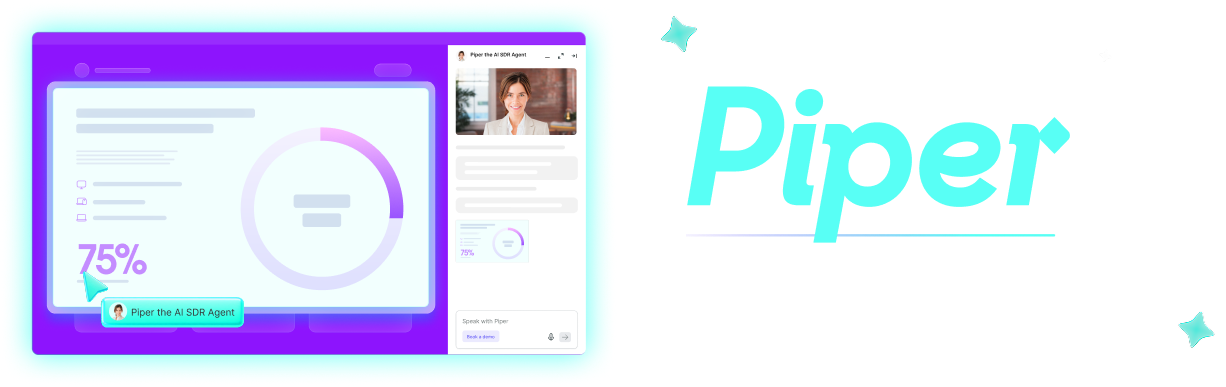

.svg)


