The Agentic Marketing Guide for B2B Marketing Teams
Our show The Agentic Marketer interviews today's leading B2B marketers to discover how they're actually using agentic AI day to day to hit their pipeline goals. Learn the 7 things agentic marketers are doing right now to stay ahead of the curve.
Shelly Weaver
No items found.
Agentic marketing isn’t about sprinkling AI on a workflow—it’s about treating AI like a real teammate that can look ahead, monitor what’s happening, and help you act in real time. That mindset shift is what moves you from one-off experiments to repeatable, integrated workflows that actually scale.
In this guide:
How today’s leading marketers define agentic marketing
Why this shift is more than a fad and requires a leadership mindset shift
How to turn “ad hoc tasks” into “integrated workflows” that hold up in production
Where agentic workflows create meaningful scale (without breaking your team)
What is agentic marketing?
Agentic marketing is the practice of using AI agents as an active teammate—not just a utility—so it can take on specific work, follow rules and guidelines, and support better decisions in real time. Instead of asking AI to generate a one-off output, you set it up to operate inside a workflow: monitoring, suggesting, and executing tasks that marketers can trust and repeat.
Agentic marketing takes all of the tasks we dreamed of automating and integrates them into systems that predict, engage, and respond to buyer behavior in real time, going far beyond the co-pilots we had just a few years ago. They aren’t just Clippy on steroids, they’re an entirely new way of working.
If 2024 was the year of experimentation, 2025 was the year of production, and 2026 will be the year teams move into optimization of their agentic marketing systems.
7 ways marketers are winning with agentic marketing today
#1 Treat AI like a teammate, not a one-off tool
If AI stays a “support administrative tool,” it stays small. The agentic leap happens when you expect AI to act more like a teammate—looking ahead, monitoring, and suggesting next steps. That’s how you move from outputs to outcomes, and from novelty to operational value.
“Agentic marketing is using AI not just as a tool, but looking at it more like a teammate. Something that's going to be more like an assistant that's going to look ahead, make suggestions, monitor what's happening, and give us real-time insights.” —Stacy West, CMO, Bonterra
#2 Operationalize: move from random tasks to integrated workflows
A lot of teams are still experimenting—and leaders acknowledge the leap isn’t automatic. Things have shifted incredibly quickly, but now is the time to get your head in the agentic game and build systems that work holistically. The win is building integrated workflows that teams can run consistently, instead of one-off prompts that disappear after the novelty fades.
The goal: repeatable successes that become operational procedures and helps create a culture of AI-first automation.
“We’re currently in the process of moving from it being more ad hoc tasks to being more integrated workflows.” —Paige O’Neill, CMO, Culture Amp
#3 Expand capacity and coverage without burning out your team
Lean teams can’t do everything everywhere all the time—yet the bar keeps rising. The recurring promise across marketers we speak to isn’t “replace your team,” it's to expand capacity so people can focus on the work they love while the agent handles the always-on load.
That’s how you get scale without burnout.
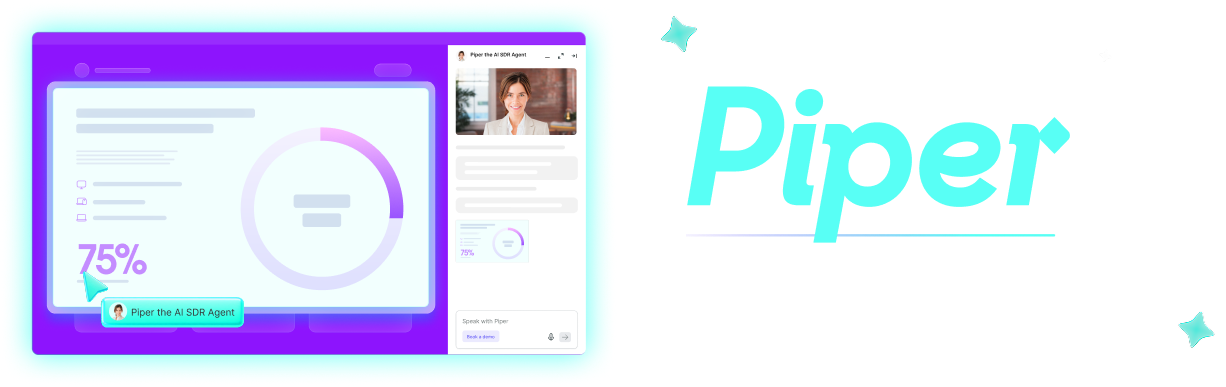
You guys call her Piper; we call her Emmy. She's become an indispensable part of our team. She doesn't sleep, she never takes PTO, and she just manages to make all of this look really easy. And that's what's giving us scale without burnout. So to me, agentic marketing is that ability to scale.” —Susan Ganeshan, CMO, Emplifi
Inbound expectations are simple: when a buyer reaches out, they want a response now. Before agentic marketing, that demand was hard to satisfy. But agentic marketers know inbound is the easiest space to win when it comes to agentic AI. AI SDR agents deliver always-on coverage and faster follow-up–teams now have 24/7 coverage.
Marketers have dreamed of a day when speed to lead wasn’t just a catchy aspiration, but the standard for their buyer experiences.
The win is clear: consistent response and a better buyer experience, no matter when they’re ready.
"And then that, back to the inbound speed to lead, that 24/7 coverage that we just don't have to worry somebody's not going to get that custom touch that we want them to have. Obviously, productivity is a huge win across the board." —Katy Abbaszadeh, VP Global Demand Gen, Glean
#5 Drive agentic AI adoption with a clear vision and operational rigor
The hard part isn’t spinning up an AI agent—it’s getting adoption to stick across your team. Each of our Agentic Marketer guests call out the same recipe for success–it starts with leadership. Leaders must foster a mindset shift away from “shiny new toy” to the operational work required to rewire workflows. If you want agentic marketing to last, you need use cases, monitoring, and operational rigor.
“The biggest hurdle was pride. Marketers felt like using AI was 'cheating.' It took reassurance that it’s just a tool, not a shortcut. Over time, once they saw results, they got comfortable. It took about two to three months to get into the rhythm.” —Trinity Nguyen, CMO, UserGems
Outside of inbound pipe gen, content is where marketers are seeing the most traction when building their agentic AI systems because it’s repeatable, high-volume, and easy to build workflows around. AI agents help across content lifecycles—drafting, reviewing, ideating, and research—allowing teams to move faster and see the results of the work they put in up front.
There's also a new skill coming to the forefront that content marketers can hone. Instead of relying on several team members to produce meaningful insights from data for content, now the skillset is more about how to reliably and accurately prompt AI agents to do all the work for you.
“We used to have to put out surveys and hire agencies and do all this complex stuff that took a very, very long time just to get what is kind of a basic collation of information back. And then you needed humans who understood your business to try to synthesize that information and say, okay, so what does this mean? AI is great for that type of thing, and you can do it really, really quickly. So the new skill is less about conducting and synthesizing and analyzing the research and more about learning how to appropriately prompt AI to bring that insight back to you.” —Leslie Alore, SVP of Marketing, Flexera
The fastest way to stall momentum is chasing hype. Leaders stress knowing when deterministic approaches are best, blending methods appropriately, and pressure-testing whether what you built is truly scalable and repeatable—especially in an enterprise context.
We're in an era where anything is possible, and new technological leaps are happening daily. It's our job as marketers to continue educating and aligning our orgs around what agentic AI can and can't do for us.
This keeps “tinkering” from becoming chaos, or producing failed experiments.
"You're going to see so many people everyday bragging about a new thing you've never heard of to create an agent in 10 minutes. Okay, sure. But is it scalable? Is it repeatable? Does it have enterprise security? We have to be really great communicators and educators while daily being open to the possibilities that the next new leap maybe is here." —William Tyree, CMO, IntelligenceBank
Agentic marketing isn’t one tactic—it’s a shift from isolated AI usage to workflows you can run, monitor, and scale. The most consistent through-line in our interviews with marketers embracing agentic AI: stop treating it as a novelty, treat it like a teammate, and operationalize what works.
If you can move from ad hoc tasks to integrated workflows, you’ll expand capacity, improve inbound responsiveness, and build a system your team can trust. And you’ll do it with grounded expectations around repeatability, scalability, and enterprise readiness.
The era of agentic marketing is here, and the winners in our space will be the ones who embrace it now, not later. Learning how to make agents work for your team is an imperative marketers can't ignore. Every week, we speak with these leaders and dig into their agentic marketing strategies. Catch up on Season One of The Agentic Marketer here.
Want to see agentic marketing in action? Stream our Agentic Marketing Summit to see how today's leaders are prepping for tomorrow's buyer behavior.
Related content
14 ways agentic AI will overhaul your marketing funnel
Discover strategic use cases for agentic AI in marketing from inbound plays like demo requests and webinar follow-ups to creative beyond-inbound campaigns. Preview insights from the GTM Partners report on agentic marketing and learn how AI can drive speed, relevance, and pipeline growth.
5 stages of the agentic marketing funnel
See why GTM Partners calls the traditional funnel dead. Explore the agentic marketing funnel powered by AI SDR agents to fill pipeline gaps and grow faster.
5 things you need to know about agentic marketing
Discover 5 key insights from Welcome to the Agentic Marketing Era and see how agentic AI is redefining funnels, pipeline, and B2B marketing.
Brightly Software’s Whitney Rosa explains why B2B marketing is shifting from campaign-centric to system-centric, powered by AI agents that automate decisions, optimize in real time, and scale marketing impact.
Episode 17 | Talkspace on the end of static marketing funnels
Learn how Talkspace uses AI SDR agents and agentic marketing to replace static funnels and turn website traffic into qualified pipeline.
Episode 16 | Stop chasing time savings with AI and start chasing strategic clarity
Highspot’s hot take is that AI costs time upfront. Learn how leaders who invest early are the ones who gain clarity, leverage, and profound competitive advantage.
The Agentic Marketing Guide for B2B Marketing Teams
Our show The Agentic Marketer interviews today's leading B2B marketers to discover how they're actually using agentic AI day to day to hit their pipeline goals. Learn the 7 things agentic marketers are doing right now to stay ahead of the curve.
Shelly Weaver
No items found.
Agentic marketing isn’t about sprinkling AI on a workflow—it’s about treating AI like a real teammate that can look ahead, monitor what’s happening, and help you act in real time. That mindset shift is what moves you from one-off experiments to repeatable, integrated workflows that actually scale.
In this guide:
How today’s leading marketers define agentic marketing
Why this shift is more than a fad and requires a leadership mindset shift
How to turn “ad hoc tasks” into “integrated workflows” that hold up in production
Where agentic workflows create meaningful scale (without breaking your team)
What is agentic marketing?
Agentic marketing is the practice of using AI agents as an active teammate—not just a utility—so it can take on specific work, follow rules and guidelines, and support better decisions in real time. Instead of asking AI to generate a one-off output, you set it up to operate inside a workflow: monitoring, suggesting, and executing tasks that marketers can trust and repeat.
Agentic marketing takes all of the tasks we dreamed of automating and integrates them into systems that predict, engage, and respond to buyer behavior in real time, going far beyond the co-pilots we had just a few years ago. They aren’t just Clippy on steroids, they’re an entirely new way of working.
If 2024 was the year of experimentation, 2025 was the year of production, and 2026 will be the year teams move into optimization of their agentic marketing systems.
7 ways marketers are winning with agentic marketing today
#1 Treat AI like a teammate, not a one-off tool
If AI stays a “support administrative tool,” it stays small. The agentic leap happens when you expect AI to act more like a teammate—looking ahead, monitoring, and suggesting next steps. That’s how you move from outputs to outcomes, and from novelty to operational value.
“Agentic marketing is using AI not just as a tool, but looking at it more like a teammate. Something that's going to be more like an assistant that's going to look ahead, make suggestions, monitor what's happening, and give us real-time insights.” —Stacy West, CMO, Bonterra
#2 Operationalize: move from random tasks to integrated workflows
A lot of teams are still experimenting—and leaders acknowledge the leap isn’t automatic. Things have shifted incredibly quickly, but now is the time to get your head in the agentic game and build systems that work holistically. The win is building integrated workflows that teams can run consistently, instead of one-off prompts that disappear after the novelty fades.
The goal: repeatable successes that become operational procedures and helps create a culture of AI-first automation.
“We’re currently in the process of moving from it being more ad hoc tasks to being more integrated workflows.” —Paige O’Neill, CMO, Culture Amp
#3 Expand capacity and coverage without burning out your team
Lean teams can’t do everything everywhere all the time—yet the bar keeps rising. The recurring promise across marketers we speak to isn’t “replace your team,” it's to expand capacity so people can focus on the work they love while the agent handles the always-on load.
That’s how you get scale without burnout.
You guys call her Piper; we call her Emmy. She's become an indispensable part of our team. She doesn't sleep, she never takes PTO, and she just manages to make all of this look really easy. And that's what's giving us scale without burnout. So to me, agentic marketing is that ability to scale.” —Susan Ganeshan, CMO, Emplifi
Inbound expectations are simple: when a buyer reaches out, they want a response now. Before agentic marketing, that demand was hard to satisfy. But agentic marketers know inbound is the easiest space to win when it comes to agentic AI. AI SDR agents deliver always-on coverage and faster follow-up–teams now have 24/7 coverage.
Marketers have dreamed of a day when speed to lead wasn’t just a catchy aspiration, but the standard for their buyer experiences.
The win is clear: consistent response and a better buyer experience, no matter when they’re ready.
"And then that, back to the inbound speed to lead, that 24/7 coverage that we just don't have to worry somebody's not going to get that custom touch that we want them to have. Obviously, productivity is a huge win across the board." —Katy Abbaszadeh, VP Global Demand Gen, Glean
#5 Drive agentic AI adoption with a clear vision and operational rigor
The hard part isn’t spinning up an AI agent—it’s getting adoption to stick across your team. Each of our Agentic Marketer guests call out the same recipe for success–it starts with leadership. Leaders must foster a mindset shift away from “shiny new toy” to the operational work required to rewire workflows. If you want agentic marketing to last, you need use cases, monitoring, and operational rigor.
“The biggest hurdle was pride. Marketers felt like using AI was 'cheating.' It took reassurance that it’s just a tool, not a shortcut. Over time, once they saw results, they got comfortable. It took about two to three months to get into the rhythm.” —Trinity Nguyen, CMO, UserGems
Outside of inbound pipe gen, content is where marketers are seeing the most traction when building their agentic AI systems because it’s repeatable, high-volume, and easy to build workflows around. AI agents help across content lifecycles—drafting, reviewing, ideating, and research—allowing teams to move faster and see the results of the work they put in up front.
There's also a new skill coming to the forefront that content marketers can hone. Instead of relying on several team members to produce meaningful insights from data for content, now the skillset is more about how to reliably and accurately prompt AI agents to do all the work for you.
“We used to have to put out surveys and hire agencies and do all this complex stuff that took a very, very long time just to get what is kind of a basic collation of information back. And then you needed humans who understood your business to try to synthesize that information and say, okay, so what does this mean? AI is great for that type of thing, and you can do it really, really quickly. So the new skill is less about conducting and synthesizing and analyzing the research and more about learning how to appropriately prompt AI to bring that insight back to you.” —Leslie Alore, SVP of Marketing, Flexera
The fastest way to stall momentum is chasing hype. Leaders stress knowing when deterministic approaches are best, blending methods appropriately, and pressure-testing whether what you built is truly scalable and repeatable—especially in an enterprise context.
We're in an era where anything is possible, and new technological leaps are happening daily. It's our job as marketers to continue educating and aligning our orgs around what agentic AI can and can't do for us.
This keeps “tinkering” from becoming chaos, or producing failed experiments.
"You're going to see so many people everyday bragging about a new thing you've never heard of to create an agent in 10 minutes. Okay, sure. But is it scalable? Is it repeatable? Does it have enterprise security? We have to be really great communicators and educators while daily being open to the possibilities that the next new leap maybe is here." —William Tyree, CMO, IntelligenceBank
Agentic marketing isn’t one tactic—it’s a shift from isolated AI usage to workflows you can run, monitor, and scale. The most consistent through-line in our interviews with marketers embracing agentic AI: stop treating it as a novelty, treat it like a teammate, and operationalize what works.
If you can move from ad hoc tasks to integrated workflows, you’ll expand capacity, improve inbound responsiveness, and build a system your team can trust. And you’ll do it with grounded expectations around repeatability, scalability, and enterprise readiness.
The era of agentic marketing is here, and the winners in our space will be the ones who embrace it now, not later. Learning how to make agents work for your team is an imperative marketers can't ignore. Every week, we speak with these leaders and dig into their agentic marketing strategies. Catch up on Season One of The Agentic Marketer here.
Want to see agentic marketing in action? Stream our Agentic Marketing Summit to see how today's leaders are prepping for tomorrow's buyer behavior.
The Agentic Marketing Guide for B2B Marketing Teams
Our show The Agentic Marketer interviews today's leading B2B marketers to discover how they're actually using agentic AI day to day to hit their pipeline goals. Learn the 7 things agentic marketers are doing right now to stay ahead of the curve.
Agentic marketing isn’t about sprinkling AI on a workflow—it’s about treating AI like a real teammate that can look ahead, monitor what’s happening, and help you act in real time. That mindset shift is what moves you from one-off experiments to repeatable, integrated workflows that actually scale.
In this guide:
How today’s leading marketers define agentic marketing
Why this shift is more than a fad and requires a leadership mindset shift
How to turn “ad hoc tasks” into “integrated workflows” that hold up in production
Where agentic workflows create meaningful scale (without breaking your team)
What is agentic marketing?
Agentic marketing is the practice of using AI agents as an active teammate—not just a utility—so it can take on specific work, follow rules and guidelines, and support better decisions in real time. Instead of asking AI to generate a one-off output, you set it up to operate inside a workflow: monitoring, suggesting, and executing tasks that marketers can trust and repeat.
Agentic marketing takes all of the tasks we dreamed of automating and integrates them into systems that predict, engage, and respond to buyer behavior in real time, going far beyond the co-pilots we had just a few years ago. They aren’t just Clippy on steroids, they’re an entirely new way of working.
If 2024 was the year of experimentation, 2025 was the year of production, and 2026 will be the year teams move into optimization of their agentic marketing systems.
7 ways marketers are winning with agentic marketing today
#1 Treat AI like a teammate, not a one-off tool
If AI stays a “support administrative tool,” it stays small. The agentic leap happens when you expect AI to act more like a teammate—looking ahead, monitoring, and suggesting next steps. That’s how you move from outputs to outcomes, and from novelty to operational value.
“Agentic marketing is using AI not just as a tool, but looking at it more like a teammate. Something that's going to be more like an assistant that's going to look ahead, make suggestions, monitor what's happening, and give us real-time insights.” —Stacy West, CMO, Bonterra
#2 Operationalize: move from random tasks to integrated workflows
A lot of teams are still experimenting—and leaders acknowledge the leap isn’t automatic. Things have shifted incredibly quickly, but now is the time to get your head in the agentic game and build systems that work holistically. The win is building integrated workflows that teams can run consistently, instead of one-off prompts that disappear after the novelty fades.
The goal: repeatable successes that become operational procedures and helps create a culture of AI-first automation.
“We’re currently in the process of moving from it being more ad hoc tasks to being more integrated workflows.” —Paige O’Neill, CMO, Culture Amp
#3 Expand capacity and coverage without burning out your team
Lean teams can’t do everything everywhere all the time—yet the bar keeps rising. The recurring promise across marketers we speak to isn’t “replace your team,” it's to expand capacity so people can focus on the work they love while the agent handles the always-on load.
That’s how you get scale without burnout.
You guys call her Piper; we call her Emmy. She's become an indispensable part of our team. She doesn't sleep, she never takes PTO, and she just manages to make all of this look really easy. And that's what's giving us scale without burnout. So to me, agentic marketing is that ability to scale.” —Susan Ganeshan, CMO, Emplifi
Inbound expectations are simple: when a buyer reaches out, they want a response now. Before agentic marketing, that demand was hard to satisfy. But agentic marketers know inbound is the easiest space to win when it comes to agentic AI. AI SDR agents deliver always-on coverage and faster follow-up–teams now have 24/7 coverage.
Marketers have dreamed of a day when speed to lead wasn’t just a catchy aspiration, but the standard for their buyer experiences.
The win is clear: consistent response and a better buyer experience, no matter when they’re ready.
"And then that, back to the inbound speed to lead, that 24/7 coverage that we just don't have to worry somebody's not going to get that custom touch that we want them to have. Obviously, productivity is a huge win across the board." —Katy Abbaszadeh, VP Global Demand Gen, Glean
#5 Drive agentic AI adoption with a clear vision and operational rigor
The hard part isn’t spinning up an AI agent—it’s getting adoption to stick across your team. Each of our Agentic Marketer guests call out the same recipe for success–it starts with leadership. Leaders must foster a mindset shift away from “shiny new toy” to the operational work required to rewire workflows. If you want agentic marketing to last, you need use cases, monitoring, and operational rigor.
“The biggest hurdle was pride. Marketers felt like using AI was 'cheating.' It took reassurance that it’s just a tool, not a shortcut. Over time, once they saw results, they got comfortable. It took about two to three months to get into the rhythm.” —Trinity Nguyen, CMO, UserGems
Outside of inbound pipe gen, content is where marketers are seeing the most traction when building their agentic AI systems because it’s repeatable, high-volume, and easy to build workflows around. AI agents help across content lifecycles—drafting, reviewing, ideating, and research—allowing teams to move faster and see the results of the work they put in up front.
There's also a new skill coming to the forefront that content marketers can hone. Instead of relying on several team members to produce meaningful insights from data for content, now the skillset is more about how to reliably and accurately prompt AI agents to do all the work for you.
“We used to have to put out surveys and hire agencies and do all this complex stuff that took a very, very long time just to get what is kind of a basic collation of information back. And then you needed humans who understood your business to try to synthesize that information and say, okay, so what does this mean? AI is great for that type of thing, and you can do it really, really quickly. So the new skill is less about conducting and synthesizing and analyzing the research and more about learning how to appropriately prompt AI to bring that insight back to you.” —Leslie Alore, SVP of Marketing, Flexera
The fastest way to stall momentum is chasing hype. Leaders stress knowing when deterministic approaches are best, blending methods appropriately, and pressure-testing whether what you built is truly scalable and repeatable—especially in an enterprise context.
We're in an era where anything is possible, and new technological leaps are happening daily. It's our job as marketers to continue educating and aligning our orgs around what agentic AI can and can't do for us.
This keeps “tinkering” from becoming chaos, or producing failed experiments.
"You're going to see so many people everyday bragging about a new thing you've never heard of to create an agent in 10 minutes. Okay, sure. But is it scalable? Is it repeatable? Does it have enterprise security? We have to be really great communicators and educators while daily being open to the possibilities that the next new leap maybe is here." —William Tyree, CMO, IntelligenceBank
Agentic marketing isn’t one tactic—it’s a shift from isolated AI usage to workflows you can run, monitor, and scale. The most consistent through-line in our interviews with marketers embracing agentic AI: stop treating it as a novelty, treat it like a teammate, and operationalize what works.
If you can move from ad hoc tasks to integrated workflows, you’ll expand capacity, improve inbound responsiveness, and build a system your team can trust. And you’ll do it with grounded expectations around repeatability, scalability, and enterprise readiness.
The era of agentic marketing is here, and the winners in our space will be the ones who embrace it now, not later. Learning how to make agents work for your team is an imperative marketers can't ignore. Every week, we speak with these leaders and dig into their agentic marketing strategies. Catch up on Season One of The Agentic Marketer here.
Want to see agentic marketing in action? Stream our Agentic Marketing Summit to see how today's leaders are prepping for tomorrow's buyer behavior.
The Agentic Marketing Guide for B2B Marketing Teams
Our show The Agentic Marketer interviews today's leading B2B marketers to discover how they're actually using agentic AI day to day to hit their pipeline goals. Learn the 7 things agentic marketers are doing right now to stay ahead of the curve.
Shelly Weaver
|
February 6, 2026
|
X
min read
Link Copied
Agentic marketing isn’t about sprinkling AI on a workflow—it’s about treating AI like a real teammate that can look ahead, monitor what’s happening, and help you act in real time. That mindset shift is what moves you from one-off experiments to repeatable, integrated workflows that actually scale.
In this guide:
How today’s leading marketers define agentic marketing
Why this shift is more than a fad and requires a leadership mindset shift
How to turn “ad hoc tasks” into “integrated workflows” that hold up in production
Where agentic workflows create meaningful scale (without breaking your team)
What is agentic marketing?
Agentic marketing is the practice of using AI agents as an active teammate—not just a utility—so it can take on specific work, follow rules and guidelines, and support better decisions in real time. Instead of asking AI to generate a one-off output, you set it up to operate inside a workflow: monitoring, suggesting, and executing tasks that marketers can trust and repeat.
Agentic marketing takes all of the tasks we dreamed of automating and integrates them into systems that predict, engage, and respond to buyer behavior in real time, going far beyond the co-pilots we had just a few years ago. They aren’t just Clippy on steroids, they’re an entirely new way of working.
If 2024 was the year of experimentation, 2025 was the year of production, and 2026 will be the year teams move into optimization of their agentic marketing systems.
7 ways marketers are winning with agentic marketing today
#1 Treat AI like a teammate, not a one-off tool
If AI stays a “support administrative tool,” it stays small. The agentic leap happens when you expect AI to act more like a teammate—looking ahead, monitoring, and suggesting next steps. That’s how you move from outputs to outcomes, and from novelty to operational value.
“Agentic marketing is using AI not just as a tool, but looking at it more like a teammate. Something that's going to be more like an assistant that's going to look ahead, make suggestions, monitor what's happening, and give us real-time insights.” —Stacy West, CMO, Bonterra
#2 Operationalize: move from random tasks to integrated workflows
A lot of teams are still experimenting—and leaders acknowledge the leap isn’t automatic. Things have shifted incredibly quickly, but now is the time to get your head in the agentic game and build systems that work holistically. The win is building integrated workflows that teams can run consistently, instead of one-off prompts that disappear after the novelty fades.
The goal: repeatable successes that become operational procedures and helps create a culture of AI-first automation.
“We’re currently in the process of moving from it being more ad hoc tasks to being more integrated workflows.” —Paige O’Neill, CMO, Culture Amp
#3 Expand capacity and coverage without burning out your team
Lean teams can’t do everything everywhere all the time—yet the bar keeps rising. The recurring promise across marketers we speak to isn’t “replace your team,” it's to expand capacity so people can focus on the work they love while the agent handles the always-on load.
That’s how you get scale without burnout.
You guys call her Piper; we call her Emmy. She's become an indispensable part of our team. She doesn't sleep, she never takes PTO, and she just manages to make all of this look really easy. And that's what's giving us scale without burnout. So to me, agentic marketing is that ability to scale.” —Susan Ganeshan, CMO, Emplifi
Inbound expectations are simple: when a buyer reaches out, they want a response now. Before agentic marketing, that demand was hard to satisfy. But agentic marketers know inbound is the easiest space to win when it comes to agentic AI. AI SDR agents deliver always-on coverage and faster follow-up–teams now have 24/7 coverage.
Marketers have dreamed of a day when speed to lead wasn’t just a catchy aspiration, but the standard for their buyer experiences.
The win is clear: consistent response and a better buyer experience, no matter when they’re ready.
"And then that, back to the inbound speed to lead, that 24/7 coverage that we just don't have to worry somebody's not going to get that custom touch that we want them to have. Obviously, productivity is a huge win across the board." —Katy Abbaszadeh, VP Global Demand Gen, Glean
#5 Drive agentic AI adoption with a clear vision and operational rigor
The hard part isn’t spinning up an AI agent—it’s getting adoption to stick across your team. Each of our Agentic Marketer guests call out the same recipe for success–it starts with leadership. Leaders must foster a mindset shift away from “shiny new toy” to the operational work required to rewire workflows. If you want agentic marketing to last, you need use cases, monitoring, and operational rigor.
“The biggest hurdle was pride. Marketers felt like using AI was 'cheating.' It took reassurance that it’s just a tool, not a shortcut. Over time, once they saw results, they got comfortable. It took about two to three months to get into the rhythm.” —Trinity Nguyen, CMO, UserGems
Outside of inbound pipe gen, content is where marketers are seeing the most traction when building their agentic AI systems because it’s repeatable, high-volume, and easy to build workflows around. AI agents help across content lifecycles—drafting, reviewing, ideating, and research—allowing teams to move faster and see the results of the work they put in up front.
There's also a new skill coming to the forefront that content marketers can hone. Instead of relying on several team members to produce meaningful insights from data for content, now the skillset is more about how to reliably and accurately prompt AI agents to do all the work for you.
“We used to have to put out surveys and hire agencies and do all this complex stuff that took a very, very long time just to get what is kind of a basic collation of information back. And then you needed humans who understood your business to try to synthesize that information and say, okay, so what does this mean? AI is great for that type of thing, and you can do it really, really quickly. So the new skill is less about conducting and synthesizing and analyzing the research and more about learning how to appropriately prompt AI to bring that insight back to you.” —Leslie Alore, SVP of Marketing, Flexera
The fastest way to stall momentum is chasing hype. Leaders stress knowing when deterministic approaches are best, blending methods appropriately, and pressure-testing whether what you built is truly scalable and repeatable—especially in an enterprise context.
We're in an era where anything is possible, and new technological leaps are happening daily. It's our job as marketers to continue educating and aligning our orgs around what agentic AI can and can't do for us.
This keeps “tinkering” from becoming chaos, or producing failed experiments.
"You're going to see so many people everyday bragging about a new thing you've never heard of to create an agent in 10 minutes. Okay, sure. But is it scalable? Is it repeatable? Does it have enterprise security? We have to be really great communicators and educators while daily being open to the possibilities that the next new leap maybe is here." —William Tyree, CMO, IntelligenceBank
Agentic marketing isn’t one tactic—it’s a shift from isolated AI usage to workflows you can run, monitor, and scale. The most consistent through-line in our interviews with marketers embracing agentic AI: stop treating it as a novelty, treat it like a teammate, and operationalize what works.
If you can move from ad hoc tasks to integrated workflows, you’ll expand capacity, improve inbound responsiveness, and build a system your team can trust. And you’ll do it with grounded expectations around repeatability, scalability, and enterprise readiness.
The era of agentic marketing is here, and the winners in our space will be the ones who embrace it now, not later. Learning how to make agents work for your team is an imperative marketers can't ignore. Every week, we speak with these leaders and dig into their agentic marketing strategies. Catch up on Season One of The Agentic Marketer here.
Want to see agentic marketing in action? Stream our Agentic Marketing Summit to see how today's leaders are prepping for tomorrow's buyer behavior.
.jpg)


-(1).avif)




.avif)
.jpg)
.jpg)



.svg)


