Core function
Executes predefined workflows









AI agents that plan, execute, and learn from every engagement to hit measurable goals (without waiting for a human to push buttons or intervene). In practical terms, what does marketing look like when it’s agentic?
It looks like AI agents on your website that detect intent in real time, engage buyers through text, voice, or video, and start personalized conversations that qualify interest and instantly convert into booked meetings.
The point is simple: agentic marketing closes the loop between data and action to drive pipeline, not busy work.
Today, many teams are stuck between automation and action:
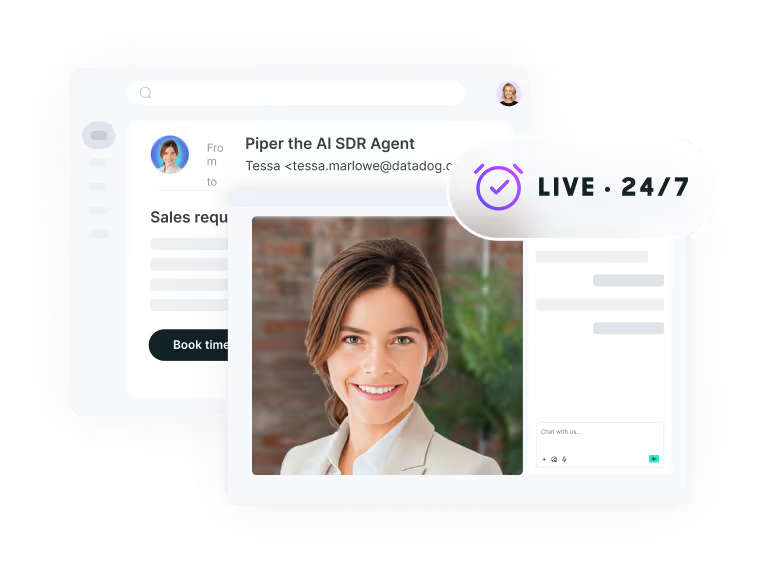


Agentic marketing is the use of autonomous AI agents that plan, execute, and refine marketing actions in real time to hit clear goals. Instead of just surfacing data or automating tasks, these agents turn continuous buyer signals into measurable outcomes.
This departs from traditional AI in marketing, which tends to focus on content generation or prediction. Agentic AI goes further by owning execution and optimization. It doesn’t just predict churn, it launches retention plays. It doesn’t just score leads, it engages them in the moment.
The shift is timely. With tighter budgets and greater scrutiny, teams must prove impact fast.
If you’re asking what is autonomous marketing or what is agentic marketing, the answer is this: autonomous, outcome-driven systems and agents that continuously decide and act without human intervention.
Autonomous AI agents in marketing don’t just sit in dashboards.
They live on your website, watch buyer behavior in real time, and take action automatically.
When a high-intent account lands, they engage. When a visitor shows buying signals, they start a personalized conversation. All of it happens within clear goals and guardrails, continuously learning and improving with every interaction.
Unlike traditional AI that surfaces insights and waits for someone to act, agentic AI executes in real time.
When a high-intent account lands on your website, it starts the conversation. When an inbound lead submits a form, it qualifies and follows up instantly. Before an event, it engages registrants. After an event, it continues the dialogue. It doesn’t just recommend the next best action. It takes it.
In practice, this shows up as a single, coordinated agent operating across the buyer journey. On the website, it engages visitors through chat, voice, or video.
For inbound leads, it converts hand-raisers into booked meetings. Around events, it manages pre- and post-event conversations. For early-stage buyers, it nurtures interest until they are ready to speak with sales.
One agent, continuously learning and acting across every touchpoint.
Marketing Automation vs. Agentic Marketing

Modern agentic marketing platforms are defined less by what they analyze and more by what they execute. Their advantage is operational speed, contextual awareness, and continuous learning.
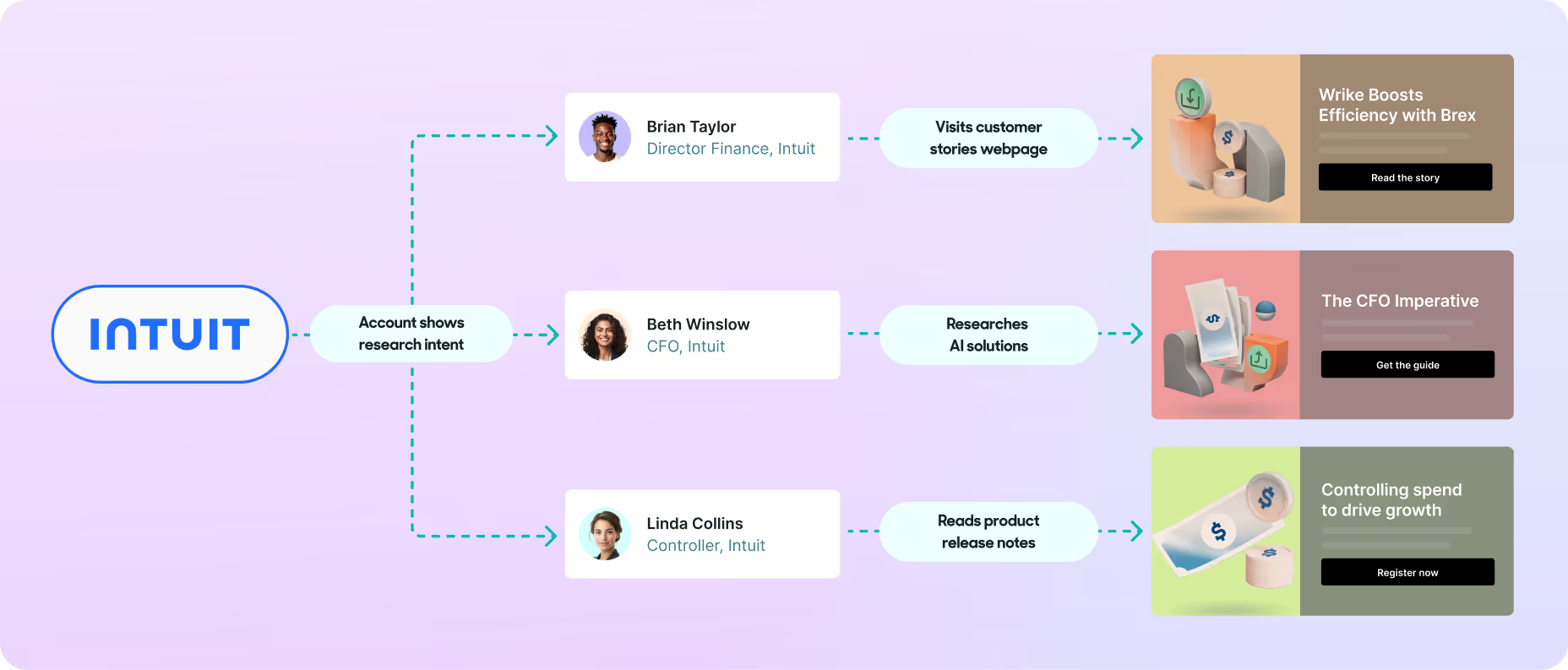
Agentic systems don’t rely on static segments or delayed scoring models. They interpret live buyer behavior, pages viewed, return visits, account signals, form activity, and CRM context, and adjust engagement instantly based on what is happening right now.
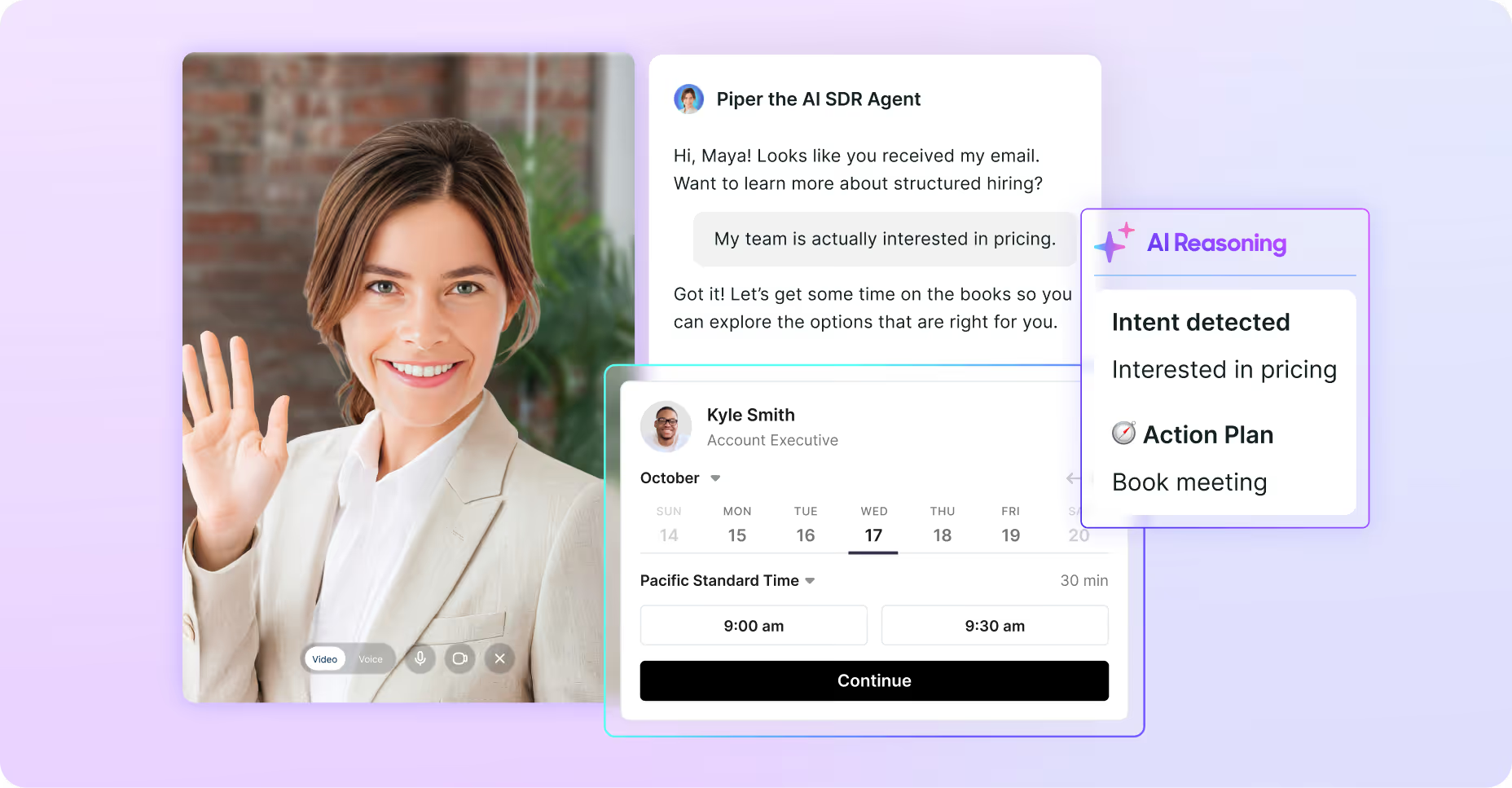
Instead of routing visitors into predefined flows, agents manage dynamic, two-way conversations. They ask follow-up questions, adapt messaging mid-conversation, qualify based on responses, and guide buyers toward the appropriate next step.
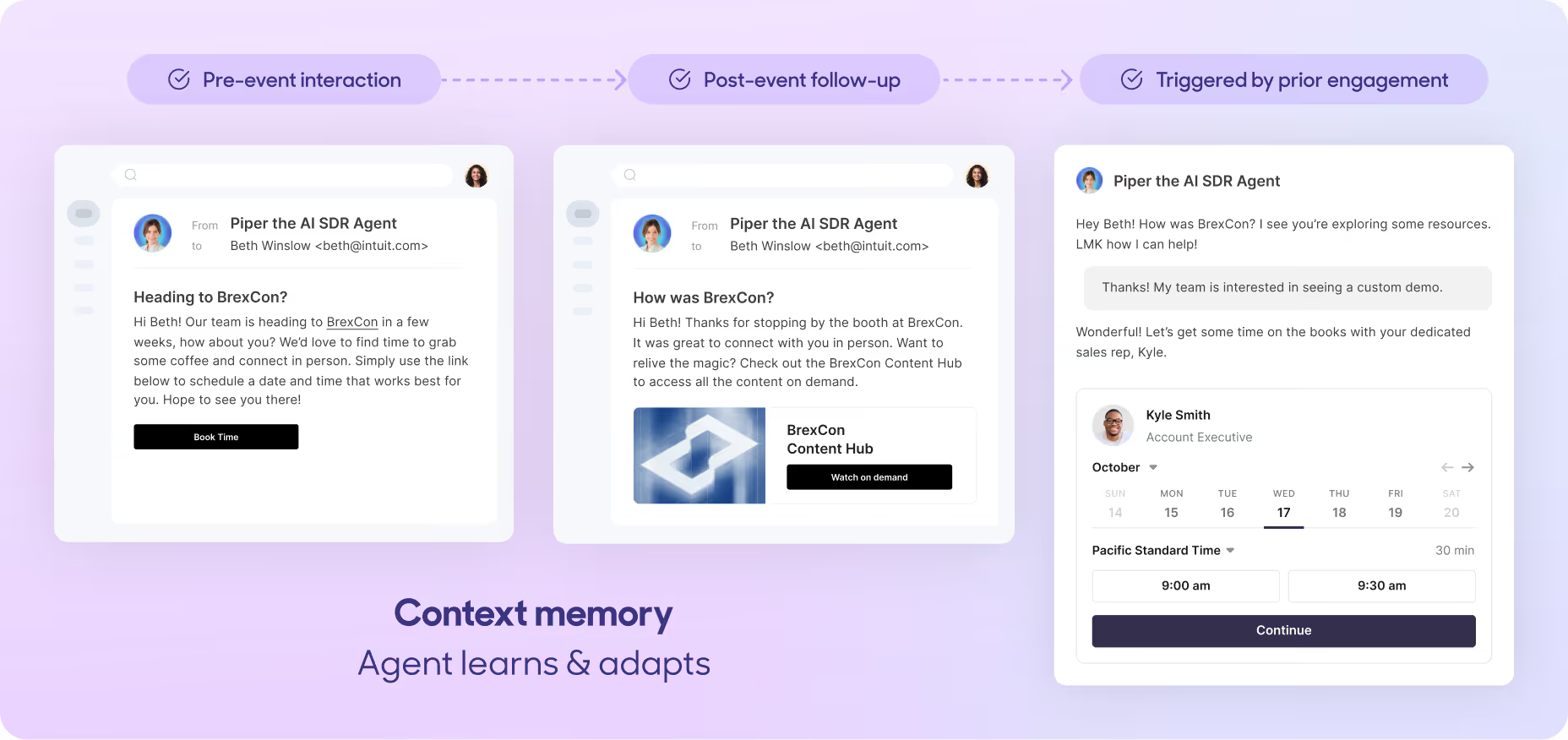
Agentic platforms maintain context across touchpoints. A pre-event interaction informs post-event follow-up. An inbound form submission informs the next website visit. The agent remembers, learns, and builds on prior engagement rather than starting from scratch each time.
Rather than optimizing for clicks or opens, agentic systems optimize for outcomes like qualified pipeline and booked meetings. Every interaction becomes training data that improves qualification accuracy, routing decisions, and engagement timing.
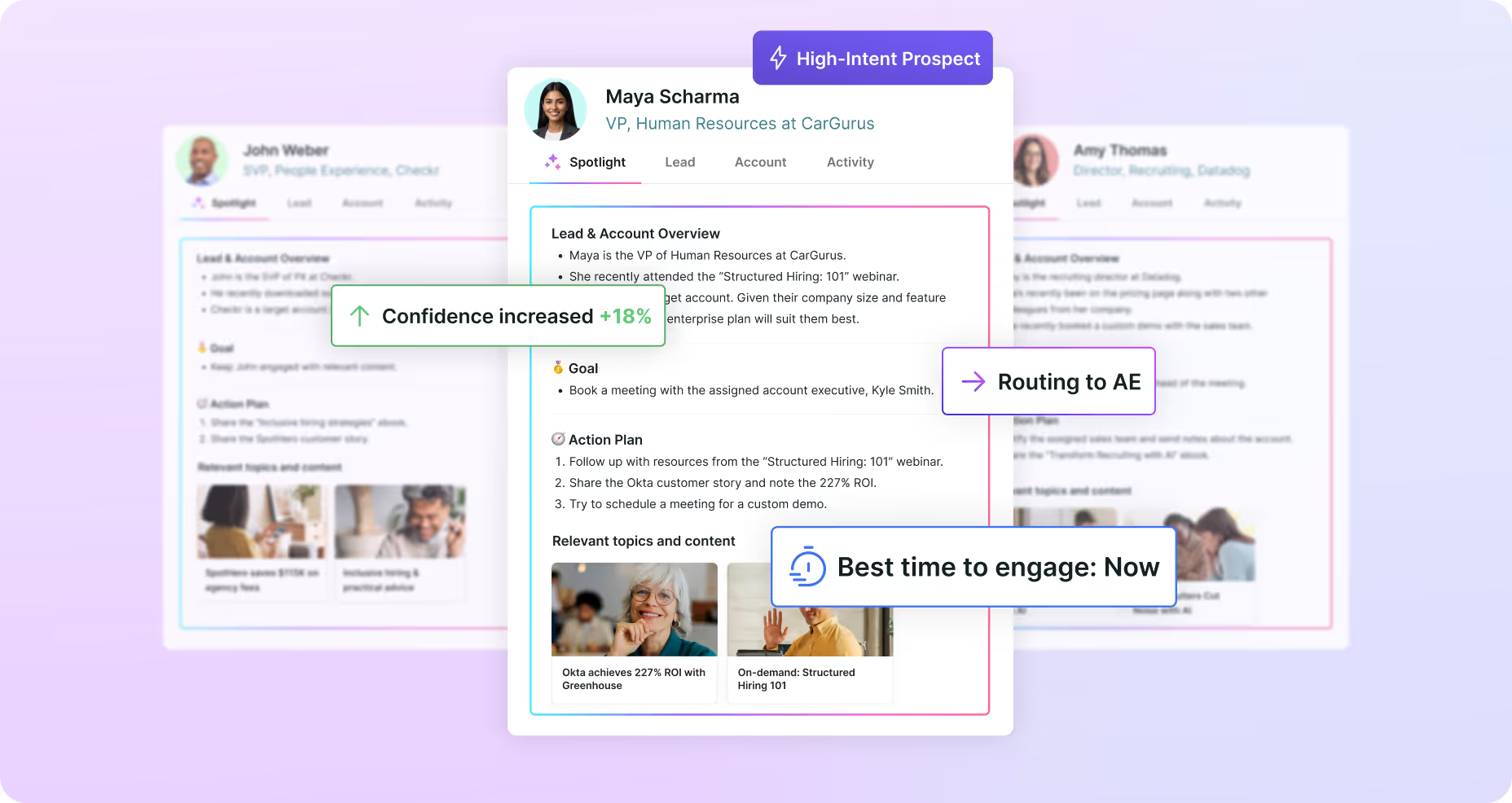
Autonomy does not mean randomness. Agentic platforms operate within defined goals, brand standards, compliance requirements, and CRM rules, ensuring execution stays aligned with revenue strategy.
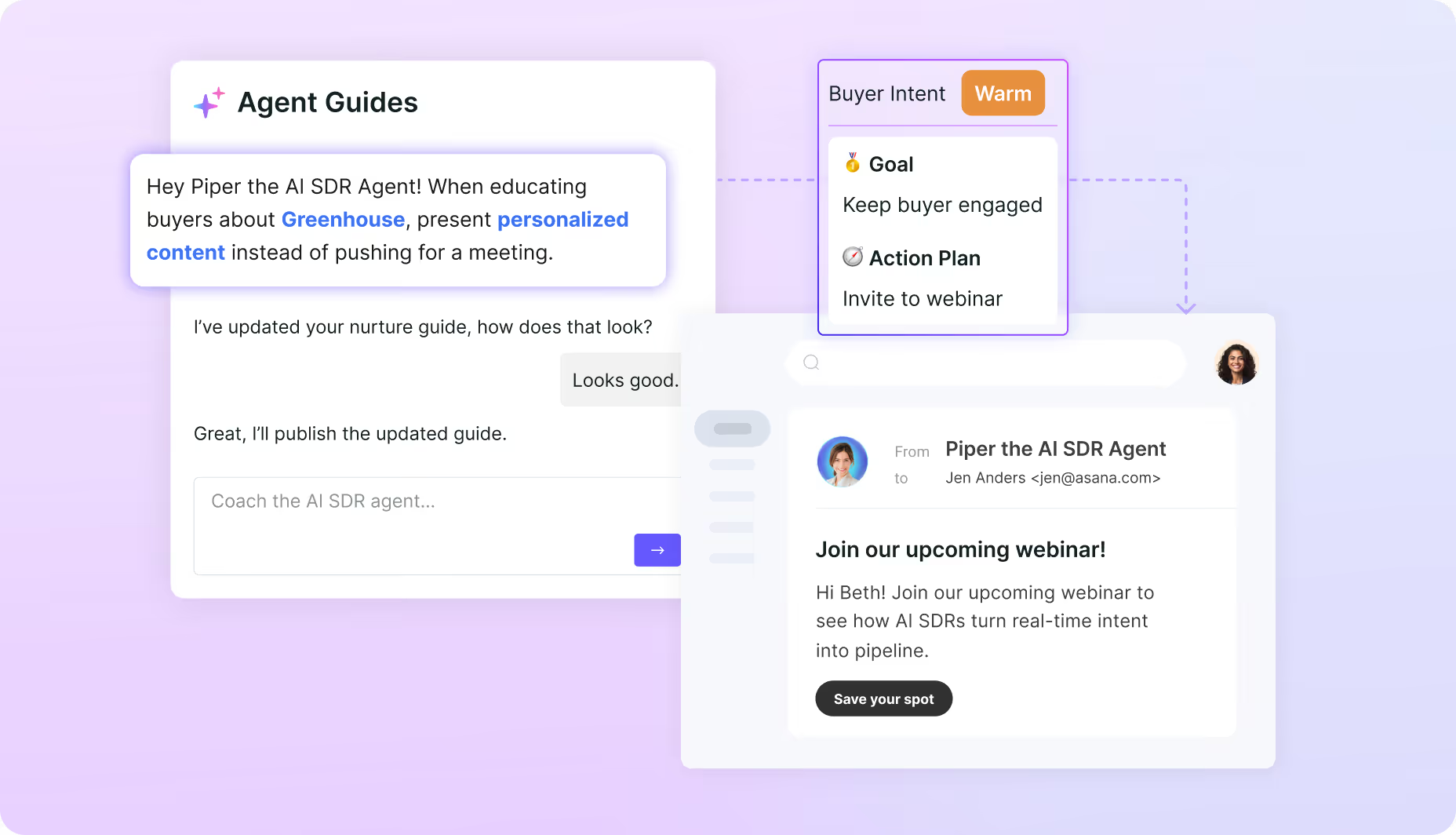
To turn agentic marketing into pipeline, start by redefining where execution happens. In an agentic model, your website becomes the center of demand generation, not just an entry point.
Focus on the moments that signal buying intent: repeat visits, pricing page activity, high-value accounts landing on your site, inbound form submissions, or event engagement. These are not leads to route later. They are opportunities to act on immediately.
Rather than separating inbound, events, nurture, and acceleration into disconnected programs, use a single agent to manage the full conversation. The same system that engages a first-time visitor should also handle event follow-up, returning prospects, and opportunity acceleration with full context.
Move beyond MQL volume and email performance. Agentic demand generation measures success in qualified conversations, meetings booked, and pipeline created. Every interaction feeds a feedback loop that improves qualification, routing, and timing automatically.
With the agent handling real-time engagement and qualification, marketing and sales teams can focus on strategy, messaging, and closing. Execution becomes continuous. Revenue teams stay focused on outcomes.
What is the future of demand generation related to agentic marketing? It’s outcome-first, agent-led orchestration that accelerates conversion the moment buyers show intent.
An AI SDR is an autonomous and virtual sales development rep that qualifies leads, engages buyers, and books meetings across channels in real time in a multi-modal capacity. Guided by agentic principles, it detects intent, personalizes messages, handles objections, and progresses the conversation without human intervention.
Qualified’s Piper, the AI SDR agent, is the category blueprint: a multi-modal AI SDR that automatically reaches out via chat and email, triages inbound interest, re-engages unworked or cold leads, and books meetings directly in calendars without manual handoffs. Welcome to the era of agentic marketing.
Responds in seconds, 24/7, versus human response times limited by queues, schedules, and time zones.
Always present across the website and inbound channels instead of waiting for a rep to pick up a lead.
Immediately engages buyers through chat, voice, video, and email rather than relying on a single outreach channel.
Understands what a buyer is doing in the moment, such as the pages they’re viewing or their prior interactions, instead of starting every conversation cold.
Handles thousands of conversations simultaneously while human SDRs can only manage a limited number of prospects at once.
Every visitor and lead receives immediate, high-quality engagement rather than variable follow-up depending on rep workload.
Maintains context across interactions, so a conversation started on the website can continue through email or future visits.
Asks questions, interprets responses, and qualifies buyers dynamically instead of relying on static forms or rigid qualification scripts.
Books meetings instantly once intent is confirmed rather than handing leads off to manual scheduling workflows.
Engages buyers the moment intent appears instead of waiting for marketing workflows or SDR follow-up.
Agents can be trained on your documentation, messaging, and FAQs, allowing them to confidently handle complex or technical questions that even experienced SDRs may need time to research.
When agentic marketing is implemented well, the impact shows up directly in pipeline. Instead of waiting on batch workflows or manual follow-up, AI agents engage buyers the moment intent appears and keep the conversation moving forward.
Several patterns consistently emerge.
Agentic systems engage every visitor and inbound lead immediately, ensuring high-intent buyers don’t slip through the cracks. Teams move from partial coverage to continuous engagement across the website and inbound funnel.
Because agents respond instantly, the delay between interest and conversation disappears.

after adopting an AI SDR approach to inbound engagement.
Agentic engagement converts website intent into real sales conversations.

using an AI SDR to engage visitors in real time.
Because agents handle the first layer of engagement and qualification, revenue teams can scale pipeline without scaling SDR teams.

after adopting an AI SDR approach to inbound engagement.
When engagement happens in the moment and conversations adapt dynamically, more buyers move forward.

through real-time AI-led engagement.
Over time, these improvements compound. Continuous engagement, faster response times, and more consistent qualification translate into stronger pipeline coverage, shorter sales cycles, and more predictable revenue generation.
For many modern B2B teams, agentic marketing is becoming the operational layer that ensures no revenue moment is missed.
While the promise of agentic marketing is powerful, deploying autonomous AI agents in a revenue environment requires thoughtful design.
The most successful teams treat agentic systems not as a plug-in tool, but as an operational layer that works alongside marketing and sales.
Here are some of the most common challenges and how leading teams address them.
Agentic systems don’t rely on static segments or delayed scoring models. They interpret live buyer behavior, pages viewed, return visits, account signals, form activity, and CRM context, and adjust engagement instantly based on what is happening right now.
One mistake teams make is trying to automate everything at once.
The highest impact usually comes from focusing on moments where buyer intent is already strong, such as pricing page visits, inbound form submissions, product trial interest, or event follow-up.
These moments represent the fastest path to pipeline and allow teams to validate the impact of agentic engagement quickly.
For an agent to hold meaningful conversations, it needs more than surface-level data.
The most effective implementations connect the agent to CRM data, account context, website behavior, and prior interactions.
This allows the agent to personalize conversations, ask relevant questions, and route buyers intelligently rather than relying on generic scripts.
Agentic marketing sits directly between demand generation and sales development. Without alignment on qualification criteria, routing logic, and meeting standards, teams can create friction rather than efficiency.
High-performing teams define clear qualification signals and treat the agent as a shared revenue resource rather than a marketing-only tool.
Agentic marketing improves over time.
Every conversation becomes training data that refines how the agent qualifies buyers, responds to objections, and routes opportunities.
Teams that review conversations, refine prompts, and adjust guardrails regularly see the fastest improvements in pipeline performance.
Agentic marketing signals a shift in how demand generation operates.
Instead of campaigns that run on schedules and workflows that wait for human action, autonomous agents engage buyers the moment intent appears and guide them toward the next step.
As these systems become more capable, demand generation will move closer to real-time execution, where every visit, signal, and conversation becomes an opportunity to create pipeline.
That future is already taking shape.
If you want to see what agentic marketing looks like in practice, explore Piper, the AI SDR agent that engages buyers across chat, voice, video, and email and turns real-time intent into qualified pipeline.
Agentic marketing uses autonomous AI agents that can reason, plan, and take action independently to drive marketing strategies, going beyond traditional automation by understanding goals, interpreting data, and executing tasks without human intervention.
Traditional marketing automation relies on rigid, rules-based workflows that require manual updates and wait for triggers, while agentic marketing uses goal-based AI agents that proactively adapt in real-time, learn autonomously, and orchestrate full-funnel campaigns across multiple channels.
Agentic marketing enables teams to follow up with every lead instantly, qualify prospects in real-time, personalize experiences at scale, run end-to-end campaigns autonomously, and operate 24/7 across channels, empowering marketers to own pipeline generation with greater speed and control.
AI agents follow up with leads intelligently regardless of volume, qualify prospects by analyzing ICP fit and behavior, personalize experiences beyond basic segmentation, and execute complete campaign workflows from audience building to performance analysis without constant oversight.
AI SDR agents are autonomous systems designed specifically for sales development that follow up with every lead, qualify prospects in real-time, and never forget a follow-up, giving marketers visibility and control over how leads are worked through the funnel.
Yes, AI agents deliver true personalization by pulling real-time data from CRMs, intent signals, and on-site behavior to understand each buyer's journey and respond with tailored, contextual messaging across channels, making every interaction feel one-to-one even at scale.
AI agents will take over repetitive tasks, but human roles will shift toward managing AI systems, optimizing outputs, and making strategic decisions. The future belongs to marketers who guide and iterate on intelligent systems running real campaigns.
Common use cases for agentic marketing focus on engaging buyers the moment intent appears and guiding them toward the next step in the buying journey. Autonomous agents can identify high-intent visitors on a website and start personalized conversations in real time through chat, voice, or video, instantly qualify inbound leads after a form submission, and book meetings without waiting for manual SDR follow-up.
They can also engage event registrants before and after events, re-engage previously unworked or cold leads, and nurture early-stage buyers when they return to the website. By acting on live buyer signals instead of scheduled campaigns, agentic marketing helps revenue teams turn more interest into qualified conversations, meetings, and pipeline.



.svg)


