How AI SDR Agents are Transforming Pipeline Generation
Learn how top GTM teams are using AI agents to drive pipeline across inbound and outbound, and what early results reveal about the future of agentic pipeline generation.


Learn how top GTM teams are using AI agents to drive pipeline across inbound and outbound, and what early results reveal about the future of agentic pipeline generation.

TRANSCRIPT
Matt Heinz – Heinz Marketing
Alright. We’re very excited for this session we have for you today, how AI SDR agents are transforming pipeline generation. Got a couple awesome panelists here.
And just to set the stage, I mean, from outbound prospecting to booking inbound demos, AI SDR agents are now opening up a whole new level of pipeline generation for go-to-market teams.
We’ve got two industry-leading organizations and their marketing leaders who are gonna talk about how AI agents work, where customers are seeing success, where they’re specifically seeing success in their go-to-market motions, and what they predict for agentic pipeline generation in two thousand twenty five and beyond.
Very excited to have with us Saima Rashid. She’s the SVP of Marketing at 6sense, and, of course, Maura Rivera, the Chief Marketing Officer at Qualified. Welcome, guys.
Matt Heinz – Heinz Marketing
Hey, Matt.
Maura Rivera – Qualified
Thanks for having us.
Matt Heinz – Heinz Marketing
So let’s get right into it. You know, both of your companies have developed AI agents that serve different parts of the customer journey. Right? Like inbound website conversion, outbound prospecting.
I’d love to have each of you share some examples of your most successful use cases, how you’re generating pipeline impact for your organization. And, Maura, may we start with you?
Maura Rivera – Qualified
Yeah. So at Qualified, we’re really focused on the inbound funnel. So what that means is how can marketers use an AI SDR agent to engage with all of your inbound buyers and do it autonomously and at scale?
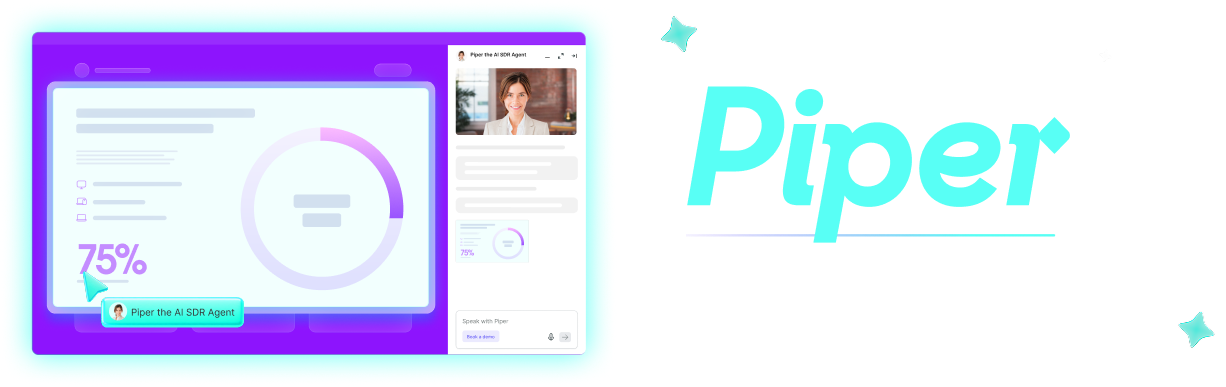
Our AI SDR, her name’s Piper because she generates pipeline.
And the cool thing about her is she’s connected to all of your go-to-market systems, including systems like 6sense, who’s a fantastic partner.
So when an inbound buyer arrives, she knows everything about them, about their lead, about their account, and she can really surface these really personalized experiences. She can engage with folks on the website when they’re ready to buy, surface offers, book meetings.
But if somebody comes to your website, another great use case would be maybe they fill out a form. Maybe they’re not ready to talk in real time.
And AI SDR can also follow up with those folks and get them back into the funnel.
So really focused on that inbound marketing use case and how do we unlock more personalization and really scale for how we generate pipeline from an inbound perspective.
Matt Heinz – Heinz Marketing
Saima, how about you?
Saima Rashid – 6sense
Yeah. I’m happy to jump in here. We use agents for a variety of use cases. Listen.
You know, when you think of 6sense, you obviously know we apply an account-based approach, but we do need to actually do outreach to individuals.
And BDR teams are wonderful. I have a fantastic BDR team, but AI agents have been really critical for us being able to augment what they’re doing.
Whether it’s on the outbound prospecting of a high-intent account that we really wanna break into, that we want to multithread early and often as soon as we start to see those signals, that’s a huge use case for us.
Whether it’s follow-up to events or webinars that we’re hosting, right, or whether it’s even doing proactive outreach to closed-lost opportunities from six months ago, the agents have helped us scale our BDRs in a way that we haven’t been able to do in the past.
Right? At this point, twenty percent of our net new pipeline as a company is being generated autonomously through using agents across a variety of use cases, and it hasn’t made us reduce our BDR team. In fact, quite the opposite.
We’ve promoted more BDRs than ever because guess what?
They’re on the phone selling as opposed to doing some of the repeatable tasks that an agent is just so perfectly suited to take on.
Matt Heinz – Heinz Marketing
Twenty percent of pipeline coming from agentic. I just wanna double click on that. That’s impressive.
I did wanna follow up and just ask, like, what are some other metrics that maybe 6sense and maybe some of your clients are using to measure the impact of AI SDRs?
And I’m curious also just to follow up to that, like, are there any surprising stories for the way that your customers have started to use and implement and integrate these tools into their go-to-market motions?
Saima Rashid – 6sense
Yeah. I think it’s a little bit of a new world out there. And leaders know they need to harness the power of AI, but there’s always this question of how we do it.
And so some of the use cases that I mentioned, right, automating outbound, improving our inbound motion, awakening the dead opportunities and event invitations and follow-up, those have been critical.
And the way we’ve been measuring that is really on the qualified pipeline being generated, and that’s what we encourage our customers to do.
So I already mentioned, of course, that we’re generating twenty percent of our net new pipeline using agents. But I have customers like Relteo, for example, where they have their same BDR team, same headcount, generating sixty three percent more pipeline as a company.
We have another customer that likens one of our agents to essentially being like having five more SDRs working simultaneously.
Right? So this is a scale play, and we know that it is getting harder and harder to create and qualify pipeline. Right? I think it’s taking more touches, more people on a specific deal.
And so, again, what a perfect way to scale some of that outreach to get in front of more people in an intelligent, automated, and personalized way.
I think both Qualified and 6sense, we put a lot of emphasis on the personalization. Yes. There is automation with AI, but we’re not here to speed up spam.
We really want to be providing a rich experience to prospects, and the agents have been crucial for us to doing that.
I also mentioned we’ve just been promoting more BDRs now to AEs because they are doing the hard job of selling as opposed to writing emails.
And so it’s been fun to see. I think that was probably a surprising use case for us because if you’re on LinkedIn, you hear that AI is coming for everyone’s jobs, but, you know, the human-to-human part of the selling process and the prospecting part process doesn’t go away.
Let’s get our humans and our wonderful teammates doing that part, and let’s automate the things that AI does so well.
Matt Heinz – Heinz Marketing
Well, AI is taking away the jobs we didn’t want anyway. Right? I think about the work, the tedious work, that goes into being a BDR that you don’t have to do, and the impact that can have on retention, on retention of your best employees and your best sales reps, and even recruiting as a competitive advantage to be able to say you’re gonna do the best parts of your job and make money and be successful and have growth opportunities there.
Maura, I want to ask you a similar question. Just, you know, Piper obviously is handling website visitors and follow ups. Curious what kind of metrics you’re targeting there, what kind of metrics your customers are seeing, and then obviously any surprises.
So some pleasant surprises you’re seeing from customers as well.
Maura Rivera – Qualified
Yeah. I mean, we like to hold our AI SDR agent accountable just like we would a sales rep.
I think if you had an agent who’s, to Saima’s point, sending all the emails in the world or having all the conversations in the world, but none of it converts, what’s the point? You just have tech that you’ve invested in that’s not actually making an impact on the business.
So we hold our AI SDR agent accountable just like we would a sales rep. We actually have Piper on our leaderboard.
We do a pipeline council every Friday. We look at how all of our human reps are doing, and we look at how our AI agents are doing.
We’re using conversational email and 6sense to do some outbounding. We’re using Piper, obviously, for our inbound motion.
We’re looking at quality pipeline, and we’re looking at meetings booked. Those are the two most relevant metrics for us to track.
One interesting thing is with humans, we would also look at IRT for inbound leads, but that’s no longer relevant because AI SDRs can get to them instantly. That’s the promise of really leveraging an agent within your funnel.
So really holding them accountable on the leaderboard.
In terms of customers, I think it’s interesting because, and one thing as we talk about kind of removing people and what the evolution of the team looks like, I think in twenty twenty four, folks were a little scared of AI SDR agents.
How are they gonna take over my job? How is it gonna transform the workplace? And here we are in twenty twenty five, and they’re here, and they’re making an impact.
And I think it’s gonna change companies and organizations for the better.
And to your point, I think it’s going to really allow folks to move on to other higher value opportunities or take those funds that you’re saving on headcount if somebody instead of backfilling them and redeploying them into the business.
It’s been super exciting at Qualified. I mean, we’ve had hundreds of customers. 6sense is a customer. You guys have Revi, your version of the AI SDR, on your site. Matt, you guys are a customer.
So we’ve had hundreds of companies hire Piper, and they’re really looking at improved pipeline and improved efficiency.
So companies like Vanilla, who generated five million dollars in pipeline with their AI SDR in the first first ninety days.
We have companies like NextGen Healthcare. They used to have all of these missed chats when they were relying on humans. They used to have fourteen hundred missed chats a year.
Now they have zero.
We have companies like Greenhouse, and they’ve seen a two x increase in meetings booked.
So it’s been cool because I think last year we were kind of in the trialing phase, and this year we’re starting to see so many real results from all of these companies.
And not only is it gonna generate more pipeline for them, but it’s transforming really how their whole team is structured and how we’re kind of relying on humans and letting agents do more of the heavy lifting.
So I think it’s an exciting time.
Matt Heinz – Heinz Marketing
It’s super exciting.
I see a lot of marketing leaders creating essentially an accountability chart with jobs to be done across the different go-to-market motions and just very clearly seeing how many different jobs can be done by an AI SDR now and how many are likely to get to be done moving forward, including things that they hadn’t been able to do because a human couldn’t scale and do it efficiently.
The more people dig into that, the more excited I think they get.
Matt Heinz – Heinz Marketing
Let’s talk about implementing these, because these are new motions. There’s some change management sometimes associated with bringing on new people, having robots interact with humans.
Saima, we’ll start with you. What are some of the biggest implementation challenges that your customers have seen when they deploy these tools? And then out of that, what are some best practices that have emerged that can help others implement more smoothly moving forward?
Saima Rashid – 6sense
Yeah. I think we’ve learned a thing or two rolling out our agents, not just internally, but across hundreds of customers.
And I would say the biggest thing is getting over what Maura just mentioned. There’s a little bit of hesitation, right, to have AI do the follow up to your best inbound demo requests or your highest intent accounts. Right?
There’s a little bit of a hesitation.
And so we always recommend, let’s start small. Let’s start with a use case, and let’s iterate and let’s prove it out. And that is typically enough.
Right? The second you start to see response to leads happening always within SLA, the second you start to see your conversion rates be on par or, in some cases, higher than what you’re getting with your BDR team, very quickly I think all of those hesitations fall down.
And people are like, alright, I need to, you know, they come up with additional use cases that they immediately wanna try.
And so we always recommend starting with one and then iterating accordingly.
And to your point, Matt, there is change management in place. Right? Because now you’ve got agents running a lot of this outreach, but the BDRs need to still be in the loop.
They still need to be informed and aware of what emails have been sent out, when, what have the responses been.
So there’s enablement that needs to happen across your internal teams. There is always a human in the loop.
And so you wanna make sure that the right person is in there to keep an eye on things or to reply if something does require a human review.
So I would say the change management, making sure that the visibility exists for all the parties, and then making sure that the customer is taking advantage of getting a really strong, robust use case up and out so that we can quickly go in, measure impact, and then scale accordingly.
Matt Heinz – Heinz Marketing
Yeah. Maura, I think same question for you. I mean, we, as you mentioned, like, we’re happy Qualified customers. I remember the implementation initially.
You know, when you’ve got a sales rep, you wanna make sure that they are representing your brand correctly. For us, it’s my name on the wall, so I need a robot to do the same thing.
Yeah. Well, confidence in the training and the engagement, it was part of our onboarding. It actually went very smoothly.
But I’m curious for you, what are some challenges in that change management side you see with Qualified new customers?
Maura Rivera – Qualified
Yeah. I think you nailed it, Matt. As marketers, our brand is paramount. We need to make sure that it is well represented the second somebody interacts with an email or on your website.
And there is a lot of fear as marketers. Can I trust it? Will it do a good job?
I think one thing that sometimes we talk about is there’s also that same fear with human SDRs when they first start. You know? They have to get onboarded. You have to make sure they’re up to speed with your messaging.
So when it comes to an AI SDR, our approach is onboard it, her, him, just like you would a human SDR.
Make sure that they have all of your messaging, all of your materials. They’re really prepared with how to talk about your company.
You can also provide guardrails. So you know, hey, never talk about pricing or never answer any questions about x, y, z.
So you kind of go through that onboarding at the beginning, and then we talk about confidence threshold.
So you don’t wanna set an AI SDR live until you have, let’s say, like, north of ninety percent confidence that they’re doing the right thing and they’re representing your brand well.
And we’re very similar to Saima. I think use cases are key. That is how we all operate.
I think right now there is this flurry to wanna invest in technology, and then you have it and you don’t know where to start.
So if you can identify an area of the business, like, I have too much website traffic, I can’t interact with everybody, or I have these event leads that need to be followed up with, those are a great place to start.
We see a lot of our customers do a crawl, walk, run.
So what that means is crawl will be maybe we have our AI SDR agent on the website work nighttime and weekends or lower quality leads who are not sticking humans on anyways.
And then walk would be really having that AI SDR agent work the front line.
So they’re doing all the heavy lifting. They’re doing the greeting. They’re doing the initial handoff, and then they’re handing off to a human rep if there’s a target account who’s on the site and wants to talk to somebody.
And then we’re actually seeing a lot of our companies really run, which means the AI SDR agent is flying pretty much solo.
There will still be human handoff if it’s appropriate and human-in-the-loop feedback, but we have some customers who their goal is to eventually not have an inbound SDR team and really redeploy those resources for prospecting or for other higher value things or promote them to account executives, and that’s really the goal.
At Qualified, we used to have six inbound SDRs. Now we have Piper.
And then we have our other reps who are outbound, and they’re ready to pick things up if they need to be.
But it’s all about getting people comfortable with that journey.
You can’t expect people to go right to the run phase. It will be chaotic, and it won’t work.
So it’s identifying those use cases, building that confidence in the agent that they’re doing a great job, and then kind of guiding them on that journey to crawl, walk, run.
Matt Heinz – Heinz Marketing
The analogy with how you train a human rep, I think, is really good. Right?
To say, I can’t just give you a playbook and run out there. There’s some training. There’s some coaching. There’s adjustments along the way as you’re reviewing behavior.
And then you gotta retrain. Right?
Like, as your business changes, as your market changes, as language changes, as the market and your customers and competitors mature, making sure that your tool is up to speed just like you would with a human sales team.
And the benefit is until we have robots selling the robots, you’re doing it for the humans. Just make sure that you’re adopting that into the agents as well, and you’ll be far more successful.
Maura Rivera – Qualified
Yeah. I was just gonna say one thing you touched on that we haven’t talked about a lot, but it’s like we’ve been talking about how this makes teams more efficient and marketing teams more efficient with how they’re generating pipeline.
But we haven’t talked about, like, the great buying experience that it provides for folks to get instant question answers to their questions and how it’s just gonna streamline how B2B software and other companies, how everything’s purchased, because that’s a pretty antiquated and not great experience for buyers also.
No forms. Right, Saima? I mean, you don’t have to put barriers in front of people, and you can meet them where they are and get them that information in real time, especially if they’re there, they’re motivated, they wanna dig in further.
Matt Heinz – Heinz Marketing
Let’s move on a little bit. I wanna sign my note. I mean, 6sense has kinda become synonymous with ABM, account-based marketing, account-based motions in the B2B space.
How are your customers integrating AI email capabilities into their broader account-based marketing efforts?
Saima Rashid – 6sense
Yeah. It’s a good question because, at the end of the day, what we wanna do at 6sense is help our customers find and connect with the right buyers. Right?
Let’s make it easy for them to close deals and to grow their revenue.
And agents fit right into it. Right? Our platform analyzes a trillion signals a day, really helping customers prioritize the right accounts, flag them to your sellers or your agents in this case.
And marketers wanna be able to harness that data to craft a really rich and personalized experience for their prospects.
Prospects, let’s be honest, are demanding that now. Right? They demand a rich experience. They demand a frictionless journey.
No spam, no forms, no cold calls. We kinda wrote the book on it.
And so the way that our customers are using this is in terms of the broader promise of ABM, taking something like our intelligent workflows canvas, which allows you to take those account-based scores, bridge them through to a contact, enrich your contacts, then drive actual outreach to them at the right time.
And so the singular canvas, the bridging between accounts and contacts, and also just optimizing the rest of your tech stack, whether you wanna point those prospects through to display, through to your sales engagement platform, through to your marketing automation, or tie them directly into an AI email agent.
We want you to be able to do all of that and more. Right?
I think, Matt, I heard the stat from you, but Gartner flagged that orchestrating across this complex journey is the top priority for CMOs. Right?
There’s such high collaboration drag across your tech stack, across all of your teams.
And so the more we can make it easier for our customers to do that, both within the 6sense platform as well as connecting to partners and other tech stack that they’ve invested in, that’s really what we wanna be doing.
Matt Heinz – Heinz Marketing
I love that answer because, I mean, you know how excited I get.
We start talking about collaboration drag and sort of helping companies address that.
But I think you fix it when you have really detailed workflows. Right?
And when you think about those jobs to be done and you deploy agents in the email, on the website, those agents can be more consistent in terms of how they operate, and it’s gonna streamline more of that workflow to make the results you want happen more consistently, but also happen more quickly.
I mean, you know, Piper, in a similar way to what Saima was talking about with sort of email agents, you can handle thousands of website conversations at once.
How are marketing teams using that increased capability to scale pipeline generation beyond what they previously knew or thought was possible?
Maura Rivera – Qualified
Yeah. I mean, we spend a lot of time looking at the traditional funnel.
Saima talked about marketing automation platforms, and we were very reliant on human capacity.
We were doing all of these things from a marketing perspective. We were doing ad campaigns and everything that Saima’s talking about, and then we relied on a finite amount of human resources to work those leads.
We could only work the leads that were really deemed like MQLs, and then we got pipeline on the other side.
And, like, Matt and Saima, this is a process you guys have been doing forever, right, as marketers?
And then what we’re talking about now is the agentic marketing funnel.
So what if you could have an agent to work all of the leads autonomously at scale?
That’s the dream. And we’ve always been promised hyper-personalization, but we’ve always had a hard time doing it until now.
So it’s exciting.
There’s so much we can do here.
Maura Rivera – Qualified
I mean, because we got a little bit of time, I wanted to go into a couple other areas that I think these tools can really help folks.
Look. Can we talk a little about CS and customer success?
I think we talked so much about sort of net new acquisition, but the tool sets we’re talking about here can work just as well on customer success, account management.
Saima, do you have some use cases and some examples of where that can be applied elsewhere in the organization?
Saima Rashid – 6sense
Yeah. So, I mean, CS and customer support is a great example. Right?
We have our email agents.
We have customers that essentially feed and train the email agent based on upcoming product releases. Right?
It’s got all the details on what the product release is, how to use it, how to take advantage of it, what you might need to configure within your own systems.
And so anytime a question comes in, the email agent is ready and responding to it.
Right? So there’s that piece.
I mentioned event follow-up, but we have another customer that went to this big industry event and had seven thousand badge scans.
No amount of BDRs was gonna get through that. Right?
But, again, they pointed the outbound agent and were able to generate significant qualified pipeline just by the sheer scale of having personalized outreach happen in a timely fashion.
Right? Because three weeks after an event, let’s be honest, everyone’s moved on.
And so whether it’s the CS use case, whether it’s the customer support use case, whether it’s providing personalization in terms of answering questions that somebody might have.
Even our demo request, believe it or not, it’s a form, but the amount of detailed responses we’ll get when somebody reaches out for a demo, it’s fantastic for the agent to be able to read that and then respond intelligently before a BDR actually needs to get involved.
So it’s just, to Maura’s point, providing a richer experience to the prospect.
Matt Heinz – Heinz Marketing
Well, and because you know something about that person, whether you’re engaging in an email or whether they’ve come to the website, you know.
We even, with our Qualified agent, like, we’ve trained it to know who’s a top prospect, who’s an existing customer, who’s a partner.
So you can engage in a different way.
And more, I mean, just as we dig in, like, the possibilities for using these in different segments of your universe, of your ecosystem, is pretty vast.
Maura Rivera – Qualified
Yeah. I mean, I think what’s key, and Saima kinda talked about this earlier, with orchestration across agents, is you need to make sure that your agent is connected to all of your go-to-market systems so it knows everything about your business.
This is not just onboarding an agent who’s gonna do one-to-many outreach.
So if you can connect with your CRM, with your ABM platform, with your sales engagement platform, if you can know everything that’s happening on your website, the idea is that this agent becomes a super agent.
They know everything about your business. They know everything about your customers and your prospects. They know exactly how you segment them, and they know exactly how to treat them.
On top of that, they also know all of their engagement with your advertising campaigns and with your website.
So they can craft these really, really personalized experiences.
Maura Rivera – Qualified
When it comes to segmentation, there are so many great use cases.
You can tell an AI agent, hey, these are all the folks that are target accounts. Make sure that you’re on a mission to book meetings with them with the right account rep.
Another cool segmentation use case we’re seeing is you can load the agent up with your competitive segment.
So these are all of the accounts that we’re trying to rip away from our competitor. Make sure to surface relevant webinars or landing pages or reports that showcase why we’re the number one player in this space.
To your point about customers, you can also have segmentation for customers and make sure their AI SDR agent is trained not to push a meeting on them because they’re already part of your customer base, but to serve them up with relevant events or content or new product releases that they might be interested in.
Or if you identify an upsell opportunity for that customer, how do you make sure to take them on that journey and showcase what’s new there?
So it’s not just about setting these AI agents free. It’s about making sure they’re onboarded with your business. They’re connected to your go-to-market systems.
They will treat these different segments of buyers just like you would want your best sales reps to treat them, and those experiences will look very different.
Maura Rivera – Qualified
And then the scale piece that you guys are talking about, it’s not just focused one at a time at each target account.
You can go after all target accounts at once.
And that was never possible before when you were relying on a limited amount of humans.
So it’s unlocking personalization. It’s unlocking really precise targeted engagements.
And it’s making sure that you can get the right folks into your funnel, not just anyone into your funnel.
It’s like your best SDR or BDR on steroids, and then they’re going out and getting everybody.
So I think that segmentation and connection to your business applications is key, or else they won’t be effective.
Matt Heinz – Heinz Marketing
Yep.
Matt Heinz – Heinz Marketing
Let’s get into predictions a little bit, which I think especially in this case and in this segment is really hard.
Like, you mean, the AI is starting to do things that we really hadn’t been thinking about before.
So I’m gonna ask you anyway.
Over the rest of two thousand twenty five, as we look into next year, I know you’re both thinking about what can the AI do, what’s in the product roadmap.
What do you think the world of agentic marketing and pipeline generation is gonna look like if we’re having this conversation in this summit even just twelve months from now?
Which isn’t that long, but in AI time, that’s a lot of iterations.
So, Saima, let’s start with you.
Saima Rashid – 6sense
Yeah. I mean, if you had told me last year that we would be where we are with our agents and generating twenty percent of our pipeline autonomously, I would have laughed at you, Matt.
So I think, you know, we can predict, but I think there’s a lot in store for us that we’re probably not sure of.
I do think the most meaningful change that will happen is this sort of initial hesitation hopefully will dissipate.
I think with so many success stories coming out of just even what Maura and I have spoken about, we’re seeing it already.
Marketing leaders in particular seem to be carrying the gauntlet within the C-suite of incorporating AI.
And I think that that will continue to happen and even more so with even more enthusiasm.
So I hope folks will lean in more.
I think new roles will emerge as well within organizations.
Right now, marketing operations and my team are the ones really managing our agentic experiences and SDRs in concert with the growth marketing orgs.
I think there might even be potential roles.
This is now, you know, I don’t wanna give it a title, but someone who’s really responsible for orchestrating across this journey.
Because, again, it is not just about doing the outreach in a meaningful and timely fashion.
It is about doing the right kind of outreach.
And so we need the entire marketing team to be on board with that, whether it’s that very top-of-funnel activity that we’re trying to drive through to when is the right time to actually have the agent reach out, through to the experiences that are happening throughout both the human interactions and the agentic.
We really wanna be providing a rich, comprehensive experience, and that’s gonna take alignment within the orgs.
And great marketing orgs are aligned already, but I think the introduction of agents and just the scale will require specialized roles to really orchestrate.
Matt Heinz – Heinz Marketing
As you wrap up here, anything you wanna add to that?
Maura Rivera – Qualified
Yeah. I mean, we actually have created two new roles on our team to oversee AI agents, Saima.
So your prediction, you have a crystal ball, because I think that’s starting to happen.
We have two folks, one on the marketing team, one on the sales side, who are GTM AI managers.
And what that means is they manage the AI agents.
You cannot just hire agents onto the team, set them loose, and expect it all to go well.
So while it might, you might backfill some roles with AI agents as folks get promoted or folks move on to other endeavors, that’s a place to start.
But then you’re also gonna create these new roles, as you said, Saima, who are overseeing the agents.
Maura Rivera – Qualified
What I’m interested to see is if, like, we look back, twenty twenty three was the year of copilot, twenty twenty four was autopilot, twenty twenty five is clearly agents in agentic marketing.
I’m interested to see what org charts look like in twenty twenty six because I think that a lot of marketing teams are gonna have agents who are sitting on their org charts doing the full job scope of a human and doing it at scale.
And I think you’re absolutely right, Saima, that marketers are usually the most bullish and forward thinking.
But I think other organizations are gonna have to adopt also.
Maura Rivera – Qualified
I just saw the Shopify CEO sent out a note that this is a mandate, that everybody’s embracing this technology, that they have use cases in mind.
So you can no longer really sit idle and expect a strategy to be brought to you.
You need to be thinking about not only the AI technology you’re bringing on, but the agents you’re bringing on who are doing a lot of the work that doesn’t necessarily need to be done by a human.
So I’m excited to see just the transformation of the workplace, the transformation of marketing teams.
And I think it’s going to make us all more powerful as marketing leaders because all of a sudden we have more capacity on our team.
We have more access on our team.
So it’s gonna totally transform, I think, how we do things.
Maura Rivera – Qualified
I think we’ll look back at, like, twenty fifteen, twenty twenty, and be like, oh, how did we ever do things that way? That wasn’t efficient.
And this is just gonna unlock a whole new way.
Matt Heinz – Heinz Marketing
Yeah. Love it.
Saima, Maura, thank you so much for being here. Thank you for your insights, and enjoy the rest of the summit, everybody.
Saima Rashid – 6sense
Thanks, Matt.
Maura Rivera – Qualified
Thanks, Matt.

Stay up to date with weekly drops of fresh B2B marketing and sales content.
Learn how top GTM teams are using AI agents to drive pipeline across inbound and outbound, and what early results reveal about the future of agentic pipeline generation.


TRANSCRIPT
Matt Heinz – Heinz Marketing
Alright. We’re very excited for this session we have for you today, how AI SDR agents are transforming pipeline generation. Got a couple awesome panelists here.
And just to set the stage, I mean, from outbound prospecting to booking inbound demos, AI SDR agents are now opening up a whole new level of pipeline generation for go-to-market teams.
We’ve got two industry-leading organizations and their marketing leaders who are gonna talk about how AI agents work, where customers are seeing success, where they’re specifically seeing success in their go-to-market motions, and what they predict for agentic pipeline generation in two thousand twenty five and beyond.
Very excited to have with us Saima Rashid. She’s the SVP of Marketing at 6sense, and, of course, Maura Rivera, the Chief Marketing Officer at Qualified. Welcome, guys.
Matt Heinz – Heinz Marketing
Hey, Matt.
Maura Rivera – Qualified
Thanks for having us.
Matt Heinz – Heinz Marketing
So let’s get right into it. You know, both of your companies have developed AI agents that serve different parts of the customer journey. Right? Like inbound website conversion, outbound prospecting.
I’d love to have each of you share some examples of your most successful use cases, how you’re generating pipeline impact for your organization. And, Maura, may we start with you?
Maura Rivera – Qualified
Yeah. So at Qualified, we’re really focused on the inbound funnel. So what that means is how can marketers use an AI SDR agent to engage with all of your inbound buyers and do it autonomously and at scale?
Our AI SDR, her name’s Piper because she generates pipeline.
And the cool thing about her is she’s connected to all of your go-to-market systems, including systems like 6sense, who’s a fantastic partner.
So when an inbound buyer arrives, she knows everything about them, about their lead, about their account, and she can really surface these really personalized experiences. She can engage with folks on the website when they’re ready to buy, surface offers, book meetings.
But if somebody comes to your website, another great use case would be maybe they fill out a form. Maybe they’re not ready to talk in real time.
And AI SDR can also follow up with those folks and get them back into the funnel.
So really focused on that inbound marketing use case and how do we unlock more personalization and really scale for how we generate pipeline from an inbound perspective.
Matt Heinz – Heinz Marketing
Saima, how about you?
Saima Rashid – 6sense
Yeah. I’m happy to jump in here. We use agents for a variety of use cases. Listen.
You know, when you think of 6sense, you obviously know we apply an account-based approach, but we do need to actually do outreach to individuals.
And BDR teams are wonderful. I have a fantastic BDR team, but AI agents have been really critical for us being able to augment what they’re doing.
Whether it’s on the outbound prospecting of a high-intent account that we really wanna break into, that we want to multithread early and often as soon as we start to see those signals, that’s a huge use case for us.
Whether it’s follow-up to events or webinars that we’re hosting, right, or whether it’s even doing proactive outreach to closed-lost opportunities from six months ago, the agents have helped us scale our BDRs in a way that we haven’t been able to do in the past.
Right? At this point, twenty percent of our net new pipeline as a company is being generated autonomously through using agents across a variety of use cases, and it hasn’t made us reduce our BDR team. In fact, quite the opposite.
We’ve promoted more BDRs than ever because guess what?
They’re on the phone selling as opposed to doing some of the repeatable tasks that an agent is just so perfectly suited to take on.
Matt Heinz – Heinz Marketing
Twenty percent of pipeline coming from agentic. I just wanna double click on that. That’s impressive.
I did wanna follow up and just ask, like, what are some other metrics that maybe 6sense and maybe some of your clients are using to measure the impact of AI SDRs?
And I’m curious also just to follow up to that, like, are there any surprising stories for the way that your customers have started to use and implement and integrate these tools into their go-to-market motions?
Saima Rashid – 6sense
Yeah. I think it’s a little bit of a new world out there. And leaders know they need to harness the power of AI, but there’s always this question of how we do it.
And so some of the use cases that I mentioned, right, automating outbound, improving our inbound motion, awakening the dead opportunities and event invitations and follow-up, those have been critical.
And the way we’ve been measuring that is really on the qualified pipeline being generated, and that’s what we encourage our customers to do.
So I already mentioned, of course, that we’re generating twenty percent of our net new pipeline using agents. But I have customers like Relteo, for example, where they have their same BDR team, same headcount, generating sixty three percent more pipeline as a company.
We have another customer that likens one of our agents to essentially being like having five more SDRs working simultaneously.
Right? So this is a scale play, and we know that it is getting harder and harder to create and qualify pipeline. Right? I think it’s taking more touches, more people on a specific deal.
And so, again, what a perfect way to scale some of that outreach to get in front of more people in an intelligent, automated, and personalized way.
I think both Qualified and 6sense, we put a lot of emphasis on the personalization. Yes. There is automation with AI, but we’re not here to speed up spam.
We really want to be providing a rich experience to prospects, and the agents have been crucial for us to doing that.
I also mentioned we’ve just been promoting more BDRs now to AEs because they are doing the hard job of selling as opposed to writing emails.
And so it’s been fun to see. I think that was probably a surprising use case for us because if you’re on LinkedIn, you hear that AI is coming for everyone’s jobs, but, you know, the human-to-human part of the selling process and the prospecting part process doesn’t go away.
Let’s get our humans and our wonderful teammates doing that part, and let’s automate the things that AI does so well.
Matt Heinz – Heinz Marketing
Well, AI is taking away the jobs we didn’t want anyway. Right? I think about the work, the tedious work, that goes into being a BDR that you don’t have to do, and the impact that can have on retention, on retention of your best employees and your best sales reps, and even recruiting as a competitive advantage to be able to say you’re gonna do the best parts of your job and make money and be successful and have growth opportunities there.
Maura, I want to ask you a similar question. Just, you know, Piper obviously is handling website visitors and follow ups. Curious what kind of metrics you’re targeting there, what kind of metrics your customers are seeing, and then obviously any surprises.
So some pleasant surprises you’re seeing from customers as well.
Maura Rivera – Qualified
Yeah. I mean, we like to hold our AI SDR agent accountable just like we would a sales rep.
I think if you had an agent who’s, to Saima’s point, sending all the emails in the world or having all the conversations in the world, but none of it converts, what’s the point? You just have tech that you’ve invested in that’s not actually making an impact on the business.
So we hold our AI SDR agent accountable just like we would a sales rep. We actually have Piper on our leaderboard.
We do a pipeline council every Friday. We look at how all of our human reps are doing, and we look at how our AI agents are doing.
We’re using conversational email and 6sense to do some outbounding. We’re using Piper, obviously, for our inbound motion.
We’re looking at quality pipeline, and we’re looking at meetings booked. Those are the two most relevant metrics for us to track.
One interesting thing is with humans, we would also look at IRT for inbound leads, but that’s no longer relevant because AI SDRs can get to them instantly. That’s the promise of really leveraging an agent within your funnel.
So really holding them accountable on the leaderboard.
In terms of customers, I think it’s interesting because, and one thing as we talk about kind of removing people and what the evolution of the team looks like, I think in twenty twenty four, folks were a little scared of AI SDR agents.
How are they gonna take over my job? How is it gonna transform the workplace? And here we are in twenty twenty five, and they’re here, and they’re making an impact.
And I think it’s gonna change companies and organizations for the better.
And to your point, I think it’s going to really allow folks to move on to other higher value opportunities or take those funds that you’re saving on headcount if somebody instead of backfilling them and redeploying them into the business.
It’s been super exciting at Qualified. I mean, we’ve had hundreds of customers. 6sense is a customer. You guys have Revi, your version of the AI SDR, on your site. Matt, you guys are a customer.
So we’ve had hundreds of companies hire Piper, and they’re really looking at improved pipeline and improved efficiency.
So companies like Vanilla, who generated five million dollars in pipeline with their AI SDR in the first first ninety days.
We have companies like NextGen Healthcare. They used to have all of these missed chats when they were relying on humans. They used to have fourteen hundred missed chats a year.
Now they have zero.
We have companies like Greenhouse, and they’ve seen a two x increase in meetings booked.
So it’s been cool because I think last year we were kind of in the trialing phase, and this year we’re starting to see so many real results from all of these companies.
And not only is it gonna generate more pipeline for them, but it’s transforming really how their whole team is structured and how we’re kind of relying on humans and letting agents do more of the heavy lifting.
So I think it’s an exciting time.
Matt Heinz – Heinz Marketing
It’s super exciting.
I see a lot of marketing leaders creating essentially an accountability chart with jobs to be done across the different go-to-market motions and just very clearly seeing how many different jobs can be done by an AI SDR now and how many are likely to get to be done moving forward, including things that they hadn’t been able to do because a human couldn’t scale and do it efficiently.
The more people dig into that, the more excited I think they get.
Matt Heinz – Heinz Marketing
Let’s talk about implementing these, because these are new motions. There’s some change management sometimes associated with bringing on new people, having robots interact with humans.
Saima, we’ll start with you. What are some of the biggest implementation challenges that your customers have seen when they deploy these tools? And then out of that, what are some best practices that have emerged that can help others implement more smoothly moving forward?
Saima Rashid – 6sense
Yeah. I think we’ve learned a thing or two rolling out our agents, not just internally, but across hundreds of customers.
And I would say the biggest thing is getting over what Maura just mentioned. There’s a little bit of hesitation, right, to have AI do the follow up to your best inbound demo requests or your highest intent accounts. Right?
There’s a little bit of a hesitation.
And so we always recommend, let’s start small. Let’s start with a use case, and let’s iterate and let’s prove it out. And that is typically enough.
Right? The second you start to see response to leads happening always within SLA, the second you start to see your conversion rates be on par or, in some cases, higher than what you’re getting with your BDR team, very quickly I think all of those hesitations fall down.
And people are like, alright, I need to, you know, they come up with additional use cases that they immediately wanna try.
And so we always recommend starting with one and then iterating accordingly.
And to your point, Matt, there is change management in place. Right? Because now you’ve got agents running a lot of this outreach, but the BDRs need to still be in the loop.
They still need to be informed and aware of what emails have been sent out, when, what have the responses been.
So there’s enablement that needs to happen across your internal teams. There is always a human in the loop.
And so you wanna make sure that the right person is in there to keep an eye on things or to reply if something does require a human review.
So I would say the change management, making sure that the visibility exists for all the parties, and then making sure that the customer is taking advantage of getting a really strong, robust use case up and out so that we can quickly go in, measure impact, and then scale accordingly.
Matt Heinz – Heinz Marketing
Yeah. Maura, I think same question for you. I mean, we, as you mentioned, like, we’re happy Qualified customers. I remember the implementation initially.
You know, when you’ve got a sales rep, you wanna make sure that they are representing your brand correctly. For us, it’s my name on the wall, so I need a robot to do the same thing.
Yeah. Well, confidence in the training and the engagement, it was part of our onboarding. It actually went very smoothly.
But I’m curious for you, what are some challenges in that change management side you see with Qualified new customers?
Maura Rivera – Qualified
Yeah. I think you nailed it, Matt. As marketers, our brand is paramount. We need to make sure that it is well represented the second somebody interacts with an email or on your website.
And there is a lot of fear as marketers. Can I trust it? Will it do a good job?
I think one thing that sometimes we talk about is there’s also that same fear with human SDRs when they first start. You know? They have to get onboarded. You have to make sure they’re up to speed with your messaging.
So when it comes to an AI SDR, our approach is onboard it, her, him, just like you would a human SDR.
Make sure that they have all of your messaging, all of your materials. They’re really prepared with how to talk about your company.
You can also provide guardrails. So you know, hey, never talk about pricing or never answer any questions about x, y, z.
So you kind of go through that onboarding at the beginning, and then we talk about confidence threshold.
So you don’t wanna set an AI SDR live until you have, let’s say, like, north of ninety percent confidence that they’re doing the right thing and they’re representing your brand well.
And we’re very similar to Saima. I think use cases are key. That is how we all operate.
I think right now there is this flurry to wanna invest in technology, and then you have it and you don’t know where to start.
So if you can identify an area of the business, like, I have too much website traffic, I can’t interact with everybody, or I have these event leads that need to be followed up with, those are a great place to start.
We see a lot of our customers do a crawl, walk, run.
So what that means is crawl will be maybe we have our AI SDR agent on the website work nighttime and weekends or lower quality leads who are not sticking humans on anyways.
And then walk would be really having that AI SDR agent work the front line.
So they’re doing all the heavy lifting. They’re doing the greeting. They’re doing the initial handoff, and then they’re handing off to a human rep if there’s a target account who’s on the site and wants to talk to somebody.
And then we’re actually seeing a lot of our companies really run, which means the AI SDR agent is flying pretty much solo.
There will still be human handoff if it’s appropriate and human-in-the-loop feedback, but we have some customers who their goal is to eventually not have an inbound SDR team and really redeploy those resources for prospecting or for other higher value things or promote them to account executives, and that’s really the goal.
At Qualified, we used to have six inbound SDRs. Now we have Piper.
And then we have our other reps who are outbound, and they’re ready to pick things up if they need to be.
But it’s all about getting people comfortable with that journey.
You can’t expect people to go right to the run phase. It will be chaotic, and it won’t work.
So it’s identifying those use cases, building that confidence in the agent that they’re doing a great job, and then kind of guiding them on that journey to crawl, walk, run.
Matt Heinz – Heinz Marketing
The analogy with how you train a human rep, I think, is really good. Right?
To say, I can’t just give you a playbook and run out there. There’s some training. There’s some coaching. There’s adjustments along the way as you’re reviewing behavior.
And then you gotta retrain. Right?
Like, as your business changes, as your market changes, as language changes, as the market and your customers and competitors mature, making sure that your tool is up to speed just like you would with a human sales team.
And the benefit is until we have robots selling the robots, you’re doing it for the humans. Just make sure that you’re adopting that into the agents as well, and you’ll be far more successful.
Maura Rivera – Qualified
Yeah. I was just gonna say one thing you touched on that we haven’t talked about a lot, but it’s like we’ve been talking about how this makes teams more efficient and marketing teams more efficient with how they’re generating pipeline.
But we haven’t talked about, like, the great buying experience that it provides for folks to get instant question answers to their questions and how it’s just gonna streamline how B2B software and other companies, how everything’s purchased, because that’s a pretty antiquated and not great experience for buyers also.
No forms. Right, Saima? I mean, you don’t have to put barriers in front of people, and you can meet them where they are and get them that information in real time, especially if they’re there, they’re motivated, they wanna dig in further.
Matt Heinz – Heinz Marketing
Let’s move on a little bit. I wanna sign my note. I mean, 6sense has kinda become synonymous with ABM, account-based marketing, account-based motions in the B2B space.
How are your customers integrating AI email capabilities into their broader account-based marketing efforts?
Saima Rashid – 6sense
Yeah. It’s a good question because, at the end of the day, what we wanna do at 6sense is help our customers find and connect with the right buyers. Right?
Let’s make it easy for them to close deals and to grow their revenue.
And agents fit right into it. Right? Our platform analyzes a trillion signals a day, really helping customers prioritize the right accounts, flag them to your sellers or your agents in this case.
And marketers wanna be able to harness that data to craft a really rich and personalized experience for their prospects.
Prospects, let’s be honest, are demanding that now. Right? They demand a rich experience. They demand a frictionless journey.
No spam, no forms, no cold calls. We kinda wrote the book on it.
And so the way that our customers are using this is in terms of the broader promise of ABM, taking something like our intelligent workflows canvas, which allows you to take those account-based scores, bridge them through to a contact, enrich your contacts, then drive actual outreach to them at the right time.
And so the singular canvas, the bridging between accounts and contacts, and also just optimizing the rest of your tech stack, whether you wanna point those prospects through to display, through to your sales engagement platform, through to your marketing automation, or tie them directly into an AI email agent.
We want you to be able to do all of that and more. Right?
I think, Matt, I heard the stat from you, but Gartner flagged that orchestrating across this complex journey is the top priority for CMOs. Right?
There’s such high collaboration drag across your tech stack, across all of your teams.
And so the more we can make it easier for our customers to do that, both within the 6sense platform as well as connecting to partners and other tech stack that they’ve invested in, that’s really what we wanna be doing.
Matt Heinz – Heinz Marketing
I love that answer because, I mean, you know how excited I get.
We start talking about collaboration drag and sort of helping companies address that.
But I think you fix it when you have really detailed workflows. Right?
And when you think about those jobs to be done and you deploy agents in the email, on the website, those agents can be more consistent in terms of how they operate, and it’s gonna streamline more of that workflow to make the results you want happen more consistently, but also happen more quickly.
I mean, you know, Piper, in a similar way to what Saima was talking about with sort of email agents, you can handle thousands of website conversations at once.
How are marketing teams using that increased capability to scale pipeline generation beyond what they previously knew or thought was possible?
Maura Rivera – Qualified
Yeah. I mean, we spend a lot of time looking at the traditional funnel.
Saima talked about marketing automation platforms, and we were very reliant on human capacity.
We were doing all of these things from a marketing perspective. We were doing ad campaigns and everything that Saima’s talking about, and then we relied on a finite amount of human resources to work those leads.
We could only work the leads that were really deemed like MQLs, and then we got pipeline on the other side.
And, like, Matt and Saima, this is a process you guys have been doing forever, right, as marketers?
And then what we’re talking about now is the agentic marketing funnel.
So what if you could have an agent to work all of the leads autonomously at scale?
That’s the dream. And we’ve always been promised hyper-personalization, but we’ve always had a hard time doing it until now.
So it’s exciting.
There’s so much we can do here.
Maura Rivera – Qualified
I mean, because we got a little bit of time, I wanted to go into a couple other areas that I think these tools can really help folks.
Look. Can we talk a little about CS and customer success?
I think we talked so much about sort of net new acquisition, but the tool sets we’re talking about here can work just as well on customer success, account management.
Saima, do you have some use cases and some examples of where that can be applied elsewhere in the organization?
Saima Rashid – 6sense
Yeah. So, I mean, CS and customer support is a great example. Right?
We have our email agents.
We have customers that essentially feed and train the email agent based on upcoming product releases. Right?
It’s got all the details on what the product release is, how to use it, how to take advantage of it, what you might need to configure within your own systems.
And so anytime a question comes in, the email agent is ready and responding to it.
Right? So there’s that piece.
I mentioned event follow-up, but we have another customer that went to this big industry event and had seven thousand badge scans.
No amount of BDRs was gonna get through that. Right?
But, again, they pointed the outbound agent and were able to generate significant qualified pipeline just by the sheer scale of having personalized outreach happen in a timely fashion.
Right? Because three weeks after an event, let’s be honest, everyone’s moved on.
And so whether it’s the CS use case, whether it’s the customer support use case, whether it’s providing personalization in terms of answering questions that somebody might have.
Even our demo request, believe it or not, it’s a form, but the amount of detailed responses we’ll get when somebody reaches out for a demo, it’s fantastic for the agent to be able to read that and then respond intelligently before a BDR actually needs to get involved.
So it’s just, to Maura’s point, providing a richer experience to the prospect.
Matt Heinz – Heinz Marketing
Well, and because you know something about that person, whether you’re engaging in an email or whether they’ve come to the website, you know.
We even, with our Qualified agent, like, we’ve trained it to know who’s a top prospect, who’s an existing customer, who’s a partner.
So you can engage in a different way.
And more, I mean, just as we dig in, like, the possibilities for using these in different segments of your universe, of your ecosystem, is pretty vast.
Maura Rivera – Qualified
Yeah. I mean, I think what’s key, and Saima kinda talked about this earlier, with orchestration across agents, is you need to make sure that your agent is connected to all of your go-to-market systems so it knows everything about your business.
This is not just onboarding an agent who’s gonna do one-to-many outreach.
So if you can connect with your CRM, with your ABM platform, with your sales engagement platform, if you can know everything that’s happening on your website, the idea is that this agent becomes a super agent.
They know everything about your business. They know everything about your customers and your prospects. They know exactly how you segment them, and they know exactly how to treat them.
On top of that, they also know all of their engagement with your advertising campaigns and with your website.
So they can craft these really, really personalized experiences.
Maura Rivera – Qualified
When it comes to segmentation, there are so many great use cases.
You can tell an AI agent, hey, these are all the folks that are target accounts. Make sure that you’re on a mission to book meetings with them with the right account rep.
Another cool segmentation use case we’re seeing is you can load the agent up with your competitive segment.
So these are all of the accounts that we’re trying to rip away from our competitor. Make sure to surface relevant webinars or landing pages or reports that showcase why we’re the number one player in this space.
To your point about customers, you can also have segmentation for customers and make sure their AI SDR agent is trained not to push a meeting on them because they’re already part of your customer base, but to serve them up with relevant events or content or new product releases that they might be interested in.
Or if you identify an upsell opportunity for that customer, how do you make sure to take them on that journey and showcase what’s new there?
So it’s not just about setting these AI agents free. It’s about making sure they’re onboarded with your business. They’re connected to your go-to-market systems.
They will treat these different segments of buyers just like you would want your best sales reps to treat them, and those experiences will look very different.
Maura Rivera – Qualified
And then the scale piece that you guys are talking about, it’s not just focused one at a time at each target account.
You can go after all target accounts at once.
And that was never possible before when you were relying on a limited amount of humans.
So it’s unlocking personalization. It’s unlocking really precise targeted engagements.
And it’s making sure that you can get the right folks into your funnel, not just anyone into your funnel.
It’s like your best SDR or BDR on steroids, and then they’re going out and getting everybody.
So I think that segmentation and connection to your business applications is key, or else they won’t be effective.
Matt Heinz – Heinz Marketing
Yep.
Matt Heinz – Heinz Marketing
Let’s get into predictions a little bit, which I think especially in this case and in this segment is really hard.
Like, you mean, the AI is starting to do things that we really hadn’t been thinking about before.
So I’m gonna ask you anyway.
Over the rest of two thousand twenty five, as we look into next year, I know you’re both thinking about what can the AI do, what’s in the product roadmap.
What do you think the world of agentic marketing and pipeline generation is gonna look like if we’re having this conversation in this summit even just twelve months from now?
Which isn’t that long, but in AI time, that’s a lot of iterations.
So, Saima, let’s start with you.
Saima Rashid – 6sense
Yeah. I mean, if you had told me last year that we would be where we are with our agents and generating twenty percent of our pipeline autonomously, I would have laughed at you, Matt.
So I think, you know, we can predict, but I think there’s a lot in store for us that we’re probably not sure of.
I do think the most meaningful change that will happen is this sort of initial hesitation hopefully will dissipate.
I think with so many success stories coming out of just even what Maura and I have spoken about, we’re seeing it already.
Marketing leaders in particular seem to be carrying the gauntlet within the C-suite of incorporating AI.
And I think that that will continue to happen and even more so with even more enthusiasm.
So I hope folks will lean in more.
I think new roles will emerge as well within organizations.
Right now, marketing operations and my team are the ones really managing our agentic experiences and SDRs in concert with the growth marketing orgs.
I think there might even be potential roles.
This is now, you know, I don’t wanna give it a title, but someone who’s really responsible for orchestrating across this journey.
Because, again, it is not just about doing the outreach in a meaningful and timely fashion.
It is about doing the right kind of outreach.
And so we need the entire marketing team to be on board with that, whether it’s that very top-of-funnel activity that we’re trying to drive through to when is the right time to actually have the agent reach out, through to the experiences that are happening throughout both the human interactions and the agentic.
We really wanna be providing a rich, comprehensive experience, and that’s gonna take alignment within the orgs.
And great marketing orgs are aligned already, but I think the introduction of agents and just the scale will require specialized roles to really orchestrate.
Matt Heinz – Heinz Marketing
As you wrap up here, anything you wanna add to that?
Maura Rivera – Qualified
Yeah. I mean, we actually have created two new roles on our team to oversee AI agents, Saima.
So your prediction, you have a crystal ball, because I think that’s starting to happen.
We have two folks, one on the marketing team, one on the sales side, who are GTM AI managers.
And what that means is they manage the AI agents.
You cannot just hire agents onto the team, set them loose, and expect it all to go well.
So while it might, you might backfill some roles with AI agents as folks get promoted or folks move on to other endeavors, that’s a place to start.
But then you’re also gonna create these new roles, as you said, Saima, who are overseeing the agents.
Maura Rivera – Qualified
What I’m interested to see is if, like, we look back, twenty twenty three was the year of copilot, twenty twenty four was autopilot, twenty twenty five is clearly agents in agentic marketing.
I’m interested to see what org charts look like in twenty twenty six because I think that a lot of marketing teams are gonna have agents who are sitting on their org charts doing the full job scope of a human and doing it at scale.
And I think you’re absolutely right, Saima, that marketers are usually the most bullish and forward thinking.
But I think other organizations are gonna have to adopt also.
Maura Rivera – Qualified
I just saw the Shopify CEO sent out a note that this is a mandate, that everybody’s embracing this technology, that they have use cases in mind.
So you can no longer really sit idle and expect a strategy to be brought to you.
You need to be thinking about not only the AI technology you’re bringing on, but the agents you’re bringing on who are doing a lot of the work that doesn’t necessarily need to be done by a human.
So I’m excited to see just the transformation of the workplace, the transformation of marketing teams.
And I think it’s going to make us all more powerful as marketing leaders because all of a sudden we have more capacity on our team.
We have more access on our team.
So it’s gonna totally transform, I think, how we do things.
Maura Rivera – Qualified
I think we’ll look back at, like, twenty fifteen, twenty twenty, and be like, oh, how did we ever do things that way? That wasn’t efficient.
And this is just gonna unlock a whole new way.
Matt Heinz – Heinz Marketing
Yeah. Love it.
Saima, Maura, thank you so much for being here. Thank you for your insights, and enjoy the rest of the summit, everybody.
Saima Rashid – 6sense
Thanks, Matt.
Maura Rivera – Qualified
Thanks, Matt.
Stay up to date with weekly drops of fresh B2B marketing and sales content.
Learn how top GTM teams are using AI agents to drive pipeline across inbound and outbound, and what early results reveal about the future of agentic pipeline generation.


TRANSCRIPT
Matt Heinz – Heinz Marketing
Alright. We’re very excited for this session we have for you today, how AI SDR agents are transforming pipeline generation. Got a couple awesome panelists here.
And just to set the stage, I mean, from outbound prospecting to booking inbound demos, AI SDR agents are now opening up a whole new level of pipeline generation for go-to-market teams.
We’ve got two industry-leading organizations and their marketing leaders who are gonna talk about how AI agents work, where customers are seeing success, where they’re specifically seeing success in their go-to-market motions, and what they predict for agentic pipeline generation in two thousand twenty five and beyond.
Very excited to have with us Saima Rashid. She’s the SVP of Marketing at 6sense, and, of course, Maura Rivera, the Chief Marketing Officer at Qualified. Welcome, guys.
Matt Heinz – Heinz Marketing
Hey, Matt.
Maura Rivera – Qualified
Thanks for having us.
Matt Heinz – Heinz Marketing
So let’s get right into it. You know, both of your companies have developed AI agents that serve different parts of the customer journey. Right? Like inbound website conversion, outbound prospecting.
I’d love to have each of you share some examples of your most successful use cases, how you’re generating pipeline impact for your organization. And, Maura, may we start with you?
Maura Rivera – Qualified
Yeah. So at Qualified, we’re really focused on the inbound funnel. So what that means is how can marketers use an AI SDR agent to engage with all of your inbound buyers and do it autonomously and at scale?
Our AI SDR, her name’s Piper because she generates pipeline.
And the cool thing about her is she’s connected to all of your go-to-market systems, including systems like 6sense, who’s a fantastic partner.
So when an inbound buyer arrives, she knows everything about them, about their lead, about their account, and she can really surface these really personalized experiences. She can engage with folks on the website when they’re ready to buy, surface offers, book meetings.
But if somebody comes to your website, another great use case would be maybe they fill out a form. Maybe they’re not ready to talk in real time.
And AI SDR can also follow up with those folks and get them back into the funnel.
So really focused on that inbound marketing use case and how do we unlock more personalization and really scale for how we generate pipeline from an inbound perspective.
Matt Heinz – Heinz Marketing
Saima, how about you?
Saima Rashid – 6sense
Yeah. I’m happy to jump in here. We use agents for a variety of use cases. Listen.
You know, when you think of 6sense, you obviously know we apply an account-based approach, but we do need to actually do outreach to individuals.
And BDR teams are wonderful. I have a fantastic BDR team, but AI agents have been really critical for us being able to augment what they’re doing.
Whether it’s on the outbound prospecting of a high-intent account that we really wanna break into, that we want to multithread early and often as soon as we start to see those signals, that’s a huge use case for us.
Whether it’s follow-up to events or webinars that we’re hosting, right, or whether it’s even doing proactive outreach to closed-lost opportunities from six months ago, the agents have helped us scale our BDRs in a way that we haven’t been able to do in the past.
Right? At this point, twenty percent of our net new pipeline as a company is being generated autonomously through using agents across a variety of use cases, and it hasn’t made us reduce our BDR team. In fact, quite the opposite.
We’ve promoted more BDRs than ever because guess what?
They’re on the phone selling as opposed to doing some of the repeatable tasks that an agent is just so perfectly suited to take on.
Matt Heinz – Heinz Marketing
Twenty percent of pipeline coming from agentic. I just wanna double click on that. That’s impressive.
I did wanna follow up and just ask, like, what are some other metrics that maybe 6sense and maybe some of your clients are using to measure the impact of AI SDRs?
And I’m curious also just to follow up to that, like, are there any surprising stories for the way that your customers have started to use and implement and integrate these tools into their go-to-market motions?
Saima Rashid – 6sense
Yeah. I think it’s a little bit of a new world out there. And leaders know they need to harness the power of AI, but there’s always this question of how we do it.
And so some of the use cases that I mentioned, right, automating outbound, improving our inbound motion, awakening the dead opportunities and event invitations and follow-up, those have been critical.
And the way we’ve been measuring that is really on the qualified pipeline being generated, and that’s what we encourage our customers to do.
So I already mentioned, of course, that we’re generating twenty percent of our net new pipeline using agents. But I have customers like Relteo, for example, where they have their same BDR team, same headcount, generating sixty three percent more pipeline as a company.
We have another customer that likens one of our agents to essentially being like having five more SDRs working simultaneously.
Right? So this is a scale play, and we know that it is getting harder and harder to create and qualify pipeline. Right? I think it’s taking more touches, more people on a specific deal.
And so, again, what a perfect way to scale some of that outreach to get in front of more people in an intelligent, automated, and personalized way.
I think both Qualified and 6sense, we put a lot of emphasis on the personalization. Yes. There is automation with AI, but we’re not here to speed up spam.
We really want to be providing a rich experience to prospects, and the agents have been crucial for us to doing that.
I also mentioned we’ve just been promoting more BDRs now to AEs because they are doing the hard job of selling as opposed to writing emails.
And so it’s been fun to see. I think that was probably a surprising use case for us because if you’re on LinkedIn, you hear that AI is coming for everyone’s jobs, but, you know, the human-to-human part of the selling process and the prospecting part process doesn’t go away.
Let’s get our humans and our wonderful teammates doing that part, and let’s automate the things that AI does so well.
Matt Heinz – Heinz Marketing
Well, AI is taking away the jobs we didn’t want anyway. Right? I think about the work, the tedious work, that goes into being a BDR that you don’t have to do, and the impact that can have on retention, on retention of your best employees and your best sales reps, and even recruiting as a competitive advantage to be able to say you’re gonna do the best parts of your job and make money and be successful and have growth opportunities there.
Maura, I want to ask you a similar question. Just, you know, Piper obviously is handling website visitors and follow ups. Curious what kind of metrics you’re targeting there, what kind of metrics your customers are seeing, and then obviously any surprises.
So some pleasant surprises you’re seeing from customers as well.
Maura Rivera – Qualified
Yeah. I mean, we like to hold our AI SDR agent accountable just like we would a sales rep.
I think if you had an agent who’s, to Saima’s point, sending all the emails in the world or having all the conversations in the world, but none of it converts, what’s the point? You just have tech that you’ve invested in that’s not actually making an impact on the business.
So we hold our AI SDR agent accountable just like we would a sales rep. We actually have Piper on our leaderboard.
We do a pipeline council every Friday. We look at how all of our human reps are doing, and we look at how our AI agents are doing.
We’re using conversational email and 6sense to do some outbounding. We’re using Piper, obviously, for our inbound motion.
We’re looking at quality pipeline, and we’re looking at meetings booked. Those are the two most relevant metrics for us to track.
One interesting thing is with humans, we would also look at IRT for inbound leads, but that’s no longer relevant because AI SDRs can get to them instantly. That’s the promise of really leveraging an agent within your funnel.
So really holding them accountable on the leaderboard.
In terms of customers, I think it’s interesting because, and one thing as we talk about kind of removing people and what the evolution of the team looks like, I think in twenty twenty four, folks were a little scared of AI SDR agents.
How are they gonna take over my job? How is it gonna transform the workplace? And here we are in twenty twenty five, and they’re here, and they’re making an impact.
And I think it’s gonna change companies and organizations for the better.
And to your point, I think it’s going to really allow folks to move on to other higher value opportunities or take those funds that you’re saving on headcount if somebody instead of backfilling them and redeploying them into the business.
It’s been super exciting at Qualified. I mean, we’ve had hundreds of customers. 6sense is a customer. You guys have Revi, your version of the AI SDR, on your site. Matt, you guys are a customer.
So we’ve had hundreds of companies hire Piper, and they’re really looking at improved pipeline and improved efficiency.
So companies like Vanilla, who generated five million dollars in pipeline with their AI SDR in the first first ninety days.
We have companies like NextGen Healthcare. They used to have all of these missed chats when they were relying on humans. They used to have fourteen hundred missed chats a year.
Now they have zero.
We have companies like Greenhouse, and they’ve seen a two x increase in meetings booked.
So it’s been cool because I think last year we were kind of in the trialing phase, and this year we’re starting to see so many real results from all of these companies.
And not only is it gonna generate more pipeline for them, but it’s transforming really how their whole team is structured and how we’re kind of relying on humans and letting agents do more of the heavy lifting.
So I think it’s an exciting time.
Matt Heinz – Heinz Marketing
It’s super exciting.
I see a lot of marketing leaders creating essentially an accountability chart with jobs to be done across the different go-to-market motions and just very clearly seeing how many different jobs can be done by an AI SDR now and how many are likely to get to be done moving forward, including things that they hadn’t been able to do because a human couldn’t scale and do it efficiently.
The more people dig into that, the more excited I think they get.
Matt Heinz – Heinz Marketing
Let’s talk about implementing these, because these are new motions. There’s some change management sometimes associated with bringing on new people, having robots interact with humans.
Saima, we’ll start with you. What are some of the biggest implementation challenges that your customers have seen when they deploy these tools? And then out of that, what are some best practices that have emerged that can help others implement more smoothly moving forward?
Saima Rashid – 6sense
Yeah. I think we’ve learned a thing or two rolling out our agents, not just internally, but across hundreds of customers.
And I would say the biggest thing is getting over what Maura just mentioned. There’s a little bit of hesitation, right, to have AI do the follow up to your best inbound demo requests or your highest intent accounts. Right?
There’s a little bit of a hesitation.
And so we always recommend, let’s start small. Let’s start with a use case, and let’s iterate and let’s prove it out. And that is typically enough.
Right? The second you start to see response to leads happening always within SLA, the second you start to see your conversion rates be on par or, in some cases, higher than what you’re getting with your BDR team, very quickly I think all of those hesitations fall down.
And people are like, alright, I need to, you know, they come up with additional use cases that they immediately wanna try.
And so we always recommend starting with one and then iterating accordingly.
And to your point, Matt, there is change management in place. Right? Because now you’ve got agents running a lot of this outreach, but the BDRs need to still be in the loop.
They still need to be informed and aware of what emails have been sent out, when, what have the responses been.
So there’s enablement that needs to happen across your internal teams. There is always a human in the loop.
And so you wanna make sure that the right person is in there to keep an eye on things or to reply if something does require a human review.
So I would say the change management, making sure that the visibility exists for all the parties, and then making sure that the customer is taking advantage of getting a really strong, robust use case up and out so that we can quickly go in, measure impact, and then scale accordingly.
Matt Heinz – Heinz Marketing
Yeah. Maura, I think same question for you. I mean, we, as you mentioned, like, we’re happy Qualified customers. I remember the implementation initially.
You know, when you’ve got a sales rep, you wanna make sure that they are representing your brand correctly. For us, it’s my name on the wall, so I need a robot to do the same thing.
Yeah. Well, confidence in the training and the engagement, it was part of our onboarding. It actually went very smoothly.
But I’m curious for you, what are some challenges in that change management side you see with Qualified new customers?
Maura Rivera – Qualified
Yeah. I think you nailed it, Matt. As marketers, our brand is paramount. We need to make sure that it is well represented the second somebody interacts with an email or on your website.
And there is a lot of fear as marketers. Can I trust it? Will it do a good job?
I think one thing that sometimes we talk about is there’s also that same fear with human SDRs when they first start. You know? They have to get onboarded. You have to make sure they’re up to speed with your messaging.
So when it comes to an AI SDR, our approach is onboard it, her, him, just like you would a human SDR.
Make sure that they have all of your messaging, all of your materials. They’re really prepared with how to talk about your company.
You can also provide guardrails. So you know, hey, never talk about pricing or never answer any questions about x, y, z.
So you kind of go through that onboarding at the beginning, and then we talk about confidence threshold.
So you don’t wanna set an AI SDR live until you have, let’s say, like, north of ninety percent confidence that they’re doing the right thing and they’re representing your brand well.
And we’re very similar to Saima. I think use cases are key. That is how we all operate.
I think right now there is this flurry to wanna invest in technology, and then you have it and you don’t know where to start.
So if you can identify an area of the business, like, I have too much website traffic, I can’t interact with everybody, or I have these event leads that need to be followed up with, those are a great place to start.
We see a lot of our customers do a crawl, walk, run.
So what that means is crawl will be maybe we have our AI SDR agent on the website work nighttime and weekends or lower quality leads who are not sticking humans on anyways.
And then walk would be really having that AI SDR agent work the front line.
So they’re doing all the heavy lifting. They’re doing the greeting. They’re doing the initial handoff, and then they’re handing off to a human rep if there’s a target account who’s on the site and wants to talk to somebody.
And then we’re actually seeing a lot of our companies really run, which means the AI SDR agent is flying pretty much solo.
There will still be human handoff if it’s appropriate and human-in-the-loop feedback, but we have some customers who their goal is to eventually not have an inbound SDR team and really redeploy those resources for prospecting or for other higher value things or promote them to account executives, and that’s really the goal.
At Qualified, we used to have six inbound SDRs. Now we have Piper.
And then we have our other reps who are outbound, and they’re ready to pick things up if they need to be.
But it’s all about getting people comfortable with that journey.
You can’t expect people to go right to the run phase. It will be chaotic, and it won’t work.
So it’s identifying those use cases, building that confidence in the agent that they’re doing a great job, and then kind of guiding them on that journey to crawl, walk, run.
Matt Heinz – Heinz Marketing
The analogy with how you train a human rep, I think, is really good. Right?
To say, I can’t just give you a playbook and run out there. There’s some training. There’s some coaching. There’s adjustments along the way as you’re reviewing behavior.
And then you gotta retrain. Right?
Like, as your business changes, as your market changes, as language changes, as the market and your customers and competitors mature, making sure that your tool is up to speed just like you would with a human sales team.
And the benefit is until we have robots selling the robots, you’re doing it for the humans. Just make sure that you’re adopting that into the agents as well, and you’ll be far more successful.
Maura Rivera – Qualified
Yeah. I was just gonna say one thing you touched on that we haven’t talked about a lot, but it’s like we’ve been talking about how this makes teams more efficient and marketing teams more efficient with how they’re generating pipeline.
But we haven’t talked about, like, the great buying experience that it provides for folks to get instant question answers to their questions and how it’s just gonna streamline how B2B software and other companies, how everything’s purchased, because that’s a pretty antiquated and not great experience for buyers also.
No forms. Right, Saima? I mean, you don’t have to put barriers in front of people, and you can meet them where they are and get them that information in real time, especially if they’re there, they’re motivated, they wanna dig in further.
Matt Heinz – Heinz Marketing
Let’s move on a little bit. I wanna sign my note. I mean, 6sense has kinda become synonymous with ABM, account-based marketing, account-based motions in the B2B space.
How are your customers integrating AI email capabilities into their broader account-based marketing efforts?
Saima Rashid – 6sense
Yeah. It’s a good question because, at the end of the day, what we wanna do at 6sense is help our customers find and connect with the right buyers. Right?
Let’s make it easy for them to close deals and to grow their revenue.
And agents fit right into it. Right? Our platform analyzes a trillion signals a day, really helping customers prioritize the right accounts, flag them to your sellers or your agents in this case.
And marketers wanna be able to harness that data to craft a really rich and personalized experience for their prospects.
Prospects, let’s be honest, are demanding that now. Right? They demand a rich experience. They demand a frictionless journey.
No spam, no forms, no cold calls. We kinda wrote the book on it.
And so the way that our customers are using this is in terms of the broader promise of ABM, taking something like our intelligent workflows canvas, which allows you to take those account-based scores, bridge them through to a contact, enrich your contacts, then drive actual outreach to them at the right time.
And so the singular canvas, the bridging between accounts and contacts, and also just optimizing the rest of your tech stack, whether you wanna point those prospects through to display, through to your sales engagement platform, through to your marketing automation, or tie them directly into an AI email agent.
We want you to be able to do all of that and more. Right?
I think, Matt, I heard the stat from you, but Gartner flagged that orchestrating across this complex journey is the top priority for CMOs. Right?
There’s such high collaboration drag across your tech stack, across all of your teams.
And so the more we can make it easier for our customers to do that, both within the 6sense platform as well as connecting to partners and other tech stack that they’ve invested in, that’s really what we wanna be doing.
Matt Heinz – Heinz Marketing
I love that answer because, I mean, you know how excited I get.
We start talking about collaboration drag and sort of helping companies address that.
But I think you fix it when you have really detailed workflows. Right?
And when you think about those jobs to be done and you deploy agents in the email, on the website, those agents can be more consistent in terms of how they operate, and it’s gonna streamline more of that workflow to make the results you want happen more consistently, but also happen more quickly.
I mean, you know, Piper, in a similar way to what Saima was talking about with sort of email agents, you can handle thousands of website conversations at once.
How are marketing teams using that increased capability to scale pipeline generation beyond what they previously knew or thought was possible?
Maura Rivera – Qualified
Yeah. I mean, we spend a lot of time looking at the traditional funnel.
Saima talked about marketing automation platforms, and we were very reliant on human capacity.
We were doing all of these things from a marketing perspective. We were doing ad campaigns and everything that Saima’s talking about, and then we relied on a finite amount of human resources to work those leads.
We could only work the leads that were really deemed like MQLs, and then we got pipeline on the other side.
And, like, Matt and Saima, this is a process you guys have been doing forever, right, as marketers?
And then what we’re talking about now is the agentic marketing funnel.
So what if you could have an agent to work all of the leads autonomously at scale?
That’s the dream. And we’ve always been promised hyper-personalization, but we’ve always had a hard time doing it until now.
So it’s exciting.
There’s so much we can do here.
Maura Rivera – Qualified
I mean, because we got a little bit of time, I wanted to go into a couple other areas that I think these tools can really help folks.
Look. Can we talk a little about CS and customer success?
I think we talked so much about sort of net new acquisition, but the tool sets we’re talking about here can work just as well on customer success, account management.
Saima, do you have some use cases and some examples of where that can be applied elsewhere in the organization?
Saima Rashid – 6sense
Yeah. So, I mean, CS and customer support is a great example. Right?
We have our email agents.
We have customers that essentially feed and train the email agent based on upcoming product releases. Right?
It’s got all the details on what the product release is, how to use it, how to take advantage of it, what you might need to configure within your own systems.
And so anytime a question comes in, the email agent is ready and responding to it.
Right? So there’s that piece.
I mentioned event follow-up, but we have another customer that went to this big industry event and had seven thousand badge scans.
No amount of BDRs was gonna get through that. Right?
But, again, they pointed the outbound agent and were able to generate significant qualified pipeline just by the sheer scale of having personalized outreach happen in a timely fashion.
Right? Because three weeks after an event, let’s be honest, everyone’s moved on.
And so whether it’s the CS use case, whether it’s the customer support use case, whether it’s providing personalization in terms of answering questions that somebody might have.
Even our demo request, believe it or not, it’s a form, but the amount of detailed responses we’ll get when somebody reaches out for a demo, it’s fantastic for the agent to be able to read that and then respond intelligently before a BDR actually needs to get involved.
So it’s just, to Maura’s point, providing a richer experience to the prospect.
Matt Heinz – Heinz Marketing
Well, and because you know something about that person, whether you’re engaging in an email or whether they’ve come to the website, you know.
We even, with our Qualified agent, like, we’ve trained it to know who’s a top prospect, who’s an existing customer, who’s a partner.
So you can engage in a different way.
And more, I mean, just as we dig in, like, the possibilities for using these in different segments of your universe, of your ecosystem, is pretty vast.
Maura Rivera – Qualified
Yeah. I mean, I think what’s key, and Saima kinda talked about this earlier, with orchestration across agents, is you need to make sure that your agent is connected to all of your go-to-market systems so it knows everything about your business.
This is not just onboarding an agent who’s gonna do one-to-many outreach.
So if you can connect with your CRM, with your ABM platform, with your sales engagement platform, if you can know everything that’s happening on your website, the idea is that this agent becomes a super agent.
They know everything about your business. They know everything about your customers and your prospects. They know exactly how you segment them, and they know exactly how to treat them.
On top of that, they also know all of their engagement with your advertising campaigns and with your website.
So they can craft these really, really personalized experiences.
Maura Rivera – Qualified
When it comes to segmentation, there are so many great use cases.
You can tell an AI agent, hey, these are all the folks that are target accounts. Make sure that you’re on a mission to book meetings with them with the right account rep.
Another cool segmentation use case we’re seeing is you can load the agent up with your competitive segment.
So these are all of the accounts that we’re trying to rip away from our competitor. Make sure to surface relevant webinars or landing pages or reports that showcase why we’re the number one player in this space.
To your point about customers, you can also have segmentation for customers and make sure their AI SDR agent is trained not to push a meeting on them because they’re already part of your customer base, but to serve them up with relevant events or content or new product releases that they might be interested in.
Or if you identify an upsell opportunity for that customer, how do you make sure to take them on that journey and showcase what’s new there?
So it’s not just about setting these AI agents free. It’s about making sure they’re onboarded with your business. They’re connected to your go-to-market systems.
They will treat these different segments of buyers just like you would want your best sales reps to treat them, and those experiences will look very different.
Maura Rivera – Qualified
And then the scale piece that you guys are talking about, it’s not just focused one at a time at each target account.
You can go after all target accounts at once.
And that was never possible before when you were relying on a limited amount of humans.
So it’s unlocking personalization. It’s unlocking really precise targeted engagements.
And it’s making sure that you can get the right folks into your funnel, not just anyone into your funnel.
It’s like your best SDR or BDR on steroids, and then they’re going out and getting everybody.
So I think that segmentation and connection to your business applications is key, or else they won’t be effective.
Matt Heinz – Heinz Marketing
Yep.
Matt Heinz – Heinz Marketing
Let’s get into predictions a little bit, which I think especially in this case and in this segment is really hard.
Like, you mean, the AI is starting to do things that we really hadn’t been thinking about before.
So I’m gonna ask you anyway.
Over the rest of two thousand twenty five, as we look into next year, I know you’re both thinking about what can the AI do, what’s in the product roadmap.
What do you think the world of agentic marketing and pipeline generation is gonna look like if we’re having this conversation in this summit even just twelve months from now?
Which isn’t that long, but in AI time, that’s a lot of iterations.
So, Saima, let’s start with you.
Saima Rashid – 6sense
Yeah. I mean, if you had told me last year that we would be where we are with our agents and generating twenty percent of our pipeline autonomously, I would have laughed at you, Matt.
So I think, you know, we can predict, but I think there’s a lot in store for us that we’re probably not sure of.
I do think the most meaningful change that will happen is this sort of initial hesitation hopefully will dissipate.
I think with so many success stories coming out of just even what Maura and I have spoken about, we’re seeing it already.
Marketing leaders in particular seem to be carrying the gauntlet within the C-suite of incorporating AI.
And I think that that will continue to happen and even more so with even more enthusiasm.
So I hope folks will lean in more.
I think new roles will emerge as well within organizations.
Right now, marketing operations and my team are the ones really managing our agentic experiences and SDRs in concert with the growth marketing orgs.
I think there might even be potential roles.
This is now, you know, I don’t wanna give it a title, but someone who’s really responsible for orchestrating across this journey.
Because, again, it is not just about doing the outreach in a meaningful and timely fashion.
It is about doing the right kind of outreach.
And so we need the entire marketing team to be on board with that, whether it’s that very top-of-funnel activity that we’re trying to drive through to when is the right time to actually have the agent reach out, through to the experiences that are happening throughout both the human interactions and the agentic.
We really wanna be providing a rich, comprehensive experience, and that’s gonna take alignment within the orgs.
And great marketing orgs are aligned already, but I think the introduction of agents and just the scale will require specialized roles to really orchestrate.
Matt Heinz – Heinz Marketing
As you wrap up here, anything you wanna add to that?
Maura Rivera – Qualified
Yeah. I mean, we actually have created two new roles on our team to oversee AI agents, Saima.
So your prediction, you have a crystal ball, because I think that’s starting to happen.
We have two folks, one on the marketing team, one on the sales side, who are GTM AI managers.
And what that means is they manage the AI agents.
You cannot just hire agents onto the team, set them loose, and expect it all to go well.
So while it might, you might backfill some roles with AI agents as folks get promoted or folks move on to other endeavors, that’s a place to start.
But then you’re also gonna create these new roles, as you said, Saima, who are overseeing the agents.
Maura Rivera – Qualified
What I’m interested to see is if, like, we look back, twenty twenty three was the year of copilot, twenty twenty four was autopilot, twenty twenty five is clearly agents in agentic marketing.
I’m interested to see what org charts look like in twenty twenty six because I think that a lot of marketing teams are gonna have agents who are sitting on their org charts doing the full job scope of a human and doing it at scale.
And I think you’re absolutely right, Saima, that marketers are usually the most bullish and forward thinking.
But I think other organizations are gonna have to adopt also.
Maura Rivera – Qualified
I just saw the Shopify CEO sent out a note that this is a mandate, that everybody’s embracing this technology, that they have use cases in mind.
So you can no longer really sit idle and expect a strategy to be brought to you.
You need to be thinking about not only the AI technology you’re bringing on, but the agents you’re bringing on who are doing a lot of the work that doesn’t necessarily need to be done by a human.
So I’m excited to see just the transformation of the workplace, the transformation of marketing teams.
And I think it’s going to make us all more powerful as marketing leaders because all of a sudden we have more capacity on our team.
We have more access on our team.
So it’s gonna totally transform, I think, how we do things.
Maura Rivera – Qualified
I think we’ll look back at, like, twenty fifteen, twenty twenty, and be like, oh, how did we ever do things that way? That wasn’t efficient.
And this is just gonna unlock a whole new way.
Matt Heinz – Heinz Marketing
Yeah. Love it.
Saima, Maura, thank you so much for being here. Thank you for your insights, and enjoy the rest of the summit, everybody.
Saima Rashid – 6sense
Thanks, Matt.
Maura Rivera – Qualified
Thanks, Matt.
Stay up to date with weekly drops of fresh B2B marketing and sales content.
Learn how top GTM teams are using AI agents to drive pipeline across inbound and outbound, and what early results reveal about the future of agentic pipeline generation.

TRANSCRIPT
Matt Heinz – Heinz Marketing
Alright. We’re very excited for this session we have for you today, how AI SDR agents are transforming pipeline generation. Got a couple awesome panelists here.
And just to set the stage, I mean, from outbound prospecting to booking inbound demos, AI SDR agents are now opening up a whole new level of pipeline generation for go-to-market teams.
We’ve got two industry-leading organizations and their marketing leaders who are gonna talk about how AI agents work, where customers are seeing success, where they’re specifically seeing success in their go-to-market motions, and what they predict for agentic pipeline generation in two thousand twenty five and beyond.
Very excited to have with us Saima Rashid. She’s the SVP of Marketing at 6sense, and, of course, Maura Rivera, the Chief Marketing Officer at Qualified. Welcome, guys.
Matt Heinz – Heinz Marketing
Hey, Matt.
Maura Rivera – Qualified
Thanks for having us.
Matt Heinz – Heinz Marketing
So let’s get right into it. You know, both of your companies have developed AI agents that serve different parts of the customer journey. Right? Like inbound website conversion, outbound prospecting.
I’d love to have each of you share some examples of your most successful use cases, how you’re generating pipeline impact for your organization. And, Maura, may we start with you?
Maura Rivera – Qualified
Yeah. So at Qualified, we’re really focused on the inbound funnel. So what that means is how can marketers use an AI SDR agent to engage with all of your inbound buyers and do it autonomously and at scale?
Our AI SDR, her name’s Piper because she generates pipeline.
And the cool thing about her is she’s connected to all of your go-to-market systems, including systems like 6sense, who’s a fantastic partner.
So when an inbound buyer arrives, she knows everything about them, about their lead, about their account, and she can really surface these really personalized experiences. She can engage with folks on the website when they’re ready to buy, surface offers, book meetings.
But if somebody comes to your website, another great use case would be maybe they fill out a form. Maybe they’re not ready to talk in real time.
And AI SDR can also follow up with those folks and get them back into the funnel.
So really focused on that inbound marketing use case and how do we unlock more personalization and really scale for how we generate pipeline from an inbound perspective.
Matt Heinz – Heinz Marketing
Saima, how about you?
Saima Rashid – 6sense
Yeah. I’m happy to jump in here. We use agents for a variety of use cases. Listen.
You know, when you think of 6sense, you obviously know we apply an account-based approach, but we do need to actually do outreach to individuals.
And BDR teams are wonderful. I have a fantastic BDR team, but AI agents have been really critical for us being able to augment what they’re doing.
Whether it’s on the outbound prospecting of a high-intent account that we really wanna break into, that we want to multithread early and often as soon as we start to see those signals, that’s a huge use case for us.
Whether it’s follow-up to events or webinars that we’re hosting, right, or whether it’s even doing proactive outreach to closed-lost opportunities from six months ago, the agents have helped us scale our BDRs in a way that we haven’t been able to do in the past.
Right? At this point, twenty percent of our net new pipeline as a company is being generated autonomously through using agents across a variety of use cases, and it hasn’t made us reduce our BDR team. In fact, quite the opposite.
We’ve promoted more BDRs than ever because guess what?
They’re on the phone selling as opposed to doing some of the repeatable tasks that an agent is just so perfectly suited to take on.
Matt Heinz – Heinz Marketing
Twenty percent of pipeline coming from agentic. I just wanna double click on that. That’s impressive.
I did wanna follow up and just ask, like, what are some other metrics that maybe 6sense and maybe some of your clients are using to measure the impact of AI SDRs?
And I’m curious also just to follow up to that, like, are there any surprising stories for the way that your customers have started to use and implement and integrate these tools into their go-to-market motions?
Saima Rashid – 6sense
Yeah. I think it’s a little bit of a new world out there. And leaders know they need to harness the power of AI, but there’s always this question of how we do it.
And so some of the use cases that I mentioned, right, automating outbound, improving our inbound motion, awakening the dead opportunities and event invitations and follow-up, those have been critical.
And the way we’ve been measuring that is really on the qualified pipeline being generated, and that’s what we encourage our customers to do.
So I already mentioned, of course, that we’re generating twenty percent of our net new pipeline using agents. But I have customers like Relteo, for example, where they have their same BDR team, same headcount, generating sixty three percent more pipeline as a company.
We have another customer that likens one of our agents to essentially being like having five more SDRs working simultaneously.
Right? So this is a scale play, and we know that it is getting harder and harder to create and qualify pipeline. Right? I think it’s taking more touches, more people on a specific deal.
And so, again, what a perfect way to scale some of that outreach to get in front of more people in an intelligent, automated, and personalized way.
I think both Qualified and 6sense, we put a lot of emphasis on the personalization. Yes. There is automation with AI, but we’re not here to speed up spam.
We really want to be providing a rich experience to prospects, and the agents have been crucial for us to doing that.
I also mentioned we’ve just been promoting more BDRs now to AEs because they are doing the hard job of selling as opposed to writing emails.
And so it’s been fun to see. I think that was probably a surprising use case for us because if you’re on LinkedIn, you hear that AI is coming for everyone’s jobs, but, you know, the human-to-human part of the selling process and the prospecting part process doesn’t go away.
Let’s get our humans and our wonderful teammates doing that part, and let’s automate the things that AI does so well.
Matt Heinz – Heinz Marketing
Well, AI is taking away the jobs we didn’t want anyway. Right? I think about the work, the tedious work, that goes into being a BDR that you don’t have to do, and the impact that can have on retention, on retention of your best employees and your best sales reps, and even recruiting as a competitive advantage to be able to say you’re gonna do the best parts of your job and make money and be successful and have growth opportunities there.
Maura, I want to ask you a similar question. Just, you know, Piper obviously is handling website visitors and follow ups. Curious what kind of metrics you’re targeting there, what kind of metrics your customers are seeing, and then obviously any surprises.
So some pleasant surprises you’re seeing from customers as well.
Maura Rivera – Qualified
Yeah. I mean, we like to hold our AI SDR agent accountable just like we would a sales rep.
I think if you had an agent who’s, to Saima’s point, sending all the emails in the world or having all the conversations in the world, but none of it converts, what’s the point? You just have tech that you’ve invested in that’s not actually making an impact on the business.
So we hold our AI SDR agent accountable just like we would a sales rep. We actually have Piper on our leaderboard.
We do a pipeline council every Friday. We look at how all of our human reps are doing, and we look at how our AI agents are doing.
We’re using conversational email and 6sense to do some outbounding. We’re using Piper, obviously, for our inbound motion.
We’re looking at quality pipeline, and we’re looking at meetings booked. Those are the two most relevant metrics for us to track.
One interesting thing is with humans, we would also look at IRT for inbound leads, but that’s no longer relevant because AI SDRs can get to them instantly. That’s the promise of really leveraging an agent within your funnel.
So really holding them accountable on the leaderboard.
In terms of customers, I think it’s interesting because, and one thing as we talk about kind of removing people and what the evolution of the team looks like, I think in twenty twenty four, folks were a little scared of AI SDR agents.
How are they gonna take over my job? How is it gonna transform the workplace? And here we are in twenty twenty five, and they’re here, and they’re making an impact.
And I think it’s gonna change companies and organizations for the better.
And to your point, I think it’s going to really allow folks to move on to other higher value opportunities or take those funds that you’re saving on headcount if somebody instead of backfilling them and redeploying them into the business.
It’s been super exciting at Qualified. I mean, we’ve had hundreds of customers. 6sense is a customer. You guys have Revi, your version of the AI SDR, on your site. Matt, you guys are a customer.
So we’ve had hundreds of companies hire Piper, and they’re really looking at improved pipeline and improved efficiency.
So companies like Vanilla, who generated five million dollars in pipeline with their AI SDR in the first first ninety days.
We have companies like NextGen Healthcare. They used to have all of these missed chats when they were relying on humans. They used to have fourteen hundred missed chats a year.
Now they have zero.
We have companies like Greenhouse, and they’ve seen a two x increase in meetings booked.
So it’s been cool because I think last year we were kind of in the trialing phase, and this year we’re starting to see so many real results from all of these companies.
And not only is it gonna generate more pipeline for them, but it’s transforming really how their whole team is structured and how we’re kind of relying on humans and letting agents do more of the heavy lifting.
So I think it’s an exciting time.
Matt Heinz – Heinz Marketing
It’s super exciting.
I see a lot of marketing leaders creating essentially an accountability chart with jobs to be done across the different go-to-market motions and just very clearly seeing how many different jobs can be done by an AI SDR now and how many are likely to get to be done moving forward, including things that they hadn’t been able to do because a human couldn’t scale and do it efficiently.
The more people dig into that, the more excited I think they get.
Matt Heinz – Heinz Marketing
Let’s talk about implementing these, because these are new motions. There’s some change management sometimes associated with bringing on new people, having robots interact with humans.
Saima, we’ll start with you. What are some of the biggest implementation challenges that your customers have seen when they deploy these tools? And then out of that, what are some best practices that have emerged that can help others implement more smoothly moving forward?
Saima Rashid – 6sense
Yeah. I think we’ve learned a thing or two rolling out our agents, not just internally, but across hundreds of customers.
And I would say the biggest thing is getting over what Maura just mentioned. There’s a little bit of hesitation, right, to have AI do the follow up to your best inbound demo requests or your highest intent accounts. Right?
There’s a little bit of a hesitation.
And so we always recommend, let’s start small. Let’s start with a use case, and let’s iterate and let’s prove it out. And that is typically enough.
Right? The second you start to see response to leads happening always within SLA, the second you start to see your conversion rates be on par or, in some cases, higher than what you’re getting with your BDR team, very quickly I think all of those hesitations fall down.
And people are like, alright, I need to, you know, they come up with additional use cases that they immediately wanna try.
And so we always recommend starting with one and then iterating accordingly.
And to your point, Matt, there is change management in place. Right? Because now you’ve got agents running a lot of this outreach, but the BDRs need to still be in the loop.
They still need to be informed and aware of what emails have been sent out, when, what have the responses been.
So there’s enablement that needs to happen across your internal teams. There is always a human in the loop.
And so you wanna make sure that the right person is in there to keep an eye on things or to reply if something does require a human review.
So I would say the change management, making sure that the visibility exists for all the parties, and then making sure that the customer is taking advantage of getting a really strong, robust use case up and out so that we can quickly go in, measure impact, and then scale accordingly.
Matt Heinz – Heinz Marketing
Yeah. Maura, I think same question for you. I mean, we, as you mentioned, like, we’re happy Qualified customers. I remember the implementation initially.
You know, when you’ve got a sales rep, you wanna make sure that they are representing your brand correctly. For us, it’s my name on the wall, so I need a robot to do the same thing.
Yeah. Well, confidence in the training and the engagement, it was part of our onboarding. It actually went very smoothly.
But I’m curious for you, what are some challenges in that change management side you see with Qualified new customers?
Maura Rivera – Qualified
Yeah. I think you nailed it, Matt. As marketers, our brand is paramount. We need to make sure that it is well represented the second somebody interacts with an email or on your website.
And there is a lot of fear as marketers. Can I trust it? Will it do a good job?
I think one thing that sometimes we talk about is there’s also that same fear with human SDRs when they first start. You know? They have to get onboarded. You have to make sure they’re up to speed with your messaging.
So when it comes to an AI SDR, our approach is onboard it, her, him, just like you would a human SDR.
Make sure that they have all of your messaging, all of your materials. They’re really prepared with how to talk about your company.
You can also provide guardrails. So you know, hey, never talk about pricing or never answer any questions about x, y, z.
So you kind of go through that onboarding at the beginning, and then we talk about confidence threshold.
So you don’t wanna set an AI SDR live until you have, let’s say, like, north of ninety percent confidence that they’re doing the right thing and they’re representing your brand well.
And we’re very similar to Saima. I think use cases are key. That is how we all operate.
I think right now there is this flurry to wanna invest in technology, and then you have it and you don’t know where to start.
So if you can identify an area of the business, like, I have too much website traffic, I can’t interact with everybody, or I have these event leads that need to be followed up with, those are a great place to start.
We see a lot of our customers do a crawl, walk, run.
So what that means is crawl will be maybe we have our AI SDR agent on the website work nighttime and weekends or lower quality leads who are not sticking humans on anyways.
And then walk would be really having that AI SDR agent work the front line.
So they’re doing all the heavy lifting. They’re doing the greeting. They’re doing the initial handoff, and then they’re handing off to a human rep if there’s a target account who’s on the site and wants to talk to somebody.
And then we’re actually seeing a lot of our companies really run, which means the AI SDR agent is flying pretty much solo.
There will still be human handoff if it’s appropriate and human-in-the-loop feedback, but we have some customers who their goal is to eventually not have an inbound SDR team and really redeploy those resources for prospecting or for other higher value things or promote them to account executives, and that’s really the goal.
At Qualified, we used to have six inbound SDRs. Now we have Piper.
And then we have our other reps who are outbound, and they’re ready to pick things up if they need to be.
But it’s all about getting people comfortable with that journey.
You can’t expect people to go right to the run phase. It will be chaotic, and it won’t work.
So it’s identifying those use cases, building that confidence in the agent that they’re doing a great job, and then kind of guiding them on that journey to crawl, walk, run.
Matt Heinz – Heinz Marketing
The analogy with how you train a human rep, I think, is really good. Right?
To say, I can’t just give you a playbook and run out there. There’s some training. There’s some coaching. There’s adjustments along the way as you’re reviewing behavior.
And then you gotta retrain. Right?
Like, as your business changes, as your market changes, as language changes, as the market and your customers and competitors mature, making sure that your tool is up to speed just like you would with a human sales team.
And the benefit is until we have robots selling the robots, you’re doing it for the humans. Just make sure that you’re adopting that into the agents as well, and you’ll be far more successful.
Maura Rivera – Qualified
Yeah. I was just gonna say one thing you touched on that we haven’t talked about a lot, but it’s like we’ve been talking about how this makes teams more efficient and marketing teams more efficient with how they’re generating pipeline.
But we haven’t talked about, like, the great buying experience that it provides for folks to get instant question answers to their questions and how it’s just gonna streamline how B2B software and other companies, how everything’s purchased, because that’s a pretty antiquated and not great experience for buyers also.
No forms. Right, Saima? I mean, you don’t have to put barriers in front of people, and you can meet them where they are and get them that information in real time, especially if they’re there, they’re motivated, they wanna dig in further.
Matt Heinz – Heinz Marketing
Let’s move on a little bit. I wanna sign my note. I mean, 6sense has kinda become synonymous with ABM, account-based marketing, account-based motions in the B2B space.
How are your customers integrating AI email capabilities into their broader account-based marketing efforts?
Saima Rashid – 6sense
Yeah. It’s a good question because, at the end of the day, what we wanna do at 6sense is help our customers find and connect with the right buyers. Right?
Let’s make it easy for them to close deals and to grow their revenue.
And agents fit right into it. Right? Our platform analyzes a trillion signals a day, really helping customers prioritize the right accounts, flag them to your sellers or your agents in this case.
And marketers wanna be able to harness that data to craft a really rich and personalized experience for their prospects.
Prospects, let’s be honest, are demanding that now. Right? They demand a rich experience. They demand a frictionless journey.
No spam, no forms, no cold calls. We kinda wrote the book on it.
And so the way that our customers are using this is in terms of the broader promise of ABM, taking something like our intelligent workflows canvas, which allows you to take those account-based scores, bridge them through to a contact, enrich your contacts, then drive actual outreach to them at the right time.
And so the singular canvas, the bridging between accounts and contacts, and also just optimizing the rest of your tech stack, whether you wanna point those prospects through to display, through to your sales engagement platform, through to your marketing automation, or tie them directly into an AI email agent.
We want you to be able to do all of that and more. Right?
I think, Matt, I heard the stat from you, but Gartner flagged that orchestrating across this complex journey is the top priority for CMOs. Right?
There’s such high collaboration drag across your tech stack, across all of your teams.
And so the more we can make it easier for our customers to do that, both within the 6sense platform as well as connecting to partners and other tech stack that they’ve invested in, that’s really what we wanna be doing.
Matt Heinz – Heinz Marketing
I love that answer because, I mean, you know how excited I get.
We start talking about collaboration drag and sort of helping companies address that.
But I think you fix it when you have really detailed workflows. Right?
And when you think about those jobs to be done and you deploy agents in the email, on the website, those agents can be more consistent in terms of how they operate, and it’s gonna streamline more of that workflow to make the results you want happen more consistently, but also happen more quickly.
I mean, you know, Piper, in a similar way to what Saima was talking about with sort of email agents, you can handle thousands of website conversations at once.
How are marketing teams using that increased capability to scale pipeline generation beyond what they previously knew or thought was possible?
Maura Rivera – Qualified
Yeah. I mean, we spend a lot of time looking at the traditional funnel.
Saima talked about marketing automation platforms, and we were very reliant on human capacity.
We were doing all of these things from a marketing perspective. We were doing ad campaigns and everything that Saima’s talking about, and then we relied on a finite amount of human resources to work those leads.
We could only work the leads that were really deemed like MQLs, and then we got pipeline on the other side.
And, like, Matt and Saima, this is a process you guys have been doing forever, right, as marketers?
And then what we’re talking about now is the agentic marketing funnel.
So what if you could have an agent to work all of the leads autonomously at scale?
That’s the dream. And we’ve always been promised hyper-personalization, but we’ve always had a hard time doing it until now.
So it’s exciting.
There’s so much we can do here.
Maura Rivera – Qualified
I mean, because we got a little bit of time, I wanted to go into a couple other areas that I think these tools can really help folks.
Look. Can we talk a little about CS and customer success?
I think we talked so much about sort of net new acquisition, but the tool sets we’re talking about here can work just as well on customer success, account management.
Saima, do you have some use cases and some examples of where that can be applied elsewhere in the organization?
Saima Rashid – 6sense
Yeah. So, I mean, CS and customer support is a great example. Right?
We have our email agents.
We have customers that essentially feed and train the email agent based on upcoming product releases. Right?
It’s got all the details on what the product release is, how to use it, how to take advantage of it, what you might need to configure within your own systems.
And so anytime a question comes in, the email agent is ready and responding to it.
Right? So there’s that piece.
I mentioned event follow-up, but we have another customer that went to this big industry event and had seven thousand badge scans.
No amount of BDRs was gonna get through that. Right?
But, again, they pointed the outbound agent and were able to generate significant qualified pipeline just by the sheer scale of having personalized outreach happen in a timely fashion.
Right? Because three weeks after an event, let’s be honest, everyone’s moved on.
And so whether it’s the CS use case, whether it’s the customer support use case, whether it’s providing personalization in terms of answering questions that somebody might have.
Even our demo request, believe it or not, it’s a form, but the amount of detailed responses we’ll get when somebody reaches out for a demo, it’s fantastic for the agent to be able to read that and then respond intelligently before a BDR actually needs to get involved.
So it’s just, to Maura’s point, providing a richer experience to the prospect.
Matt Heinz – Heinz Marketing
Well, and because you know something about that person, whether you’re engaging in an email or whether they’ve come to the website, you know.
We even, with our Qualified agent, like, we’ve trained it to know who’s a top prospect, who’s an existing customer, who’s a partner.
So you can engage in a different way.
And more, I mean, just as we dig in, like, the possibilities for using these in different segments of your universe, of your ecosystem, is pretty vast.
Maura Rivera – Qualified
Yeah. I mean, I think what’s key, and Saima kinda talked about this earlier, with orchestration across agents, is you need to make sure that your agent is connected to all of your go-to-market systems so it knows everything about your business.
This is not just onboarding an agent who’s gonna do one-to-many outreach.
So if you can connect with your CRM, with your ABM platform, with your sales engagement platform, if you can know everything that’s happening on your website, the idea is that this agent becomes a super agent.
They know everything about your business. They know everything about your customers and your prospects. They know exactly how you segment them, and they know exactly how to treat them.
On top of that, they also know all of their engagement with your advertising campaigns and with your website.
So they can craft these really, really personalized experiences.
Maura Rivera – Qualified
When it comes to segmentation, there are so many great use cases.
You can tell an AI agent, hey, these are all the folks that are target accounts. Make sure that you’re on a mission to book meetings with them with the right account rep.
Another cool segmentation use case we’re seeing is you can load the agent up with your competitive segment.
So these are all of the accounts that we’re trying to rip away from our competitor. Make sure to surface relevant webinars or landing pages or reports that showcase why we’re the number one player in this space.
To your point about customers, you can also have segmentation for customers and make sure their AI SDR agent is trained not to push a meeting on them because they’re already part of your customer base, but to serve them up with relevant events or content or new product releases that they might be interested in.
Or if you identify an upsell opportunity for that customer, how do you make sure to take them on that journey and showcase what’s new there?
So it’s not just about setting these AI agents free. It’s about making sure they’re onboarded with your business. They’re connected to your go-to-market systems.
They will treat these different segments of buyers just like you would want your best sales reps to treat them, and those experiences will look very different.
Maura Rivera – Qualified
And then the scale piece that you guys are talking about, it’s not just focused one at a time at each target account.
You can go after all target accounts at once.
And that was never possible before when you were relying on a limited amount of humans.
So it’s unlocking personalization. It’s unlocking really precise targeted engagements.
And it’s making sure that you can get the right folks into your funnel, not just anyone into your funnel.
It’s like your best SDR or BDR on steroids, and then they’re going out and getting everybody.
So I think that segmentation and connection to your business applications is key, or else they won’t be effective.
Matt Heinz – Heinz Marketing
Yep.
Matt Heinz – Heinz Marketing
Let’s get into predictions a little bit, which I think especially in this case and in this segment is really hard.
Like, you mean, the AI is starting to do things that we really hadn’t been thinking about before.
So I’m gonna ask you anyway.
Over the rest of two thousand twenty five, as we look into next year, I know you’re both thinking about what can the AI do, what’s in the product roadmap.
What do you think the world of agentic marketing and pipeline generation is gonna look like if we’re having this conversation in this summit even just twelve months from now?
Which isn’t that long, but in AI time, that’s a lot of iterations.
So, Saima, let’s start with you.
Saima Rashid – 6sense
Yeah. I mean, if you had told me last year that we would be where we are with our agents and generating twenty percent of our pipeline autonomously, I would have laughed at you, Matt.
So I think, you know, we can predict, but I think there’s a lot in store for us that we’re probably not sure of.
I do think the most meaningful change that will happen is this sort of initial hesitation hopefully will dissipate.
I think with so many success stories coming out of just even what Maura and I have spoken about, we’re seeing it already.
Marketing leaders in particular seem to be carrying the gauntlet within the C-suite of incorporating AI.
And I think that that will continue to happen and even more so with even more enthusiasm.
So I hope folks will lean in more.
I think new roles will emerge as well within organizations.
Right now, marketing operations and my team are the ones really managing our agentic experiences and SDRs in concert with the growth marketing orgs.
I think there might even be potential roles.
This is now, you know, I don’t wanna give it a title, but someone who’s really responsible for orchestrating across this journey.
Because, again, it is not just about doing the outreach in a meaningful and timely fashion.
It is about doing the right kind of outreach.
And so we need the entire marketing team to be on board with that, whether it’s that very top-of-funnel activity that we’re trying to drive through to when is the right time to actually have the agent reach out, through to the experiences that are happening throughout both the human interactions and the agentic.
We really wanna be providing a rich, comprehensive experience, and that’s gonna take alignment within the orgs.
And great marketing orgs are aligned already, but I think the introduction of agents and just the scale will require specialized roles to really orchestrate.
Matt Heinz – Heinz Marketing
As you wrap up here, anything you wanna add to that?
Maura Rivera – Qualified
Yeah. I mean, we actually have created two new roles on our team to oversee AI agents, Saima.
So your prediction, you have a crystal ball, because I think that’s starting to happen.
We have two folks, one on the marketing team, one on the sales side, who are GTM AI managers.
And what that means is they manage the AI agents.
You cannot just hire agents onto the team, set them loose, and expect it all to go well.
So while it might, you might backfill some roles with AI agents as folks get promoted or folks move on to other endeavors, that’s a place to start.
But then you’re also gonna create these new roles, as you said, Saima, who are overseeing the agents.
Maura Rivera – Qualified
What I’m interested to see is if, like, we look back, twenty twenty three was the year of copilot, twenty twenty four was autopilot, twenty twenty five is clearly agents in agentic marketing.
I’m interested to see what org charts look like in twenty twenty six because I think that a lot of marketing teams are gonna have agents who are sitting on their org charts doing the full job scope of a human and doing it at scale.
And I think you’re absolutely right, Saima, that marketers are usually the most bullish and forward thinking.
But I think other organizations are gonna have to adopt also.
Maura Rivera – Qualified
I just saw the Shopify CEO sent out a note that this is a mandate, that everybody’s embracing this technology, that they have use cases in mind.
So you can no longer really sit idle and expect a strategy to be brought to you.
You need to be thinking about not only the AI technology you’re bringing on, but the agents you’re bringing on who are doing a lot of the work that doesn’t necessarily need to be done by a human.
So I’m excited to see just the transformation of the workplace, the transformation of marketing teams.
And I think it’s going to make us all more powerful as marketing leaders because all of a sudden we have more capacity on our team.
We have more access on our team.
So it’s gonna totally transform, I think, how we do things.
Maura Rivera – Qualified
I think we’ll look back at, like, twenty fifteen, twenty twenty, and be like, oh, how did we ever do things that way? That wasn’t efficient.
And this is just gonna unlock a whole new way.
Matt Heinz – Heinz Marketing
Yeah. Love it.
Saima, Maura, thank you so much for being here. Thank you for your insights, and enjoy the rest of the summit, everybody.
Saima Rashid – 6sense
Thanks, Matt.
Maura Rivera – Qualified
Thanks, Matt.

Discover how we can help you convert more prospects into pipeline–right from your website.