Decoding Agentic Marketing: The Language of Tomorrow’s Leaders
Play video button
Glow play video button

Decoding Agentic Marketing: The Language of Tomorrow’s Leaders

Elevate your expertise by unpacking the critical concepts, distinctions, and frameworks shaping agentic marketing. This session will empower you to speak with authority on the evolving landscape—from co-pilots to autonomous agents—and command the conversations that define next-generation marketing leadership.

Sarah McConnell
Sarah McConnell
No items found.
Apple Podcast LinkGoogle Podcast LinkSpotify Podcast Link

TRANSCRIPT

Sarah McConnell – Qualified
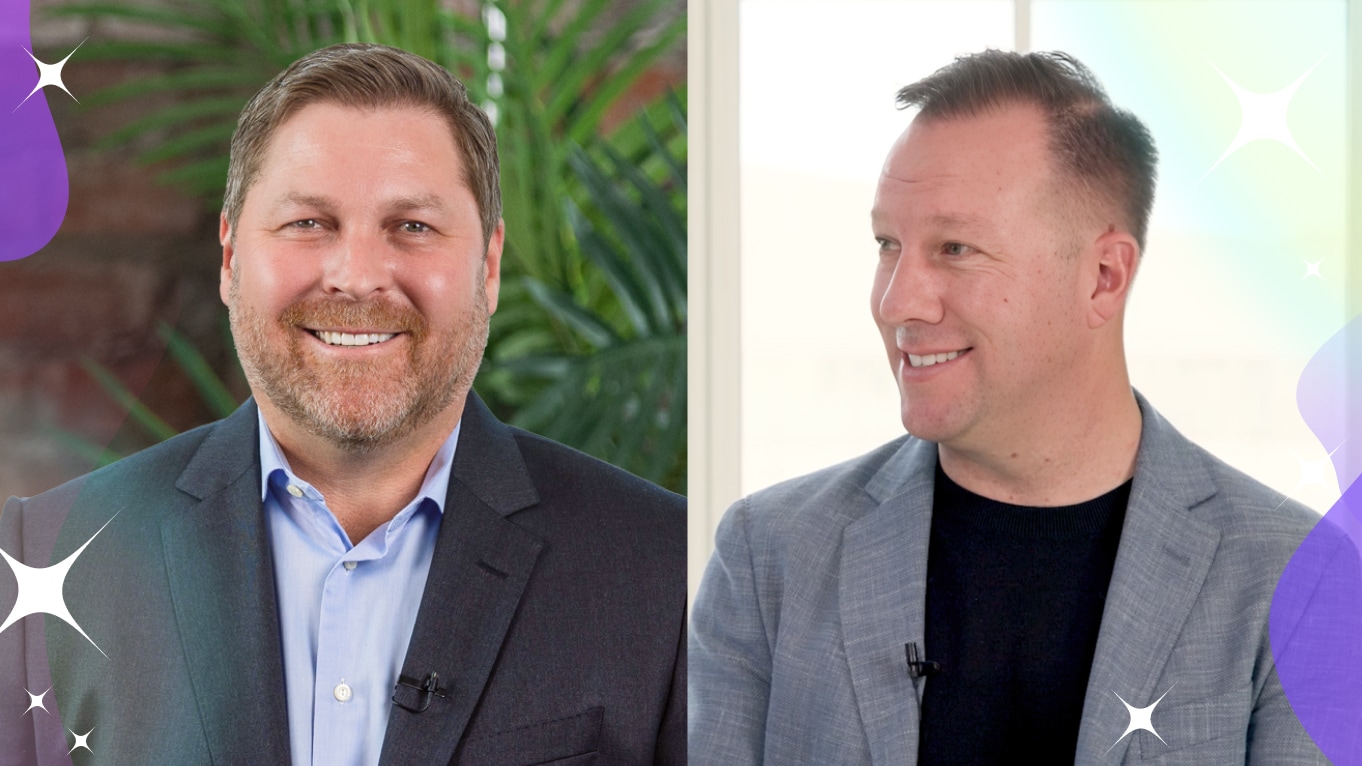
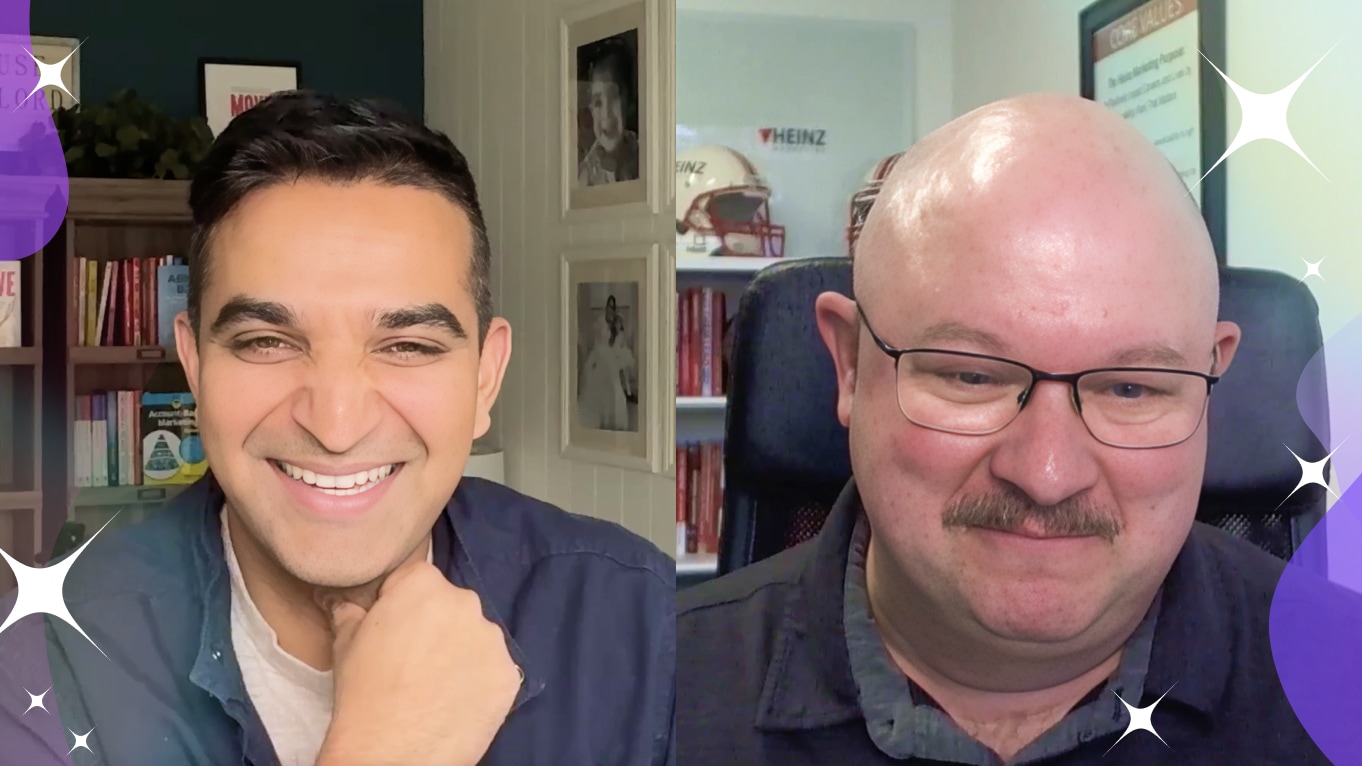
Okay, Kim, Jessica, thank you so much for joining us at the Agentic Marketing Summit to talk about agentic marketing and agentic terminology. I'm so excited for this session because I feel like there is a lot of confusion in the market right now about the way we're talking about AI and agentic in general. So I want to just jump right into it. To get things going first, agentic marketing. I feel like it can be a bloated term. We don't really know what it means. What does it mean compared to generative AI?

So, Kim, I'd love to start with you. When you hear the term agentic marketing or agentic, what does that mean to you for marketing teams today?

Kimberly Storin – Zoom
So I kind of boil it down to one word, which is autonomy. It's really AI that doesn't just assist us, but it acts for us. And it moves us, and it's not just a co-pilot, but it becomes a co-worker. So at Zoom, we really think about this as how we go from meetings to milestones, conversations to completion.

And an AI really does that, whether it's through summarizing calls, updating your CRM, or drafting or sending follow-ups. That agent is always moving work forward, not just generating the words on paper. And so we define it at Zoom as really leaning on four core skills: memory, reasoning, task action, and orchestration. So it really comes down to autonomy.

Sarah McConnell – Qualified
Yeah, I really love that answer. I think autonomy is such a great way to think about it, especially when we're thinking about how it’s different, the differentiation with generative. Jessica, I would love to put the same question to you. When you think agentic marketing, what does it mean? How does it differ from these different iterations of AI that we've seen prior to this agentic movement?

Jessica Graeser – NinjaCat
Yeah, similar to what Kim said, I really think of agentic marketing as AI that acts. So while generative AI creates content, agents go further. They can reason, take actions, and they use connected tools like Slack, email, calendars, and APIs to go ahead and then execute those tasks.

So agents or agentic systems can really pursue a goal, such as optimize a campaign or go fetch the data, clean the data, visualize data in a continuous loop with minimal human intervention, but also adjusting based on that human input and feedback and context along the way.

Sarah McConnell – Qualified
Yep, that is such a good distinction. I always know, generative to me generates ideas. It's just that. But agentic AI is doing the work. So I think from both of your standpoints, it sounds like when we talk agentic marketing, you talk about agentic in general, it should be autonomous. It should be able to make critical decisions.

Now, Jessica, I'd love to keep this question with you. This session is obviously about terminology. I think there are a lot of different terms that are being tossed around, especially when we're in the start of a new movement. I think there's always confusion around those terms because they get misconstrued. We're still defining them, I think, as we're in this start of this agentic era.

So terms that I hear a lot when I'm talking to peers like yourselves are things like orchestration or autonomy or co-pilots. And then we also have agentic. So can you walk me through how you're thinking of terms like orchestration, autonomy, and co-pilot, and what those mean to you or how other marketing leaders should be thinking about those particular terms?

Jessica Graeser – NinjaCat
Sure. So I like to say I wouldn't get bogged down by the terms. I would actually start in a different place, and I would start with the pain and the use case. As a leader, as a team member, think about where are we wasting time? Where is there inconsistency, or where are we getting delays in our decision making?

So think use case first and then AI second. You're going to brainstorm with your team to come up with those use cases. There probably are many. But as an example, if you are spending 10 hours a week compiling channel data for analysis, that would be a candidate for agentic automation.

So I think with any tool, it's only as useful as you can first scope the problem, whether that solution becomes an agent, a co-pilot, or a chatbot.

I think it's just beware of shiny object syndrome and just buzzwords. Just anchor everything in a use case and ultimately a business value.

Kimberly Storin – Zoom
Yeah, I always think to myself, AI doesn't care about our silos and functions, right? AI thinks in workflow. And so we have to start thinking in workflow. So we're not solving a content problem, right? We're solving a workflow problem that content happens to be part of.

Ultimately, orchestration is really like conducting a symphony. And you've got to keep all these different pieces moving and every section in harmony in real time. And that means, to Jessica's point, you're thinking about the use case, you're thinking about the workflow, and you're making sure all these pieces are working in concert.

And ultimately, we don't want to replace our musicians, but we want to expand what's possible and make everything work seamlessly together so that the outcomes are faster, better, et cetera. And our customers feel that. As marketers, that's our goal, to be the voice of and the voice to the market.

So we get so caught up in all of this AI washing, and really at the end of the day, it just comes down to identifying the business value through use cases and workflows.

Sarah McConnell – Qualified
Yeah.
Yeah, Kim, I absolutely agree with that.

Now, I think one of the things that gets conflated quite a bit is when we think co-pilots versus agents. For maybe Kim, for you, how do you differentiate between that co-pilot versus an agent? Is that autonomy that we talked about earlier? Is that the differentiation between those two terms, I guess?

Kimberly Storin – Zoom
That's how I would think about it, right? The co-pilot is your assistant. It's somebody that's sitting next to you, helping you be a better version of yourself. And the agent is the one that is solving your problems.

Imagine if you could call customer support at the airline of your choice and have a problem, and whether that agent is a human or it's AI, it solves your problem. It rebooks your ticket, gets you on the right flight at the right time, and is able to move you through that process faster.

We've all been there. We've all spent hours and hours on the line with both AI and with those human agents. But as those virtual agents and agentic AI get better, we start to see a world where we are able to move into a task completion state more seamlessly.

Sarah McConnell – Qualified
Makes sense.

Jessica Graeser – NinjaCat
I also think of co-pilots as kind of like modern-day Clippy. So remember Clippy in Word? It's like that, actually trying to help you along the way. It's just a different kind of configuration of that chatbot interface.

But to what Kim was saying, agent and agentic AI is that next step. It's that full action and outside of just that conversation and helping within the context of a particular tool.

Kimberly Storin – Zoom
And what's interesting for Zoom, right, is we do have an AI Companion that is that assistant. It has more context because it sits with you in your meetings. It has access to all of those hours of meetings that you spend every day on Zoom.

But in this last iteration of AI Companion 3, which we just announced at Zoomtopia in September, we actually announced a truly agentic AI. So it also can be that evolution where it gets you to those quality results faster with more proactive assistance and powerful agentic skills. And that helps you optimize your time and up-level your work.

And it turns every conversation into truly an actionable business outcome. But there is an evolution to that as well. We started with that companion, and now it's truly evolving into agentic AI.

Sarah McConnell – Qualified
Yeah, I really like that differentiation. And I know we went through a similar evolution here at Qualified with our own product, where we had our co-pilot functionality that was assisting SDRs as they had conversations. It was suggesting language or adding things in.

And then we evolved into this agentic where we're like, do we even need it to write shotgun with these humans, or can it run autonomously like we talked about previously? So, Kim, I think we've seen a very similar product evolution.

Jessica Graeser – NinjaCat
To pile on, NinjaCat saw similarly. We started with a co-pilot that we were using to summarize reporting, just kind of generate output of key points or some executive summaries from a report.

And now we've built into the product more task-specific agents that help with those end-to-end reporting workflows. So as the marketers are coming in to do their analysis, they can build subject matter expert agents for SEO or for PPC, those kind of functional areas, and that's the next iteration after just kind of a general co-pilot that was summarizing, and now having the specific agents for various marketing analytics tasks.

Sarah McConnell – Qualified
Which, Jessica, you mentioned earlier about use cases, and Kim, you also had some additions to that. And I think as we think about that differentiation between co-pilot and agent, to me, that's where the use case really stands out.

I think most products, I love giving these examples from each of us because it's proof that every product that's in the market right now, most of them are trying to put some sort of AI functionality into their product because obviously that is where the future is going.

So if you have a use case and you're evaluating potential vendors to help with that use case, understanding do you need something more like a co-pilot that is assisting humans, or do you need something that's more agentic and more autonomous and helping scale things or take away work from people so they can free up their time?

Understanding that differentiation can be really important when you think about it from a use case perspective or an evaluation perspective when you're looking at products. So I like all of those unique examples. I think hopefully that will help our listeners as they're looking at vendors and they're doing any sort of evaluation.

Now, as we move on here, I'm thinking about LLMs, AI fundamentals. Kim, I'd like to start with you here. As a marketing leader, I know it can feel really overwhelming. I keep telling people I am six months back from maternity leave. I came back and I felt like I was already in a whole new world of AI and was like, what happened in the four months that I was gone? It feels like a whole different time.

AI fundamentals can seem really scary, but understanding things like LLMs or model behaviors, things like that. Are there any key concepts that marketing leaders really do need to grasp right now if they want to stay ahead or up to speed with what's happening in this agentic world?

Kimberly Storin – Zoom
Yeah, I don't think you have to be a data scientist by any sense of the word, but I do think you have to be AI literate and you have to understand what models can and can't do, and especially when it comes to context and bias and autonomy.

Now, I think there's really three ultimate attributes of great transformational leaders, and this spans across any transformation. And we are in a moment of great transformation in the marketing function right now. And that's curiosity, agility, and calculated risk taking.

And so as much as I think it's critical that you understand the basics of AI and have literacy there, we also have to bring that human element of curiosity to the table, right? We always have to be looking, we have to be optimistic and believe that the future is bright, and be interested in what's next.

So staying on top of that and really embracing your curiosity is really critical. Agility in the sense of being able to look back and see what worked yesterday, to your point, what worked four months ago before your maternity leave, is not the same thing that works today.

And so being able to move with agility to figure out what's working and what's not is also really critical. And then, of course, when we don't know all the answers, taking calculated risks is really important. We want to protect ourselves, but we have to feel comfortable taking risks.

And so I think it's that balance of AI literacy with those human attributes that make us who we are as leaders that will end up enabling those of us who weren't born with a cell phone in our hands, let's be honest, right, staying on top of a very high degree of change that's being thrown at us every single day.

So we just have to learn how to ask the right questions and how to find the right experts. We're not going to be able to lead teams, drive creative, run social, be the head of PR, do all the things that marketers have to do every day, and also be a data scientist. So we just have to be smart about it.

Sarah McConnell – Qualified
Jessica, what about you? How do you think about AI literacy and understanding the fundamentals of AI?

Jessica Graeser – NinjaCat
Yeah, completely agree with everything Kim just said. I think that ability to lean in, to always stay curious, have that growth mindset is just critical.

And then one kind of slightly technical thing that I think is a fundamental thing to grasp is understanding what LLMs do really well, which is they excel at summarizing, translating tone or voice, or generating first drafts and alternatives.

But remember, they're always just trained to give the average. And it's really differentiation is going to depend on that human input. You don't want to lose touch with that humanity, and your secret sauce is really your context, your data, your strategy, your taste, and creativity. That is key.

You've always got to make sure you're grounding it in context and all of those human elements that are going to be what's going to take it from average, which is what LLMs do, to excellent.

And then I would say just building literacy around prompting and model evaluation to some degree. Again, this is part of leaning in and being curious. It's hard to keep up, but even if you start small, you can just try the same prompt, put it into different models, try it on Gemini, Claude, GPT, and just start to understand the difference between those outputs and what works for you for certain tasks.

Because it's not going to be the same necessarily. But those are just ways to kind of start small without feeling overwhelmed by it. You don't have to use every model or you're not using the best one. I mean, use what works for you.

Sarah McConnell – Qualified
I really like that both of you touched on this curiosity mindset. I think I tend to talk to marketers, we have a tendency to be type A. We don't like to fail. We like to know exactly what's going on and have a plan. It's why we're good at our jobs.

And I think in this era of AI, being curious and also being willing to fail is part of that humanity that we're bringing to AI. It's saying we're okay failing at something. We might not know the answers to it, but we're in a time that's so early, it's okay to not know the answers.

And I don't think we hear that enough when it comes to AI. I think it's so easy to see other people talking about it, see everything that's going on, and think, man, I'm really behind. I'm not keeping up.

But instead of shifting that into this, no, I'd rather be curious, I want to learn and understand that other people are also still in that learning journey, just kind of helps give me confidence, hopefully some of the listeners confidence that we're all kind of in the same boat and we need to just stay curious and bring that humanity to it.

Now, Jessica, I want to talk about agents in particular to marketing. This is obviously the Agentic Marketing Summit. So when we think about autonomous agents and we think about deploying them on a marketing team, what do you think is a myth that we're all being perpetuated within agents in marketing?

And what's a reality that you wish leaders really understood about deploying agents within our marketing organizations?

Jessica Graeser – NinjaCat
Well, there's just so much hype. So I think that it's hard to say one myth, but I'll give you kind of two that I think are the biggest ones that I see.

So myth number one is that agents are just going to work out of the box or there's some magic wand and agents are going to take over our jobs. I mean, the reality is that they need a lot of context and configuration and training, just like any employee or team member. That onboarding, that training, that context absolutely matters.

And then myth number two is the idea that it's nice to have or just something that you can ignore. I mean, think if you're probably here at this summit, you realize that you can't ignore this. This is going to become essential for teams and for efficiency and scale.

And especially as smaller teams or resource constrained teams, this is something you've got to start learning about. And it's not something far in the future. You got to start to learn it now.

And this is the moment, as Kim said, you got to take those calculated risks. I like to say, don't be brave, test. It's not a time to be overwhelmed. Just your goal should be iteration, not perfection. Just try some things in a measured way and learn fast.

Sarah McConnell – Qualified
Yeah. Kim, what about you? What's a myth that you think we're all hearing as marketers when we think about agents and our marketing teams?

Kimberly Storin – Zoom
Well, I think the biggest one that we see every day is that agents are replacing humans. And while I think it is great clickbait, so it's easy to write an article with a headline, and we are going to see some of that, but you are starting to even see it now come back.

It doesn't work in this current day and age and with marketing in particular, where marketing is such an art and a science that I don't think that we should look at agents as a replacement for the creativity and context that human marketers bring to the table.

I think those agents are really going to scale our humans, but I don't necessarily think that AI slop is the future of marketing that we all want to see.

And buyers and prospects are humans, and there will still be an element of art and science that we need to bring to the table. So I want that AI to help us stay focused on the work that moves the strategy forward, and I want it to be the thing that helps scale me and my team.

But I'm not convinced yet that we're going to see massive replacement of marketers.

Sarah McConnell – Qualified
Yeah, I agree with that. Yeah, absolutely.

Now, I was really excited about this panel because, Kim, you obviously bring a wealth of expertise from an enterprise side. And then, Jessica, you're in more of a growth-stage company over at NinjaCat.

For this particular discussion or this question, I want to just talk about AI strategies at two different stages of company, because we'll have listeners, I'm sure, at this summit that are going to be from all varying sizes and where they're at in their AI journey.

So, Kim, starting with you, how do you think about employing AI agents or AI strategies at your enterprise-sized organization? But alternatively, what do you wish that you could bring on from that growth-stage mindset that you think enterprise companies could adopt more into their AI implementations within their organization?

Kimberly Storin – Zoom
So I would love to have less tech debt and legacy technology that I'm trying to integrate with. So I think that's the biggest challenge, right?

We just did a study with Upwork around how solopreneurs in particular are leveraging AI, and it was amazing to see, I think it was 90% of them are seeing a return on investment on their AI usage already. I mean, can you imagine in the enterprise if we saw an ROI of that magnitude?

And so for us enterprises, right, we want to focus on control, and startups, solopreneurs, they get to really focus on velocity. And so I do have a little bit of jealousy, especially in this AI world, of being able to build with a blank slate.

But the reality is we have to build something at scale while we're flying the plane. And so that means that we have to think about scaling safely. We want agents that act fast, but are always in alignment with human intent and our brand integrity, because our brand is our most valuable asset that we have.

And so for us, we can learn agility from our growth peers. We can look at these smaller organizations, and that can help us learn ways to implement fast and iterate, similar to the agility that we were talking about before.

But what is really exciting from an enterprise side is that we do have the power of our brand and the power of our scale behind us. Starting with those, you don't want to be kicking the tires under a desk somewhere and piloting things that you can't pull into production or at scale.

But working with your cross-functional teams, whether that's your chief data officer or your CISO or your IT team, and coming up with those use cases and workflows that can be implemented in the current tech environment in which you live in an enterprise safely, it's really fulfilling.

And so when you can get it right and you can bring that cross-functional team together to get it right, you really see the magic happen because the ability to make the impact is there.

But it is hard because you do have a lot of legacy, whether it's people, processes, or technology that you're trying to work around.

Sarah McConnell – Qualified
Yeah, absolutely. Jessica, what about you? From a growth company's perspective, what do you think you're able to do really well from an AI standpoint? But alternatively, what would you like to implement that you know enterprise companies are able to do when they think about AI implementations within their organizations?

Jessica Graeser – NinjaCat
Yeah, so I think that for growth-stage teams and small teams like mine, we have an advantage of relatively low bureaucracy and the ability to move quickly. There is that agility, that velocity that Kim alluded to.

And I think that allows us to try a bunch of stuff without a lot of blockers, but also test and figure out what skill sets you can round out teams with, or things that we might not have been able to have the resources for before.

So AI can kind of fill some of those. Well, they weren't even holes. There were things that we couldn't have before, but now we can leverage AI in ways that augment our small team to punch above our weight and to have skills, expertise, and programs that we would not have been able to before.

And we're able to do those things much more quickly in ways that we wouldn't have been able to before.

On the flip side, I think enterprise has that rigor, the data governance, compliance, and orchestration layer that is just not usually present in most growth-stage teams.

So I think that foundation or layer of that enterprise data discipline is something that growth-stage teams can learn from, because that data becomes a competitive advantage if it's structured and organized in a way that AI can be layered on top, as opposed to just data as an analytics afterthought.

And so, yeah, I think that both can learn from each other. The velocity of growth stage and that structure from enterprise need the balance of both.

Sarah McConnell – Qualified
Absolutely. Now, the last question I have for both of you, I think there's a range of people that are attending this summit, whether they're individual contributors that are looking to up-level their skills or maybe move into a role that's more AI-focused, or marketing leaders that are on this summit that are really thinking about what's the future of my team look like?

How can I help up-level current people in my organization who want to be more AI forward?

Jessica, starting with you, what do you think are some roles or skills that are going to be imperative for any teams that want to be agentic-first?

Jessica Graeser – NinjaCat
Sure. Well, we said this before, Kim said it very well, and I'll say it again. I think that curiosity and continuous learning are just absolute must-haves in today's world.

The tools are always going to change. The AI is evolving more quickly than we can keep up. But adaptability, curiosity, and a growth mindset are skills that are just always going to serve you.

And critical thinking is more important than just content creation. So that ability to assess, critique, and redirect AI outputs is more valuable than just making things.

You need to be able to be a system architect, if you will, or take that generalist marketer mindset to see the big picture and map end-to-end workflows or understand that process end-to-end so that you can embed agents effectively.

And then I said this before too, but being brave. Being a brave builder. Being willing to experiment. If you are in a culture that allows that, being able to experiment and fail and learn quickly, because that's what's going to help you get ahead.

The agents can do average, but being brave enough to put your expertise online with that agent to come together and deliver exceptional results.

Sarah McConnell – Qualified
I think that's such an undervalued strength of people, the ability to fail and to be brave about it and to go in and be willing to put themselves out there, especially in this AI world where it's also new.

But to say, a lot of people don't know what's going on. I'm willing to go out there and be brave and test this and fail at this and learn from this, and also put themselves out there.

Because if you're going to do it well, you have to be willing to be a little bit vulnerable with your team and say, hey, I failed at this. This didn't work, but here's what we're going to learn from it.

And I think that is going to be a very valued skill of people that are willing to be honest and vulnerable about that failure, but helping their team learn along the way.

Kim, what about you? What are some skills or roles that you're thinking about as you look at your current team and how you want them to be more agentic-first?

Kimberly Storin – Zoom
So I think you're going to start to see marketing roles that are not necessarily the traditional functional roles that we've historically seen.

I think you're going to see more of those orchestrator or architect-type roles coming into play. And so being flexible with what you think about your career journey and being open-minded to understanding what leaders are looking for when they write a job description that has the word orchestrate in there.

What does that mean? And understanding what that means from a change in how you think as a marketing functional leader.

I do think, to Jessica's point, systems thinking is going to be really critical, because again, people have to start thinking about guiding autonomous workflows, not necessarily just executing a campaign.

We will see that shift into a workflow mentality. And I think you're going to see less of a content creator and a campaign manager and an integrated marketing manager.

You're going to see more of that orchestration across the workflow. So I think hybrid marketers, those generalists, which Jessica was referencing, are going to be really critical as we're thinking about how agentic AI plays into all of the functions that we own as marketers.

And so ultimately, if you are a CMO or a head of marketing and you think that you have what it takes to be the spiritual leader of an AI transformation, this is your time.

Because all of this, at the end of the day, is a cultural shift within an organization. And the organizations that are seeing this come to life and are seeing it drive ROI for their function and for their business are ones that have figured out the change management.

And so I'm always looking for who is going to be my spiritual leader of this AI transformation, because it can't be a top-down approach.

I have to be leading the charge, absolutely, but it has to be something that is happening across that working level and have change champions within the organization who are leading the way and bringing people along with them.

And if that is something that you're interested in, raise your hand, because that's going to be a job that will be so valued as we continue to figure out what's the role of agents, what's the role of humans, what's the role of co-pilots, because it's all going to come together.

Sarah McConnell – Qualified
Our CEO always likes to say, who are my drivers? Like, I want someone to jump in the driver's seat and be the person that's driving this forward.

And I agree, Kim, that I feel like this is the perfect time, if this interests you and you're excited by it, to be that driver at your company and really step into that role.

Well, Kim, Jessica, thank you so much for joining us here at the summit. You both were named one of our 30 top agentic marketers to watch for good reason. I feel like you are such a wealth of knowledge.

Please go follow Kim and Jessica both. I feel like you guys are doing such an amazing job of leading from the front as we think about AI in our organizations. So thank you so much for joining us today.

Kimberly Storin – Zoom
Thanks for having us.

Jessica Graeser – NinjaCat
Thank you.

Related content

Welcome to the Agentic Marketing EraWelcome to the Agentic Marketing Era

Welcome to the Agentic Marketing Era

With the rise of agentic AI, marketing will never be the same. Explore what the agentic marketing era means for marketing teams and how embracing AI-powered agents will fundamentally reshape your brand, GTM strategies, and customer engagement for the decade ahead.

GTM Playbooks for Agentic Marketing TeamsGTM Playbooks for Agentic Marketing Teams

GTM Playbooks for Agentic Marketing Teams

Explore how leading marketers are evolving go-to-market strategies and pipeline generation with agentic AI. Learn actionable frameworks for driving buyer engagement, personalizing journeys, and scaling impact, plus what’s next for high-performance teams in the agentic marketing era.

Transforming Every Corner of Marketing with AgentsTransforming Every Corner of Marketing with Agents

Transforming Every Corner of Marketing with Agents

Discover how specialized AI agents are optimizing every function in marketing from campaign management and content creation to analytics, customer engagement, ops, and beyond.

Stay up to date with weekly drops of fresh B2B marketing and sales content.

By registering, you agree that Qualified may process your personal data for events and marketing as set forth in our Privacy Policy
Thank you for subscribing. You’ll start receiving updates for Qualified+ shortly.
Oops! Something went wrong while submitting the form.

Decoding Agentic Marketing: The Language of Tomorrow’s Leaders

Elevate your expertise by unpacking the critical concepts, distinctions, and frameworks shaping agentic marketing. This session will empower you to speak with authority on the evolving landscape—from co-pilots to autonomous agents—and command the conversations that define next-generation marketing leadership.

Sarah McConnell
Sarah McConnell
No items found.
Decoding Agentic Marketing: The Language of Tomorrow’s Leaders
Apple Podcast LinkGoogle Podcast LinkSpotify Podcast Link

TRANSCRIPT

Sarah McConnell – Qualified
Okay, Kim, Jessica, thank you so much for joining us at the Agentic Marketing Summit to talk about agentic marketing and agentic terminology. I'm so excited for this session because I feel like there is a lot of confusion in the market right now about the way we're talking about AI and agentic in general. So I want to just jump right into it. To get things going first, agentic marketing. I feel like it can be a bloated term. We don't really know what it means. What does it mean compared to generative AI?

So, Kim, I'd love to start with you. When you hear the term agentic marketing or agentic, what does that mean to you for marketing teams today?

Kimberly Storin – Zoom
So I kind of boil it down to one word, which is autonomy. It's really AI that doesn't just assist us, but it acts for us. And it moves us, and it's not just a co-pilot, but it becomes a co-worker. So at Zoom, we really think about this as how we go from meetings to milestones, conversations to completion.

And an AI really does that, whether it's through summarizing calls, updating your CRM, or drafting or sending follow-ups. That agent is always moving work forward, not just generating the words on paper. And so we define it at Zoom as really leaning on four core skills: memory, reasoning, task action, and orchestration. So it really comes down to autonomy.

Sarah McConnell – Qualified
Yeah, I really love that answer. I think autonomy is such a great way to think about it, especially when we're thinking about how it’s different, the differentiation with generative. Jessica, I would love to put the same question to you. When you think agentic marketing, what does it mean? How does it differ from these different iterations of AI that we've seen prior to this agentic movement?

Jessica Graeser – NinjaCat
Yeah, similar to what Kim said, I really think of agentic marketing as AI that acts. So while generative AI creates content, agents go further. They can reason, take actions, and they use connected tools like Slack, email, calendars, and APIs to go ahead and then execute those tasks.

So agents or agentic systems can really pursue a goal, such as optimize a campaign or go fetch the data, clean the data, visualize data in a continuous loop with minimal human intervention, but also adjusting based on that human input and feedback and context along the way.

Sarah McConnell – Qualified
Yep, that is such a good distinction. I always know, generative to me generates ideas. It's just that. But agentic AI is doing the work. So I think from both of your standpoints, it sounds like when we talk agentic marketing, you talk about agentic in general, it should be autonomous. It should be able to make critical decisions.

Now, Jessica, I'd love to keep this question with you. This session is obviously about terminology. I think there are a lot of different terms that are being tossed around, especially when we're in the start of a new movement. I think there's always confusion around those terms because they get misconstrued. We're still defining them, I think, as we're in this start of this agentic era.

So terms that I hear a lot when I'm talking to peers like yourselves are things like orchestration or autonomy or co-pilots. And then we also have agentic. So can you walk me through how you're thinking of terms like orchestration, autonomy, and co-pilot, and what those mean to you or how other marketing leaders should be thinking about those particular terms?

Jessica Graeser – NinjaCat
Sure. So I like to say I wouldn't get bogged down by the terms. I would actually start in a different place, and I would start with the pain and the use case. As a leader, as a team member, think about where are we wasting time? Where is there inconsistency, or where are we getting delays in our decision making?

So think use case first and then AI second. You're going to brainstorm with your team to come up with those use cases. There probably are many. But as an example, if you are spending 10 hours a week compiling channel data for analysis, that would be a candidate for agentic automation.

So I think with any tool, it's only as useful as you can first scope the problem, whether that solution becomes an agent, a co-pilot, or a chatbot.

I think it's just beware of shiny object syndrome and just buzzwords. Just anchor everything in a use case and ultimately a business value.

Kimberly Storin – Zoom
Yeah, I always think to myself, AI doesn't care about our silos and functions, right? AI thinks in workflow. And so we have to start thinking in workflow. So we're not solving a content problem, right? We're solving a workflow problem that content happens to be part of.

Ultimately, orchestration is really like conducting a symphony. And you've got to keep all these different pieces moving and every section in harmony in real time. And that means, to Jessica's point, you're thinking about the use case, you're thinking about the workflow, and you're making sure all these pieces are working in concert.

And ultimately, we don't want to replace our musicians, but we want to expand what's possible and make everything work seamlessly together so that the outcomes are faster, better, et cetera. And our customers feel that. As marketers, that's our goal, to be the voice of and the voice to the market.

So we get so caught up in all of this AI washing, and really at the end of the day, it just comes down to identifying the business value through use cases and workflows.

Sarah McConnell – Qualified
Yeah.
Yeah, Kim, I absolutely agree with that.

Now, I think one of the things that gets conflated quite a bit is when we think co-pilots versus agents. For maybe Kim, for you, how do you differentiate between that co-pilot versus an agent? Is that autonomy that we talked about earlier? Is that the differentiation between those two terms, I guess?

Kimberly Storin – Zoom
That's how I would think about it, right? The co-pilot is your assistant. It's somebody that's sitting next to you, helping you be a better version of yourself. And the agent is the one that is solving your problems.

Imagine if you could call customer support at the airline of your choice and have a problem, and whether that agent is a human or it's AI, it solves your problem. It rebooks your ticket, gets you on the right flight at the right time, and is able to move you through that process faster.

We've all been there. We've all spent hours and hours on the line with both AI and with those human agents. But as those virtual agents and agentic AI get better, we start to see a world where we are able to move into a task completion state more seamlessly.

Sarah McConnell – Qualified
Makes sense.

Jessica Graeser – NinjaCat
I also think of co-pilots as kind of like modern-day Clippy. So remember Clippy in Word? It's like that, actually trying to help you along the way. It's just a different kind of configuration of that chatbot interface.

But to what Kim was saying, agent and agentic AI is that next step. It's that full action and outside of just that conversation and helping within the context of a particular tool.

Kimberly Storin – Zoom
And what's interesting for Zoom, right, is we do have an AI Companion that is that assistant. It has more context because it sits with you in your meetings. It has access to all of those hours of meetings that you spend every day on Zoom.

But in this last iteration of AI Companion 3, which we just announced at Zoomtopia in September, we actually announced a truly agentic AI. So it also can be that evolution where it gets you to those quality results faster with more proactive assistance and powerful agentic skills. And that helps you optimize your time and up-level your work.

And it turns every conversation into truly an actionable business outcome. But there is an evolution to that as well. We started with that companion, and now it's truly evolving into agentic AI.

Sarah McConnell – Qualified
Yeah, I really like that differentiation. And I know we went through a similar evolution here at Qualified with our own product, where we had our co-pilot functionality that was assisting SDRs as they had conversations. It was suggesting language or adding things in.

And then we evolved into this agentic where we're like, do we even need it to write shotgun with these humans, or can it run autonomously like we talked about previously? So, Kim, I think we've seen a very similar product evolution.

Jessica Graeser – NinjaCat
To pile on, NinjaCat saw similarly. We started with a co-pilot that we were using to summarize reporting, just kind of generate output of key points or some executive summaries from a report.

And now we've built into the product more task-specific agents that help with those end-to-end reporting workflows. So as the marketers are coming in to do their analysis, they can build subject matter expert agents for SEO or for PPC, those kind of functional areas, and that's the next iteration after just kind of a general co-pilot that was summarizing, and now having the specific agents for various marketing analytics tasks.

Sarah McConnell – Qualified
Which, Jessica, you mentioned earlier about use cases, and Kim, you also had some additions to that. And I think as we think about that differentiation between co-pilot and agent, to me, that's where the use case really stands out.

I think most products, I love giving these examples from each of us because it's proof that every product that's in the market right now, most of them are trying to put some sort of AI functionality into their product because obviously that is where the future is going.

So if you have a use case and you're evaluating potential vendors to help with that use case, understanding do you need something more like a co-pilot that is assisting humans, or do you need something that's more agentic and more autonomous and helping scale things or take away work from people so they can free up their time?

Understanding that differentiation can be really important when you think about it from a use case perspective or an evaluation perspective when you're looking at products. So I like all of those unique examples. I think hopefully that will help our listeners as they're looking at vendors and they're doing any sort of evaluation.

Now, as we move on here, I'm thinking about LLMs, AI fundamentals. Kim, I'd like to start with you here. As a marketing leader, I know it can feel really overwhelming. I keep telling people I am six months back from maternity leave. I came back and I felt like I was already in a whole new world of AI and was like, what happened in the four months that I was gone? It feels like a whole different time.

AI fundamentals can seem really scary, but understanding things like LLMs or model behaviors, things like that. Are there any key concepts that marketing leaders really do need to grasp right now if they want to stay ahead or up to speed with what's happening in this agentic world?

Kimberly Storin – Zoom
Yeah, I don't think you have to be a data scientist by any sense of the word, but I do think you have to be AI literate and you have to understand what models can and can't do, and especially when it comes to context and bias and autonomy.

Now, I think there's really three ultimate attributes of great transformational leaders, and this spans across any transformation. And we are in a moment of great transformation in the marketing function right now. And that's curiosity, agility, and calculated risk taking.

And so as much as I think it's critical that you understand the basics of AI and have literacy there, we also have to bring that human element of curiosity to the table, right? We always have to be looking, we have to be optimistic and believe that the future is bright, and be interested in what's next.

So staying on top of that and really embracing your curiosity is really critical. Agility in the sense of being able to look back and see what worked yesterday, to your point, what worked four months ago before your maternity leave, is not the same thing that works today.

And so being able to move with agility to figure out what's working and what's not is also really critical. And then, of course, when we don't know all the answers, taking calculated risks is really important. We want to protect ourselves, but we have to feel comfortable taking risks.

And so I think it's that balance of AI literacy with those human attributes that make us who we are as leaders that will end up enabling those of us who weren't born with a cell phone in our hands, let's be honest, right, staying on top of a very high degree of change that's being thrown at us every single day.

So we just have to learn how to ask the right questions and how to find the right experts. We're not going to be able to lead teams, drive creative, run social, be the head of PR, do all the things that marketers have to do every day, and also be a data scientist. So we just have to be smart about it.

Sarah McConnell – Qualified
Jessica, what about you? How do you think about AI literacy and understanding the fundamentals of AI?

Jessica Graeser – NinjaCat
Yeah, completely agree with everything Kim just said. I think that ability to lean in, to always stay curious, have that growth mindset is just critical.

And then one kind of slightly technical thing that I think is a fundamental thing to grasp is understanding what LLMs do really well, which is they excel at summarizing, translating tone or voice, or generating first drafts and alternatives.

But remember, they're always just trained to give the average. And it's really differentiation is going to depend on that human input. You don't want to lose touch with that humanity, and your secret sauce is really your context, your data, your strategy, your taste, and creativity. That is key.

You've always got to make sure you're grounding it in context and all of those human elements that are going to be what's going to take it from average, which is what LLMs do, to excellent.

And then I would say just building literacy around prompting and model evaluation to some degree. Again, this is part of leaning in and being curious. It's hard to keep up, but even if you start small, you can just try the same prompt, put it into different models, try it on Gemini, Claude, GPT, and just start to understand the difference between those outputs and what works for you for certain tasks.

Because it's not going to be the same necessarily. But those are just ways to kind of start small without feeling overwhelmed by it. You don't have to use every model or you're not using the best one. I mean, use what works for you.

Sarah McConnell – Qualified
I really like that both of you touched on this curiosity mindset. I think I tend to talk to marketers, we have a tendency to be type A. We don't like to fail. We like to know exactly what's going on and have a plan. It's why we're good at our jobs.

And I think in this era of AI, being curious and also being willing to fail is part of that humanity that we're bringing to AI. It's saying we're okay failing at something. We might not know the answers to it, but we're in a time that's so early, it's okay to not know the answers.

And I don't think we hear that enough when it comes to AI. I think it's so easy to see other people talking about it, see everything that's going on, and think, man, I'm really behind. I'm not keeping up.

But instead of shifting that into this, no, I'd rather be curious, I want to learn and understand that other people are also still in that learning journey, just kind of helps give me confidence, hopefully some of the listeners confidence that we're all kind of in the same boat and we need to just stay curious and bring that humanity to it.

Now, Jessica, I want to talk about agents in particular to marketing. This is obviously the Agentic Marketing Summit. So when we think about autonomous agents and we think about deploying them on a marketing team, what do you think is a myth that we're all being perpetuated within agents in marketing?

And what's a reality that you wish leaders really understood about deploying agents within our marketing organizations?

Jessica Graeser – NinjaCat
Well, there's just so much hype. So I think that it's hard to say one myth, but I'll give you kind of two that I think are the biggest ones that I see.

So myth number one is that agents are just going to work out of the box or there's some magic wand and agents are going to take over our jobs. I mean, the reality is that they need a lot of context and configuration and training, just like any employee or team member. That onboarding, that training, that context absolutely matters.

And then myth number two is the idea that it's nice to have or just something that you can ignore. I mean, think if you're probably here at this summit, you realize that you can't ignore this. This is going to become essential for teams and for efficiency and scale.

And especially as smaller teams or resource constrained teams, this is something you've got to start learning about. And it's not something far in the future. You got to start to learn it now.

And this is the moment, as Kim said, you got to take those calculated risks. I like to say, don't be brave, test. It's not a time to be overwhelmed. Just your goal should be iteration, not perfection. Just try some things in a measured way and learn fast.

Sarah McConnell – Qualified
Yeah. Kim, what about you? What's a myth that you think we're all hearing as marketers when we think about agents and our marketing teams?

Kimberly Storin – Zoom
Well, I think the biggest one that we see every day is that agents are replacing humans. And while I think it is great clickbait, so it's easy to write an article with a headline, and we are going to see some of that, but you are starting to even see it now come back.

It doesn't work in this current day and age and with marketing in particular, where marketing is such an art and a science that I don't think that we should look at agents as a replacement for the creativity and context that human marketers bring to the table.

I think those agents are really going to scale our humans, but I don't necessarily think that AI slop is the future of marketing that we all want to see.

And buyers and prospects are humans, and there will still be an element of art and science that we need to bring to the table. So I want that AI to help us stay focused on the work that moves the strategy forward, and I want it to be the thing that helps scale me and my team.

But I'm not convinced yet that we're going to see massive replacement of marketers.

Sarah McConnell – Qualified
Yeah, I agree with that. Yeah, absolutely.

Now, I was really excited about this panel because, Kim, you obviously bring a wealth of expertise from an enterprise side. And then, Jessica, you're in more of a growth-stage company over at NinjaCat.

For this particular discussion or this question, I want to just talk about AI strategies at two different stages of company, because we'll have listeners, I'm sure, at this summit that are going to be from all varying sizes and where they're at in their AI journey.

So, Kim, starting with you, how do you think about employing AI agents or AI strategies at your enterprise-sized organization? But alternatively, what do you wish that you could bring on from that growth-stage mindset that you think enterprise companies could adopt more into their AI implementations within their organization?

Kimberly Storin – Zoom
So I would love to have less tech debt and legacy technology that I'm trying to integrate with. So I think that's the biggest challenge, right?

We just did a study with Upwork around how solopreneurs in particular are leveraging AI, and it was amazing to see, I think it was 90% of them are seeing a return on investment on their AI usage already. I mean, can you imagine in the enterprise if we saw an ROI of that magnitude?

And so for us enterprises, right, we want to focus on control, and startups, solopreneurs, they get to really focus on velocity. And so I do have a little bit of jealousy, especially in this AI world, of being able to build with a blank slate.

But the reality is we have to build something at scale while we're flying the plane. And so that means that we have to think about scaling safely. We want agents that act fast, but are always in alignment with human intent and our brand integrity, because our brand is our most valuable asset that we have.

And so for us, we can learn agility from our growth peers. We can look at these smaller organizations, and that can help us learn ways to implement fast and iterate, similar to the agility that we were talking about before.

But what is really exciting from an enterprise side is that we do have the power of our brand and the power of our scale behind us. Starting with those, you don't want to be kicking the tires under a desk somewhere and piloting things that you can't pull into production or at scale.

But working with your cross-functional teams, whether that's your chief data officer or your CISO or your IT team, and coming up with those use cases and workflows that can be implemented in the current tech environment in which you live in an enterprise safely, it's really fulfilling.

And so when you can get it right and you can bring that cross-functional team together to get it right, you really see the magic happen because the ability to make the impact is there.

But it is hard because you do have a lot of legacy, whether it's people, processes, or technology that you're trying to work around.

Sarah McConnell – Qualified
Yeah, absolutely. Jessica, what about you? From a growth company's perspective, what do you think you're able to do really well from an AI standpoint? But alternatively, what would you like to implement that you know enterprise companies are able to do when they think about AI implementations within their organizations?

Jessica Graeser – NinjaCat
Yeah, so I think that for growth-stage teams and small teams like mine, we have an advantage of relatively low bureaucracy and the ability to move quickly. There is that agility, that velocity that Kim alluded to.

And I think that allows us to try a bunch of stuff without a lot of blockers, but also test and figure out what skill sets you can round out teams with, or things that we might not have been able to have the resources for before.

So AI can kind of fill some of those. Well, they weren't even holes. There were things that we couldn't have before, but now we can leverage AI in ways that augment our small team to punch above our weight and to have skills, expertise, and programs that we would not have been able to before.

And we're able to do those things much more quickly in ways that we wouldn't have been able to before.

On the flip side, I think enterprise has that rigor, the data governance, compliance, and orchestration layer that is just not usually present in most growth-stage teams.

So I think that foundation or layer of that enterprise data discipline is something that growth-stage teams can learn from, because that data becomes a competitive advantage if it's structured and organized in a way that AI can be layered on top, as opposed to just data as an analytics afterthought.

And so, yeah, I think that both can learn from each other. The velocity of growth stage and that structure from enterprise need the balance of both.

Sarah McConnell – Qualified
Absolutely. Now, the last question I have for both of you, I think there's a range of people that are attending this summit, whether they're individual contributors that are looking to up-level their skills or maybe move into a role that's more AI-focused, or marketing leaders that are on this summit that are really thinking about what's the future of my team look like?

How can I help up-level current people in my organization who want to be more AI forward?

Jessica, starting with you, what do you think are some roles or skills that are going to be imperative for any teams that want to be agentic-first?

Jessica Graeser – NinjaCat
Sure. Well, we said this before, Kim said it very well, and I'll say it again. I think that curiosity and continuous learning are just absolute must-haves in today's world.

The tools are always going to change. The AI is evolving more quickly than we can keep up. But adaptability, curiosity, and a growth mindset are skills that are just always going to serve you.

And critical thinking is more important than just content creation. So that ability to assess, critique, and redirect AI outputs is more valuable than just making things.

You need to be able to be a system architect, if you will, or take that generalist marketer mindset to see the big picture and map end-to-end workflows or understand that process end-to-end so that you can embed agents effectively.

And then I said this before too, but being brave. Being a brave builder. Being willing to experiment. If you are in a culture that allows that, being able to experiment and fail and learn quickly, because that's what's going to help you get ahead.

The agents can do average, but being brave enough to put your expertise online with that agent to come together and deliver exceptional results.

Sarah McConnell – Qualified
I think that's such an undervalued strength of people, the ability to fail and to be brave about it and to go in and be willing to put themselves out there, especially in this AI world where it's also new.

But to say, a lot of people don't know what's going on. I'm willing to go out there and be brave and test this and fail at this and learn from this, and also put themselves out there.

Because if you're going to do it well, you have to be willing to be a little bit vulnerable with your team and say, hey, I failed at this. This didn't work, but here's what we're going to learn from it.

And I think that is going to be a very valued skill of people that are willing to be honest and vulnerable about that failure, but helping their team learn along the way.

Kim, what about you? What are some skills or roles that you're thinking about as you look at your current team and how you want them to be more agentic-first?

Kimberly Storin – Zoom
So I think you're going to start to see marketing roles that are not necessarily the traditional functional roles that we've historically seen.

I think you're going to see more of those orchestrator or architect-type roles coming into play. And so being flexible with what you think about your career journey and being open-minded to understanding what leaders are looking for when they write a job description that has the word orchestrate in there.

What does that mean? And understanding what that means from a change in how you think as a marketing functional leader.

I do think, to Jessica's point, systems thinking is going to be really critical, because again, people have to start thinking about guiding autonomous workflows, not necessarily just executing a campaign.

We will see that shift into a workflow mentality. And I think you're going to see less of a content creator and a campaign manager and an integrated marketing manager.

You're going to see more of that orchestration across the workflow. So I think hybrid marketers, those generalists, which Jessica was referencing, are going to be really critical as we're thinking about how agentic AI plays into all of the functions that we own as marketers.

And so ultimately, if you are a CMO or a head of marketing and you think that you have what it takes to be the spiritual leader of an AI transformation, this is your time.

Because all of this, at the end of the day, is a cultural shift within an organization. And the organizations that are seeing this come to life and are seeing it drive ROI for their function and for their business are ones that have figured out the change management.

And so I'm always looking for who is going to be my spiritual leader of this AI transformation, because it can't be a top-down approach.

I have to be leading the charge, absolutely, but it has to be something that is happening across that working level and have change champions within the organization who are leading the way and bringing people along with them.

And if that is something that you're interested in, raise your hand, because that's going to be a job that will be so valued as we continue to figure out what's the role of agents, what's the role of humans, what's the role of co-pilots, because it's all going to come together.

Sarah McConnell – Qualified
Our CEO always likes to say, who are my drivers? Like, I want someone to jump in the driver's seat and be the person that's driving this forward.

And I agree, Kim, that I feel like this is the perfect time, if this interests you and you're excited by it, to be that driver at your company and really step into that role.

Well, Kim, Jessica, thank you so much for joining us here at the summit. You both were named one of our 30 top agentic marketers to watch for good reason. I feel like you are such a wealth of knowledge.

Please go follow Kim and Jessica both. I feel like you guys are doing such an amazing job of leading from the front as we think about AI in our organizations. So thank you so much for joining us today.

Kimberly Storin – Zoom
Thanks for having us.

Jessica Graeser – NinjaCat
Thank you.

Stay up to date with weekly drops of fresh B2B marketing and sales content.

By registering, you agree that Qualified may process your personal data for events and marketing as set forth in our Privacy Policy
Thank you for subscribing. You’ll start receiving updates for Qualified+ shortly.
Oops! Something went wrong while submitting the form.

Decoding Agentic Marketing: The Language of Tomorrow’s Leaders

Elevate your expertise by unpacking the critical concepts, distinctions, and frameworks shaping agentic marketing. This session will empower you to speak with authority on the evolving landscape—from co-pilots to autonomous agents—and command the conversations that define next-generation marketing leadership.

Sarah McConnell
Sarah McConnell
No items found.
Decoding Agentic Marketing: The Language of Tomorrow’s Leaders
Table of Contents
Apple Podcast LinkGoogle Podcast LinkSpotify Podcast Link

TRANSCRIPT

Sarah McConnell – Qualified
Okay, Kim, Jessica, thank you so much for joining us at the Agentic Marketing Summit to talk about agentic marketing and agentic terminology. I'm so excited for this session because I feel like there is a lot of confusion in the market right now about the way we're talking about AI and agentic in general. So I want to just jump right into it. To get things going first, agentic marketing. I feel like it can be a bloated term. We don't really know what it means. What does it mean compared to generative AI?

So, Kim, I'd love to start with you. When you hear the term agentic marketing or agentic, what does that mean to you for marketing teams today?

Kimberly Storin – Zoom
So I kind of boil it down to one word, which is autonomy. It's really AI that doesn't just assist us, but it acts for us. And it moves us, and it's not just a co-pilot, but it becomes a co-worker. So at Zoom, we really think about this as how we go from meetings to milestones, conversations to completion.

And an AI really does that, whether it's through summarizing calls, updating your CRM, or drafting or sending follow-ups. That agent is always moving work forward, not just generating the words on paper. And so we define it at Zoom as really leaning on four core skills: memory, reasoning, task action, and orchestration. So it really comes down to autonomy.

Sarah McConnell – Qualified
Yeah, I really love that answer. I think autonomy is such a great way to think about it, especially when we're thinking about how it’s different, the differentiation with generative. Jessica, I would love to put the same question to you. When you think agentic marketing, what does it mean? How does it differ from these different iterations of AI that we've seen prior to this agentic movement?

Jessica Graeser – NinjaCat
Yeah, similar to what Kim said, I really think of agentic marketing as AI that acts. So while generative AI creates content, agents go further. They can reason, take actions, and they use connected tools like Slack, email, calendars, and APIs to go ahead and then execute those tasks.

So agents or agentic systems can really pursue a goal, such as optimize a campaign or go fetch the data, clean the data, visualize data in a continuous loop with minimal human intervention, but also adjusting based on that human input and feedback and context along the way.

Sarah McConnell – Qualified
Yep, that is such a good distinction. I always know, generative to me generates ideas. It's just that. But agentic AI is doing the work. So I think from both of your standpoints, it sounds like when we talk agentic marketing, you talk about agentic in general, it should be autonomous. It should be able to make critical decisions.

Now, Jessica, I'd love to keep this question with you. This session is obviously about terminology. I think there are a lot of different terms that are being tossed around, especially when we're in the start of a new movement. I think there's always confusion around those terms because they get misconstrued. We're still defining them, I think, as we're in this start of this agentic era.

So terms that I hear a lot when I'm talking to peers like yourselves are things like orchestration or autonomy or co-pilots. And then we also have agentic. So can you walk me through how you're thinking of terms like orchestration, autonomy, and co-pilot, and what those mean to you or how other marketing leaders should be thinking about those particular terms?

Jessica Graeser – NinjaCat
Sure. So I like to say I wouldn't get bogged down by the terms. I would actually start in a different place, and I would start with the pain and the use case. As a leader, as a team member, think about where are we wasting time? Where is there inconsistency, or where are we getting delays in our decision making?

So think use case first and then AI second. You're going to brainstorm with your team to come up with those use cases. There probably are many. But as an example, if you are spending 10 hours a week compiling channel data for analysis, that would be a candidate for agentic automation.

So I think with any tool, it's only as useful as you can first scope the problem, whether that solution becomes an agent, a co-pilot, or a chatbot.

I think it's just beware of shiny object syndrome and just buzzwords. Just anchor everything in a use case and ultimately a business value.

Kimberly Storin – Zoom
Yeah, I always think to myself, AI doesn't care about our silos and functions, right? AI thinks in workflow. And so we have to start thinking in workflow. So we're not solving a content problem, right? We're solving a workflow problem that content happens to be part of.

Ultimately, orchestration is really like conducting a symphony. And you've got to keep all these different pieces moving and every section in harmony in real time. And that means, to Jessica's point, you're thinking about the use case, you're thinking about the workflow, and you're making sure all these pieces are working in concert.

And ultimately, we don't want to replace our musicians, but we want to expand what's possible and make everything work seamlessly together so that the outcomes are faster, better, et cetera. And our customers feel that. As marketers, that's our goal, to be the voice of and the voice to the market.

So we get so caught up in all of this AI washing, and really at the end of the day, it just comes down to identifying the business value through use cases and workflows.

Sarah McConnell – Qualified
Yeah.
Yeah, Kim, I absolutely agree with that.

Now, I think one of the things that gets conflated quite a bit is when we think co-pilots versus agents. For maybe Kim, for you, how do you differentiate between that co-pilot versus an agent? Is that autonomy that we talked about earlier? Is that the differentiation between those two terms, I guess?

Kimberly Storin – Zoom
That's how I would think about it, right? The co-pilot is your assistant. It's somebody that's sitting next to you, helping you be a better version of yourself. And the agent is the one that is solving your problems.

Imagine if you could call customer support at the airline of your choice and have a problem, and whether that agent is a human or it's AI, it solves your problem. It rebooks your ticket, gets you on the right flight at the right time, and is able to move you through that process faster.

We've all been there. We've all spent hours and hours on the line with both AI and with those human agents. But as those virtual agents and agentic AI get better, we start to see a world where we are able to move into a task completion state more seamlessly.

Sarah McConnell – Qualified
Makes sense.

Jessica Graeser – NinjaCat
I also think of co-pilots as kind of like modern-day Clippy. So remember Clippy in Word? It's like that, actually trying to help you along the way. It's just a different kind of configuration of that chatbot interface.

But to what Kim was saying, agent and agentic AI is that next step. It's that full action and outside of just that conversation and helping within the context of a particular tool.

Kimberly Storin – Zoom
And what's interesting for Zoom, right, is we do have an AI Companion that is that assistant. It has more context because it sits with you in your meetings. It has access to all of those hours of meetings that you spend every day on Zoom.

But in this last iteration of AI Companion 3, which we just announced at Zoomtopia in September, we actually announced a truly agentic AI. So it also can be that evolution where it gets you to those quality results faster with more proactive assistance and powerful agentic skills. And that helps you optimize your time and up-level your work.

And it turns every conversation into truly an actionable business outcome. But there is an evolution to that as well. We started with that companion, and now it's truly evolving into agentic AI.

Sarah McConnell – Qualified
Yeah, I really like that differentiation. And I know we went through a similar evolution here at Qualified with our own product, where we had our co-pilot functionality that was assisting SDRs as they had conversations. It was suggesting language or adding things in.

And then we evolved into this agentic where we're like, do we even need it to write shotgun with these humans, or can it run autonomously like we talked about previously? So, Kim, I think we've seen a very similar product evolution.

Jessica Graeser – NinjaCat
To pile on, NinjaCat saw similarly. We started with a co-pilot that we were using to summarize reporting, just kind of generate output of key points or some executive summaries from a report.

And now we've built into the product more task-specific agents that help with those end-to-end reporting workflows. So as the marketers are coming in to do their analysis, they can build subject matter expert agents for SEO or for PPC, those kind of functional areas, and that's the next iteration after just kind of a general co-pilot that was summarizing, and now having the specific agents for various marketing analytics tasks.

Sarah McConnell – Qualified
Which, Jessica, you mentioned earlier about use cases, and Kim, you also had some additions to that. And I think as we think about that differentiation between co-pilot and agent, to me, that's where the use case really stands out.

I think most products, I love giving these examples from each of us because it's proof that every product that's in the market right now, most of them are trying to put some sort of AI functionality into their product because obviously that is where the future is going.

So if you have a use case and you're evaluating potential vendors to help with that use case, understanding do you need something more like a co-pilot that is assisting humans, or do you need something that's more agentic and more autonomous and helping scale things or take away work from people so they can free up their time?

Understanding that differentiation can be really important when you think about it from a use case perspective or an evaluation perspective when you're looking at products. So I like all of those unique examples. I think hopefully that will help our listeners as they're looking at vendors and they're doing any sort of evaluation.

Now, as we move on here, I'm thinking about LLMs, AI fundamentals. Kim, I'd like to start with you here. As a marketing leader, I know it can feel really overwhelming. I keep telling people I am six months back from maternity leave. I came back and I felt like I was already in a whole new world of AI and was like, what happened in the four months that I was gone? It feels like a whole different time.

AI fundamentals can seem really scary, but understanding things like LLMs or model behaviors, things like that. Are there any key concepts that marketing leaders really do need to grasp right now if they want to stay ahead or up to speed with what's happening in this agentic world?

Kimberly Storin – Zoom
Yeah, I don't think you have to be a data scientist by any sense of the word, but I do think you have to be AI literate and you have to understand what models can and can't do, and especially when it comes to context and bias and autonomy.

Now, I think there's really three ultimate attributes of great transformational leaders, and this spans across any transformation. And we are in a moment of great transformation in the marketing function right now. And that's curiosity, agility, and calculated risk taking.

And so as much as I think it's critical that you understand the basics of AI and have literacy there, we also have to bring that human element of curiosity to the table, right? We always have to be looking, we have to be optimistic and believe that the future is bright, and be interested in what's next.

So staying on top of that and really embracing your curiosity is really critical. Agility in the sense of being able to look back and see what worked yesterday, to your point, what worked four months ago before your maternity leave, is not the same thing that works today.

And so being able to move with agility to figure out what's working and what's not is also really critical. And then, of course, when we don't know all the answers, taking calculated risks is really important. We want to protect ourselves, but we have to feel comfortable taking risks.

And so I think it's that balance of AI literacy with those human attributes that make us who we are as leaders that will end up enabling those of us who weren't born with a cell phone in our hands, let's be honest, right, staying on top of a very high degree of change that's being thrown at us every single day.

So we just have to learn how to ask the right questions and how to find the right experts. We're not going to be able to lead teams, drive creative, run social, be the head of PR, do all the things that marketers have to do every day, and also be a data scientist. So we just have to be smart about it.

Sarah McConnell – Qualified
Jessica, what about you? How do you think about AI literacy and understanding the fundamentals of AI?

Jessica Graeser – NinjaCat
Yeah, completely agree with everything Kim just said. I think that ability to lean in, to always stay curious, have that growth mindset is just critical.

And then one kind of slightly technical thing that I think is a fundamental thing to grasp is understanding what LLMs do really well, which is they excel at summarizing, translating tone or voice, or generating first drafts and alternatives.

But remember, they're always just trained to give the average. And it's really differentiation is going to depend on that human input. You don't want to lose touch with that humanity, and your secret sauce is really your context, your data, your strategy, your taste, and creativity. That is key.

You've always got to make sure you're grounding it in context and all of those human elements that are going to be what's going to take it from average, which is what LLMs do, to excellent.

And then I would say just building literacy around prompting and model evaluation to some degree. Again, this is part of leaning in and being curious. It's hard to keep up, but even if you start small, you can just try the same prompt, put it into different models, try it on Gemini, Claude, GPT, and just start to understand the difference between those outputs and what works for you for certain tasks.

Because it's not going to be the same necessarily. But those are just ways to kind of start small without feeling overwhelmed by it. You don't have to use every model or you're not using the best one. I mean, use what works for you.

Sarah McConnell – Qualified
I really like that both of you touched on this curiosity mindset. I think I tend to talk to marketers, we have a tendency to be type A. We don't like to fail. We like to know exactly what's going on and have a plan. It's why we're good at our jobs.

And I think in this era of AI, being curious and also being willing to fail is part of that humanity that we're bringing to AI. It's saying we're okay failing at something. We might not know the answers to it, but we're in a time that's so early, it's okay to not know the answers.

And I don't think we hear that enough when it comes to AI. I think it's so easy to see other people talking about it, see everything that's going on, and think, man, I'm really behind. I'm not keeping up.

But instead of shifting that into this, no, I'd rather be curious, I want to learn and understand that other people are also still in that learning journey, just kind of helps give me confidence, hopefully some of the listeners confidence that we're all kind of in the same boat and we need to just stay curious and bring that humanity to it.

Now, Jessica, I want to talk about agents in particular to marketing. This is obviously the Agentic Marketing Summit. So when we think about autonomous agents and we think about deploying them on a marketing team, what do you think is a myth that we're all being perpetuated within agents in marketing?

And what's a reality that you wish leaders really understood about deploying agents within our marketing organizations?

Jessica Graeser – NinjaCat
Well, there's just so much hype. So I think that it's hard to say one myth, but I'll give you kind of two that I think are the biggest ones that I see.

So myth number one is that agents are just going to work out of the box or there's some magic wand and agents are going to take over our jobs. I mean, the reality is that they need a lot of context and configuration and training, just like any employee or team member. That onboarding, that training, that context absolutely matters.

And then myth number two is the idea that it's nice to have or just something that you can ignore. I mean, think if you're probably here at this summit, you realize that you can't ignore this. This is going to become essential for teams and for efficiency and scale.

And especially as smaller teams or resource constrained teams, this is something you've got to start learning about. And it's not something far in the future. You got to start to learn it now.

And this is the moment, as Kim said, you got to take those calculated risks. I like to say, don't be brave, test. It's not a time to be overwhelmed. Just your goal should be iteration, not perfection. Just try some things in a measured way and learn fast.

Sarah McConnell – Qualified
Yeah. Kim, what about you? What's a myth that you think we're all hearing as marketers when we think about agents and our marketing teams?

Kimberly Storin – Zoom
Well, I think the biggest one that we see every day is that agents are replacing humans. And while I think it is great clickbait, so it's easy to write an article with a headline, and we are going to see some of that, but you are starting to even see it now come back.

It doesn't work in this current day and age and with marketing in particular, where marketing is such an art and a science that I don't think that we should look at agents as a replacement for the creativity and context that human marketers bring to the table.

I think those agents are really going to scale our humans, but I don't necessarily think that AI slop is the future of marketing that we all want to see.

And buyers and prospects are humans, and there will still be an element of art and science that we need to bring to the table. So I want that AI to help us stay focused on the work that moves the strategy forward, and I want it to be the thing that helps scale me and my team.

But I'm not convinced yet that we're going to see massive replacement of marketers.

Sarah McConnell – Qualified
Yeah, I agree with that. Yeah, absolutely.

Now, I was really excited about this panel because, Kim, you obviously bring a wealth of expertise from an enterprise side. And then, Jessica, you're in more of a growth-stage company over at NinjaCat.

For this particular discussion or this question, I want to just talk about AI strategies at two different stages of company, because we'll have listeners, I'm sure, at this summit that are going to be from all varying sizes and where they're at in their AI journey.

So, Kim, starting with you, how do you think about employing AI agents or AI strategies at your enterprise-sized organization? But alternatively, what do you wish that you could bring on from that growth-stage mindset that you think enterprise companies could adopt more into their AI implementations within their organization?

Kimberly Storin – Zoom
So I would love to have less tech debt and legacy technology that I'm trying to integrate with. So I think that's the biggest challenge, right?

We just did a study with Upwork around how solopreneurs in particular are leveraging AI, and it was amazing to see, I think it was 90% of them are seeing a return on investment on their AI usage already. I mean, can you imagine in the enterprise if we saw an ROI of that magnitude?

And so for us enterprises, right, we want to focus on control, and startups, solopreneurs, they get to really focus on velocity. And so I do have a little bit of jealousy, especially in this AI world, of being able to build with a blank slate.

But the reality is we have to build something at scale while we're flying the plane. And so that means that we have to think about scaling safely. We want agents that act fast, but are always in alignment with human intent and our brand integrity, because our brand is our most valuable asset that we have.

And so for us, we can learn agility from our growth peers. We can look at these smaller organizations, and that can help us learn ways to implement fast and iterate, similar to the agility that we were talking about before.

But what is really exciting from an enterprise side is that we do have the power of our brand and the power of our scale behind us. Starting with those, you don't want to be kicking the tires under a desk somewhere and piloting things that you can't pull into production or at scale.

But working with your cross-functional teams, whether that's your chief data officer or your CISO or your IT team, and coming up with those use cases and workflows that can be implemented in the current tech environment in which you live in an enterprise safely, it's really fulfilling.

And so when you can get it right and you can bring that cross-functional team together to get it right, you really see the magic happen because the ability to make the impact is there.

But it is hard because you do have a lot of legacy, whether it's people, processes, or technology that you're trying to work around.

Sarah McConnell – Qualified
Yeah, absolutely. Jessica, what about you? From a growth company's perspective, what do you think you're able to do really well from an AI standpoint? But alternatively, what would you like to implement that you know enterprise companies are able to do when they think about AI implementations within their organizations?

Jessica Graeser – NinjaCat
Yeah, so I think that for growth-stage teams and small teams like mine, we have an advantage of relatively low bureaucracy and the ability to move quickly. There is that agility, that velocity that Kim alluded to.

And I think that allows us to try a bunch of stuff without a lot of blockers, but also test and figure out what skill sets you can round out teams with, or things that we might not have been able to have the resources for before.

So AI can kind of fill some of those. Well, they weren't even holes. There were things that we couldn't have before, but now we can leverage AI in ways that augment our small team to punch above our weight and to have skills, expertise, and programs that we would not have been able to before.

And we're able to do those things much more quickly in ways that we wouldn't have been able to before.

On the flip side, I think enterprise has that rigor, the data governance, compliance, and orchestration layer that is just not usually present in most growth-stage teams.

So I think that foundation or layer of that enterprise data discipline is something that growth-stage teams can learn from, because that data becomes a competitive advantage if it's structured and organized in a way that AI can be layered on top, as opposed to just data as an analytics afterthought.

And so, yeah, I think that both can learn from each other. The velocity of growth stage and that structure from enterprise need the balance of both.

Sarah McConnell – Qualified
Absolutely. Now, the last question I have for both of you, I think there's a range of people that are attending this summit, whether they're individual contributors that are looking to up-level their skills or maybe move into a role that's more AI-focused, or marketing leaders that are on this summit that are really thinking about what's the future of my team look like?

How can I help up-level current people in my organization who want to be more AI forward?

Jessica, starting with you, what do you think are some roles or skills that are going to be imperative for any teams that want to be agentic-first?

Jessica Graeser – NinjaCat
Sure. Well, we said this before, Kim said it very well, and I'll say it again. I think that curiosity and continuous learning are just absolute must-haves in today's world.

The tools are always going to change. The AI is evolving more quickly than we can keep up. But adaptability, curiosity, and a growth mindset are skills that are just always going to serve you.

And critical thinking is more important than just content creation. So that ability to assess, critique, and redirect AI outputs is more valuable than just making things.

You need to be able to be a system architect, if you will, or take that generalist marketer mindset to see the big picture and map end-to-end workflows or understand that process end-to-end so that you can embed agents effectively.

And then I said this before too, but being brave. Being a brave builder. Being willing to experiment. If you are in a culture that allows that, being able to experiment and fail and learn quickly, because that's what's going to help you get ahead.

The agents can do average, but being brave enough to put your expertise online with that agent to come together and deliver exceptional results.

Sarah McConnell – Qualified
I think that's such an undervalued strength of people, the ability to fail and to be brave about it and to go in and be willing to put themselves out there, especially in this AI world where it's also new.

But to say, a lot of people don't know what's going on. I'm willing to go out there and be brave and test this and fail at this and learn from this, and also put themselves out there.

Because if you're going to do it well, you have to be willing to be a little bit vulnerable with your team and say, hey, I failed at this. This didn't work, but here's what we're going to learn from it.

And I think that is going to be a very valued skill of people that are willing to be honest and vulnerable about that failure, but helping their team learn along the way.

Kim, what about you? What are some skills or roles that you're thinking about as you look at your current team and how you want them to be more agentic-first?

Kimberly Storin – Zoom
So I think you're going to start to see marketing roles that are not necessarily the traditional functional roles that we've historically seen.

I think you're going to see more of those orchestrator or architect-type roles coming into play. And so being flexible with what you think about your career journey and being open-minded to understanding what leaders are looking for when they write a job description that has the word orchestrate in there.

What does that mean? And understanding what that means from a change in how you think as a marketing functional leader.

I do think, to Jessica's point, systems thinking is going to be really critical, because again, people have to start thinking about guiding autonomous workflows, not necessarily just executing a campaign.

We will see that shift into a workflow mentality. And I think you're going to see less of a content creator and a campaign manager and an integrated marketing manager.

You're going to see more of that orchestration across the workflow. So I think hybrid marketers, those generalists, which Jessica was referencing, are going to be really critical as we're thinking about how agentic AI plays into all of the functions that we own as marketers.

And so ultimately, if you are a CMO or a head of marketing and you think that you have what it takes to be the spiritual leader of an AI transformation, this is your time.

Because all of this, at the end of the day, is a cultural shift within an organization. And the organizations that are seeing this come to life and are seeing it drive ROI for their function and for their business are ones that have figured out the change management.

And so I'm always looking for who is going to be my spiritual leader of this AI transformation, because it can't be a top-down approach.

I have to be leading the charge, absolutely, but it has to be something that is happening across that working level and have change champions within the organization who are leading the way and bringing people along with them.

And if that is something that you're interested in, raise your hand, because that's going to be a job that will be so valued as we continue to figure out what's the role of agents, what's the role of humans, what's the role of co-pilots, because it's all going to come together.

Sarah McConnell – Qualified
Our CEO always likes to say, who are my drivers? Like, I want someone to jump in the driver's seat and be the person that's driving this forward.

And I agree, Kim, that I feel like this is the perfect time, if this interests you and you're excited by it, to be that driver at your company and really step into that role.

Well, Kim, Jessica, thank you so much for joining us here at the summit. You both were named one of our 30 top agentic marketers to watch for good reason. I feel like you are such a wealth of knowledge.

Please go follow Kim and Jessica both. I feel like you guys are doing such an amazing job of leading from the front as we think about AI in our organizations. So thank you so much for joining us today.

Kimberly Storin – Zoom
Thanks for having us.

Jessica Graeser – NinjaCat
Thank you.

Related content

Stay up to date with weekly drops of fresh B2B marketing and sales content.

By registering, you agree that Qualified may process your personal data for events and marketing as set forth in our Privacy Policy
Thank you for subscribing. You’ll start receiving updates for Qualified+ shortly.
Oops! Something went wrong while submitting the form.

Decoding Agentic Marketing: The Language of Tomorrow’s Leaders

Elevate your expertise by unpacking the critical concepts, distinctions, and frameworks shaping agentic marketing. This session will empower you to speak with authority on the evolving landscape—from co-pilots to autonomous agents—and command the conversations that define next-generation marketing leadership.

Decoding Agentic Marketing: The Language of Tomorrow’s Leaders
Play video button
Glow play video button
Sarah McConnell
Sarah McConnell
|
November 1, 2025
|
X
min read
Apple Podcast LinkGoogle Podcast LinkSpotify Podcast Link

TRANSCRIPT

Sarah McConnell – Qualified
Okay, Kim, Jessica, thank you so much for joining us at the Agentic Marketing Summit to talk about agentic marketing and agentic terminology. I'm so excited for this session because I feel like there is a lot of confusion in the market right now about the way we're talking about AI and agentic in general. So I want to just jump right into it. To get things going first, agentic marketing. I feel like it can be a bloated term. We don't really know what it means. What does it mean compared to generative AI?

So, Kim, I'd love to start with you. When you hear the term agentic marketing or agentic, what does that mean to you for marketing teams today?

Kimberly Storin – Zoom
So I kind of boil it down to one word, which is autonomy. It's really AI that doesn't just assist us, but it acts for us. And it moves us, and it's not just a co-pilot, but it becomes a co-worker. So at Zoom, we really think about this as how we go from meetings to milestones, conversations to completion.

And an AI really does that, whether it's through summarizing calls, updating your CRM, or drafting or sending follow-ups. That agent is always moving work forward, not just generating the words on paper. And so we define it at Zoom as really leaning on four core skills: memory, reasoning, task action, and orchestration. So it really comes down to autonomy.

Sarah McConnell – Qualified
Yeah, I really love that answer. I think autonomy is such a great way to think about it, especially when we're thinking about how it’s different, the differentiation with generative. Jessica, I would love to put the same question to you. When you think agentic marketing, what does it mean? How does it differ from these different iterations of AI that we've seen prior to this agentic movement?

Jessica Graeser – NinjaCat
Yeah, similar to what Kim said, I really think of agentic marketing as AI that acts. So while generative AI creates content, agents go further. They can reason, take actions, and they use connected tools like Slack, email, calendars, and APIs to go ahead and then execute those tasks.

So agents or agentic systems can really pursue a goal, such as optimize a campaign or go fetch the data, clean the data, visualize data in a continuous loop with minimal human intervention, but also adjusting based on that human input and feedback and context along the way.

Sarah McConnell – Qualified
Yep, that is such a good distinction. I always know, generative to me generates ideas. It's just that. But agentic AI is doing the work. So I think from both of your standpoints, it sounds like when we talk agentic marketing, you talk about agentic in general, it should be autonomous. It should be able to make critical decisions.

Now, Jessica, I'd love to keep this question with you. This session is obviously about terminology. I think there are a lot of different terms that are being tossed around, especially when we're in the start of a new movement. I think there's always confusion around those terms because they get misconstrued. We're still defining them, I think, as we're in this start of this agentic era.

So terms that I hear a lot when I'm talking to peers like yourselves are things like orchestration or autonomy or co-pilots. And then we also have agentic. So can you walk me through how you're thinking of terms like orchestration, autonomy, and co-pilot, and what those mean to you or how other marketing leaders should be thinking about those particular terms?

Jessica Graeser – NinjaCat
Sure. So I like to say I wouldn't get bogged down by the terms. I would actually start in a different place, and I would start with the pain and the use case. As a leader, as a team member, think about where are we wasting time? Where is there inconsistency, or where are we getting delays in our decision making?

So think use case first and then AI second. You're going to brainstorm with your team to come up with those use cases. There probably are many. But as an example, if you are spending 10 hours a week compiling channel data for analysis, that would be a candidate for agentic automation.

So I think with any tool, it's only as useful as you can first scope the problem, whether that solution becomes an agent, a co-pilot, or a chatbot.

I think it's just beware of shiny object syndrome and just buzzwords. Just anchor everything in a use case and ultimately a business value.

Kimberly Storin – Zoom
Yeah, I always think to myself, AI doesn't care about our silos and functions, right? AI thinks in workflow. And so we have to start thinking in workflow. So we're not solving a content problem, right? We're solving a workflow problem that content happens to be part of.

Ultimately, orchestration is really like conducting a symphony. And you've got to keep all these different pieces moving and every section in harmony in real time. And that means, to Jessica's point, you're thinking about the use case, you're thinking about the workflow, and you're making sure all these pieces are working in concert.

And ultimately, we don't want to replace our musicians, but we want to expand what's possible and make everything work seamlessly together so that the outcomes are faster, better, et cetera. And our customers feel that. As marketers, that's our goal, to be the voice of and the voice to the market.

So we get so caught up in all of this AI washing, and really at the end of the day, it just comes down to identifying the business value through use cases and workflows.

Sarah McConnell – Qualified
Yeah.
Yeah, Kim, I absolutely agree with that.

Now, I think one of the things that gets conflated quite a bit is when we think co-pilots versus agents. For maybe Kim, for you, how do you differentiate between that co-pilot versus an agent? Is that autonomy that we talked about earlier? Is that the differentiation between those two terms, I guess?

Kimberly Storin – Zoom
That's how I would think about it, right? The co-pilot is your assistant. It's somebody that's sitting next to you, helping you be a better version of yourself. And the agent is the one that is solving your problems.

Imagine if you could call customer support at the airline of your choice and have a problem, and whether that agent is a human or it's AI, it solves your problem. It rebooks your ticket, gets you on the right flight at the right time, and is able to move you through that process faster.

We've all been there. We've all spent hours and hours on the line with both AI and with those human agents. But as those virtual agents and agentic AI get better, we start to see a world where we are able to move into a task completion state more seamlessly.

Sarah McConnell – Qualified
Makes sense.

Jessica Graeser – NinjaCat
I also think of co-pilots as kind of like modern-day Clippy. So remember Clippy in Word? It's like that, actually trying to help you along the way. It's just a different kind of configuration of that chatbot interface.

But to what Kim was saying, agent and agentic AI is that next step. It's that full action and outside of just that conversation and helping within the context of a particular tool.

Kimberly Storin – Zoom
And what's interesting for Zoom, right, is we do have an AI Companion that is that assistant. It has more context because it sits with you in your meetings. It has access to all of those hours of meetings that you spend every day on Zoom.

But in this last iteration of AI Companion 3, which we just announced at Zoomtopia in September, we actually announced a truly agentic AI. So it also can be that evolution where it gets you to those quality results faster with more proactive assistance and powerful agentic skills. And that helps you optimize your time and up-level your work.

And it turns every conversation into truly an actionable business outcome. But there is an evolution to that as well. We started with that companion, and now it's truly evolving into agentic AI.

Sarah McConnell – Qualified
Yeah, I really like that differentiation. And I know we went through a similar evolution here at Qualified with our own product, where we had our co-pilot functionality that was assisting SDRs as they had conversations. It was suggesting language or adding things in.

And then we evolved into this agentic where we're like, do we even need it to write shotgun with these humans, or can it run autonomously like we talked about previously? So, Kim, I think we've seen a very similar product evolution.

Jessica Graeser – NinjaCat
To pile on, NinjaCat saw similarly. We started with a co-pilot that we were using to summarize reporting, just kind of generate output of key points or some executive summaries from a report.

And now we've built into the product more task-specific agents that help with those end-to-end reporting workflows. So as the marketers are coming in to do their analysis, they can build subject matter expert agents for SEO or for PPC, those kind of functional areas, and that's the next iteration after just kind of a general co-pilot that was summarizing, and now having the specific agents for various marketing analytics tasks.

Sarah McConnell – Qualified
Which, Jessica, you mentioned earlier about use cases, and Kim, you also had some additions to that. And I think as we think about that differentiation between co-pilot and agent, to me, that's where the use case really stands out.

I think most products, I love giving these examples from each of us because it's proof that every product that's in the market right now, most of them are trying to put some sort of AI functionality into their product because obviously that is where the future is going.

So if you have a use case and you're evaluating potential vendors to help with that use case, understanding do you need something more like a co-pilot that is assisting humans, or do you need something that's more agentic and more autonomous and helping scale things or take away work from people so they can free up their time?

Understanding that differentiation can be really important when you think about it from a use case perspective or an evaluation perspective when you're looking at products. So I like all of those unique examples. I think hopefully that will help our listeners as they're looking at vendors and they're doing any sort of evaluation.

Now, as we move on here, I'm thinking about LLMs, AI fundamentals. Kim, I'd like to start with you here. As a marketing leader, I know it can feel really overwhelming. I keep telling people I am six months back from maternity leave. I came back and I felt like I was already in a whole new world of AI and was like, what happened in the four months that I was gone? It feels like a whole different time.

AI fundamentals can seem really scary, but understanding things like LLMs or model behaviors, things like that. Are there any key concepts that marketing leaders really do need to grasp right now if they want to stay ahead or up to speed with what's happening in this agentic world?

Kimberly Storin – Zoom
Yeah, I don't think you have to be a data scientist by any sense of the word, but I do think you have to be AI literate and you have to understand what models can and can't do, and especially when it comes to context and bias and autonomy.

Now, I think there's really three ultimate attributes of great transformational leaders, and this spans across any transformation. And we are in a moment of great transformation in the marketing function right now. And that's curiosity, agility, and calculated risk taking.

And so as much as I think it's critical that you understand the basics of AI and have literacy there, we also have to bring that human element of curiosity to the table, right? We always have to be looking, we have to be optimistic and believe that the future is bright, and be interested in what's next.

So staying on top of that and really embracing your curiosity is really critical. Agility in the sense of being able to look back and see what worked yesterday, to your point, what worked four months ago before your maternity leave, is not the same thing that works today.

And so being able to move with agility to figure out what's working and what's not is also really critical. And then, of course, when we don't know all the answers, taking calculated risks is really important. We want to protect ourselves, but we have to feel comfortable taking risks.

And so I think it's that balance of AI literacy with those human attributes that make us who we are as leaders that will end up enabling those of us who weren't born with a cell phone in our hands, let's be honest, right, staying on top of a very high degree of change that's being thrown at us every single day.

So we just have to learn how to ask the right questions and how to find the right experts. We're not going to be able to lead teams, drive creative, run social, be the head of PR, do all the things that marketers have to do every day, and also be a data scientist. So we just have to be smart about it.

Sarah McConnell – Qualified
Jessica, what about you? How do you think about AI literacy and understanding the fundamentals of AI?

Jessica Graeser – NinjaCat
Yeah, completely agree with everything Kim just said. I think that ability to lean in, to always stay curious, have that growth mindset is just critical.

And then one kind of slightly technical thing that I think is a fundamental thing to grasp is understanding what LLMs do really well, which is they excel at summarizing, translating tone or voice, or generating first drafts and alternatives.

But remember, they're always just trained to give the average. And it's really differentiation is going to depend on that human input. You don't want to lose touch with that humanity, and your secret sauce is really your context, your data, your strategy, your taste, and creativity. That is key.

You've always got to make sure you're grounding it in context and all of those human elements that are going to be what's going to take it from average, which is what LLMs do, to excellent.

And then I would say just building literacy around prompting and model evaluation to some degree. Again, this is part of leaning in and being curious. It's hard to keep up, but even if you start small, you can just try the same prompt, put it into different models, try it on Gemini, Claude, GPT, and just start to understand the difference between those outputs and what works for you for certain tasks.

Because it's not going to be the same necessarily. But those are just ways to kind of start small without feeling overwhelmed by it. You don't have to use every model or you're not using the best one. I mean, use what works for you.

Sarah McConnell – Qualified
I really like that both of you touched on this curiosity mindset. I think I tend to talk to marketers, we have a tendency to be type A. We don't like to fail. We like to know exactly what's going on and have a plan. It's why we're good at our jobs.

And I think in this era of AI, being curious and also being willing to fail is part of that humanity that we're bringing to AI. It's saying we're okay failing at something. We might not know the answers to it, but we're in a time that's so early, it's okay to not know the answers.

And I don't think we hear that enough when it comes to AI. I think it's so easy to see other people talking about it, see everything that's going on, and think, man, I'm really behind. I'm not keeping up.

But instead of shifting that into this, no, I'd rather be curious, I want to learn and understand that other people are also still in that learning journey, just kind of helps give me confidence, hopefully some of the listeners confidence that we're all kind of in the same boat and we need to just stay curious and bring that humanity to it.

Now, Jessica, I want to talk about agents in particular to marketing. This is obviously the Agentic Marketing Summit. So when we think about autonomous agents and we think about deploying them on a marketing team, what do you think is a myth that we're all being perpetuated within agents in marketing?

And what's a reality that you wish leaders really understood about deploying agents within our marketing organizations?

Jessica Graeser – NinjaCat
Well, there's just so much hype. So I think that it's hard to say one myth, but I'll give you kind of two that I think are the biggest ones that I see.

So myth number one is that agents are just going to work out of the box or there's some magic wand and agents are going to take over our jobs. I mean, the reality is that they need a lot of context and configuration and training, just like any employee or team member. That onboarding, that training, that context absolutely matters.

And then myth number two is the idea that it's nice to have or just something that you can ignore. I mean, think if you're probably here at this summit, you realize that you can't ignore this. This is going to become essential for teams and for efficiency and scale.

And especially as smaller teams or resource constrained teams, this is something you've got to start learning about. And it's not something far in the future. You got to start to learn it now.

And this is the moment, as Kim said, you got to take those calculated risks. I like to say, don't be brave, test. It's not a time to be overwhelmed. Just your goal should be iteration, not perfection. Just try some things in a measured way and learn fast.

Sarah McConnell – Qualified
Yeah. Kim, what about you? What's a myth that you think we're all hearing as marketers when we think about agents and our marketing teams?

Kimberly Storin – Zoom
Well, I think the biggest one that we see every day is that agents are replacing humans. And while I think it is great clickbait, so it's easy to write an article with a headline, and we are going to see some of that, but you are starting to even see it now come back.

It doesn't work in this current day and age and with marketing in particular, where marketing is such an art and a science that I don't think that we should look at agents as a replacement for the creativity and context that human marketers bring to the table.

I think those agents are really going to scale our humans, but I don't necessarily think that AI slop is the future of marketing that we all want to see.

And buyers and prospects are humans, and there will still be an element of art and science that we need to bring to the table. So I want that AI to help us stay focused on the work that moves the strategy forward, and I want it to be the thing that helps scale me and my team.

But I'm not convinced yet that we're going to see massive replacement of marketers.

Sarah McConnell – Qualified
Yeah, I agree with that. Yeah, absolutely.

Now, I was really excited about this panel because, Kim, you obviously bring a wealth of expertise from an enterprise side. And then, Jessica, you're in more of a growth-stage company over at NinjaCat.

For this particular discussion or this question, I want to just talk about AI strategies at two different stages of company, because we'll have listeners, I'm sure, at this summit that are going to be from all varying sizes and where they're at in their AI journey.

So, Kim, starting with you, how do you think about employing AI agents or AI strategies at your enterprise-sized organization? But alternatively, what do you wish that you could bring on from that growth-stage mindset that you think enterprise companies could adopt more into their AI implementations within their organization?

Kimberly Storin – Zoom
So I would love to have less tech debt and legacy technology that I'm trying to integrate with. So I think that's the biggest challenge, right?

We just did a study with Upwork around how solopreneurs in particular are leveraging AI, and it was amazing to see, I think it was 90% of them are seeing a return on investment on their AI usage already. I mean, can you imagine in the enterprise if we saw an ROI of that magnitude?

And so for us enterprises, right, we want to focus on control, and startups, solopreneurs, they get to really focus on velocity. And so I do have a little bit of jealousy, especially in this AI world, of being able to build with a blank slate.

But the reality is we have to build something at scale while we're flying the plane. And so that means that we have to think about scaling safely. We want agents that act fast, but are always in alignment with human intent and our brand integrity, because our brand is our most valuable asset that we have.

And so for us, we can learn agility from our growth peers. We can look at these smaller organizations, and that can help us learn ways to implement fast and iterate, similar to the agility that we were talking about before.

But what is really exciting from an enterprise side is that we do have the power of our brand and the power of our scale behind us. Starting with those, you don't want to be kicking the tires under a desk somewhere and piloting things that you can't pull into production or at scale.

But working with your cross-functional teams, whether that's your chief data officer or your CISO or your IT team, and coming up with those use cases and workflows that can be implemented in the current tech environment in which you live in an enterprise safely, it's really fulfilling.

And so when you can get it right and you can bring that cross-functional team together to get it right, you really see the magic happen because the ability to make the impact is there.

But it is hard because you do have a lot of legacy, whether it's people, processes, or technology that you're trying to work around.

Sarah McConnell – Qualified
Yeah, absolutely. Jessica, what about you? From a growth company's perspective, what do you think you're able to do really well from an AI standpoint? But alternatively, what would you like to implement that you know enterprise companies are able to do when they think about AI implementations within their organizations?

Jessica Graeser – NinjaCat
Yeah, so I think that for growth-stage teams and small teams like mine, we have an advantage of relatively low bureaucracy and the ability to move quickly. There is that agility, that velocity that Kim alluded to.

And I think that allows us to try a bunch of stuff without a lot of blockers, but also test and figure out what skill sets you can round out teams with, or things that we might not have been able to have the resources for before.

So AI can kind of fill some of those. Well, they weren't even holes. There were things that we couldn't have before, but now we can leverage AI in ways that augment our small team to punch above our weight and to have skills, expertise, and programs that we would not have been able to before.

And we're able to do those things much more quickly in ways that we wouldn't have been able to before.

On the flip side, I think enterprise has that rigor, the data governance, compliance, and orchestration layer that is just not usually present in most growth-stage teams.

So I think that foundation or layer of that enterprise data discipline is something that growth-stage teams can learn from, because that data becomes a competitive advantage if it's structured and organized in a way that AI can be layered on top, as opposed to just data as an analytics afterthought.

And so, yeah, I think that both can learn from each other. The velocity of growth stage and that structure from enterprise need the balance of both.

Sarah McConnell – Qualified
Absolutely. Now, the last question I have for both of you, I think there's a range of people that are attending this summit, whether they're individual contributors that are looking to up-level their skills or maybe move into a role that's more AI-focused, or marketing leaders that are on this summit that are really thinking about what's the future of my team look like?

How can I help up-level current people in my organization who want to be more AI forward?

Jessica, starting with you, what do you think are some roles or skills that are going to be imperative for any teams that want to be agentic-first?

Jessica Graeser – NinjaCat
Sure. Well, we said this before, Kim said it very well, and I'll say it again. I think that curiosity and continuous learning are just absolute must-haves in today's world.

The tools are always going to change. The AI is evolving more quickly than we can keep up. But adaptability, curiosity, and a growth mindset are skills that are just always going to serve you.

And critical thinking is more important than just content creation. So that ability to assess, critique, and redirect AI outputs is more valuable than just making things.

You need to be able to be a system architect, if you will, or take that generalist marketer mindset to see the big picture and map end-to-end workflows or understand that process end-to-end so that you can embed agents effectively.

And then I said this before too, but being brave. Being a brave builder. Being willing to experiment. If you are in a culture that allows that, being able to experiment and fail and learn quickly, because that's what's going to help you get ahead.

The agents can do average, but being brave enough to put your expertise online with that agent to come together and deliver exceptional results.

Sarah McConnell – Qualified
I think that's such an undervalued strength of people, the ability to fail and to be brave about it and to go in and be willing to put themselves out there, especially in this AI world where it's also new.

But to say, a lot of people don't know what's going on. I'm willing to go out there and be brave and test this and fail at this and learn from this, and also put themselves out there.

Because if you're going to do it well, you have to be willing to be a little bit vulnerable with your team and say, hey, I failed at this. This didn't work, but here's what we're going to learn from it.

And I think that is going to be a very valued skill of people that are willing to be honest and vulnerable about that failure, but helping their team learn along the way.

Kim, what about you? What are some skills or roles that you're thinking about as you look at your current team and how you want them to be more agentic-first?

Kimberly Storin – Zoom
So I think you're going to start to see marketing roles that are not necessarily the traditional functional roles that we've historically seen.

I think you're going to see more of those orchestrator or architect-type roles coming into play. And so being flexible with what you think about your career journey and being open-minded to understanding what leaders are looking for when they write a job description that has the word orchestrate in there.

What does that mean? And understanding what that means from a change in how you think as a marketing functional leader.

I do think, to Jessica's point, systems thinking is going to be really critical, because again, people have to start thinking about guiding autonomous workflows, not necessarily just executing a campaign.

We will see that shift into a workflow mentality. And I think you're going to see less of a content creator and a campaign manager and an integrated marketing manager.

You're going to see more of that orchestration across the workflow. So I think hybrid marketers, those generalists, which Jessica was referencing, are going to be really critical as we're thinking about how agentic AI plays into all of the functions that we own as marketers.

And so ultimately, if you are a CMO or a head of marketing and you think that you have what it takes to be the spiritual leader of an AI transformation, this is your time.

Because all of this, at the end of the day, is a cultural shift within an organization. And the organizations that are seeing this come to life and are seeing it drive ROI for their function and for their business are ones that have figured out the change management.

And so I'm always looking for who is going to be my spiritual leader of this AI transformation, because it can't be a top-down approach.

I have to be leading the charge, absolutely, but it has to be something that is happening across that working level and have change champions within the organization who are leading the way and bringing people along with them.

And if that is something that you're interested in, raise your hand, because that's going to be a job that will be so valued as we continue to figure out what's the role of agents, what's the role of humans, what's the role of co-pilots, because it's all going to come together.

Sarah McConnell – Qualified
Our CEO always likes to say, who are my drivers? Like, I want someone to jump in the driver's seat and be the person that's driving this forward.

And I agree, Kim, that I feel like this is the perfect time, if this interests you and you're excited by it, to be that driver at your company and really step into that role.

Well, Kim, Jessica, thank you so much for joining us here at the summit. You both were named one of our 30 top agentic marketers to watch for good reason. I feel like you are such a wealth of knowledge.

Please go follow Kim and Jessica both. I feel like you guys are doing such an amazing job of leading from the front as we think about AI in our organizations. So thank you so much for joining us today.

Kimberly Storin – Zoom
Thanks for having us.

Jessica Graeser – NinjaCat
Thank you.

Tags:
No tags added.

Related articles

Qualified in Action

Quick demo?

Discover how we can help you convert more prospects into pipeline–right from your website.

Contact Us