Transforming Every Corner of Marketing with Agents
Play video button
Glow play video button

Transforming Every Corner of Marketing with Agents

Discover how specialized AI agents are optimizing every function in marketing from campaign management and content creation to analytics, customer engagement, ops, and beyond.

Matt Heinz
Matt Heinz
No items found.
Apple Podcast LinkGoogle Podcast LinkSpotify Podcast Link

TRANSCRIPT

Matt Heinz – Heinz Marketing
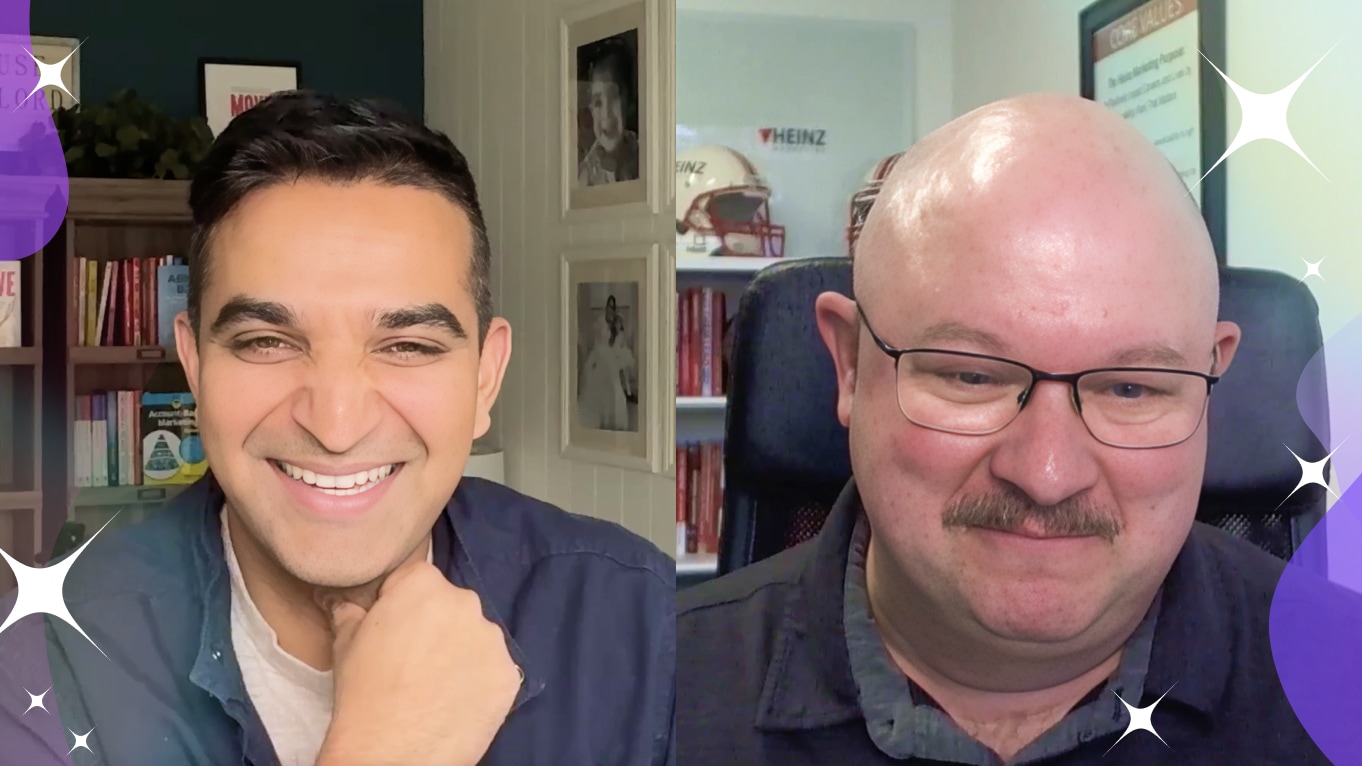
All right, Sang, well, here we go. Talking about how agents are transforming literally every corner of marketing and how quickly did we get here, right? I feel like it was just yesterday that somebody, a buddy, sent me this note saying, “Have you heard about ChatGPT and what it can do?” And we very quickly have gone from experiment to tool to infrastructure, and from generative AI like, “Look what blog posts it could create for me,” to literally impacting every component of go-to-market.

And so I’m excited to talk about that with you. We were joking earlier, like we don’t get time together unless we record something, so I’m very happy to have this moment. But for the maybe three people watching that don’t know you, maybe just quick introduce yourself.

Sangram Vajre – GTM Partners
Yeah.
Yeah, well, dude, first of all, I’m so excited for this. I think this is a long time coming, and we should just find ways to do this more often. I’ll send you a recurring meeting that I’d never send. But outside of that, yeah, I’ve run marketing at PowerDot, got acquired by ExactTarget and Salesforce. So I learned a lot about growth and what it means to grow, grow at all costs, right? Like that really was that era.

And then co-founded Terminus, which got acquired by a PE firm in 2020, and then somehow wrote a few books. And the last one, Move, became a Wall Street Journal bestseller that really got me into go-to-market. So sometimes I do get to say that I wrote about go-to-market before it was cool, but not as cool as AI. So here we are.

Matt Heinz – Heinz Marketing
I mean, everything has its moment, right? Like when I was in college, I’m old enough now that when I started in college and they asked me if I wanted an email address, I’m like, “Why? What do I need an email address for?” I couldn’t conceive of what that was going to do.

And so now we’ve moved through cloud, we’ve moved through cell phones with social. I mean, these aren’t innovations, these are industries, right? These are whole ecosystems. And I think we’re on that with AI as well. It’s fascinating. You think about these booms and these leaps in technology.

Like some of the most interesting businesses are those that think like, “How do I support that?” Right? Like the gold boom in the mid-1800s in California, Levi jeans became a thing as a support tool for that. And I think we’re going to see a lot of that with AI as well. And there’s going to be a lot of jobs, a lot of opportunity, a lot of very interesting businesses that are not the AI, but the support of the AI.

And I think that’s, I think I could segue into thinking about all the corners of marketing this is going to impact. And I want to address the fear around what that means for people. I want to address a bit of the trough of disillusionment that I think some people are feeling right now around it.

When I say every corner of marketing, how do you define that? And I’d love for you to sort of pull the aperture back and say this isn’t just marketing. You’ve got to think about this in a go-to-market motion.

Sangram Vajre – GTM Partners
Yeah.
Yeah, I mean, you know what’s well, you made a comment a minute ago, so I want to touch on that for a second. I think you’re so right. And I think people don’t realize this is that this is a big shift, but shift, we’re not, it’s not uncommon for all of us to see it. It’s just happening at a much hyper speed and everybody gets to see it live.

It’s like the first time somebody, you know, when the whole world was watching a man on the moon, right? Like that was a moment that the whole world watched and understood the implication of it. It’s now happening to every one of us in our own way. So we’re all literally in this show where we’re watching lives change and everything change.

What’s interesting about, you mentioned about email, why do you need an email? My son, who’s 15 now, he said, “Why do you need a phone number?” Like, “Do you have that person’s phone number? You’re trying to get a job like a Chick-fil-A?” And he’s like, “Why do I need a phone number?” I’m like, “What do you mean? How are you going to contact?” “On Snap,” you know, “nobody calls.” Yeah. I’m like, so they don’t even need a phone number. They just need a Snap account or whatever to connect and communicate.

And it might be, it’s mind boggling to me. It’s like, no, get the phone number and call and say, “Hello, sir.”

Matt Heinz – Heinz Marketing
Just telephone, like get me Sangram. I don’t even know what his number is. Phone note.

Sangram Vajre – GTM Partners
I need a job. You need to do those things. But that shift is happening.

And talking about specifically every corner of everything, well, this is again very tangential to this. You know the biggest job market that is open because of AI, this is not talked about enough, is electrician jobs. Like because AI creates so much computing power, you actually can make a hundred K.

And this may not be true for every marketer now wanting to be an electrician, but maybe your kids need to be. You can get a vocational job because the electrician jobs in the marketplace are crazy. So there are new industries, to your point, getting created around as a result of AI that one would have said, like, well, that’s a dying industry.

Matt Heinz – Heinz Marketing
I think that’s a great example. I mean, you think about the amount of construction that’s about to happen if we truly build the data centers and the sources of energy that are going to be required to power all of this.

You know, shout out to Brent Adamson, who last week talked about the way Mo’s and the driverless cars that are amazing. But you know what, like who’s going to clean it, right? Like the Uber driver is going to keep cleaning the car, but the car is not going to clean itself.

And so there’s an opportunity for someone that when the car recognizes it’s dirty, you go to Joe’s car wash, and there’s a component of Joe’s car wash that now cleans the driverless car.

So like all the different things. What supports this? What gives it the experience we want? What is missing in that? And I think that that’s an inflection point for marketers and go-to-market leaders as well, thinking about those areas.

You can’t boil the ocean. You can’t do everything at once. And so there’s a little bit of the art of the possible on what could be impacted and where you should focus. But what we often encourage people is like you’ve got to think about this not just as something that part of your team does. This needs to be thought of as infrastructure.

Sangram Vajre – GTM Partners
Yeah.
Yeah.

Matt Heinz – Heinz Marketing
So where are there constraints that have always frustrated you that you’ve treated as status quo? Think about creative production, think about asset management, think about lead flow. Things that can not only speed up and improve the efficiency and effectiveness as you go-to-market motions, but help your people do the things that they really want to spend their time on.

Sangram Vajre – GTM Partners
Yeah.
Yeah.

Sangram Vajre – GTM Partners
You know, I was having this conversation with Yamini Rangan, the CEO of HubSpot, at Inbound, and she made a comment to me at that conference that, look, there was a time as a marketer you could say that I’m going to only spend time on the top 5% of my accounts or leads because they’re the most valuable. We have lead scored them and all of those things.

And the rest, 95%, I’m not going to spend any time on because why would I? I need to spend my time in the most important area that will create the most value, so it’d make perfect sense.

In the new world of AI and automation, which ultimately I think is architecting your org chart, like organizational chart is getting re-architected. People think about automation. I think we need to think about this as reprogramming your organizational chart at large. So you have to reimagine that.

And she made a point that has just been in my brain: there should not be a single lead ever left behind anymore. You should be able to create every conceivable scenario and a workflow with AI as a marketer to make sure that you are able to reach out to every single person that leaves a particular event that they came in for, whatever expressed purpose the conversation has been.

So this idea that you can’t follow up with people or this idea that, “We’ll get to it later,” like in a new world, really you should be able to architect the whole thing very clearly.

Matt Heinz – Heinz Marketing
Yeah. I think we might be getting to a point where the org chart isn’t sufficient. And I’ve got some clients that are rethinking it in terms of an accountability chart, right? So who or what has accountability for this function?

If you think about, like, if you break down the work of marketing and go-to-market, right, like there’s somewhere between jazz hands at sales kickoff and like what happens on Tuesday, there’s a lot of workflow, a lot of process, and a lot of systems that have to work together.

If you can break it down to the jobs to be done in those systems, there’s a lot of jobs that are chaotic today. There’s a lot of jobs that are manual today. There’s a lot of jobs that are still done inconsistently today. And if you could apply agents in those places, these may be tools you already have and are not deploying the agentic components of it.

These may be agents you can build that are custom to you for that unique element. But if you break it down, this is where I see a lot of marketing teams go from being afraid to being just super energized about what I can do.

Because you see specifically the jobs that are going to make your job better. They’re going to make your job easier. They’re going to allow you to do the things that you really want to spend your time doing. There’s a career acceleration impact of creating that accountability chart versus thinking, “Am I worth worrying about whether you’re going to have a career?”

Sangram Vajre – GTM Partners
Yeah, yeah.

Sangram Vajre – GTM Partners
You know, this brings this, you make me think about the conversation that Dario, who’s the CEO of Anthropic, he was having. And he was talking about the fact that they became a $5 billion company in like three years.

You know, talk about growth and talk about breaking every, anybody talk about like CRM implementation takes six months, marketing automation. Like you build a $5 billion company in three years.

You’re scaling every element at the nth level. Nobody has ever done it at that speed ever before. But he said something that made me think, and I wrote it down. He said, “We are only exploiting right now with AI one use case. That’s it.”

With one use case, which is for programmers, for developers to be able to write code and do all of those things, that’s the only use case they have been able to crack. And it’s a $5 billion company. Like revenue. I’m not talking about market cap, like revenue.

So they haven’t even, and when the conversation started moving toward what about marketing and sales and go-to-market, he’s like, well, there is so much unknown in that space because there’s just so many different ways.

The security has been stopping them from creating a lot more because if you want to create a go-to-market dashboard, a marketing dashboard, and if you don’t want to expose that to everybody, well, how do you apply security controls to that?

So I guess that made me think about, Matt, was the level of creativity that is going to be needed in the world of AI is going to be next level. I think each one of us gets to now be creative again. That’s what’s exciting to me.

Matt Heinz – Heinz Marketing
I agree. I think there’s a level to which the things we will innovate and the things that will benefit us in our lives and in our jobs are almost impossible to conceive incrementally.

There’s a guy by the name of Pascal Finette, who’s like a futurist, and he does a lot of great thinking around innovation. And he’s got something he calls the innovation paradox. And I’m going to paraphrase it and hopefully get it right.

He says the innovation that we have experienced to date appears far shallower than it actually was. Like when I first, back when I started Heinz Marketing, the iPhone barely existed, right? And think about all the things we can now do.

I remember when Mary Meeker came out with her internet trends report. For those of you old enough to remember Mary Meeker, I remember at one point she said everyone’s going to be mobile-first at some point in the near future. I’m like, that’s ridiculous. How is that? And of course, it came true.

So our lizard brains are really good at creating new normals and accepting, like you can have high-speed internet on a 500-mile-an-hour airplane going through the sky. I mean, like how ridiculous is that to think about not that long ago.

So that’s one half of the paradox. The other is the future. The future we don’t know. The future we don’t understand. The future we can’t conceive. And that creates fear in our minds and our hearts.

And his point is that the innovation curve of the future currently appears steeper, and it will never be experienced that way. Your same lizard brain will adapt to those new realities, those new normals, more quickly than you think it will.

Sangram Vajre – GTM Partners
What do you believe then in this, in this like a way? Like there was so much, so everybody has used that, like got into ChatGPT and we can write, and then got them and you can create like meeting notes and now next steps and now email automation. You don’t need a full-on marketing automation all of a sudden. You need something that can just do some of these things.

It almost feels like at this, in one place, the paradox is it feels like we’re still in the stone age of AI because everything we see right now, six months from now, we’re going to laugh at it.

Do you know we actually did this? Like, you know, we used ChatGPT for email summaries and notes. Like we will laugh at it.

On the flip side of it, it feels like everything is about to accelerate like crazy. And as a case in point, we have been advising a company and they have over 10,000 customers.

And he said the use case they’re using for marketing and customer success is that they were until now never ever able to get good feedback from their customers. They always had these 10 customers that you put on a pedestal. They say exactly what you want them to say and you tell everybody and nobody believes you.

Right? Like that’s the typical customer success marketing spotlight stories. He said now they have put an AI agent in place that essentially goes through all 10,000 of their customers, tracks every single move they do in the product, outside the product, recommends them real time the list of products that they should be creating, features they should be creating.

And now they’re launching new products almost every three weeks as a result of that outcome. He said it was impossible for this to happen outside of the age that we are in right now.

Matt Heinz – Heinz Marketing
Yeah. Have you also found that the adoption curve of AI is about as wide as any innovation I’ve ever seen?

I mean, I’m old enough to remember when the internet kind of came about and then we made the move to mobile and then cloud computing. And you know, there’s always been sort of that curve and that chasm and all the rest of that.

But like, I mean, we’ve got clients that are so deep into this that have just transformed their entire go-to-market motions. And we have others that are, you know, their lawyers are telling them to stay away from it.

Right? And it’s just, you’ve got sort of renegade members of the team trying to do their own thing for the right reasons and having to do it under the cloak of night to sort of be able to do it.

When we talk about just transforming corners of marketing and you’re really transforming the impact we can have as go-to-market professionals, we have to create a safe place for people to do that.

I think we have to create a place where we are encouraging people to try it, encouraging people to fail with it. We have to create an environment where you know that failure is going to be part of the process, but you’re encouraged to figure out the path of least resistance anyway.

If you don’t create that environment, then I think you will, I mean, this is one of those moments when I think like, you know, nobodies are going to become market leaders. And you want to be that. And that’s going to take some vision and some courage to do that.

Sangram Vajre – GTM Partners
Yeah.

Sangram Vajre – GTM Partners
Yeah, dude. I mean, a few months ago, I did this incredible panel where we had Henry Schuck, the CEO of ZoomInfo, Godard, CEO of G2, Yamini HubSpot. And at that time, Nick Mehta was still the CEO of Gainsight.

And they all said, I asked them, how much time do you personally, like, you know, one or two of them are publicly traded company CEOs, two of the other two are over $100 million revenue, right?

So these are all really accomplished, decade-old OGs of the space. I asked them, how much time do you spend on AI, just you yourself? And just brutally honest, across the board at a minimum, they said 40% of their time.

40%. Like it was like some days I just literally take like four hours and block off and I’m just playing to figure out what use cases would be in this.

And Henry’s like, I’m just with the product team trying. So they are spending about 40% of their time on average to figure this thing out because it is so new.

So to answer your question, Matt, I feel like it really starts at the top. If the CEO and the founders of the organization are not in it, and they’re saying that you guys figure it out, this is no longer that kind of thing.

It’s not you guys figure out what we need to do. It is like you need to really get your hands dirty in that kind of thing.

It’s something where you have to really feel it and understand it in order for you to see around the corner what and how these use cases might change.

It is not something that you delegate and relegate and put guardrails around it and say try this, not too much. You just can’t because it’s going to make, from a marketing perspective, it’s going to completely revolutionize every campaign orchestration that you might think about, every journey builder that you may have built and seeing like this is how we’re going to do nurture.

It is going to change everything because the workflow of how somebody engages and expands, how they search and find you on ChatGPT versus finding you, and everything is changing. So every playbook has changed.

So the question is no longer I’m going to try to figure out, or some people should focus on, is that we are in this together. Nobody has the answers. Nobody knows the exact playbook.

If I see another LinkedIn post that says type playbook and I’ll send you a playbook again, like I’m going to lose it because there is no playbook for this.

This is all, the MIT put out this thing that we all know, which is 95% of the AI projects are failing because we are figuring it out. This is a classic problem-market fit scenario for the entire industry as we know it.

Matt Heinz – Heinz Marketing
Yes, and I am thankful that there are so many people that are devoting so much time to figuring this out because that is a sandbox that we can all learn from.

Right? And so someone else’s playbook is not going to be your playbook. Every business needs to take best practices and mold them to your unique business, industry, competitive set, culture, and everything.

But you don’t need to start this from scratch. If you want to and you’re excited about it and you don’t find any precedents out there, like certainly go do it.

You’re familiar with WD-40, like the magical thing that like, you know why it’s called WD-40? Because the first 39 versions failed. Like they took 40 times to create what they were intending to make, and they call it WD-40.

So I don’t have to reinvent WD-40. Someone else has the patent making a lot of money on it, but I don’t have to make my own thing to stop my stuff from squeaking. I could just use that.

To me, when we talk about the skill sets marketers need now, I think there is a reinventing of the playbook, but you don’t have to reinvent it yourself.

So take best practices from others. Find the people in the market. Find communities of other people, like the Marketing AI Institute, SmarterX, I think is what they’re called now.

Find those places where other people are doing this work, other people like you with the same jobs, and learn from them.

And I think about that a lot when I think about my kids and kids in college and those that are going to graduate. The entry-level jobs you and I might have benefited from may not exist because AI does that.

But I used to think that was a problem. Now I’m like, great. Now I’ve got a bunch of people that are AI aware. They can immediately move into roles where they are managing armies of AI agents and they’re doing it natively.

They’re not like us old people that have to learn this and figure this out and retrain our brains around it.

I think that’s going to be a really exciting place to be and create a whole new ecosystem of opportunities, jobs, and careers for the kids who come up.

Sangram Vajre – GTM Partners
You know, you know that reminds me. A friend of mine on Friday, this is like so recent, wrote a book called The Future Begins with Z. It’s about all the different generations.

And he made a point, Matt, that this is the first time in the history of the known world there are five generations working together at the same time. It has never happened in the history of the known world.

So you start thinking about how boomers think about it, Gen X, Gen Y, Gen Z. We all are thinking about this, coming at it very differently.

If you think about if you were a boomer, you know, I’ve literally made notes around, he said you’re just grateful to have a job. Like that’s a very different mindset than a millennial who says, you know what, life is like a cafeteria. I’m going to try a little bit of this, a little bit of that, a little bit of the other, and then see what it is.

And so now you’re walking into a workplace. If you are new to marketing, you’re coming into marketing right now, and if you’re listening to this, you’re going to have such a different mindset than somebody who has been at it for 20 years.

And I think this is the first time ever where it has never been more important to have mentorship, both going up and down.

Because I think we have, I want to learn so much more because I think my learning, over the years, I think I’ve become slow in figuring it out. And I need super young marketers to figure out, okay, what are you doing? How would you do it? What do you buy?

Like my son is telling me, well, nobody does it that way anymore. I’m like, okay, well, good to know. Like it’s shifting in front of us.

And I think this idea, because there are five different generations of marketers or leaders or buyers all consuming at the same time, you can no longer have the same way of engagement.

Matt Heinz – Heinz Marketing
Yeah, we’ve got a few more minutes. We’re going to wrap this session up here.

I think you think about like how to approach this moving forward. Like everyone’s trying to figure it out.

And I think like forever, you know, it’s like a generation in the middle of that generation. So you talked about, right? Our default usually is to say the old people are dinosaurs. Things have moved on. Things have progressed. They don’t know what they’re doing.

And at the same reason, we tell the young people like they don’t have enough experience. They don’t figure it out. They don’t listen.

I mean, like someone asked me last minute, I was like, don’t you wish you could go and tell your younger self what you know now? I’m like, well, sure, but he wouldn’t listen. He’d say, well, crap, who is this old guy telling me all these things? I know better.

So I think that our job is to just be eyes wide open on both sides. I think that those that have been around for a while, that may not have the nativity around that particular technology, still have experience and wisdom that can help us accelerate the impact of that effort.

One of my favorite marketing books to this day is Scientific Advertising by Claude Hopkins. It was written in 1921. It wasn’t about social or about internet. It was really more about human psychology and how that worked.

And so how do you apply wisdom like that, that is universal, to what we, the variables that have changed?

And just because we’ve done it, like I think it’s really easy for us to not see our own blind spots and to take people that may not have anywhere near the experience and wisdom that we do just because we’ve lived longer, but are seeing the world with a fresh set of eyes, with a set of variables that are native to them.

We have so much to learn from both of those areas.

And so when I think about approaching this go-to-market challenge moving forward, not just the go-to-market motions, but as a team and using that to our advantage to create and innovate faster and better.

Sangram Vajre – GTM Partners
No doubt. So I’ll leave you with this part, right?

I feel the beauty of all of this is AI doesn’t have emotions. AI doesn’t care about titles. AI doesn’t care about roles. AI doesn’t care about functions and the lines in between. AI doesn’t care about politics that happens and plagues so many of our roles in a lot of organizations.

So the beauty that we have in front of us right now is that we can actually be very factual about a lot of things that need to be done, how it needs to be done, and follow it.

The biggest differentiator for marketers who are jumping into the AI agentic world and looking at it as go-to-market is the business.

You have to get out of a role of a marketer and recognize yourself as a business leader who happens to know a lot about marketing, or happens to be fascinated by marketing, or curious about marketing.

But you are ultimately a go-to-market leader. You’re a business person. That’s what you’re getting groomed to be.

And you start making and getting the help of AI to help you make business decisions. And once you start putting in that layer on your eyes and think through it, it’s like, well, how is this making me better?

It’s really not about just making a bunch of posts and all that stuff. It’s that can you use it, using the right prompts, the right process, the right way to get consensus on the team, focus on the right things, help you get prioritized on it, and you actually come out as a business leader.

Now you’re looking at it right.

Matt Heinz – Heinz Marketing
Yeah, I think you’re absolutely right. I mean, this is one of those biases we come into where we sort of think incrementally. How do we make marketing better? How do we make sales better?

Well, back to that accountability chart, right? Like how has the buying journey, how has the world, how have the tools we have reinvented or sort of forced us to reinvent what we’re doing?

And those that are willing to lean into that are going to win.

I mean, I’m an anxious person. Anxiety is a disease of control. I don’t know where a lot of this is going, but you know, more and more as I dig into it, the more excited I am about what it’s going to be moving forward.

I know we’re out of time. This has been fun. We really should have recorded this. This would have been a great thing to be able to share with other people. We’ll have to remember that next time.

But in the meantime, if this is the excuse to get to spend time with you, this has been phenomenal. It’s great to see you, your smile and energy.

Let’s do it. Let’s figure out how to do it. We need a sponsor. I know someone else. Anyway, we’ll figure it out.

Thanks, everyone, for listening and watching. Enjoy the rest of the summit. We’ll see you next time.

Sangram Vajre – GTM Partners
Yeah, I should do this monthly, every month.
Thanks, Matt. Thanks, everyone.
Related content

Welcome to the Agentic Marketing EraWelcome to the Agentic Marketing Era

Welcome to the Agentic Marketing Era

With the rise of agentic AI, marketing will never be the same. Explore what the agentic marketing era means for marketing teams and how embracing AI-powered agents will fundamentally reshape your brand, GTM strategies, and customer engagement for the decade ahead.

GTM Playbooks for Agentic Marketing TeamsGTM Playbooks for Agentic Marketing Teams

GTM Playbooks for Agentic Marketing Teams

Explore how leading marketers are evolving go-to-market strategies and pipeline generation with agentic AI. Learn actionable frameworks for driving buyer engagement, personalizing journeys, and scaling impact, plus what’s next for high-performance teams in the agentic marketing era.

Decoding Agentic Marketing: The Language of Tomorrow’s LeadersDecoding Agentic Marketing: The Language of Tomorrow’s Leaders

Decoding Agentic Marketing: The Language of Tomorrow’s Leaders

Elevate your expertise by unpacking the critical concepts, distinctions, and frameworks shaping agentic marketing. This session will empower you to speak with authority on the evolving landscape—from co-pilots to autonomous agents—and command the conversations that define next-generation marketing leadership.

Stay up to date with weekly drops of fresh B2B marketing and sales content.

By registering, you agree that Qualified may process your personal data for events and marketing as set forth in our Privacy Policy
Thank you for subscribing. You’ll start receiving updates for Qualified+ shortly.
Oops! Something went wrong while submitting the form.

Transforming Every Corner of Marketing with Agents

Discover how specialized AI agents are optimizing every function in marketing from campaign management and content creation to analytics, customer engagement, ops, and beyond.

Matt Heinz
Matt Heinz
No items found.
Transforming Every Corner of Marketing with Agents
Apple Podcast LinkGoogle Podcast LinkSpotify Podcast Link

TRANSCRIPT

Matt Heinz – Heinz Marketing
All right, Sang, well, here we go. Talking about how agents are transforming literally every corner of marketing and how quickly did we get here, right? I feel like it was just yesterday that somebody, a buddy, sent me this note saying, “Have you heard about ChatGPT and what it can do?” And we very quickly have gone from experiment to tool to infrastructure, and from generative AI like, “Look what blog posts it could create for me,” to literally impacting every component of go-to-market.

And so I’m excited to talk about that with you. We were joking earlier, like we don’t get time together unless we record something, so I’m very happy to have this moment. But for the maybe three people watching that don’t know you, maybe just quick introduce yourself.

Sangram Vajre – GTM Partners
Yeah.
Yeah, well, dude, first of all, I’m so excited for this. I think this is a long time coming, and we should just find ways to do this more often. I’ll send you a recurring meeting that I’d never send. But outside of that, yeah, I’ve run marketing at PowerDot, got acquired by ExactTarget and Salesforce. So I learned a lot about growth and what it means to grow, grow at all costs, right? Like that really was that era.

And then co-founded Terminus, which got acquired by a PE firm in 2020, and then somehow wrote a few books. And the last one, Move, became a Wall Street Journal bestseller that really got me into go-to-market. So sometimes I do get to say that I wrote about go-to-market before it was cool, but not as cool as AI. So here we are.

Matt Heinz – Heinz Marketing
I mean, everything has its moment, right? Like when I was in college, I’m old enough now that when I started in college and they asked me if I wanted an email address, I’m like, “Why? What do I need an email address for?” I couldn’t conceive of what that was going to do.

And so now we’ve moved through cloud, we’ve moved through cell phones with social. I mean, these aren’t innovations, these are industries, right? These are whole ecosystems. And I think we’re on that with AI as well. It’s fascinating. You think about these booms and these leaps in technology.

Like some of the most interesting businesses are those that think like, “How do I support that?” Right? Like the gold boom in the mid-1800s in California, Levi jeans became a thing as a support tool for that. And I think we’re going to see a lot of that with AI as well. And there’s going to be a lot of jobs, a lot of opportunity, a lot of very interesting businesses that are not the AI, but the support of the AI.

And I think that’s, I think I could segue into thinking about all the corners of marketing this is going to impact. And I want to address the fear around what that means for people. I want to address a bit of the trough of disillusionment that I think some people are feeling right now around it.

When I say every corner of marketing, how do you define that? And I’d love for you to sort of pull the aperture back and say this isn’t just marketing. You’ve got to think about this in a go-to-market motion.

Sangram Vajre – GTM Partners
Yeah.
Yeah, I mean, you know what’s well, you made a comment a minute ago, so I want to touch on that for a second. I think you’re so right. And I think people don’t realize this is that this is a big shift, but shift, we’re not, it’s not uncommon for all of us to see it. It’s just happening at a much hyper speed and everybody gets to see it live.

It’s like the first time somebody, you know, when the whole world was watching a man on the moon, right? Like that was a moment that the whole world watched and understood the implication of it. It’s now happening to every one of us in our own way. So we’re all literally in this show where we’re watching lives change and everything change.

What’s interesting about, you mentioned about email, why do you need an email? My son, who’s 15 now, he said, “Why do you need a phone number?” Like, “Do you have that person’s phone number? You’re trying to get a job like a Chick-fil-A?” And he’s like, “Why do I need a phone number?” I’m like, “What do you mean? How are you going to contact?” “On Snap,” you know, “nobody calls.” Yeah. I’m like, so they don’t even need a phone number. They just need a Snap account or whatever to connect and communicate.

And it might be, it’s mind boggling to me. It’s like, no, get the phone number and call and say, “Hello, sir.”

Matt Heinz – Heinz Marketing
Just telephone, like get me Sangram. I don’t even know what his number is. Phone note.

Sangram Vajre – GTM Partners
I need a job. You need to do those things. But that shift is happening.

And talking about specifically every corner of everything, well, this is again very tangential to this. You know the biggest job market that is open because of AI, this is not talked about enough, is electrician jobs. Like because AI creates so much computing power, you actually can make a hundred K.

And this may not be true for every marketer now wanting to be an electrician, but maybe your kids need to be. You can get a vocational job because the electrician jobs in the marketplace are crazy. So there are new industries, to your point, getting created around as a result of AI that one would have said, like, well, that’s a dying industry.

Matt Heinz – Heinz Marketing
I think that’s a great example. I mean, you think about the amount of construction that’s about to happen if we truly build the data centers and the sources of energy that are going to be required to power all of this.

You know, shout out to Brent Adamson, who last week talked about the way Mo’s and the driverless cars that are amazing. But you know what, like who’s going to clean it, right? Like the Uber driver is going to keep cleaning the car, but the car is not going to clean itself.

And so there’s an opportunity for someone that when the car recognizes it’s dirty, you go to Joe’s car wash, and there’s a component of Joe’s car wash that now cleans the driverless car.

So like all the different things. What supports this? What gives it the experience we want? What is missing in that? And I think that that’s an inflection point for marketers and go-to-market leaders as well, thinking about those areas.

You can’t boil the ocean. You can’t do everything at once. And so there’s a little bit of the art of the possible on what could be impacted and where you should focus. But what we often encourage people is like you’ve got to think about this not just as something that part of your team does. This needs to be thought of as infrastructure.

Sangram Vajre – GTM Partners
Yeah.
Yeah.

Matt Heinz – Heinz Marketing
So where are there constraints that have always frustrated you that you’ve treated as status quo? Think about creative production, think about asset management, think about lead flow. Things that can not only speed up and improve the efficiency and effectiveness as you go-to-market motions, but help your people do the things that they really want to spend their time on.

Sangram Vajre – GTM Partners
Yeah.
Yeah.

Sangram Vajre – GTM Partners
You know, I was having this conversation with Yamini Rangan, the CEO of HubSpot, at Inbound, and she made a comment to me at that conference that, look, there was a time as a marketer you could say that I’m going to only spend time on the top 5% of my accounts or leads because they’re the most valuable. We have lead scored them and all of those things.

And the rest, 95%, I’m not going to spend any time on because why would I? I need to spend my time in the most important area that will create the most value, so it’d make perfect sense.

In the new world of AI and automation, which ultimately I think is architecting your org chart, like organizational chart is getting re-architected. People think about automation. I think we need to think about this as reprogramming your organizational chart at large. So you have to reimagine that.

And she made a point that has just been in my brain: there should not be a single lead ever left behind anymore. You should be able to create every conceivable scenario and a workflow with AI as a marketer to make sure that you are able to reach out to every single person that leaves a particular event that they came in for, whatever expressed purpose the conversation has been.

So this idea that you can’t follow up with people or this idea that, “We’ll get to it later,” like in a new world, really you should be able to architect the whole thing very clearly.

Matt Heinz – Heinz Marketing
Yeah. I think we might be getting to a point where the org chart isn’t sufficient. And I’ve got some clients that are rethinking it in terms of an accountability chart, right? So who or what has accountability for this function?

If you think about, like, if you break down the work of marketing and go-to-market, right, like there’s somewhere between jazz hands at sales kickoff and like what happens on Tuesday, there’s a lot of workflow, a lot of process, and a lot of systems that have to work together.

If you can break it down to the jobs to be done in those systems, there’s a lot of jobs that are chaotic today. There’s a lot of jobs that are manual today. There’s a lot of jobs that are still done inconsistently today. And if you could apply agents in those places, these may be tools you already have and are not deploying the agentic components of it.

These may be agents you can build that are custom to you for that unique element. But if you break it down, this is where I see a lot of marketing teams go from being afraid to being just super energized about what I can do.

Because you see specifically the jobs that are going to make your job better. They’re going to make your job easier. They’re going to allow you to do the things that you really want to spend your time doing. There’s a career acceleration impact of creating that accountability chart versus thinking, “Am I worth worrying about whether you’re going to have a career?”

Sangram Vajre – GTM Partners
Yeah, yeah.

Sangram Vajre – GTM Partners
You know, this brings this, you make me think about the conversation that Dario, who’s the CEO of Anthropic, he was having. And he was talking about the fact that they became a $5 billion company in like three years.

You know, talk about growth and talk about breaking every, anybody talk about like CRM implementation takes six months, marketing automation. Like you build a $5 billion company in three years.

You’re scaling every element at the nth level. Nobody has ever done it at that speed ever before. But he said something that made me think, and I wrote it down. He said, “We are only exploiting right now with AI one use case. That’s it.”

With one use case, which is for programmers, for developers to be able to write code and do all of those things, that’s the only use case they have been able to crack. And it’s a $5 billion company. Like revenue. I’m not talking about market cap, like revenue.

So they haven’t even, and when the conversation started moving toward what about marketing and sales and go-to-market, he’s like, well, there is so much unknown in that space because there’s just so many different ways.

The security has been stopping them from creating a lot more because if you want to create a go-to-market dashboard, a marketing dashboard, and if you don’t want to expose that to everybody, well, how do you apply security controls to that?

So I guess that made me think about, Matt, was the level of creativity that is going to be needed in the world of AI is going to be next level. I think each one of us gets to now be creative again. That’s what’s exciting to me.

Matt Heinz – Heinz Marketing
I agree. I think there’s a level to which the things we will innovate and the things that will benefit us in our lives and in our jobs are almost impossible to conceive incrementally.

There’s a guy by the name of Pascal Finette, who’s like a futurist, and he does a lot of great thinking around innovation. And he’s got something he calls the innovation paradox. And I’m going to paraphrase it and hopefully get it right.

He says the innovation that we have experienced to date appears far shallower than it actually was. Like when I first, back when I started Heinz Marketing, the iPhone barely existed, right? And think about all the things we can now do.

I remember when Mary Meeker came out with her internet trends report. For those of you old enough to remember Mary Meeker, I remember at one point she said everyone’s going to be mobile-first at some point in the near future. I’m like, that’s ridiculous. How is that? And of course, it came true.

So our lizard brains are really good at creating new normals and accepting, like you can have high-speed internet on a 500-mile-an-hour airplane going through the sky. I mean, like how ridiculous is that to think about not that long ago.

So that’s one half of the paradox. The other is the future. The future we don’t know. The future we don’t understand. The future we can’t conceive. And that creates fear in our minds and our hearts.

And his point is that the innovation curve of the future currently appears steeper, and it will never be experienced that way. Your same lizard brain will adapt to those new realities, those new normals, more quickly than you think it will.

Sangram Vajre – GTM Partners
What do you believe then in this, in this like a way? Like there was so much, so everybody has used that, like got into ChatGPT and we can write, and then got them and you can create like meeting notes and now next steps and now email automation. You don’t need a full-on marketing automation all of a sudden. You need something that can just do some of these things.

It almost feels like at this, in one place, the paradox is it feels like we’re still in the stone age of AI because everything we see right now, six months from now, we’re going to laugh at it.

Do you know we actually did this? Like, you know, we used ChatGPT for email summaries and notes. Like we will laugh at it.

On the flip side of it, it feels like everything is about to accelerate like crazy. And as a case in point, we have been advising a company and they have over 10,000 customers.

And he said the use case they’re using for marketing and customer success is that they were until now never ever able to get good feedback from their customers. They always had these 10 customers that you put on a pedestal. They say exactly what you want them to say and you tell everybody and nobody believes you.

Right? Like that’s the typical customer success marketing spotlight stories. He said now they have put an AI agent in place that essentially goes through all 10,000 of their customers, tracks every single move they do in the product, outside the product, recommends them real time the list of products that they should be creating, features they should be creating.

And now they’re launching new products almost every three weeks as a result of that outcome. He said it was impossible for this to happen outside of the age that we are in right now.

Matt Heinz – Heinz Marketing
Yeah. Have you also found that the adoption curve of AI is about as wide as any innovation I’ve ever seen?

I mean, I’m old enough to remember when the internet kind of came about and then we made the move to mobile and then cloud computing. And you know, there’s always been sort of that curve and that chasm and all the rest of that.

But like, I mean, we’ve got clients that are so deep into this that have just transformed their entire go-to-market motions. And we have others that are, you know, their lawyers are telling them to stay away from it.

Right? And it’s just, you’ve got sort of renegade members of the team trying to do their own thing for the right reasons and having to do it under the cloak of night to sort of be able to do it.

When we talk about just transforming corners of marketing and you’re really transforming the impact we can have as go-to-market professionals, we have to create a safe place for people to do that.

I think we have to create a place where we are encouraging people to try it, encouraging people to fail with it. We have to create an environment where you know that failure is going to be part of the process, but you’re encouraged to figure out the path of least resistance anyway.

If you don’t create that environment, then I think you will, I mean, this is one of those moments when I think like, you know, nobodies are going to become market leaders. And you want to be that. And that’s going to take some vision and some courage to do that.

Sangram Vajre – GTM Partners
Yeah.

Sangram Vajre – GTM Partners
Yeah, dude. I mean, a few months ago, I did this incredible panel where we had Henry Schuck, the CEO of ZoomInfo, Godard, CEO of G2, Yamini HubSpot. And at that time, Nick Mehta was still the CEO of Gainsight.

And they all said, I asked them, how much time do you personally, like, you know, one or two of them are publicly traded company CEOs, two of the other two are over $100 million revenue, right?

So these are all really accomplished, decade-old OGs of the space. I asked them, how much time do you spend on AI, just you yourself? And just brutally honest, across the board at a minimum, they said 40% of their time.

40%. Like it was like some days I just literally take like four hours and block off and I’m just playing to figure out what use cases would be in this.

And Henry’s like, I’m just with the product team trying. So they are spending about 40% of their time on average to figure this thing out because it is so new.

So to answer your question, Matt, I feel like it really starts at the top. If the CEO and the founders of the organization are not in it, and they’re saying that you guys figure it out, this is no longer that kind of thing.

It’s not you guys figure out what we need to do. It is like you need to really get your hands dirty in that kind of thing.

It’s something where you have to really feel it and understand it in order for you to see around the corner what and how these use cases might change.

It is not something that you delegate and relegate and put guardrails around it and say try this, not too much. You just can’t because it’s going to make, from a marketing perspective, it’s going to completely revolutionize every campaign orchestration that you might think about, every journey builder that you may have built and seeing like this is how we’re going to do nurture.

It is going to change everything because the workflow of how somebody engages and expands, how they search and find you on ChatGPT versus finding you, and everything is changing. So every playbook has changed.

So the question is no longer I’m going to try to figure out, or some people should focus on, is that we are in this together. Nobody has the answers. Nobody knows the exact playbook.

If I see another LinkedIn post that says type playbook and I’ll send you a playbook again, like I’m going to lose it because there is no playbook for this.

This is all, the MIT put out this thing that we all know, which is 95% of the AI projects are failing because we are figuring it out. This is a classic problem-market fit scenario for the entire industry as we know it.

Matt Heinz – Heinz Marketing
Yes, and I am thankful that there are so many people that are devoting so much time to figuring this out because that is a sandbox that we can all learn from.

Right? And so someone else’s playbook is not going to be your playbook. Every business needs to take best practices and mold them to your unique business, industry, competitive set, culture, and everything.

But you don’t need to start this from scratch. If you want to and you’re excited about it and you don’t find any precedents out there, like certainly go do it.

You’re familiar with WD-40, like the magical thing that like, you know why it’s called WD-40? Because the first 39 versions failed. Like they took 40 times to create what they were intending to make, and they call it WD-40.

So I don’t have to reinvent WD-40. Someone else has the patent making a lot of money on it, but I don’t have to make my own thing to stop my stuff from squeaking. I could just use that.

To me, when we talk about the skill sets marketers need now, I think there is a reinventing of the playbook, but you don’t have to reinvent it yourself.

So take best practices from others. Find the people in the market. Find communities of other people, like the Marketing AI Institute, SmarterX, I think is what they’re called now.

Find those places where other people are doing this work, other people like you with the same jobs, and learn from them.

And I think about that a lot when I think about my kids and kids in college and those that are going to graduate. The entry-level jobs you and I might have benefited from may not exist because AI does that.

But I used to think that was a problem. Now I’m like, great. Now I’ve got a bunch of people that are AI aware. They can immediately move into roles where they are managing armies of AI agents and they’re doing it natively.

They’re not like us old people that have to learn this and figure this out and retrain our brains around it.

I think that’s going to be a really exciting place to be and create a whole new ecosystem of opportunities, jobs, and careers for the kids who come up.

Sangram Vajre – GTM Partners
You know, you know that reminds me. A friend of mine on Friday, this is like so recent, wrote a book called The Future Begins with Z. It’s about all the different generations.

And he made a point, Matt, that this is the first time in the history of the known world there are five generations working together at the same time. It has never happened in the history of the known world.

So you start thinking about how boomers think about it, Gen X, Gen Y, Gen Z. We all are thinking about this, coming at it very differently.

If you think about if you were a boomer, you know, I’ve literally made notes around, he said you’re just grateful to have a job. Like that’s a very different mindset than a millennial who says, you know what, life is like a cafeteria. I’m going to try a little bit of this, a little bit of that, a little bit of the other, and then see what it is.

And so now you’re walking into a workplace. If you are new to marketing, you’re coming into marketing right now, and if you’re listening to this, you’re going to have such a different mindset than somebody who has been at it for 20 years.

And I think this is the first time ever where it has never been more important to have mentorship, both going up and down.

Because I think we have, I want to learn so much more because I think my learning, over the years, I think I’ve become slow in figuring it out. And I need super young marketers to figure out, okay, what are you doing? How would you do it? What do you buy?

Like my son is telling me, well, nobody does it that way anymore. I’m like, okay, well, good to know. Like it’s shifting in front of us.

And I think this idea, because there are five different generations of marketers or leaders or buyers all consuming at the same time, you can no longer have the same way of engagement.

Matt Heinz – Heinz Marketing
Yeah, we’ve got a few more minutes. We’re going to wrap this session up here.

I think you think about like how to approach this moving forward. Like everyone’s trying to figure it out.

And I think like forever, you know, it’s like a generation in the middle of that generation. So you talked about, right? Our default usually is to say the old people are dinosaurs. Things have moved on. Things have progressed. They don’t know what they’re doing.

And at the same reason, we tell the young people like they don’t have enough experience. They don’t figure it out. They don’t listen.

I mean, like someone asked me last minute, I was like, don’t you wish you could go and tell your younger self what you know now? I’m like, well, sure, but he wouldn’t listen. He’d say, well, crap, who is this old guy telling me all these things? I know better.

So I think that our job is to just be eyes wide open on both sides. I think that those that have been around for a while, that may not have the nativity around that particular technology, still have experience and wisdom that can help us accelerate the impact of that effort.

One of my favorite marketing books to this day is Scientific Advertising by Claude Hopkins. It was written in 1921. It wasn’t about social or about internet. It was really more about human psychology and how that worked.

And so how do you apply wisdom like that, that is universal, to what we, the variables that have changed?

And just because we’ve done it, like I think it’s really easy for us to not see our own blind spots and to take people that may not have anywhere near the experience and wisdom that we do just because we’ve lived longer, but are seeing the world with a fresh set of eyes, with a set of variables that are native to them.

We have so much to learn from both of those areas.

And so when I think about approaching this go-to-market challenge moving forward, not just the go-to-market motions, but as a team and using that to our advantage to create and innovate faster and better.

Sangram Vajre – GTM Partners
No doubt. So I’ll leave you with this part, right?

I feel the beauty of all of this is AI doesn’t have emotions. AI doesn’t care about titles. AI doesn’t care about roles. AI doesn’t care about functions and the lines in between. AI doesn’t care about politics that happens and plagues so many of our roles in a lot of organizations.

So the beauty that we have in front of us right now is that we can actually be very factual about a lot of things that need to be done, how it needs to be done, and follow it.

The biggest differentiator for marketers who are jumping into the AI agentic world and looking at it as go-to-market is the business.

You have to get out of a role of a marketer and recognize yourself as a business leader who happens to know a lot about marketing, or happens to be fascinated by marketing, or curious about marketing.

But you are ultimately a go-to-market leader. You’re a business person. That’s what you’re getting groomed to be.

And you start making and getting the help of AI to help you make business decisions. And once you start putting in that layer on your eyes and think through it, it’s like, well, how is this making me better?

It’s really not about just making a bunch of posts and all that stuff. It’s that can you use it, using the right prompts, the right process, the right way to get consensus on the team, focus on the right things, help you get prioritized on it, and you actually come out as a business leader.

Now you’re looking at it right.

Matt Heinz – Heinz Marketing
Yeah, I think you’re absolutely right. I mean, this is one of those biases we come into where we sort of think incrementally. How do we make marketing better? How do we make sales better?

Well, back to that accountability chart, right? Like how has the buying journey, how has the world, how have the tools we have reinvented or sort of forced us to reinvent what we’re doing?

And those that are willing to lean into that are going to win.

I mean, I’m an anxious person. Anxiety is a disease of control. I don’t know where a lot of this is going, but you know, more and more as I dig into it, the more excited I am about what it’s going to be moving forward.

I know we’re out of time. This has been fun. We really should have recorded this. This would have been a great thing to be able to share with other people. We’ll have to remember that next time.

But in the meantime, if this is the excuse to get to spend time with you, this has been phenomenal. It’s great to see you, your smile and energy.

Let’s do it. Let’s figure out how to do it. We need a sponsor. I know someone else. Anyway, we’ll figure it out.

Thanks, everyone, for listening and watching. Enjoy the rest of the summit. We’ll see you next time.

Sangram Vajre – GTM Partners
Yeah, I should do this monthly, every month.
Thanks, Matt. Thanks, everyone.

Stay up to date with weekly drops of fresh B2B marketing and sales content.

By registering, you agree that Qualified may process your personal data for events and marketing as set forth in our Privacy Policy
Thank you for subscribing. You’ll start receiving updates for Qualified+ shortly.
Oops! Something went wrong while submitting the form.

Transforming Every Corner of Marketing with Agents

Discover how specialized AI agents are optimizing every function in marketing from campaign management and content creation to analytics, customer engagement, ops, and beyond.

Matt Heinz
Matt Heinz
No items found.
Transforming Every Corner of Marketing with Agents
Table of Contents
Apple Podcast LinkGoogle Podcast LinkSpotify Podcast Link

TRANSCRIPT

Matt Heinz – Heinz Marketing
All right, Sang, well, here we go. Talking about how agents are transforming literally every corner of marketing and how quickly did we get here, right? I feel like it was just yesterday that somebody, a buddy, sent me this note saying, “Have you heard about ChatGPT and what it can do?” And we very quickly have gone from experiment to tool to infrastructure, and from generative AI like, “Look what blog posts it could create for me,” to literally impacting every component of go-to-market.

And so I’m excited to talk about that with you. We were joking earlier, like we don’t get time together unless we record something, so I’m very happy to have this moment. But for the maybe three people watching that don’t know you, maybe just quick introduce yourself.

Sangram Vajre – GTM Partners
Yeah.
Yeah, well, dude, first of all, I’m so excited for this. I think this is a long time coming, and we should just find ways to do this more often. I’ll send you a recurring meeting that I’d never send. But outside of that, yeah, I’ve run marketing at PowerDot, got acquired by ExactTarget and Salesforce. So I learned a lot about growth and what it means to grow, grow at all costs, right? Like that really was that era.

And then co-founded Terminus, which got acquired by a PE firm in 2020, and then somehow wrote a few books. And the last one, Move, became a Wall Street Journal bestseller that really got me into go-to-market. So sometimes I do get to say that I wrote about go-to-market before it was cool, but not as cool as AI. So here we are.

Matt Heinz – Heinz Marketing
I mean, everything has its moment, right? Like when I was in college, I’m old enough now that when I started in college and they asked me if I wanted an email address, I’m like, “Why? What do I need an email address for?” I couldn’t conceive of what that was going to do.

And so now we’ve moved through cloud, we’ve moved through cell phones with social. I mean, these aren’t innovations, these are industries, right? These are whole ecosystems. And I think we’re on that with AI as well. It’s fascinating. You think about these booms and these leaps in technology.

Like some of the most interesting businesses are those that think like, “How do I support that?” Right? Like the gold boom in the mid-1800s in California, Levi jeans became a thing as a support tool for that. And I think we’re going to see a lot of that with AI as well. And there’s going to be a lot of jobs, a lot of opportunity, a lot of very interesting businesses that are not the AI, but the support of the AI.

And I think that’s, I think I could segue into thinking about all the corners of marketing this is going to impact. And I want to address the fear around what that means for people. I want to address a bit of the trough of disillusionment that I think some people are feeling right now around it.

When I say every corner of marketing, how do you define that? And I’d love for you to sort of pull the aperture back and say this isn’t just marketing. You’ve got to think about this in a go-to-market motion.

Sangram Vajre – GTM Partners
Yeah.
Yeah, I mean, you know what’s well, you made a comment a minute ago, so I want to touch on that for a second. I think you’re so right. And I think people don’t realize this is that this is a big shift, but shift, we’re not, it’s not uncommon for all of us to see it. It’s just happening at a much hyper speed and everybody gets to see it live.

It’s like the first time somebody, you know, when the whole world was watching a man on the moon, right? Like that was a moment that the whole world watched and understood the implication of it. It’s now happening to every one of us in our own way. So we’re all literally in this show where we’re watching lives change and everything change.

What’s interesting about, you mentioned about email, why do you need an email? My son, who’s 15 now, he said, “Why do you need a phone number?” Like, “Do you have that person’s phone number? You’re trying to get a job like a Chick-fil-A?” And he’s like, “Why do I need a phone number?” I’m like, “What do you mean? How are you going to contact?” “On Snap,” you know, “nobody calls.” Yeah. I’m like, so they don’t even need a phone number. They just need a Snap account or whatever to connect and communicate.

And it might be, it’s mind boggling to me. It’s like, no, get the phone number and call and say, “Hello, sir.”

Matt Heinz – Heinz Marketing
Just telephone, like get me Sangram. I don’t even know what his number is. Phone note.

Sangram Vajre – GTM Partners
I need a job. You need to do those things. But that shift is happening.

And talking about specifically every corner of everything, well, this is again very tangential to this. You know the biggest job market that is open because of AI, this is not talked about enough, is electrician jobs. Like because AI creates so much computing power, you actually can make a hundred K.

And this may not be true for every marketer now wanting to be an electrician, but maybe your kids need to be. You can get a vocational job because the electrician jobs in the marketplace are crazy. So there are new industries, to your point, getting created around as a result of AI that one would have said, like, well, that’s a dying industry.

Matt Heinz – Heinz Marketing
I think that’s a great example. I mean, you think about the amount of construction that’s about to happen if we truly build the data centers and the sources of energy that are going to be required to power all of this.

You know, shout out to Brent Adamson, who last week talked about the way Mo’s and the driverless cars that are amazing. But you know what, like who’s going to clean it, right? Like the Uber driver is going to keep cleaning the car, but the car is not going to clean itself.

And so there’s an opportunity for someone that when the car recognizes it’s dirty, you go to Joe’s car wash, and there’s a component of Joe’s car wash that now cleans the driverless car.

So like all the different things. What supports this? What gives it the experience we want? What is missing in that? And I think that that’s an inflection point for marketers and go-to-market leaders as well, thinking about those areas.

You can’t boil the ocean. You can’t do everything at once. And so there’s a little bit of the art of the possible on what could be impacted and where you should focus. But what we often encourage people is like you’ve got to think about this not just as something that part of your team does. This needs to be thought of as infrastructure.

Sangram Vajre – GTM Partners
Yeah.
Yeah.

Matt Heinz – Heinz Marketing
So where are there constraints that have always frustrated you that you’ve treated as status quo? Think about creative production, think about asset management, think about lead flow. Things that can not only speed up and improve the efficiency and effectiveness as you go-to-market motions, but help your people do the things that they really want to spend their time on.

Sangram Vajre – GTM Partners
Yeah.
Yeah.

Sangram Vajre – GTM Partners
You know, I was having this conversation with Yamini Rangan, the CEO of HubSpot, at Inbound, and she made a comment to me at that conference that, look, there was a time as a marketer you could say that I’m going to only spend time on the top 5% of my accounts or leads because they’re the most valuable. We have lead scored them and all of those things.

And the rest, 95%, I’m not going to spend any time on because why would I? I need to spend my time in the most important area that will create the most value, so it’d make perfect sense.

In the new world of AI and automation, which ultimately I think is architecting your org chart, like organizational chart is getting re-architected. People think about automation. I think we need to think about this as reprogramming your organizational chart at large. So you have to reimagine that.

And she made a point that has just been in my brain: there should not be a single lead ever left behind anymore. You should be able to create every conceivable scenario and a workflow with AI as a marketer to make sure that you are able to reach out to every single person that leaves a particular event that they came in for, whatever expressed purpose the conversation has been.

So this idea that you can’t follow up with people or this idea that, “We’ll get to it later,” like in a new world, really you should be able to architect the whole thing very clearly.

Matt Heinz – Heinz Marketing
Yeah. I think we might be getting to a point where the org chart isn’t sufficient. And I’ve got some clients that are rethinking it in terms of an accountability chart, right? So who or what has accountability for this function?

If you think about, like, if you break down the work of marketing and go-to-market, right, like there’s somewhere between jazz hands at sales kickoff and like what happens on Tuesday, there’s a lot of workflow, a lot of process, and a lot of systems that have to work together.

If you can break it down to the jobs to be done in those systems, there’s a lot of jobs that are chaotic today. There’s a lot of jobs that are manual today. There’s a lot of jobs that are still done inconsistently today. And if you could apply agents in those places, these may be tools you already have and are not deploying the agentic components of it.

These may be agents you can build that are custom to you for that unique element. But if you break it down, this is where I see a lot of marketing teams go from being afraid to being just super energized about what I can do.

Because you see specifically the jobs that are going to make your job better. They’re going to make your job easier. They’re going to allow you to do the things that you really want to spend your time doing. There’s a career acceleration impact of creating that accountability chart versus thinking, “Am I worth worrying about whether you’re going to have a career?”

Sangram Vajre – GTM Partners
Yeah, yeah.

Sangram Vajre – GTM Partners
You know, this brings this, you make me think about the conversation that Dario, who’s the CEO of Anthropic, he was having. And he was talking about the fact that they became a $5 billion company in like three years.

You know, talk about growth and talk about breaking every, anybody talk about like CRM implementation takes six months, marketing automation. Like you build a $5 billion company in three years.

You’re scaling every element at the nth level. Nobody has ever done it at that speed ever before. But he said something that made me think, and I wrote it down. He said, “We are only exploiting right now with AI one use case. That’s it.”

With one use case, which is for programmers, for developers to be able to write code and do all of those things, that’s the only use case they have been able to crack. And it’s a $5 billion company. Like revenue. I’m not talking about market cap, like revenue.

So they haven’t even, and when the conversation started moving toward what about marketing and sales and go-to-market, he’s like, well, there is so much unknown in that space because there’s just so many different ways.

The security has been stopping them from creating a lot more because if you want to create a go-to-market dashboard, a marketing dashboard, and if you don’t want to expose that to everybody, well, how do you apply security controls to that?

So I guess that made me think about, Matt, was the level of creativity that is going to be needed in the world of AI is going to be next level. I think each one of us gets to now be creative again. That’s what’s exciting to me.

Matt Heinz – Heinz Marketing
I agree. I think there’s a level to which the things we will innovate and the things that will benefit us in our lives and in our jobs are almost impossible to conceive incrementally.

There’s a guy by the name of Pascal Finette, who’s like a futurist, and he does a lot of great thinking around innovation. And he’s got something he calls the innovation paradox. And I’m going to paraphrase it and hopefully get it right.

He says the innovation that we have experienced to date appears far shallower than it actually was. Like when I first, back when I started Heinz Marketing, the iPhone barely existed, right? And think about all the things we can now do.

I remember when Mary Meeker came out with her internet trends report. For those of you old enough to remember Mary Meeker, I remember at one point she said everyone’s going to be mobile-first at some point in the near future. I’m like, that’s ridiculous. How is that? And of course, it came true.

So our lizard brains are really good at creating new normals and accepting, like you can have high-speed internet on a 500-mile-an-hour airplane going through the sky. I mean, like how ridiculous is that to think about not that long ago.

So that’s one half of the paradox. The other is the future. The future we don’t know. The future we don’t understand. The future we can’t conceive. And that creates fear in our minds and our hearts.

And his point is that the innovation curve of the future currently appears steeper, and it will never be experienced that way. Your same lizard brain will adapt to those new realities, those new normals, more quickly than you think it will.

Sangram Vajre – GTM Partners
What do you believe then in this, in this like a way? Like there was so much, so everybody has used that, like got into ChatGPT and we can write, and then got them and you can create like meeting notes and now next steps and now email automation. You don’t need a full-on marketing automation all of a sudden. You need something that can just do some of these things.

It almost feels like at this, in one place, the paradox is it feels like we’re still in the stone age of AI because everything we see right now, six months from now, we’re going to laugh at it.

Do you know we actually did this? Like, you know, we used ChatGPT for email summaries and notes. Like we will laugh at it.

On the flip side of it, it feels like everything is about to accelerate like crazy. And as a case in point, we have been advising a company and they have over 10,000 customers.

And he said the use case they’re using for marketing and customer success is that they were until now never ever able to get good feedback from their customers. They always had these 10 customers that you put on a pedestal. They say exactly what you want them to say and you tell everybody and nobody believes you.

Right? Like that’s the typical customer success marketing spotlight stories. He said now they have put an AI agent in place that essentially goes through all 10,000 of their customers, tracks every single move they do in the product, outside the product, recommends them real time the list of products that they should be creating, features they should be creating.

And now they’re launching new products almost every three weeks as a result of that outcome. He said it was impossible for this to happen outside of the age that we are in right now.

Matt Heinz – Heinz Marketing
Yeah. Have you also found that the adoption curve of AI is about as wide as any innovation I’ve ever seen?

I mean, I’m old enough to remember when the internet kind of came about and then we made the move to mobile and then cloud computing. And you know, there’s always been sort of that curve and that chasm and all the rest of that.

But like, I mean, we’ve got clients that are so deep into this that have just transformed their entire go-to-market motions. And we have others that are, you know, their lawyers are telling them to stay away from it.

Right? And it’s just, you’ve got sort of renegade members of the team trying to do their own thing for the right reasons and having to do it under the cloak of night to sort of be able to do it.

When we talk about just transforming corners of marketing and you’re really transforming the impact we can have as go-to-market professionals, we have to create a safe place for people to do that.

I think we have to create a place where we are encouraging people to try it, encouraging people to fail with it. We have to create an environment where you know that failure is going to be part of the process, but you’re encouraged to figure out the path of least resistance anyway.

If you don’t create that environment, then I think you will, I mean, this is one of those moments when I think like, you know, nobodies are going to become market leaders. And you want to be that. And that’s going to take some vision and some courage to do that.

Sangram Vajre – GTM Partners
Yeah.

Sangram Vajre – GTM Partners
Yeah, dude. I mean, a few months ago, I did this incredible panel where we had Henry Schuck, the CEO of ZoomInfo, Godard, CEO of G2, Yamini HubSpot. And at that time, Nick Mehta was still the CEO of Gainsight.

And they all said, I asked them, how much time do you personally, like, you know, one or two of them are publicly traded company CEOs, two of the other two are over $100 million revenue, right?

So these are all really accomplished, decade-old OGs of the space. I asked them, how much time do you spend on AI, just you yourself? And just brutally honest, across the board at a minimum, they said 40% of their time.

40%. Like it was like some days I just literally take like four hours and block off and I’m just playing to figure out what use cases would be in this.

And Henry’s like, I’m just with the product team trying. So they are spending about 40% of their time on average to figure this thing out because it is so new.

So to answer your question, Matt, I feel like it really starts at the top. If the CEO and the founders of the organization are not in it, and they’re saying that you guys figure it out, this is no longer that kind of thing.

It’s not you guys figure out what we need to do. It is like you need to really get your hands dirty in that kind of thing.

It’s something where you have to really feel it and understand it in order for you to see around the corner what and how these use cases might change.

It is not something that you delegate and relegate and put guardrails around it and say try this, not too much. You just can’t because it’s going to make, from a marketing perspective, it’s going to completely revolutionize every campaign orchestration that you might think about, every journey builder that you may have built and seeing like this is how we’re going to do nurture.

It is going to change everything because the workflow of how somebody engages and expands, how they search and find you on ChatGPT versus finding you, and everything is changing. So every playbook has changed.

So the question is no longer I’m going to try to figure out, or some people should focus on, is that we are in this together. Nobody has the answers. Nobody knows the exact playbook.

If I see another LinkedIn post that says type playbook and I’ll send you a playbook again, like I’m going to lose it because there is no playbook for this.

This is all, the MIT put out this thing that we all know, which is 95% of the AI projects are failing because we are figuring it out. This is a classic problem-market fit scenario for the entire industry as we know it.

Matt Heinz – Heinz Marketing
Yes, and I am thankful that there are so many people that are devoting so much time to figuring this out because that is a sandbox that we can all learn from.

Right? And so someone else’s playbook is not going to be your playbook. Every business needs to take best practices and mold them to your unique business, industry, competitive set, culture, and everything.

But you don’t need to start this from scratch. If you want to and you’re excited about it and you don’t find any precedents out there, like certainly go do it.

You’re familiar with WD-40, like the magical thing that like, you know why it’s called WD-40? Because the first 39 versions failed. Like they took 40 times to create what they were intending to make, and they call it WD-40.

So I don’t have to reinvent WD-40. Someone else has the patent making a lot of money on it, but I don’t have to make my own thing to stop my stuff from squeaking. I could just use that.

To me, when we talk about the skill sets marketers need now, I think there is a reinventing of the playbook, but you don’t have to reinvent it yourself.

So take best practices from others. Find the people in the market. Find communities of other people, like the Marketing AI Institute, SmarterX, I think is what they’re called now.

Find those places where other people are doing this work, other people like you with the same jobs, and learn from them.

And I think about that a lot when I think about my kids and kids in college and those that are going to graduate. The entry-level jobs you and I might have benefited from may not exist because AI does that.

But I used to think that was a problem. Now I’m like, great. Now I’ve got a bunch of people that are AI aware. They can immediately move into roles where they are managing armies of AI agents and they’re doing it natively.

They’re not like us old people that have to learn this and figure this out and retrain our brains around it.

I think that’s going to be a really exciting place to be and create a whole new ecosystem of opportunities, jobs, and careers for the kids who come up.

Sangram Vajre – GTM Partners
You know, you know that reminds me. A friend of mine on Friday, this is like so recent, wrote a book called The Future Begins with Z. It’s about all the different generations.

And he made a point, Matt, that this is the first time in the history of the known world there are five generations working together at the same time. It has never happened in the history of the known world.

So you start thinking about how boomers think about it, Gen X, Gen Y, Gen Z. We all are thinking about this, coming at it very differently.

If you think about if you were a boomer, you know, I’ve literally made notes around, he said you’re just grateful to have a job. Like that’s a very different mindset than a millennial who says, you know what, life is like a cafeteria. I’m going to try a little bit of this, a little bit of that, a little bit of the other, and then see what it is.

And so now you’re walking into a workplace. If you are new to marketing, you’re coming into marketing right now, and if you’re listening to this, you’re going to have such a different mindset than somebody who has been at it for 20 years.

And I think this is the first time ever where it has never been more important to have mentorship, both going up and down.

Because I think we have, I want to learn so much more because I think my learning, over the years, I think I’ve become slow in figuring it out. And I need super young marketers to figure out, okay, what are you doing? How would you do it? What do you buy?

Like my son is telling me, well, nobody does it that way anymore. I’m like, okay, well, good to know. Like it’s shifting in front of us.

And I think this idea, because there are five different generations of marketers or leaders or buyers all consuming at the same time, you can no longer have the same way of engagement.

Matt Heinz – Heinz Marketing
Yeah, we’ve got a few more minutes. We’re going to wrap this session up here.

I think you think about like how to approach this moving forward. Like everyone’s trying to figure it out.

And I think like forever, you know, it’s like a generation in the middle of that generation. So you talked about, right? Our default usually is to say the old people are dinosaurs. Things have moved on. Things have progressed. They don’t know what they’re doing.

And at the same reason, we tell the young people like they don’t have enough experience. They don’t figure it out. They don’t listen.

I mean, like someone asked me last minute, I was like, don’t you wish you could go and tell your younger self what you know now? I’m like, well, sure, but he wouldn’t listen. He’d say, well, crap, who is this old guy telling me all these things? I know better.

So I think that our job is to just be eyes wide open on both sides. I think that those that have been around for a while, that may not have the nativity around that particular technology, still have experience and wisdom that can help us accelerate the impact of that effort.

One of my favorite marketing books to this day is Scientific Advertising by Claude Hopkins. It was written in 1921. It wasn’t about social or about internet. It was really more about human psychology and how that worked.

And so how do you apply wisdom like that, that is universal, to what we, the variables that have changed?

And just because we’ve done it, like I think it’s really easy for us to not see our own blind spots and to take people that may not have anywhere near the experience and wisdom that we do just because we’ve lived longer, but are seeing the world with a fresh set of eyes, with a set of variables that are native to them.

We have so much to learn from both of those areas.

And so when I think about approaching this go-to-market challenge moving forward, not just the go-to-market motions, but as a team and using that to our advantage to create and innovate faster and better.

Sangram Vajre – GTM Partners
No doubt. So I’ll leave you with this part, right?

I feel the beauty of all of this is AI doesn’t have emotions. AI doesn’t care about titles. AI doesn’t care about roles. AI doesn’t care about functions and the lines in between. AI doesn’t care about politics that happens and plagues so many of our roles in a lot of organizations.

So the beauty that we have in front of us right now is that we can actually be very factual about a lot of things that need to be done, how it needs to be done, and follow it.

The biggest differentiator for marketers who are jumping into the AI agentic world and looking at it as go-to-market is the business.

You have to get out of a role of a marketer and recognize yourself as a business leader who happens to know a lot about marketing, or happens to be fascinated by marketing, or curious about marketing.

But you are ultimately a go-to-market leader. You’re a business person. That’s what you’re getting groomed to be.

And you start making and getting the help of AI to help you make business decisions. And once you start putting in that layer on your eyes and think through it, it’s like, well, how is this making me better?

It’s really not about just making a bunch of posts and all that stuff. It’s that can you use it, using the right prompts, the right process, the right way to get consensus on the team, focus on the right things, help you get prioritized on it, and you actually come out as a business leader.

Now you’re looking at it right.

Matt Heinz – Heinz Marketing
Yeah, I think you’re absolutely right. I mean, this is one of those biases we come into where we sort of think incrementally. How do we make marketing better? How do we make sales better?

Well, back to that accountability chart, right? Like how has the buying journey, how has the world, how have the tools we have reinvented or sort of forced us to reinvent what we’re doing?

And those that are willing to lean into that are going to win.

I mean, I’m an anxious person. Anxiety is a disease of control. I don’t know where a lot of this is going, but you know, more and more as I dig into it, the more excited I am about what it’s going to be moving forward.

I know we’re out of time. This has been fun. We really should have recorded this. This would have been a great thing to be able to share with other people. We’ll have to remember that next time.

But in the meantime, if this is the excuse to get to spend time with you, this has been phenomenal. It’s great to see you, your smile and energy.

Let’s do it. Let’s figure out how to do it. We need a sponsor. I know someone else. Anyway, we’ll figure it out.

Thanks, everyone, for listening and watching. Enjoy the rest of the summit. We’ll see you next time.

Sangram Vajre – GTM Partners
Yeah, I should do this monthly, every month.
Thanks, Matt. Thanks, everyone.

Related content

Stay up to date with weekly drops of fresh B2B marketing and sales content.

By registering, you agree that Qualified may process your personal data for events and marketing as set forth in our Privacy Policy
Thank you for subscribing. You’ll start receiving updates for Qualified+ shortly.
Oops! Something went wrong while submitting the form.

Transforming Every Corner of Marketing with Agents

Discover how specialized AI agents are optimizing every function in marketing from campaign management and content creation to analytics, customer engagement, ops, and beyond.

Transforming Every Corner of Marketing with Agents
Play video button
Glow play video button
Matt Heinz
Matt Heinz
|
November 2, 2025
|
X
min read
Apple Podcast LinkGoogle Podcast LinkSpotify Podcast Link

TRANSCRIPT

Matt Heinz – Heinz Marketing
All right, Sang, well, here we go. Talking about how agents are transforming literally every corner of marketing and how quickly did we get here, right? I feel like it was just yesterday that somebody, a buddy, sent me this note saying, “Have you heard about ChatGPT and what it can do?” And we very quickly have gone from experiment to tool to infrastructure, and from generative AI like, “Look what blog posts it could create for me,” to literally impacting every component of go-to-market.

And so I’m excited to talk about that with you. We were joking earlier, like we don’t get time together unless we record something, so I’m very happy to have this moment. But for the maybe three people watching that don’t know you, maybe just quick introduce yourself.

Sangram Vajre – GTM Partners
Yeah.
Yeah, well, dude, first of all, I’m so excited for this. I think this is a long time coming, and we should just find ways to do this more often. I’ll send you a recurring meeting that I’d never send. But outside of that, yeah, I’ve run marketing at PowerDot, got acquired by ExactTarget and Salesforce. So I learned a lot about growth and what it means to grow, grow at all costs, right? Like that really was that era.

And then co-founded Terminus, which got acquired by a PE firm in 2020, and then somehow wrote a few books. And the last one, Move, became a Wall Street Journal bestseller that really got me into go-to-market. So sometimes I do get to say that I wrote about go-to-market before it was cool, but not as cool as AI. So here we are.

Matt Heinz – Heinz Marketing
I mean, everything has its moment, right? Like when I was in college, I’m old enough now that when I started in college and they asked me if I wanted an email address, I’m like, “Why? What do I need an email address for?” I couldn’t conceive of what that was going to do.

And so now we’ve moved through cloud, we’ve moved through cell phones with social. I mean, these aren’t innovations, these are industries, right? These are whole ecosystems. And I think we’re on that with AI as well. It’s fascinating. You think about these booms and these leaps in technology.

Like some of the most interesting businesses are those that think like, “How do I support that?” Right? Like the gold boom in the mid-1800s in California, Levi jeans became a thing as a support tool for that. And I think we’re going to see a lot of that with AI as well. And there’s going to be a lot of jobs, a lot of opportunity, a lot of very interesting businesses that are not the AI, but the support of the AI.

And I think that’s, I think I could segue into thinking about all the corners of marketing this is going to impact. And I want to address the fear around what that means for people. I want to address a bit of the trough of disillusionment that I think some people are feeling right now around it.

When I say every corner of marketing, how do you define that? And I’d love for you to sort of pull the aperture back and say this isn’t just marketing. You’ve got to think about this in a go-to-market motion.

Sangram Vajre – GTM Partners
Yeah.
Yeah, I mean, you know what’s well, you made a comment a minute ago, so I want to touch on that for a second. I think you’re so right. And I think people don’t realize this is that this is a big shift, but shift, we’re not, it’s not uncommon for all of us to see it. It’s just happening at a much hyper speed and everybody gets to see it live.

It’s like the first time somebody, you know, when the whole world was watching a man on the moon, right? Like that was a moment that the whole world watched and understood the implication of it. It’s now happening to every one of us in our own way. So we’re all literally in this show where we’re watching lives change and everything change.

What’s interesting about, you mentioned about email, why do you need an email? My son, who’s 15 now, he said, “Why do you need a phone number?” Like, “Do you have that person’s phone number? You’re trying to get a job like a Chick-fil-A?” And he’s like, “Why do I need a phone number?” I’m like, “What do you mean? How are you going to contact?” “On Snap,” you know, “nobody calls.” Yeah. I’m like, so they don’t even need a phone number. They just need a Snap account or whatever to connect and communicate.

And it might be, it’s mind boggling to me. It’s like, no, get the phone number and call and say, “Hello, sir.”

Matt Heinz – Heinz Marketing
Just telephone, like get me Sangram. I don’t even know what his number is. Phone note.

Sangram Vajre – GTM Partners
I need a job. You need to do those things. But that shift is happening.

And talking about specifically every corner of everything, well, this is again very tangential to this. You know the biggest job market that is open because of AI, this is not talked about enough, is electrician jobs. Like because AI creates so much computing power, you actually can make a hundred K.

And this may not be true for every marketer now wanting to be an electrician, but maybe your kids need to be. You can get a vocational job because the electrician jobs in the marketplace are crazy. So there are new industries, to your point, getting created around as a result of AI that one would have said, like, well, that’s a dying industry.

Matt Heinz – Heinz Marketing
I think that’s a great example. I mean, you think about the amount of construction that’s about to happen if we truly build the data centers and the sources of energy that are going to be required to power all of this.

You know, shout out to Brent Adamson, who last week talked about the way Mo’s and the driverless cars that are amazing. But you know what, like who’s going to clean it, right? Like the Uber driver is going to keep cleaning the car, but the car is not going to clean itself.

And so there’s an opportunity for someone that when the car recognizes it’s dirty, you go to Joe’s car wash, and there’s a component of Joe’s car wash that now cleans the driverless car.

So like all the different things. What supports this? What gives it the experience we want? What is missing in that? And I think that that’s an inflection point for marketers and go-to-market leaders as well, thinking about those areas.

You can’t boil the ocean. You can’t do everything at once. And so there’s a little bit of the art of the possible on what could be impacted and where you should focus. But what we often encourage people is like you’ve got to think about this not just as something that part of your team does. This needs to be thought of as infrastructure.

Sangram Vajre – GTM Partners
Yeah.
Yeah.

Matt Heinz – Heinz Marketing
So where are there constraints that have always frustrated you that you’ve treated as status quo? Think about creative production, think about asset management, think about lead flow. Things that can not only speed up and improve the efficiency and effectiveness as you go-to-market motions, but help your people do the things that they really want to spend their time on.

Sangram Vajre – GTM Partners
Yeah.
Yeah.

Sangram Vajre – GTM Partners
You know, I was having this conversation with Yamini Rangan, the CEO of HubSpot, at Inbound, and she made a comment to me at that conference that, look, there was a time as a marketer you could say that I’m going to only spend time on the top 5% of my accounts or leads because they’re the most valuable. We have lead scored them and all of those things.

And the rest, 95%, I’m not going to spend any time on because why would I? I need to spend my time in the most important area that will create the most value, so it’d make perfect sense.

In the new world of AI and automation, which ultimately I think is architecting your org chart, like organizational chart is getting re-architected. People think about automation. I think we need to think about this as reprogramming your organizational chart at large. So you have to reimagine that.

And she made a point that has just been in my brain: there should not be a single lead ever left behind anymore. You should be able to create every conceivable scenario and a workflow with AI as a marketer to make sure that you are able to reach out to every single person that leaves a particular event that they came in for, whatever expressed purpose the conversation has been.

So this idea that you can’t follow up with people or this idea that, “We’ll get to it later,” like in a new world, really you should be able to architect the whole thing very clearly.

Matt Heinz – Heinz Marketing
Yeah. I think we might be getting to a point where the org chart isn’t sufficient. And I’ve got some clients that are rethinking it in terms of an accountability chart, right? So who or what has accountability for this function?

If you think about, like, if you break down the work of marketing and go-to-market, right, like there’s somewhere between jazz hands at sales kickoff and like what happens on Tuesday, there’s a lot of workflow, a lot of process, and a lot of systems that have to work together.

If you can break it down to the jobs to be done in those systems, there’s a lot of jobs that are chaotic today. There’s a lot of jobs that are manual today. There’s a lot of jobs that are still done inconsistently today. And if you could apply agents in those places, these may be tools you already have and are not deploying the agentic components of it.

These may be agents you can build that are custom to you for that unique element. But if you break it down, this is where I see a lot of marketing teams go from being afraid to being just super energized about what I can do.

Because you see specifically the jobs that are going to make your job better. They’re going to make your job easier. They’re going to allow you to do the things that you really want to spend your time doing. There’s a career acceleration impact of creating that accountability chart versus thinking, “Am I worth worrying about whether you’re going to have a career?”

Sangram Vajre – GTM Partners
Yeah, yeah.

Sangram Vajre – GTM Partners
You know, this brings this, you make me think about the conversation that Dario, who’s the CEO of Anthropic, he was having. And he was talking about the fact that they became a $5 billion company in like three years.

You know, talk about growth and talk about breaking every, anybody talk about like CRM implementation takes six months, marketing automation. Like you build a $5 billion company in three years.

You’re scaling every element at the nth level. Nobody has ever done it at that speed ever before. But he said something that made me think, and I wrote it down. He said, “We are only exploiting right now with AI one use case. That’s it.”

With one use case, which is for programmers, for developers to be able to write code and do all of those things, that’s the only use case they have been able to crack. And it’s a $5 billion company. Like revenue. I’m not talking about market cap, like revenue.

So they haven’t even, and when the conversation started moving toward what about marketing and sales and go-to-market, he’s like, well, there is so much unknown in that space because there’s just so many different ways.

The security has been stopping them from creating a lot more because if you want to create a go-to-market dashboard, a marketing dashboard, and if you don’t want to expose that to everybody, well, how do you apply security controls to that?

So I guess that made me think about, Matt, was the level of creativity that is going to be needed in the world of AI is going to be next level. I think each one of us gets to now be creative again. That’s what’s exciting to me.

Matt Heinz – Heinz Marketing
I agree. I think there’s a level to which the things we will innovate and the things that will benefit us in our lives and in our jobs are almost impossible to conceive incrementally.

There’s a guy by the name of Pascal Finette, who’s like a futurist, and he does a lot of great thinking around innovation. And he’s got something he calls the innovation paradox. And I’m going to paraphrase it and hopefully get it right.

He says the innovation that we have experienced to date appears far shallower than it actually was. Like when I first, back when I started Heinz Marketing, the iPhone barely existed, right? And think about all the things we can now do.

I remember when Mary Meeker came out with her internet trends report. For those of you old enough to remember Mary Meeker, I remember at one point she said everyone’s going to be mobile-first at some point in the near future. I’m like, that’s ridiculous. How is that? And of course, it came true.

So our lizard brains are really good at creating new normals and accepting, like you can have high-speed internet on a 500-mile-an-hour airplane going through the sky. I mean, like how ridiculous is that to think about not that long ago.

So that’s one half of the paradox. The other is the future. The future we don’t know. The future we don’t understand. The future we can’t conceive. And that creates fear in our minds and our hearts.

And his point is that the innovation curve of the future currently appears steeper, and it will never be experienced that way. Your same lizard brain will adapt to those new realities, those new normals, more quickly than you think it will.

Sangram Vajre – GTM Partners
What do you believe then in this, in this like a way? Like there was so much, so everybody has used that, like got into ChatGPT and we can write, and then got them and you can create like meeting notes and now next steps and now email automation. You don’t need a full-on marketing automation all of a sudden. You need something that can just do some of these things.

It almost feels like at this, in one place, the paradox is it feels like we’re still in the stone age of AI because everything we see right now, six months from now, we’re going to laugh at it.

Do you know we actually did this? Like, you know, we used ChatGPT for email summaries and notes. Like we will laugh at it.

On the flip side of it, it feels like everything is about to accelerate like crazy. And as a case in point, we have been advising a company and they have over 10,000 customers.

And he said the use case they’re using for marketing and customer success is that they were until now never ever able to get good feedback from their customers. They always had these 10 customers that you put on a pedestal. They say exactly what you want them to say and you tell everybody and nobody believes you.

Right? Like that’s the typical customer success marketing spotlight stories. He said now they have put an AI agent in place that essentially goes through all 10,000 of their customers, tracks every single move they do in the product, outside the product, recommends them real time the list of products that they should be creating, features they should be creating.

And now they’re launching new products almost every three weeks as a result of that outcome. He said it was impossible for this to happen outside of the age that we are in right now.

Matt Heinz – Heinz Marketing
Yeah. Have you also found that the adoption curve of AI is about as wide as any innovation I’ve ever seen?

I mean, I’m old enough to remember when the internet kind of came about and then we made the move to mobile and then cloud computing. And you know, there’s always been sort of that curve and that chasm and all the rest of that.

But like, I mean, we’ve got clients that are so deep into this that have just transformed their entire go-to-market motions. And we have others that are, you know, their lawyers are telling them to stay away from it.

Right? And it’s just, you’ve got sort of renegade members of the team trying to do their own thing for the right reasons and having to do it under the cloak of night to sort of be able to do it.

When we talk about just transforming corners of marketing and you’re really transforming the impact we can have as go-to-market professionals, we have to create a safe place for people to do that.

I think we have to create a place where we are encouraging people to try it, encouraging people to fail with it. We have to create an environment where you know that failure is going to be part of the process, but you’re encouraged to figure out the path of least resistance anyway.

If you don’t create that environment, then I think you will, I mean, this is one of those moments when I think like, you know, nobodies are going to become market leaders. And you want to be that. And that’s going to take some vision and some courage to do that.

Sangram Vajre – GTM Partners
Yeah.

Sangram Vajre – GTM Partners
Yeah, dude. I mean, a few months ago, I did this incredible panel where we had Henry Schuck, the CEO of ZoomInfo, Godard, CEO of G2, Yamini HubSpot. And at that time, Nick Mehta was still the CEO of Gainsight.

And they all said, I asked them, how much time do you personally, like, you know, one or two of them are publicly traded company CEOs, two of the other two are over $100 million revenue, right?

So these are all really accomplished, decade-old OGs of the space. I asked them, how much time do you spend on AI, just you yourself? And just brutally honest, across the board at a minimum, they said 40% of their time.

40%. Like it was like some days I just literally take like four hours and block off and I’m just playing to figure out what use cases would be in this.

And Henry’s like, I’m just with the product team trying. So they are spending about 40% of their time on average to figure this thing out because it is so new.

So to answer your question, Matt, I feel like it really starts at the top. If the CEO and the founders of the organization are not in it, and they’re saying that you guys figure it out, this is no longer that kind of thing.

It’s not you guys figure out what we need to do. It is like you need to really get your hands dirty in that kind of thing.

It’s something where you have to really feel it and understand it in order for you to see around the corner what and how these use cases might change.

It is not something that you delegate and relegate and put guardrails around it and say try this, not too much. You just can’t because it’s going to make, from a marketing perspective, it’s going to completely revolutionize every campaign orchestration that you might think about, every journey builder that you may have built and seeing like this is how we’re going to do nurture.

It is going to change everything because the workflow of how somebody engages and expands, how they search and find you on ChatGPT versus finding you, and everything is changing. So every playbook has changed.

So the question is no longer I’m going to try to figure out, or some people should focus on, is that we are in this together. Nobody has the answers. Nobody knows the exact playbook.

If I see another LinkedIn post that says type playbook and I’ll send you a playbook again, like I’m going to lose it because there is no playbook for this.

This is all, the MIT put out this thing that we all know, which is 95% of the AI projects are failing because we are figuring it out. This is a classic problem-market fit scenario for the entire industry as we know it.

Matt Heinz – Heinz Marketing
Yes, and I am thankful that there are so many people that are devoting so much time to figuring this out because that is a sandbox that we can all learn from.

Right? And so someone else’s playbook is not going to be your playbook. Every business needs to take best practices and mold them to your unique business, industry, competitive set, culture, and everything.

But you don’t need to start this from scratch. If you want to and you’re excited about it and you don’t find any precedents out there, like certainly go do it.

You’re familiar with WD-40, like the magical thing that like, you know why it’s called WD-40? Because the first 39 versions failed. Like they took 40 times to create what they were intending to make, and they call it WD-40.

So I don’t have to reinvent WD-40. Someone else has the patent making a lot of money on it, but I don’t have to make my own thing to stop my stuff from squeaking. I could just use that.

To me, when we talk about the skill sets marketers need now, I think there is a reinventing of the playbook, but you don’t have to reinvent it yourself.

So take best practices from others. Find the people in the market. Find communities of other people, like the Marketing AI Institute, SmarterX, I think is what they’re called now.

Find those places where other people are doing this work, other people like you with the same jobs, and learn from them.

And I think about that a lot when I think about my kids and kids in college and those that are going to graduate. The entry-level jobs you and I might have benefited from may not exist because AI does that.

But I used to think that was a problem. Now I’m like, great. Now I’ve got a bunch of people that are AI aware. They can immediately move into roles where they are managing armies of AI agents and they’re doing it natively.

They’re not like us old people that have to learn this and figure this out and retrain our brains around it.

I think that’s going to be a really exciting place to be and create a whole new ecosystem of opportunities, jobs, and careers for the kids who come up.

Sangram Vajre – GTM Partners
You know, you know that reminds me. A friend of mine on Friday, this is like so recent, wrote a book called The Future Begins with Z. It’s about all the different generations.

And he made a point, Matt, that this is the first time in the history of the known world there are five generations working together at the same time. It has never happened in the history of the known world.

So you start thinking about how boomers think about it, Gen X, Gen Y, Gen Z. We all are thinking about this, coming at it very differently.

If you think about if you were a boomer, you know, I’ve literally made notes around, he said you’re just grateful to have a job. Like that’s a very different mindset than a millennial who says, you know what, life is like a cafeteria. I’m going to try a little bit of this, a little bit of that, a little bit of the other, and then see what it is.

And so now you’re walking into a workplace. If you are new to marketing, you’re coming into marketing right now, and if you’re listening to this, you’re going to have such a different mindset than somebody who has been at it for 20 years.

And I think this is the first time ever where it has never been more important to have mentorship, both going up and down.

Because I think we have, I want to learn so much more because I think my learning, over the years, I think I’ve become slow in figuring it out. And I need super young marketers to figure out, okay, what are you doing? How would you do it? What do you buy?

Like my son is telling me, well, nobody does it that way anymore. I’m like, okay, well, good to know. Like it’s shifting in front of us.

And I think this idea, because there are five different generations of marketers or leaders or buyers all consuming at the same time, you can no longer have the same way of engagement.

Matt Heinz – Heinz Marketing
Yeah, we’ve got a few more minutes. We’re going to wrap this session up here.

I think you think about like how to approach this moving forward. Like everyone’s trying to figure it out.

And I think like forever, you know, it’s like a generation in the middle of that generation. So you talked about, right? Our default usually is to say the old people are dinosaurs. Things have moved on. Things have progressed. They don’t know what they’re doing.

And at the same reason, we tell the young people like they don’t have enough experience. They don’t figure it out. They don’t listen.

I mean, like someone asked me last minute, I was like, don’t you wish you could go and tell your younger self what you know now? I’m like, well, sure, but he wouldn’t listen. He’d say, well, crap, who is this old guy telling me all these things? I know better.

So I think that our job is to just be eyes wide open on both sides. I think that those that have been around for a while, that may not have the nativity around that particular technology, still have experience and wisdom that can help us accelerate the impact of that effort.

One of my favorite marketing books to this day is Scientific Advertising by Claude Hopkins. It was written in 1921. It wasn’t about social or about internet. It was really more about human psychology and how that worked.

And so how do you apply wisdom like that, that is universal, to what we, the variables that have changed?

And just because we’ve done it, like I think it’s really easy for us to not see our own blind spots and to take people that may not have anywhere near the experience and wisdom that we do just because we’ve lived longer, but are seeing the world with a fresh set of eyes, with a set of variables that are native to them.

We have so much to learn from both of those areas.

And so when I think about approaching this go-to-market challenge moving forward, not just the go-to-market motions, but as a team and using that to our advantage to create and innovate faster and better.

Sangram Vajre – GTM Partners
No doubt. So I’ll leave you with this part, right?

I feel the beauty of all of this is AI doesn’t have emotions. AI doesn’t care about titles. AI doesn’t care about roles. AI doesn’t care about functions and the lines in between. AI doesn’t care about politics that happens and plagues so many of our roles in a lot of organizations.

So the beauty that we have in front of us right now is that we can actually be very factual about a lot of things that need to be done, how it needs to be done, and follow it.

The biggest differentiator for marketers who are jumping into the AI agentic world and looking at it as go-to-market is the business.

You have to get out of a role of a marketer and recognize yourself as a business leader who happens to know a lot about marketing, or happens to be fascinated by marketing, or curious about marketing.

But you are ultimately a go-to-market leader. You’re a business person. That’s what you’re getting groomed to be.

And you start making and getting the help of AI to help you make business decisions. And once you start putting in that layer on your eyes and think through it, it’s like, well, how is this making me better?

It’s really not about just making a bunch of posts and all that stuff. It’s that can you use it, using the right prompts, the right process, the right way to get consensus on the team, focus on the right things, help you get prioritized on it, and you actually come out as a business leader.

Now you’re looking at it right.

Matt Heinz – Heinz Marketing
Yeah, I think you’re absolutely right. I mean, this is one of those biases we come into where we sort of think incrementally. How do we make marketing better? How do we make sales better?

Well, back to that accountability chart, right? Like how has the buying journey, how has the world, how have the tools we have reinvented or sort of forced us to reinvent what we’re doing?

And those that are willing to lean into that are going to win.

I mean, I’m an anxious person. Anxiety is a disease of control. I don’t know where a lot of this is going, but you know, more and more as I dig into it, the more excited I am about what it’s going to be moving forward.

I know we’re out of time. This has been fun. We really should have recorded this. This would have been a great thing to be able to share with other people. We’ll have to remember that next time.

But in the meantime, if this is the excuse to get to spend time with you, this has been phenomenal. It’s great to see you, your smile and energy.

Let’s do it. Let’s figure out how to do it. We need a sponsor. I know someone else. Anyway, we’ll figure it out.

Thanks, everyone, for listening and watching. Enjoy the rest of the summit. We’ll see you next time.

Sangram Vajre – GTM Partners
Yeah, I should do this monthly, every month.
Thanks, Matt. Thanks, everyone.

Tags:
No tags added.

Related articles

Qualified in Action

Quick demo?

Discover how we can help you convert more prospects into pipeline–right from your website.

Contact Us