Welcome to the Agentic Marketing Era
Play video button
Glow play video button

Welcome to the Agentic Marketing Era

With the rise of agentic AI, marketing will never be the same. Explore what the agentic marketing era means for marketing teams and how embracing AI-powered agents will fundamentally reshape your brand, GTM strategies, and customer engagement for the decade ahead.

Kraig Swensrud
Kraig Swensrud
No items found.
Apple Podcast LinkGoogle Podcast LinkSpotify Podcast Link

TRANSCRIPT

Kraig Swensrud – Qualified
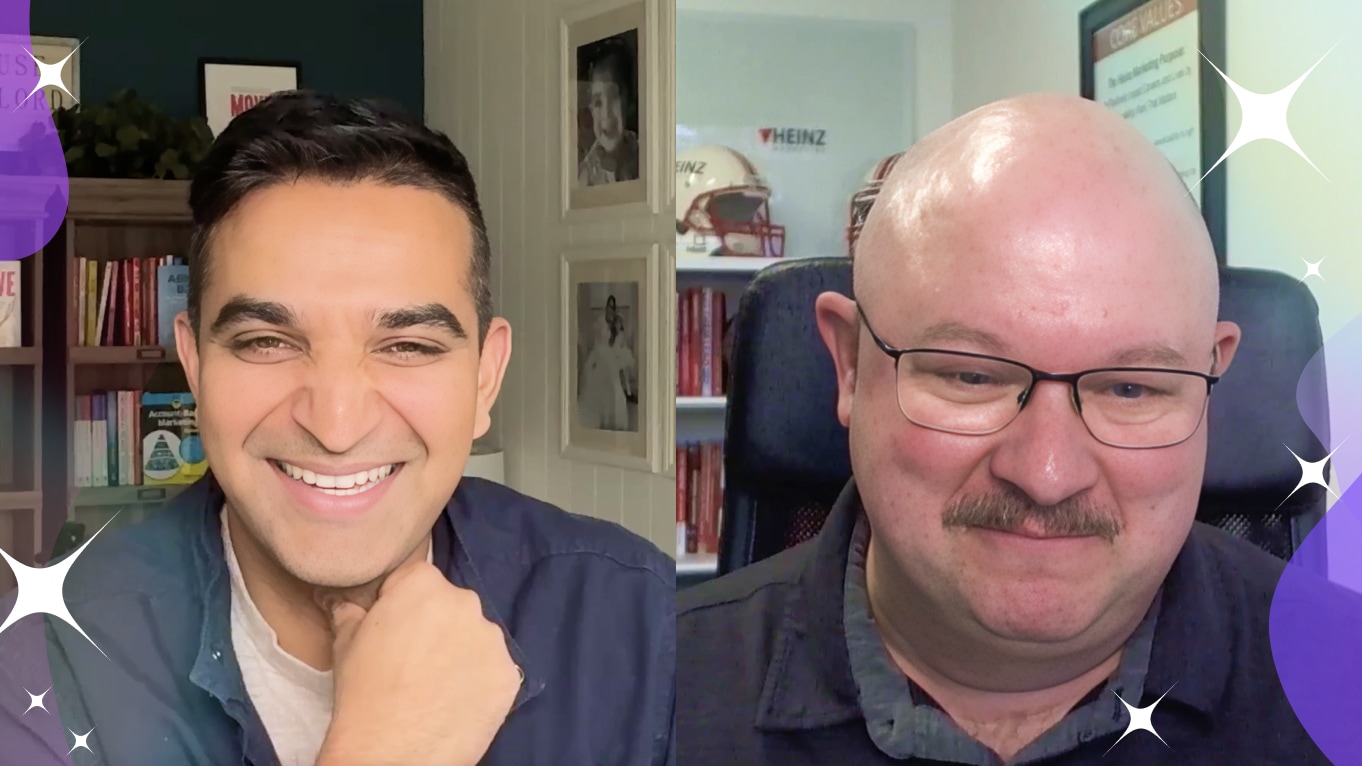
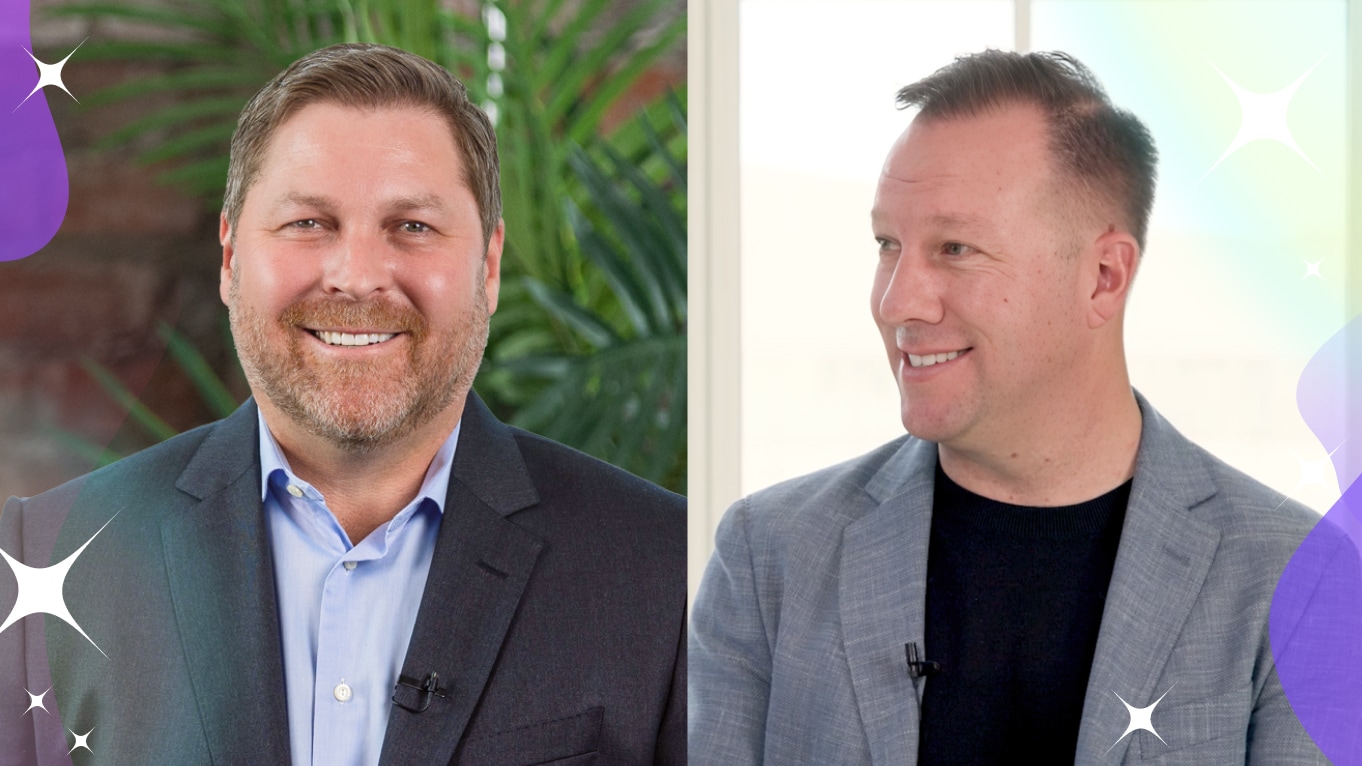
Hey. Thanks so much, Maura. Thank you so much, Sarah. We’re here at Agentic Marketing Summit, and I’m so pleased to be joined by Colin Fleming, the CMO of ServiceNow. Colin, welcome.

Colin Fleming – ServiceNow
Hey. Thanks for having me.

Kraig Swensrud – Qualified
It’s been—we have had the pleasure of knowing one another for more than fifteen years. And when I first met you, I couldn’t believe you told me that your background was actually as a Formula One team driver for Red Bull. And all of a sudden, here you are fifteen years later, or more than fifteen years later, and you’re the CMO of a top five software company.

For the audience, can you just tell us a little bit more about your background and how you got to where you are today?

Colin Fleming – ServiceNow
Yeah. From a young age, I chased a dream. We all have those childhood dreams. I decided to pursue it.

And so at a very young age, I started racing go-karts, moved to Europe, won some things, got opportunity after opportunity, and found myself on the cusp of Formula One, which was an amazing opportunity. And, you know, it didn’t quite work out. Made it right at the cusp, the 2008 finance crisis happened.

But I took everything that I learned—raising money and becoming a brand ambassador for companies—and applied that to what’s turned out to be a relatively successful marketing career.

Kraig Swensrud – Qualified
Yeah. And you sure have been on the forefront of brand in enterprise software. I think that’s a super cool background. I saw you keynote at Adobe Summit earlier this year, and you had a big slide that said the two Bs in B2B—none of them stand for boring.

So, you know, I’ve watched you and your approach to marketing at ServiceNow as long as you’ve been there. Can you tell us a little bit about your perspective on B2B marketing?

Colin Fleming – ServiceNow
Sure. Well, look, when you really take a step back and look at it, B2B is seventy percent of the GDP in the world. And yet, for some reason, the marketing comparatively has not been good or as provocative or as thought-leadership oriented.

And so for me, the career progression and the career trajectory has been about challenging that status quo. Why can’t B2B marketing be just as good, be just as provocative, and just as business-oriented as our friends in B2C?

That’s really what motivates me and my team on a daily basis, because we have an opportunity to move audiences, and there are real things at stake here. And I think that’s been a really fun trajectory for us as a company.

Kraig Swensrud – Qualified
And I’ve loved what I’ve watched you do over at ServiceNow. You’ve got Idris Elba repping your brand. You’re running Wall Street Journal ads that say you don’t need AI agents. I think you’re sponsoring Team Ferrari or something like that.

But basically, what is your approach when it comes to agents and AI? Let’s dive into that, because you’re trying to change an entire industry, and you’re obviously not trying to do it in a boring way. How do you think about it?

Colin Fleming – ServiceNow
Well, it’s funny because I’m both a consumer and a purchaser of agents, and also we’re in the business as well.

And so the headline you mentioned—it’s always a good juxtaposition headline. Because look, we’re all going through this together. We’re learning, we’re adopting in real time, and the market is moving really, really quickly.

A couple perspectives we’ve really learned: getting our data in order and making sure that we’ve got a great foundation. Because what we see a lot of our customers doing, and a lot of people and peers in the market doing, is they’re putting agents to work on top of the legacy hornet’s nest of complexity of technology that exists.

So really make sure our foundation is set, putting agents to work where repetition really, really matters, and where we really get to think about specialization. That’s really interesting for us—allowing humans and people to really do the things that we’re really great at.

Kraig Swensrud – Qualified
Well, you’re the top marketer at a software company that delivers agents, and you’re the CMO who’s got to run a huge organization. Let me ask you about this term—we’re here at the Agentic Marketing Summit.

Some people have said earlier this year we’re entering this new agentic marketing era. A year ago, we were not using this terminology. What does it mean to you as the CMO?

Colin Fleming – ServiceNow
Well, I think we have to not just rethink marketing in incremental ways. We have to kind of rewire ourselves for this new world and think about what was never within reach is now within reach.

You and I have done a lot of marketing planning cycles in our career, and it’s always like, “Well, now I can afford 150 account-based marketing accounts, and it used to be 120,” or whatever it is. Now we think we can do ABM at scale—true scale. We don’t have to think about those limitations.

So we almost have to rewire our brains in ways that we haven’t in the past, which is a lot of fun. We have to think about our data repositories, and data becomes almost the golden asset for marketers.

Really rethinking every aspect to allow the creativity in humans to come out, and really enable agents to handle the small stuff so we can focus on doing the big creative stuff.

Kraig Swensrud – Qualified
So let me double-click on something you just said, which is finally we could do ABM at scale. Explain to the audience what you mean when you say that.

Colin Fleming – ServiceNow
Well, it’s always been a limitation. We can handle, let’s say, the hundred accounts that we’ve been able to fund and resource and articulate against and really be thoughtful about. But agents take away those mundane tasks that stood in the way of us scaling.

So now we can think about building out the right buying group audiences, articulating messages, personalizing ways at true scale. Those things were not within reach.

And so the question inside the four walls of ServiceNow, and I’m sure you’re thinking about this as well, is how do we unshackle ourselves from the burdens of the past and really have an opportunity to think at true scale?

So I do think persona targeting, segmentation, data—things like this—have never been as within reach as it is today, and that opens up a class of opportunities.

Kraig Swensrud – Qualified
I think fifteen years ago, we were in a marketing laboratory together, and we said the word one-to-one personalization, right? And that’s kind of been the mantra of our industry for so long. And finally, we kind of are at this moment where you actually can have one-to-one personalization at scale. Pretty, pretty, pretty crazy.

What do you think are the biggest challenges as organizations shift from a traditional marketing model, a traditional marketing tech stack, traditional marketing people, and now we’re in the agentic marketing era? What pitfalls do you see out there, or even the struggles you’ve had internally transforming your organization?

What advice do you have for other CMOs?

Colin Fleming – ServiceNow
Look, I think a couple things are true.

We know the average company has 367 different applications inside their organization. And what we see a lot of vendors and a lot of companies doing is they’re dumping agentic technology on that existing tech stack without regard for thinking about, how is my data set? Is my data in the right foundational order?

Do I have the right partners? Not just my existing partners, but do I have the right partners to think about this going forward? Am I betting on the future?

So I do think that I see a lot of companies getting in trouble, almost exacerbating the hornet’s nest of complexity that we talked about.

So it’s about simplifying the tech stack, really thinking about what really matters, and prioritizing outcomes, not use cases. So many times I see marketers think about, “I’ve got seventeen thousand agents in my tech stack.” That doesn’t mean it’s successful.

We’ve actually seen success by reducing our agents, choosing the right partners like Qualified, and things like this to really help us scale and make sure the data’s in order so it has the right amount of context along the way.

And it’s that foundational layer that really enables success at the agentic layer.

Kraig Swensrud – Qualified
Okay. So you just said it’s about outcomes, not agents. I think we went through a period of time earlier this year where marketers were proud to say, “Oh, we put this agent into production,” and chalk that up as a win.

But ultimately, it’s not about just putting some agent into production. It’s about where you can get the most value as a business. What outcomes can I drive for the marketing organization?

Let me pivot a little bit. The Wall Street Journal ad you ran said, “You don’t need AI agents.” It was a full-page ad. Can you expand a little bit more on the ServiceNow philosophy about how agents do work, humans also do work, and the creativity that humans bring?

Can you tell me the message behind that ad? It was super provocative.

Colin Fleming – ServiceNow
Yeah. A couple things. One is we saw the agentic direction, and too much of the conversation was going toward job replacement. It was almost like people at odds with agents.

And we think it’s both. We think agents are there to help tackle the mundane, to sweat the small stuff so humans can focus on what they’re really great at.

I look at our job as CMOs as finding the DNA of the company and putting a big spotlight on it. And at ServiceNow, from day one when Fred Luddy founded the company, it was about putting technology to work for people.

Now, twenty years later, we find ourselves in this position to put AI to work for people—not to move people aside, but to do it with them. That humanity that goes into the work enables us to bring more joy into our careers and into the work.

Too many peers and competitors are talking about job replacement in almost boastful ways. We don’t think that’s the path forward. We think the differentiation is making people better at their jobs and freeing up time for creativity and innovation.

That’s the unlock, and that’s why we put a big spotlight on it with a juxtaposition headline. And it worked.

Kraig Swensrud – Qualified
So you also had this recent LinkedIn article that said, “So what comes after the funnel?” You were describing the changing landscape and the next evolution of marketing teams. What do you see as the next evolution of the funnel?

Colin Fleming – ServiceNow
As my career has grown, I’ve become a student of how people buy in B2B—transactionally, scientifically, emotionally.

What I learned is we’ve been measuring it the wrong way the entire time. We’ve been measuring some linear form that starts with a lead form fill and goes to an SDR. When you take a step back, it doesn’t work that way at all.

On average, there are 22 members of the buying committee. Shortlists have gotten shorter—on average, only three companies. If you’re not part of that initial consideration set, you’re not getting bought.

So marketing’s role has moved way up funnel into mental availability inside organizations. It’s shifted our focus toward buying groups and buying group engagement, making sure we have both obvious buyers and hidden buyers.

That’s account-based marketing. Our job isn’t to just flip a lead over the fence. Our job is to warm up the entire buying group and hand that on a silver platter to sales.

Kraig Swensrud – Qualified
If I can take a detour, how do you actually do this? What are the key elements of your tech stack? What’s coming down the line?

Colin Fleming – ServiceNow
Before the tech stack, it comes with permission from the executive team. CEO Bill McDermott has been incredibly supportive, allowing us to take risks.

We cut lead generation by 63 percent, which is usually a great way for a CMO to get fired. But conversion rates went through the roof, and we more than offset the reduction.

It took a culture of experimentation, the right partners—Adobe, Qualified—and a willingness to break things that had worked for twenty years.

And I’ll say it again: if you don’t have your data in order, the agentic layer doesn’t scale.

Kraig Swensrud – Qualified
You’ve mentioned data a lot. You’ve been in this role for eighteen months. If you had a crystal ball, what do you think will be possible a year from now?

Colin Fleming – ServiceNow
Differentiation will change. Tech stack and speed will become table stakes. The question will be, can we move quickly with bold messages and reduce friction?

Marketing has historically inserted friction to capture interest. Now we can remove friction and make buying experiences better. That allows us to turn the boldness meter up.

Kraig Swensrud – Qualified
Final question. For marketers entering the workforce today, starting their careers in this AI era, what advice do you have?

Colin Fleming – ServiceNow
I’m almost envious. They don’t have the baggage we carry.

My advice is curiosity. Experiment. Learn. Fail fast. Be on the bleeding edge rather than waiting. Measure outcomes, not volume. That’s where marketing wins.

Kraig Swensrud – Qualified
When you’re a little uncomfortable, that’s when you know you’re in the right place. That’s when the best marketing happens.

Well, I’m so pleased you joined us today. Colin Fleming, CMO of ServiceNow.

Colin Fleming – ServiceNow
Thanks so much. Appreciate it.
Related content

GTM Playbooks for Agentic Marketing TeamsGTM Playbooks for Agentic Marketing Teams

GTM Playbooks for Agentic Marketing Teams

Explore how leading marketers are evolving go-to-market strategies and pipeline generation with agentic AI. Learn actionable frameworks for driving buyer engagement, personalizing journeys, and scaling impact, plus what’s next for high-performance teams in the agentic marketing era.

Transforming Every Corner of Marketing with AgentsTransforming Every Corner of Marketing with Agents

Transforming Every Corner of Marketing with Agents

Discover how specialized AI agents are optimizing every function in marketing from campaign management and content creation to analytics, customer engagement, ops, and beyond.

Decoding Agentic Marketing: The Language of Tomorrow’s LeadersDecoding Agentic Marketing: The Language of Tomorrow’s Leaders

Decoding Agentic Marketing: The Language of Tomorrow’s Leaders

Elevate your expertise by unpacking the critical concepts, distinctions, and frameworks shaping agentic marketing. This session will empower you to speak with authority on the evolving landscape—from co-pilots to autonomous agents—and command the conversations that define next-generation marketing leadership.

Stay up to date with weekly drops of fresh B2B marketing and sales content.

By registering, you agree that Qualified may process your personal data for events and marketing as set forth in our Privacy Policy
Thank you for subscribing. You’ll start receiving updates for Qualified+ shortly.
Oops! Something went wrong while submitting the form.

Welcome to the Agentic Marketing Era

With the rise of agentic AI, marketing will never be the same. Explore what the agentic marketing era means for marketing teams and how embracing AI-powered agents will fundamentally reshape your brand, GTM strategies, and customer engagement for the decade ahead.

Kraig Swensrud
Kraig Swensrud
No items found.
Welcome to the Agentic Marketing Era
Apple Podcast LinkGoogle Podcast LinkSpotify Podcast Link

TRANSCRIPT

Kraig Swensrud – Qualified
Hey. Thanks so much, Maura. Thank you so much, Sarah. We’re here at Agentic Marketing Summit, and I’m so pleased to be joined by Colin Fleming, the CMO of ServiceNow. Colin, welcome.

Colin Fleming – ServiceNow
Hey. Thanks for having me.

Kraig Swensrud – Qualified
It’s been—we have had the pleasure of knowing one another for more than fifteen years. And when I first met you, I couldn’t believe you told me that your background was actually as a Formula One team driver for Red Bull. And all of a sudden, here you are fifteen years later, or more than fifteen years later, and you’re the CMO of a top five software company.

For the audience, can you just tell us a little bit more about your background and how you got to where you are today?

Colin Fleming – ServiceNow
Yeah. From a young age, I chased a dream. We all have those childhood dreams. I decided to pursue it.

And so at a very young age, I started racing go-karts, moved to Europe, won some things, got opportunity after opportunity, and found myself on the cusp of Formula One, which was an amazing opportunity. And, you know, it didn’t quite work out. Made it right at the cusp, the 2008 finance crisis happened.

But I took everything that I learned—raising money and becoming a brand ambassador for companies—and applied that to what’s turned out to be a relatively successful marketing career.

Kraig Swensrud – Qualified
Yeah. And you sure have been on the forefront of brand in enterprise software. I think that’s a super cool background. I saw you keynote at Adobe Summit earlier this year, and you had a big slide that said the two Bs in B2B—none of them stand for boring.

So, you know, I’ve watched you and your approach to marketing at ServiceNow as long as you’ve been there. Can you tell us a little bit about your perspective on B2B marketing?

Colin Fleming – ServiceNow
Sure. Well, look, when you really take a step back and look at it, B2B is seventy percent of the GDP in the world. And yet, for some reason, the marketing comparatively has not been good or as provocative or as thought-leadership oriented.

And so for me, the career progression and the career trajectory has been about challenging that status quo. Why can’t B2B marketing be just as good, be just as provocative, and just as business-oriented as our friends in B2C?

That’s really what motivates me and my team on a daily basis, because we have an opportunity to move audiences, and there are real things at stake here. And I think that’s been a really fun trajectory for us as a company.

Kraig Swensrud – Qualified
And I’ve loved what I’ve watched you do over at ServiceNow. You’ve got Idris Elba repping your brand. You’re running Wall Street Journal ads that say you don’t need AI agents. I think you’re sponsoring Team Ferrari or something like that.

But basically, what is your approach when it comes to agents and AI? Let’s dive into that, because you’re trying to change an entire industry, and you’re obviously not trying to do it in a boring way. How do you think about it?

Colin Fleming – ServiceNow
Well, it’s funny because I’m both a consumer and a purchaser of agents, and also we’re in the business as well.

And so the headline you mentioned—it’s always a good juxtaposition headline. Because look, we’re all going through this together. We’re learning, we’re adopting in real time, and the market is moving really, really quickly.

A couple perspectives we’ve really learned: getting our data in order and making sure that we’ve got a great foundation. Because what we see a lot of our customers doing, and a lot of people and peers in the market doing, is they’re putting agents to work on top of the legacy hornet’s nest of complexity of technology that exists.

So really make sure our foundation is set, putting agents to work where repetition really, really matters, and where we really get to think about specialization. That’s really interesting for us—allowing humans and people to really do the things that we’re really great at.

Kraig Swensrud – Qualified
Well, you’re the top marketer at a software company that delivers agents, and you’re the CMO who’s got to run a huge organization. Let me ask you about this term—we’re here at the Agentic Marketing Summit.

Some people have said earlier this year we’re entering this new agentic marketing era. A year ago, we were not using this terminology. What does it mean to you as the CMO?

Colin Fleming – ServiceNow
Well, I think we have to not just rethink marketing in incremental ways. We have to kind of rewire ourselves for this new world and think about what was never within reach is now within reach.

You and I have done a lot of marketing planning cycles in our career, and it’s always like, “Well, now I can afford 150 account-based marketing accounts, and it used to be 120,” or whatever it is. Now we think we can do ABM at scale—true scale. We don’t have to think about those limitations.

So we almost have to rewire our brains in ways that we haven’t in the past, which is a lot of fun. We have to think about our data repositories, and data becomes almost the golden asset for marketers.

Really rethinking every aspect to allow the creativity in humans to come out, and really enable agents to handle the small stuff so we can focus on doing the big creative stuff.

Kraig Swensrud – Qualified
So let me double-click on something you just said, which is finally we could do ABM at scale. Explain to the audience what you mean when you say that.

Colin Fleming – ServiceNow
Well, it’s always been a limitation. We can handle, let’s say, the hundred accounts that we’ve been able to fund and resource and articulate against and really be thoughtful about. But agents take away those mundane tasks that stood in the way of us scaling.

So now we can think about building out the right buying group audiences, articulating messages, personalizing ways at true scale. Those things were not within reach.

And so the question inside the four walls of ServiceNow, and I’m sure you’re thinking about this as well, is how do we unshackle ourselves from the burdens of the past and really have an opportunity to think at true scale?

So I do think persona targeting, segmentation, data—things like this—have never been as within reach as it is today, and that opens up a class of opportunities.

Kraig Swensrud – Qualified
I think fifteen years ago, we were in a marketing laboratory together, and we said the word one-to-one personalization, right? And that’s kind of been the mantra of our industry for so long. And finally, we kind of are at this moment where you actually can have one-to-one personalization at scale. Pretty, pretty, pretty crazy.

What do you think are the biggest challenges as organizations shift from a traditional marketing model, a traditional marketing tech stack, traditional marketing people, and now we’re in the agentic marketing era? What pitfalls do you see out there, or even the struggles you’ve had internally transforming your organization?

What advice do you have for other CMOs?

Colin Fleming – ServiceNow
Look, I think a couple things are true.

We know the average company has 367 different applications inside their organization. And what we see a lot of vendors and a lot of companies doing is they’re dumping agentic technology on that existing tech stack without regard for thinking about, how is my data set? Is my data in the right foundational order?

Do I have the right partners? Not just my existing partners, but do I have the right partners to think about this going forward? Am I betting on the future?

So I do think that I see a lot of companies getting in trouble, almost exacerbating the hornet’s nest of complexity that we talked about.

So it’s about simplifying the tech stack, really thinking about what really matters, and prioritizing outcomes, not use cases. So many times I see marketers think about, “I’ve got seventeen thousand agents in my tech stack.” That doesn’t mean it’s successful.

We’ve actually seen success by reducing our agents, choosing the right partners like Qualified, and things like this to really help us scale and make sure the data’s in order so it has the right amount of context along the way.

And it’s that foundational layer that really enables success at the agentic layer.

Kraig Swensrud – Qualified
Okay. So you just said it’s about outcomes, not agents. I think we went through a period of time earlier this year where marketers were proud to say, “Oh, we put this agent into production,” and chalk that up as a win.

But ultimately, it’s not about just putting some agent into production. It’s about where you can get the most value as a business. What outcomes can I drive for the marketing organization?

Let me pivot a little bit. The Wall Street Journal ad you ran said, “You don’t need AI agents.” It was a full-page ad. Can you expand a little bit more on the ServiceNow philosophy about how agents do work, humans also do work, and the creativity that humans bring?

Can you tell me the message behind that ad? It was super provocative.

Colin Fleming – ServiceNow
Yeah. A couple things. One is we saw the agentic direction, and too much of the conversation was going toward job replacement. It was almost like people at odds with agents.

And we think it’s both. We think agents are there to help tackle the mundane, to sweat the small stuff so humans can focus on what they’re really great at.

I look at our job as CMOs as finding the DNA of the company and putting a big spotlight on it. And at ServiceNow, from day one when Fred Luddy founded the company, it was about putting technology to work for people.

Now, twenty years later, we find ourselves in this position to put AI to work for people—not to move people aside, but to do it with them. That humanity that goes into the work enables us to bring more joy into our careers and into the work.

Too many peers and competitors are talking about job replacement in almost boastful ways. We don’t think that’s the path forward. We think the differentiation is making people better at their jobs and freeing up time for creativity and innovation.

That’s the unlock, and that’s why we put a big spotlight on it with a juxtaposition headline. And it worked.

Kraig Swensrud – Qualified
So you also had this recent LinkedIn article that said, “So what comes after the funnel?” You were describing the changing landscape and the next evolution of marketing teams. What do you see as the next evolution of the funnel?

Colin Fleming – ServiceNow
As my career has grown, I’ve become a student of how people buy in B2B—transactionally, scientifically, emotionally.

What I learned is we’ve been measuring it the wrong way the entire time. We’ve been measuring some linear form that starts with a lead form fill and goes to an SDR. When you take a step back, it doesn’t work that way at all.

On average, there are 22 members of the buying committee. Shortlists have gotten shorter—on average, only three companies. If you’re not part of that initial consideration set, you’re not getting bought.

So marketing’s role has moved way up funnel into mental availability inside organizations. It’s shifted our focus toward buying groups and buying group engagement, making sure we have both obvious buyers and hidden buyers.

That’s account-based marketing. Our job isn’t to just flip a lead over the fence. Our job is to warm up the entire buying group and hand that on a silver platter to sales.

Kraig Swensrud – Qualified
If I can take a detour, how do you actually do this? What are the key elements of your tech stack? What’s coming down the line?

Colin Fleming – ServiceNow
Before the tech stack, it comes with permission from the executive team. CEO Bill McDermott has been incredibly supportive, allowing us to take risks.

We cut lead generation by 63 percent, which is usually a great way for a CMO to get fired. But conversion rates went through the roof, and we more than offset the reduction.

It took a culture of experimentation, the right partners—Adobe, Qualified—and a willingness to break things that had worked for twenty years.

And I’ll say it again: if you don’t have your data in order, the agentic layer doesn’t scale.

Kraig Swensrud – Qualified
You’ve mentioned data a lot. You’ve been in this role for eighteen months. If you had a crystal ball, what do you think will be possible a year from now?

Colin Fleming – ServiceNow
Differentiation will change. Tech stack and speed will become table stakes. The question will be, can we move quickly with bold messages and reduce friction?

Marketing has historically inserted friction to capture interest. Now we can remove friction and make buying experiences better. That allows us to turn the boldness meter up.

Kraig Swensrud – Qualified
Final question. For marketers entering the workforce today, starting their careers in this AI era, what advice do you have?

Colin Fleming – ServiceNow
I’m almost envious. They don’t have the baggage we carry.

My advice is curiosity. Experiment. Learn. Fail fast. Be on the bleeding edge rather than waiting. Measure outcomes, not volume. That’s where marketing wins.

Kraig Swensrud – Qualified
When you’re a little uncomfortable, that’s when you know you’re in the right place. That’s when the best marketing happens.

Well, I’m so pleased you joined us today. Colin Fleming, CMO of ServiceNow.

Colin Fleming – ServiceNow
Thanks so much. Appreciate it.

Stay up to date with weekly drops of fresh B2B marketing and sales content.

By registering, you agree that Qualified may process your personal data for events and marketing as set forth in our Privacy Policy
Thank you for subscribing. You’ll start receiving updates for Qualified+ shortly.
Oops! Something went wrong while submitting the form.

Welcome to the Agentic Marketing Era

With the rise of agentic AI, marketing will never be the same. Explore what the agentic marketing era means for marketing teams and how embracing AI-powered agents will fundamentally reshape your brand, GTM strategies, and customer engagement for the decade ahead.

Kraig Swensrud
Kraig Swensrud
No items found.
Welcome to the Agentic Marketing Era
Table of Contents
Apple Podcast LinkGoogle Podcast LinkSpotify Podcast Link

TRANSCRIPT

Kraig Swensrud – Qualified
Hey. Thanks so much, Maura. Thank you so much, Sarah. We’re here at Agentic Marketing Summit, and I’m so pleased to be joined by Colin Fleming, the CMO of ServiceNow. Colin, welcome.

Colin Fleming – ServiceNow
Hey. Thanks for having me.

Kraig Swensrud – Qualified
It’s been—we have had the pleasure of knowing one another for more than fifteen years. And when I first met you, I couldn’t believe you told me that your background was actually as a Formula One team driver for Red Bull. And all of a sudden, here you are fifteen years later, or more than fifteen years later, and you’re the CMO of a top five software company.

For the audience, can you just tell us a little bit more about your background and how you got to where you are today?

Colin Fleming – ServiceNow
Yeah. From a young age, I chased a dream. We all have those childhood dreams. I decided to pursue it.

And so at a very young age, I started racing go-karts, moved to Europe, won some things, got opportunity after opportunity, and found myself on the cusp of Formula One, which was an amazing opportunity. And, you know, it didn’t quite work out. Made it right at the cusp, the 2008 finance crisis happened.

But I took everything that I learned—raising money and becoming a brand ambassador for companies—and applied that to what’s turned out to be a relatively successful marketing career.

Kraig Swensrud – Qualified
Yeah. And you sure have been on the forefront of brand in enterprise software. I think that’s a super cool background. I saw you keynote at Adobe Summit earlier this year, and you had a big slide that said the two Bs in B2B—none of them stand for boring.

So, you know, I’ve watched you and your approach to marketing at ServiceNow as long as you’ve been there. Can you tell us a little bit about your perspective on B2B marketing?

Colin Fleming – ServiceNow
Sure. Well, look, when you really take a step back and look at it, B2B is seventy percent of the GDP in the world. And yet, for some reason, the marketing comparatively has not been good or as provocative or as thought-leadership oriented.

And so for me, the career progression and the career trajectory has been about challenging that status quo. Why can’t B2B marketing be just as good, be just as provocative, and just as business-oriented as our friends in B2C?

That’s really what motivates me and my team on a daily basis, because we have an opportunity to move audiences, and there are real things at stake here. And I think that’s been a really fun trajectory for us as a company.

Kraig Swensrud – Qualified
And I’ve loved what I’ve watched you do over at ServiceNow. You’ve got Idris Elba repping your brand. You’re running Wall Street Journal ads that say you don’t need AI agents. I think you’re sponsoring Team Ferrari or something like that.

But basically, what is your approach when it comes to agents and AI? Let’s dive into that, because you’re trying to change an entire industry, and you’re obviously not trying to do it in a boring way. How do you think about it?

Colin Fleming – ServiceNow
Well, it’s funny because I’m both a consumer and a purchaser of agents, and also we’re in the business as well.

And so the headline you mentioned—it’s always a good juxtaposition headline. Because look, we’re all going through this together. We’re learning, we’re adopting in real time, and the market is moving really, really quickly.

A couple perspectives we’ve really learned: getting our data in order and making sure that we’ve got a great foundation. Because what we see a lot of our customers doing, and a lot of people and peers in the market doing, is they’re putting agents to work on top of the legacy hornet’s nest of complexity of technology that exists.

So really make sure our foundation is set, putting agents to work where repetition really, really matters, and where we really get to think about specialization. That’s really interesting for us—allowing humans and people to really do the things that we’re really great at.

Kraig Swensrud – Qualified
Well, you’re the top marketer at a software company that delivers agents, and you’re the CMO who’s got to run a huge organization. Let me ask you about this term—we’re here at the Agentic Marketing Summit.

Some people have said earlier this year we’re entering this new agentic marketing era. A year ago, we were not using this terminology. What does it mean to you as the CMO?

Colin Fleming – ServiceNow
Well, I think we have to not just rethink marketing in incremental ways. We have to kind of rewire ourselves for this new world and think about what was never within reach is now within reach.

You and I have done a lot of marketing planning cycles in our career, and it’s always like, “Well, now I can afford 150 account-based marketing accounts, and it used to be 120,” or whatever it is. Now we think we can do ABM at scale—true scale. We don’t have to think about those limitations.

So we almost have to rewire our brains in ways that we haven’t in the past, which is a lot of fun. We have to think about our data repositories, and data becomes almost the golden asset for marketers.

Really rethinking every aspect to allow the creativity in humans to come out, and really enable agents to handle the small stuff so we can focus on doing the big creative stuff.

Kraig Swensrud – Qualified
So let me double-click on something you just said, which is finally we could do ABM at scale. Explain to the audience what you mean when you say that.

Colin Fleming – ServiceNow
Well, it’s always been a limitation. We can handle, let’s say, the hundred accounts that we’ve been able to fund and resource and articulate against and really be thoughtful about. But agents take away those mundane tasks that stood in the way of us scaling.

So now we can think about building out the right buying group audiences, articulating messages, personalizing ways at true scale. Those things were not within reach.

And so the question inside the four walls of ServiceNow, and I’m sure you’re thinking about this as well, is how do we unshackle ourselves from the burdens of the past and really have an opportunity to think at true scale?

So I do think persona targeting, segmentation, data—things like this—have never been as within reach as it is today, and that opens up a class of opportunities.

Kraig Swensrud – Qualified
I think fifteen years ago, we were in a marketing laboratory together, and we said the word one-to-one personalization, right? And that’s kind of been the mantra of our industry for so long. And finally, we kind of are at this moment where you actually can have one-to-one personalization at scale. Pretty, pretty, pretty crazy.

What do you think are the biggest challenges as organizations shift from a traditional marketing model, a traditional marketing tech stack, traditional marketing people, and now we’re in the agentic marketing era? What pitfalls do you see out there, or even the struggles you’ve had internally transforming your organization?

What advice do you have for other CMOs?

Colin Fleming – ServiceNow
Look, I think a couple things are true.

We know the average company has 367 different applications inside their organization. And what we see a lot of vendors and a lot of companies doing is they’re dumping agentic technology on that existing tech stack without regard for thinking about, how is my data set? Is my data in the right foundational order?

Do I have the right partners? Not just my existing partners, but do I have the right partners to think about this going forward? Am I betting on the future?

So I do think that I see a lot of companies getting in trouble, almost exacerbating the hornet’s nest of complexity that we talked about.

So it’s about simplifying the tech stack, really thinking about what really matters, and prioritizing outcomes, not use cases. So many times I see marketers think about, “I’ve got seventeen thousand agents in my tech stack.” That doesn’t mean it’s successful.

We’ve actually seen success by reducing our agents, choosing the right partners like Qualified, and things like this to really help us scale and make sure the data’s in order so it has the right amount of context along the way.

And it’s that foundational layer that really enables success at the agentic layer.

Kraig Swensrud – Qualified
Okay. So you just said it’s about outcomes, not agents. I think we went through a period of time earlier this year where marketers were proud to say, “Oh, we put this agent into production,” and chalk that up as a win.

But ultimately, it’s not about just putting some agent into production. It’s about where you can get the most value as a business. What outcomes can I drive for the marketing organization?

Let me pivot a little bit. The Wall Street Journal ad you ran said, “You don’t need AI agents.” It was a full-page ad. Can you expand a little bit more on the ServiceNow philosophy about how agents do work, humans also do work, and the creativity that humans bring?

Can you tell me the message behind that ad? It was super provocative.

Colin Fleming – ServiceNow
Yeah. A couple things. One is we saw the agentic direction, and too much of the conversation was going toward job replacement. It was almost like people at odds with agents.

And we think it’s both. We think agents are there to help tackle the mundane, to sweat the small stuff so humans can focus on what they’re really great at.

I look at our job as CMOs as finding the DNA of the company and putting a big spotlight on it. And at ServiceNow, from day one when Fred Luddy founded the company, it was about putting technology to work for people.

Now, twenty years later, we find ourselves in this position to put AI to work for people—not to move people aside, but to do it with them. That humanity that goes into the work enables us to bring more joy into our careers and into the work.

Too many peers and competitors are talking about job replacement in almost boastful ways. We don’t think that’s the path forward. We think the differentiation is making people better at their jobs and freeing up time for creativity and innovation.

That’s the unlock, and that’s why we put a big spotlight on it with a juxtaposition headline. And it worked.

Kraig Swensrud – Qualified
So you also had this recent LinkedIn article that said, “So what comes after the funnel?” You were describing the changing landscape and the next evolution of marketing teams. What do you see as the next evolution of the funnel?

Colin Fleming – ServiceNow
As my career has grown, I’ve become a student of how people buy in B2B—transactionally, scientifically, emotionally.

What I learned is we’ve been measuring it the wrong way the entire time. We’ve been measuring some linear form that starts with a lead form fill and goes to an SDR. When you take a step back, it doesn’t work that way at all.

On average, there are 22 members of the buying committee. Shortlists have gotten shorter—on average, only three companies. If you’re not part of that initial consideration set, you’re not getting bought.

So marketing’s role has moved way up funnel into mental availability inside organizations. It’s shifted our focus toward buying groups and buying group engagement, making sure we have both obvious buyers and hidden buyers.

That’s account-based marketing. Our job isn’t to just flip a lead over the fence. Our job is to warm up the entire buying group and hand that on a silver platter to sales.

Kraig Swensrud – Qualified
If I can take a detour, how do you actually do this? What are the key elements of your tech stack? What’s coming down the line?

Colin Fleming – ServiceNow
Before the tech stack, it comes with permission from the executive team. CEO Bill McDermott has been incredibly supportive, allowing us to take risks.

We cut lead generation by 63 percent, which is usually a great way for a CMO to get fired. But conversion rates went through the roof, and we more than offset the reduction.

It took a culture of experimentation, the right partners—Adobe, Qualified—and a willingness to break things that had worked for twenty years.

And I’ll say it again: if you don’t have your data in order, the agentic layer doesn’t scale.

Kraig Swensrud – Qualified
You’ve mentioned data a lot. You’ve been in this role for eighteen months. If you had a crystal ball, what do you think will be possible a year from now?

Colin Fleming – ServiceNow
Differentiation will change. Tech stack and speed will become table stakes. The question will be, can we move quickly with bold messages and reduce friction?

Marketing has historically inserted friction to capture interest. Now we can remove friction and make buying experiences better. That allows us to turn the boldness meter up.

Kraig Swensrud – Qualified
Final question. For marketers entering the workforce today, starting their careers in this AI era, what advice do you have?

Colin Fleming – ServiceNow
I’m almost envious. They don’t have the baggage we carry.

My advice is curiosity. Experiment. Learn. Fail fast. Be on the bleeding edge rather than waiting. Measure outcomes, not volume. That’s where marketing wins.

Kraig Swensrud – Qualified
When you’re a little uncomfortable, that’s when you know you’re in the right place. That’s when the best marketing happens.

Well, I’m so pleased you joined us today. Colin Fleming, CMO of ServiceNow.

Colin Fleming – ServiceNow
Thanks so much. Appreciate it.

Related content

Stay up to date with weekly drops of fresh B2B marketing and sales content.

By registering, you agree that Qualified may process your personal data for events and marketing as set forth in our Privacy Policy
Thank you for subscribing. You’ll start receiving updates for Qualified+ shortly.
Oops! Something went wrong while submitting the form.

Welcome to the Agentic Marketing Era

With the rise of agentic AI, marketing will never be the same. Explore what the agentic marketing era means for marketing teams and how embracing AI-powered agents will fundamentally reshape your brand, GTM strategies, and customer engagement for the decade ahead.

Welcome to the Agentic Marketing Era
Play video button
Glow play video button
Kraig Swensrud
Kraig Swensrud
|
November 4, 2025
|
X
min read
Apple Podcast LinkGoogle Podcast LinkSpotify Podcast Link

TRANSCRIPT

Kraig Swensrud – Qualified
Hey. Thanks so much, Maura. Thank you so much, Sarah. We’re here at Agentic Marketing Summit, and I’m so pleased to be joined by Colin Fleming, the CMO of ServiceNow. Colin, welcome.

Colin Fleming – ServiceNow
Hey. Thanks for having me.

Kraig Swensrud – Qualified
It’s been—we have had the pleasure of knowing one another for more than fifteen years. And when I first met you, I couldn’t believe you told me that your background was actually as a Formula One team driver for Red Bull. And all of a sudden, here you are fifteen years later, or more than fifteen years later, and you’re the CMO of a top five software company.

For the audience, can you just tell us a little bit more about your background and how you got to where you are today?

Colin Fleming – ServiceNow
Yeah. From a young age, I chased a dream. We all have those childhood dreams. I decided to pursue it.

And so at a very young age, I started racing go-karts, moved to Europe, won some things, got opportunity after opportunity, and found myself on the cusp of Formula One, which was an amazing opportunity. And, you know, it didn’t quite work out. Made it right at the cusp, the 2008 finance crisis happened.

But I took everything that I learned—raising money and becoming a brand ambassador for companies—and applied that to what’s turned out to be a relatively successful marketing career.

Kraig Swensrud – Qualified
Yeah. And you sure have been on the forefront of brand in enterprise software. I think that’s a super cool background. I saw you keynote at Adobe Summit earlier this year, and you had a big slide that said the two Bs in B2B—none of them stand for boring.

So, you know, I’ve watched you and your approach to marketing at ServiceNow as long as you’ve been there. Can you tell us a little bit about your perspective on B2B marketing?

Colin Fleming – ServiceNow
Sure. Well, look, when you really take a step back and look at it, B2B is seventy percent of the GDP in the world. And yet, for some reason, the marketing comparatively has not been good or as provocative or as thought-leadership oriented.

And so for me, the career progression and the career trajectory has been about challenging that status quo. Why can’t B2B marketing be just as good, be just as provocative, and just as business-oriented as our friends in B2C?

That’s really what motivates me and my team on a daily basis, because we have an opportunity to move audiences, and there are real things at stake here. And I think that’s been a really fun trajectory for us as a company.

Kraig Swensrud – Qualified
And I’ve loved what I’ve watched you do over at ServiceNow. You’ve got Idris Elba repping your brand. You’re running Wall Street Journal ads that say you don’t need AI agents. I think you’re sponsoring Team Ferrari or something like that.

But basically, what is your approach when it comes to agents and AI? Let’s dive into that, because you’re trying to change an entire industry, and you’re obviously not trying to do it in a boring way. How do you think about it?

Colin Fleming – ServiceNow
Well, it’s funny because I’m both a consumer and a purchaser of agents, and also we’re in the business as well.

And so the headline you mentioned—it’s always a good juxtaposition headline. Because look, we’re all going through this together. We’re learning, we’re adopting in real time, and the market is moving really, really quickly.

A couple perspectives we’ve really learned: getting our data in order and making sure that we’ve got a great foundation. Because what we see a lot of our customers doing, and a lot of people and peers in the market doing, is they’re putting agents to work on top of the legacy hornet’s nest of complexity of technology that exists.

So really make sure our foundation is set, putting agents to work where repetition really, really matters, and where we really get to think about specialization. That’s really interesting for us—allowing humans and people to really do the things that we’re really great at.

Kraig Swensrud – Qualified
Well, you’re the top marketer at a software company that delivers agents, and you’re the CMO who’s got to run a huge organization. Let me ask you about this term—we’re here at the Agentic Marketing Summit.

Some people have said earlier this year we’re entering this new agentic marketing era. A year ago, we were not using this terminology. What does it mean to you as the CMO?

Colin Fleming – ServiceNow
Well, I think we have to not just rethink marketing in incremental ways. We have to kind of rewire ourselves for this new world and think about what was never within reach is now within reach.

You and I have done a lot of marketing planning cycles in our career, and it’s always like, “Well, now I can afford 150 account-based marketing accounts, and it used to be 120,” or whatever it is. Now we think we can do ABM at scale—true scale. We don’t have to think about those limitations.

So we almost have to rewire our brains in ways that we haven’t in the past, which is a lot of fun. We have to think about our data repositories, and data becomes almost the golden asset for marketers.

Really rethinking every aspect to allow the creativity in humans to come out, and really enable agents to handle the small stuff so we can focus on doing the big creative stuff.

Kraig Swensrud – Qualified
So let me double-click on something you just said, which is finally we could do ABM at scale. Explain to the audience what you mean when you say that.

Colin Fleming – ServiceNow
Well, it’s always been a limitation. We can handle, let’s say, the hundred accounts that we’ve been able to fund and resource and articulate against and really be thoughtful about. But agents take away those mundane tasks that stood in the way of us scaling.

So now we can think about building out the right buying group audiences, articulating messages, personalizing ways at true scale. Those things were not within reach.

And so the question inside the four walls of ServiceNow, and I’m sure you’re thinking about this as well, is how do we unshackle ourselves from the burdens of the past and really have an opportunity to think at true scale?

So I do think persona targeting, segmentation, data—things like this—have never been as within reach as it is today, and that opens up a class of opportunities.

Kraig Swensrud – Qualified
I think fifteen years ago, we were in a marketing laboratory together, and we said the word one-to-one personalization, right? And that’s kind of been the mantra of our industry for so long. And finally, we kind of are at this moment where you actually can have one-to-one personalization at scale. Pretty, pretty, pretty crazy.

What do you think are the biggest challenges as organizations shift from a traditional marketing model, a traditional marketing tech stack, traditional marketing people, and now we’re in the agentic marketing era? What pitfalls do you see out there, or even the struggles you’ve had internally transforming your organization?

What advice do you have for other CMOs?

Colin Fleming – ServiceNow
Look, I think a couple things are true.

We know the average company has 367 different applications inside their organization. And what we see a lot of vendors and a lot of companies doing is they’re dumping agentic technology on that existing tech stack without regard for thinking about, how is my data set? Is my data in the right foundational order?

Do I have the right partners? Not just my existing partners, but do I have the right partners to think about this going forward? Am I betting on the future?

So I do think that I see a lot of companies getting in trouble, almost exacerbating the hornet’s nest of complexity that we talked about.

So it’s about simplifying the tech stack, really thinking about what really matters, and prioritizing outcomes, not use cases. So many times I see marketers think about, “I’ve got seventeen thousand agents in my tech stack.” That doesn’t mean it’s successful.

We’ve actually seen success by reducing our agents, choosing the right partners like Qualified, and things like this to really help us scale and make sure the data’s in order so it has the right amount of context along the way.

And it’s that foundational layer that really enables success at the agentic layer.

Kraig Swensrud – Qualified
Okay. So you just said it’s about outcomes, not agents. I think we went through a period of time earlier this year where marketers were proud to say, “Oh, we put this agent into production,” and chalk that up as a win.

But ultimately, it’s not about just putting some agent into production. It’s about where you can get the most value as a business. What outcomes can I drive for the marketing organization?

Let me pivot a little bit. The Wall Street Journal ad you ran said, “You don’t need AI agents.” It was a full-page ad. Can you expand a little bit more on the ServiceNow philosophy about how agents do work, humans also do work, and the creativity that humans bring?

Can you tell me the message behind that ad? It was super provocative.

Colin Fleming – ServiceNow
Yeah. A couple things. One is we saw the agentic direction, and too much of the conversation was going toward job replacement. It was almost like people at odds with agents.

And we think it’s both. We think agents are there to help tackle the mundane, to sweat the small stuff so humans can focus on what they’re really great at.

I look at our job as CMOs as finding the DNA of the company and putting a big spotlight on it. And at ServiceNow, from day one when Fred Luddy founded the company, it was about putting technology to work for people.

Now, twenty years later, we find ourselves in this position to put AI to work for people—not to move people aside, but to do it with them. That humanity that goes into the work enables us to bring more joy into our careers and into the work.

Too many peers and competitors are talking about job replacement in almost boastful ways. We don’t think that’s the path forward. We think the differentiation is making people better at their jobs and freeing up time for creativity and innovation.

That’s the unlock, and that’s why we put a big spotlight on it with a juxtaposition headline. And it worked.

Kraig Swensrud – Qualified
So you also had this recent LinkedIn article that said, “So what comes after the funnel?” You were describing the changing landscape and the next evolution of marketing teams. What do you see as the next evolution of the funnel?

Colin Fleming – ServiceNow
As my career has grown, I’ve become a student of how people buy in B2B—transactionally, scientifically, emotionally.

What I learned is we’ve been measuring it the wrong way the entire time. We’ve been measuring some linear form that starts with a lead form fill and goes to an SDR. When you take a step back, it doesn’t work that way at all.

On average, there are 22 members of the buying committee. Shortlists have gotten shorter—on average, only three companies. If you’re not part of that initial consideration set, you’re not getting bought.

So marketing’s role has moved way up funnel into mental availability inside organizations. It’s shifted our focus toward buying groups and buying group engagement, making sure we have both obvious buyers and hidden buyers.

That’s account-based marketing. Our job isn’t to just flip a lead over the fence. Our job is to warm up the entire buying group and hand that on a silver platter to sales.

Kraig Swensrud – Qualified
If I can take a detour, how do you actually do this? What are the key elements of your tech stack? What’s coming down the line?

Colin Fleming – ServiceNow
Before the tech stack, it comes with permission from the executive team. CEO Bill McDermott has been incredibly supportive, allowing us to take risks.

We cut lead generation by 63 percent, which is usually a great way for a CMO to get fired. But conversion rates went through the roof, and we more than offset the reduction.

It took a culture of experimentation, the right partners—Adobe, Qualified—and a willingness to break things that had worked for twenty years.

And I’ll say it again: if you don’t have your data in order, the agentic layer doesn’t scale.

Kraig Swensrud – Qualified
You’ve mentioned data a lot. You’ve been in this role for eighteen months. If you had a crystal ball, what do you think will be possible a year from now?

Colin Fleming – ServiceNow
Differentiation will change. Tech stack and speed will become table stakes. The question will be, can we move quickly with bold messages and reduce friction?

Marketing has historically inserted friction to capture interest. Now we can remove friction and make buying experiences better. That allows us to turn the boldness meter up.

Kraig Swensrud – Qualified
Final question. For marketers entering the workforce today, starting their careers in this AI era, what advice do you have?

Colin Fleming – ServiceNow
I’m almost envious. They don’t have the baggage we carry.

My advice is curiosity. Experiment. Learn. Fail fast. Be on the bleeding edge rather than waiting. Measure outcomes, not volume. That’s where marketing wins.

Kraig Swensrud – Qualified
When you’re a little uncomfortable, that’s when you know you’re in the right place. That’s when the best marketing happens.

Well, I’m so pleased you joined us today. Colin Fleming, CMO of ServiceNow.

Colin Fleming – ServiceNow
Thanks so much. Appreciate it.

Tags:
No tags added.

Related articles

Qualified in Action

Quick demo?

Discover how we can help you convert more prospects into pipeline–right from your website.

Contact Us