Meet Pinned Mode: The future of the B2B website
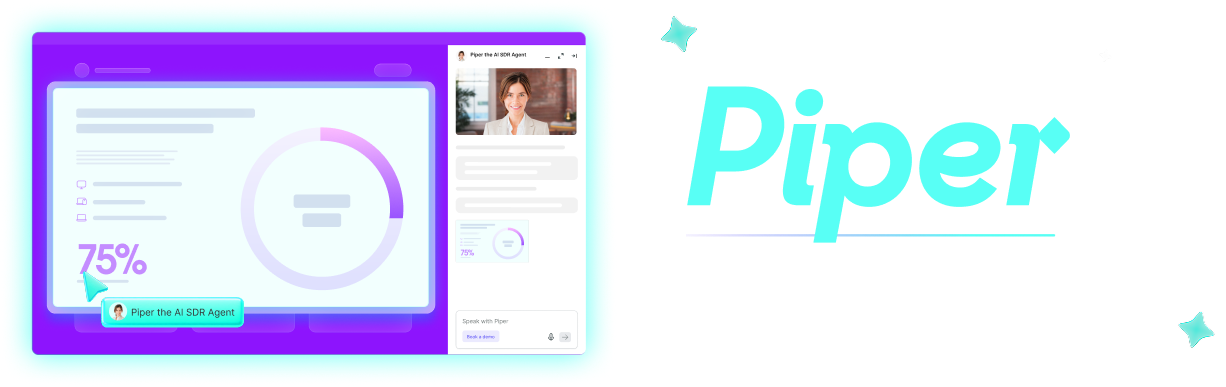
Pinned Mode transforms the B2B website into an interactive buying experience powered by an always-present AI SDR agent.

Ryan Teasell
No items found.
.jpg)


Pinned Mode transforms the B2B website into an interactive buying experience powered by an always-present AI SDR agent.



B2B websites have remained the same for decades. As a potential buyer, you arrive on the site, browse the navigation, and look at what stands out. If you need help, you fill out a form or interact with a text-based chatbot. If you can’t find what you’re looking for, you bounce.
This experience has always felt a bit lackluster, but it got the job done.
With the general adoption and advancement of large language models, if you think this website experience is going to cut it in the near future, you are 100% wrong.
Companies have begun deploying AI SDR agents to modernize the B2B website experience. But the typical implementation falls short: the agent sits hidden in the bottom-right corner, waits for the visitor to initiate engagement, operates in a single modality (text only), and functions primarily as a basic Q&A bot.
This was very much the agentic marketing 1.0 era: use an LLM to help complete some simple tasks, which mostly benefits the business, but gives the visitor some value too.
We are quickly crossing into the agentic marketing 2.0 era, and I have to say that once you see it, non-agentic websites are going to feel like using a fax machine.
This new era gives every website visitor an always-on, always-available, ever-present agent.
The agent is ever present: No longer tucked away in the corner, behind a button, or waiting for an inbound message. The agent is always on and truly a part of the website experience.
The agent can see what you’re seeing: The agent has a live view of what you are seeing, and can help explain things as you browse. For instance, she can share her point of view on what the visuals on the page are trying to convey, the key messaging takeaways, and so on. The agent has the full context of your browsing experience and can chime in to add color.
The agent can guide you around the website: She can take you where you want to go, like a VIP tour guide. Want to see customer stories? Want to see a slide on the implementation process? Want to better understand how an integration works? The agent will show you.
The agent can interact via text, voice, and video: In 2026, voice and video mode are the default. We use ChatGPT voice-mode. We Facetime our friends. An agent should be no different. She can operate across whatever modality works best for you (voice, video, and text).
The agent can answer any question: As you are browsing, you probably have some questions. How does the solution stack up to the competition? How does it work for a financial services company? What's the quickest way to get started? The agent can answer every question with the knowledge of the entire company.
The agent has all of the skills of your dream salesperson: Imagine taking this beyond just back and forth Q&A. The agent can present, she can demo, she can schedule meetings with the right people. She can follow up with you, summarize your engagement, send you the most relevant content and offers.
What we’re starting to realize is b2b marketing is about to have a complete overhaul. Having a static website with no agent is not going to cut it by the end of 2026. As more and more companies implement this new strategy into their buyer's journey, the companies that don’t are going to feel quickly outdated. Your competition is going to beat you with a website experience that helps inform their prospect more three discovery calls with your business will.
So what does this agent-centric website experience look like?
At Qualified, we call it ‘Pinned Mode.’ It’s a brand new website experience where the agent is front and center. It feels more like a concierge in a hotel lobby than a chatbot asking for your email.
With Pinned Mode, Piper the AI SDR Agent is visible and waiting to help the moment you arrive on the site. She knows the website better than anybody who works here, can answer all your questions, can help you navigate, book a demo, or even show you some slides.
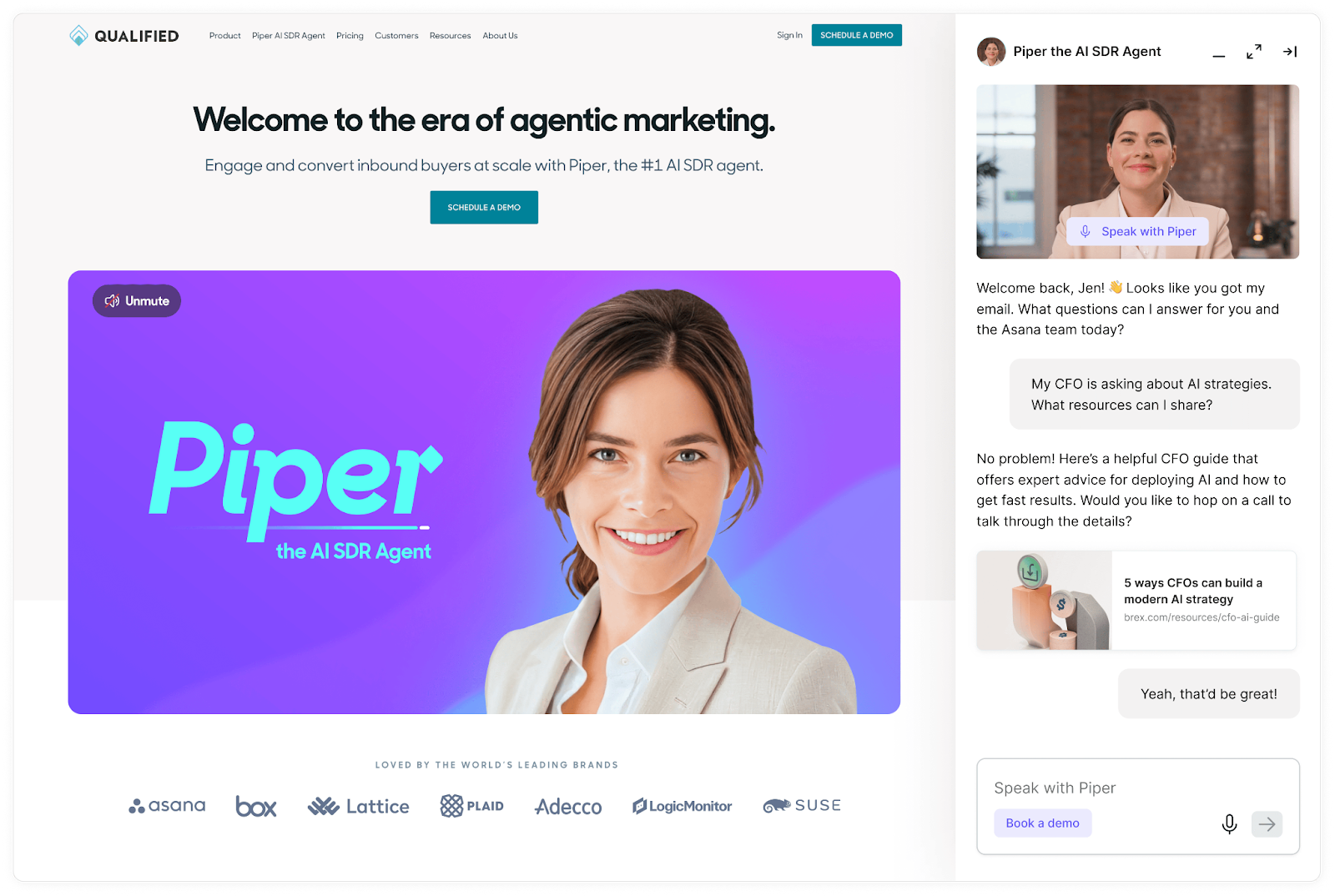
Traditional chat widgets sit on top of your site, they load after the page loads, they overlap content, and sometimes they disappear.
They feel temporary and a lot of the time, we forget they’re even there.
Pinned Mode is intentional, and instead of floating on top of the experience, it (literally) lives alongside it.
When we decided to implement “Pinned Mode”, we knew one thing: she couldn’t block content, and she couldn’t shove the page around after load.
Most web teams care deeply about CLS, which stands for Cumulative Layout Shift. It’s a Google metric that measures how stable your page is while loading.
Without planning for it, an always-on agent can cause major page shifts to happen, and degrade this score significantly. A degradation in this score can have negative impacts on SEO and other web health metrics, which marketing teams strive to avoid.
We solved this problem by creating a dedicated space on the right side of the browser, where Piper can load and keep the CLS score where it should be.
So how does it work?
Intentional Loading State: We added a gutter to prevent the site from shifting once Piper loads, keeping your CLS scores safe.
The space is native, so there’s no shifting, overlap, or unnecessary chaos.
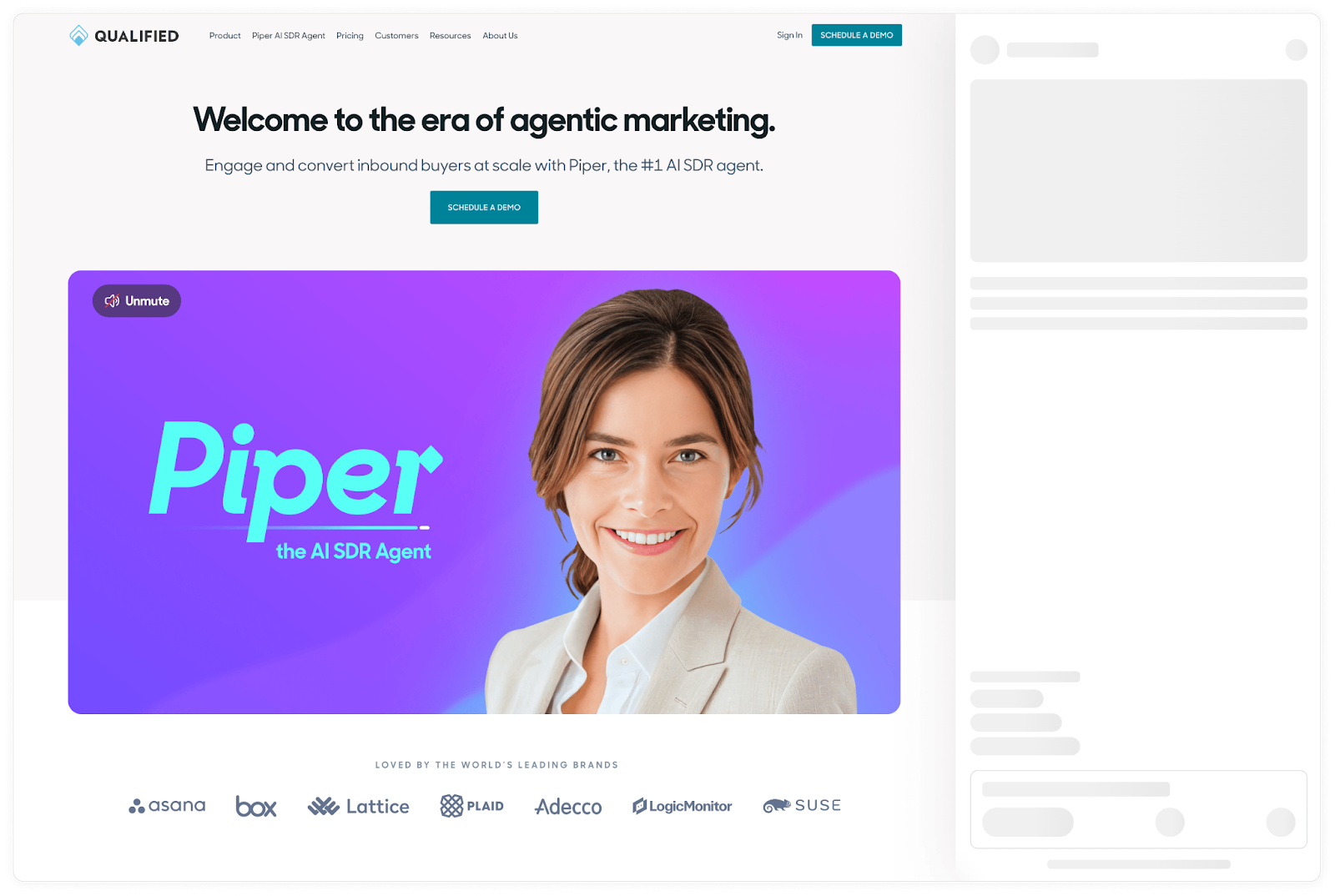
Because that design choice changes how the agent shows up, pinned mode lets Piper the AI SDR Agent feel more like that concierge at that 5-star hotel: present, context-aware, and ready to actually help.
And because she’s persistent and always visible, Piper can now truly act as a liaison for your brand, however your buyer wants to interact: voice, video, text.
The results: 2X more conversations, 6X more meetings with qualified buyers.
We turned pinned mode on for qualified.com and watched closely.
After one week, here’s what we saw:
Here’s the interesting part: we did not increase traffic. We did not launch a new campaign. We didn’t change the whole website.
All we did was change where and how Piper shows up. Instead of overhauling everything, we removed friction and made her visible at all times.
When Piper is visible, there is no barrier to entry. Visitors do not have to decide whether to open a chat or hunt for help. She is there, always ready to engage.
When we decided to change how help showed up, the impact was outsized.
Here’s what matters:
In the very near future, visitors are going to start visiting B2B websites looking for the agent.
If they don’t find one, at the very least they’ll feel frustrated, but more than likely they’ll think your business doesn’t understand AI and what buyers expect.
They’re used to conversational AI everywhere: on their phones, in their workflows, in search and productivity tools.
Buyers ask questions, and get answers. They do this via voice or text. They do it in their cars. They do it while they are multitasking.
They expect that they make requests, and something happens.
That expectation will not disappear when they land on your website. It's the front door to your business, and it certainly should not be the one place that still feels static.
Your website should naturally evolve with the way buyers move and operate everywhere else.
The future of the website is something they actually interact with and that responds, guides, and adapts to buyers.
Ultimately, the brands that figure this out early on are going to feel dramatically easier to buy from, and buyers will take note.
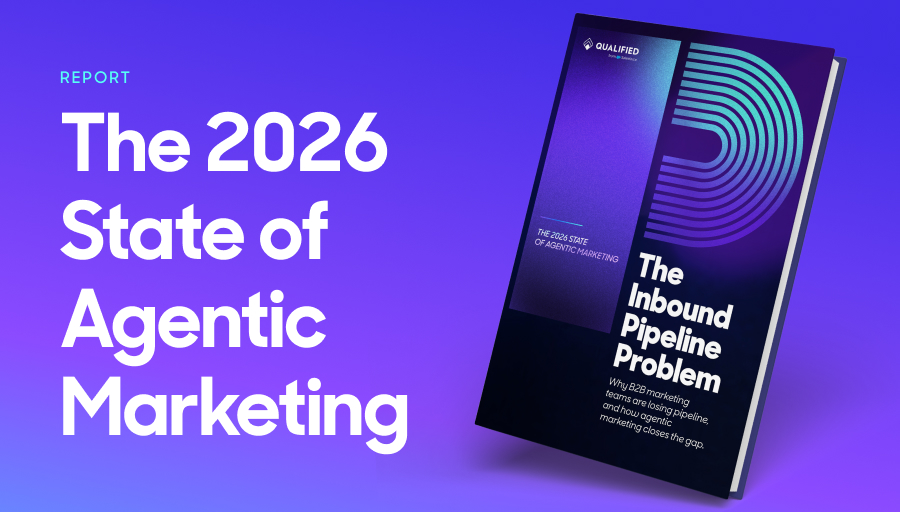
This report uncovers where pipeline is actually lost, between intent and response, and what high-performing teams do differently.

SaaStr CEO Jason Lemkin and Chief AI Officer Amelia Lerutte join Qualified founder & CEO Kraig Swensrud to share how they scaled from 0 to 20 AI agents and how starting somewhere is better than getting it perfect out of the gate. They share their perspectives on why there is no longer an excuse to not deploy AI SDR agents in your GTM motions before the end of the year, and how to do it effectively.

We've left the traditional marketing funnel behind. Learn how to step into the funnel of the future with your guide to agentic marketing.
Pinned Mode transforms the B2B website into an interactive buying experience powered by an always-present AI SDR agent.
B2B websites have remained the same for decades. As a potential buyer, you arrive on the site, browse the navigation, and look at what stands out. If you need help, you fill out a form or interact with a text-based chatbot. If you can’t find what you’re looking for, you bounce.
This experience has always felt a bit lackluster, but it got the job done.
With the general adoption and advancement of large language models, if you think this website experience is going to cut it in the near future, you are 100% wrong.
Companies have begun deploying AI SDR agents to modernize the B2B website experience. But the typical implementation falls short: the agent sits hidden in the bottom-right corner, waits for the visitor to initiate engagement, operates in a single modality (text only), and functions primarily as a basic Q&A bot.
This was very much the agentic marketing 1.0 era: use an LLM to help complete some simple tasks, which mostly benefits the business, but gives the visitor some value too.
We are quickly crossing into the agentic marketing 2.0 era, and I have to say that once you see it, non-agentic websites are going to feel like using a fax machine.
This new era gives every website visitor an always-on, always-available, ever-present agent.
The agent is ever present: No longer tucked away in the corner, behind a button, or waiting for an inbound message. The agent is always on and truly a part of the website experience.
The agent can see what you’re seeing: The agent has a live view of what you are seeing, and can help explain things as you browse. For instance, she can share her point of view on what the visuals on the page are trying to convey, the key messaging takeaways, and so on. The agent has the full context of your browsing experience and can chime in to add color.
The agent can guide you around the website: She can take you where you want to go, like a VIP tour guide. Want to see customer stories? Want to see a slide on the implementation process? Want to better understand how an integration works? The agent will show you.
The agent can interact via text, voice, and video: In 2026, voice and video mode are the default. We use ChatGPT voice-mode. We Facetime our friends. An agent should be no different. She can operate across whatever modality works best for you (voice, video, and text).
The agent can answer any question: As you are browsing, you probably have some questions. How does the solution stack up to the competition? How does it work for a financial services company? What's the quickest way to get started? The agent can answer every question with the knowledge of the entire company.
The agent has all of the skills of your dream salesperson: Imagine taking this beyond just back and forth Q&A. The agent can present, she can demo, she can schedule meetings with the right people. She can follow up with you, summarize your engagement, send you the most relevant content and offers.
What we’re starting to realize is b2b marketing is about to have a complete overhaul. Having a static website with no agent is not going to cut it by the end of 2026. As more and more companies implement this new strategy into their buyer's journey, the companies that don’t are going to feel quickly outdated. Your competition is going to beat you with a website experience that helps inform their prospect more three discovery calls with your business will.
So what does this agent-centric website experience look like?
At Qualified, we call it ‘Pinned Mode.’ It’s a brand new website experience where the agent is front and center. It feels more like a concierge in a hotel lobby than a chatbot asking for your email.
With Pinned Mode, Piper the AI SDR Agent is visible and waiting to help the moment you arrive on the site. She knows the website better than anybody who works here, can answer all your questions, can help you navigate, book a demo, or even show you some slides.
Traditional chat widgets sit on top of your site, they load after the page loads, they overlap content, and sometimes they disappear.
They feel temporary and a lot of the time, we forget they’re even there.
Pinned Mode is intentional, and instead of floating on top of the experience, it (literally) lives alongside it.
When we decided to implement “Pinned Mode”, we knew one thing: she couldn’t block content, and she couldn’t shove the page around after load.
Most web teams care deeply about CLS, which stands for Cumulative Layout Shift. It’s a Google metric that measures how stable your page is while loading.
Without planning for it, an always-on agent can cause major page shifts to happen, and degrade this score significantly. A degradation in this score can have negative impacts on SEO and other web health metrics, which marketing teams strive to avoid.
We solved this problem by creating a dedicated space on the right side of the browser, where Piper can load and keep the CLS score where it should be.
So how does it work?
Intentional Loading State: We added a gutter to prevent the site from shifting once Piper loads, keeping your CLS scores safe.
The space is native, so there’s no shifting, overlap, or unnecessary chaos.
Because that design choice changes how the agent shows up, pinned mode lets Piper the AI SDR Agent feel more like that concierge at that 5-star hotel: present, context-aware, and ready to actually help.
And because she’s persistent and always visible, Piper can now truly act as a liaison for your brand, however your buyer wants to interact: voice, video, text.
The results: 2X more conversations, 6X more meetings with qualified buyers.
We turned pinned mode on for qualified.com and watched closely.
After one week, here’s what we saw:
Here’s the interesting part: we did not increase traffic. We did not launch a new campaign. We didn’t change the whole website.
All we did was change where and how Piper shows up. Instead of overhauling everything, we removed friction and made her visible at all times.
When Piper is visible, there is no barrier to entry. Visitors do not have to decide whether to open a chat or hunt for help. She is there, always ready to engage.
When we decided to change how help showed up, the impact was outsized.
Here’s what matters:
In the very near future, visitors are going to start visiting B2B websites looking for the agent.
If they don’t find one, at the very least they’ll feel frustrated, but more than likely they’ll think your business doesn’t understand AI and what buyers expect.
They’re used to conversational AI everywhere: on their phones, in their workflows, in search and productivity tools.
Buyers ask questions, and get answers. They do this via voice or text. They do it in their cars. They do it while they are multitasking.
They expect that they make requests, and something happens.
That expectation will not disappear when they land on your website. It's the front door to your business, and it certainly should not be the one place that still feels static.
Your website should naturally evolve with the way buyers move and operate everywhere else.
The future of the website is something they actually interact with and that responds, guides, and adapts to buyers.
Ultimately, the brands that figure this out early on are going to feel dramatically easier to buy from, and buyers will take note.
Pinned Mode transforms the B2B website into an interactive buying experience powered by an always-present AI SDR agent.
B2B websites have remained the same for decades. As a potential buyer, you arrive on the site, browse the navigation, and look at what stands out. If you need help, you fill out a form or interact with a text-based chatbot. If you can’t find what you’re looking for, you bounce.
This experience has always felt a bit lackluster, but it got the job done.
With the general adoption and advancement of large language models, if you think this website experience is going to cut it in the near future, you are 100% wrong.
Companies have begun deploying AI SDR agents to modernize the B2B website experience. But the typical implementation falls short: the agent sits hidden in the bottom-right corner, waits for the visitor to initiate engagement, operates in a single modality (text only), and functions primarily as a basic Q&A bot.
This was very much the agentic marketing 1.0 era: use an LLM to help complete some simple tasks, which mostly benefits the business, but gives the visitor some value too.
We are quickly crossing into the agentic marketing 2.0 era, and I have to say that once you see it, non-agentic websites are going to feel like using a fax machine.
This new era gives every website visitor an always-on, always-available, ever-present agent.
The agent is ever present: No longer tucked away in the corner, behind a button, or waiting for an inbound message. The agent is always on and truly a part of the website experience.
The agent can see what you’re seeing: The agent has a live view of what you are seeing, and can help explain things as you browse. For instance, she can share her point of view on what the visuals on the page are trying to convey, the key messaging takeaways, and so on. The agent has the full context of your browsing experience and can chime in to add color.
The agent can guide you around the website: She can take you where you want to go, like a VIP tour guide. Want to see customer stories? Want to see a slide on the implementation process? Want to better understand how an integration works? The agent will show you.
The agent can interact via text, voice, and video: In 2026, voice and video mode are the default. We use ChatGPT voice-mode. We Facetime our friends. An agent should be no different. She can operate across whatever modality works best for you (voice, video, and text).
The agent can answer any question: As you are browsing, you probably have some questions. How does the solution stack up to the competition? How does it work for a financial services company? What's the quickest way to get started? The agent can answer every question with the knowledge of the entire company.
The agent has all of the skills of your dream salesperson: Imagine taking this beyond just back and forth Q&A. The agent can present, she can demo, she can schedule meetings with the right people. She can follow up with you, summarize your engagement, send you the most relevant content and offers.
What we’re starting to realize is b2b marketing is about to have a complete overhaul. Having a static website with no agent is not going to cut it by the end of 2026. As more and more companies implement this new strategy into their buyer's journey, the companies that don’t are going to feel quickly outdated. Your competition is going to beat you with a website experience that helps inform their prospect more three discovery calls with your business will.
So what does this agent-centric website experience look like?
At Qualified, we call it ‘Pinned Mode.’ It’s a brand new website experience where the agent is front and center. It feels more like a concierge in a hotel lobby than a chatbot asking for your email.
With Pinned Mode, Piper the AI SDR Agent is visible and waiting to help the moment you arrive on the site. She knows the website better than anybody who works here, can answer all your questions, can help you navigate, book a demo, or even show you some slides.
Traditional chat widgets sit on top of your site, they load after the page loads, they overlap content, and sometimes they disappear.
They feel temporary and a lot of the time, we forget they’re even there.
Pinned Mode is intentional, and instead of floating on top of the experience, it (literally) lives alongside it.
When we decided to implement “Pinned Mode”, we knew one thing: she couldn’t block content, and she couldn’t shove the page around after load.
Most web teams care deeply about CLS, which stands for Cumulative Layout Shift. It’s a Google metric that measures how stable your page is while loading.
Without planning for it, an always-on agent can cause major page shifts to happen, and degrade this score significantly. A degradation in this score can have negative impacts on SEO and other web health metrics, which marketing teams strive to avoid.
We solved this problem by creating a dedicated space on the right side of the browser, where Piper can load and keep the CLS score where it should be.
So how does it work?
Intentional Loading State: We added a gutter to prevent the site from shifting once Piper loads, keeping your CLS scores safe.
The space is native, so there’s no shifting, overlap, or unnecessary chaos.
Because that design choice changes how the agent shows up, pinned mode lets Piper the AI SDR Agent feel more like that concierge at that 5-star hotel: present, context-aware, and ready to actually help.
And because she’s persistent and always visible, Piper can now truly act as a liaison for your brand, however your buyer wants to interact: voice, video, text.
The results: 2X more conversations, 6X more meetings with qualified buyers.
We turned pinned mode on for qualified.com and watched closely.
After one week, here’s what we saw:
Here’s the interesting part: we did not increase traffic. We did not launch a new campaign. We didn’t change the whole website.
All we did was change where and how Piper shows up. Instead of overhauling everything, we removed friction and made her visible at all times.
When Piper is visible, there is no barrier to entry. Visitors do not have to decide whether to open a chat or hunt for help. She is there, always ready to engage.
When we decided to change how help showed up, the impact was outsized.
Here’s what matters:
In the very near future, visitors are going to start visiting B2B websites looking for the agent.
If they don’t find one, at the very least they’ll feel frustrated, but more than likely they’ll think your business doesn’t understand AI and what buyers expect.
They’re used to conversational AI everywhere: on their phones, in their workflows, in search and productivity tools.
Buyers ask questions, and get answers. They do this via voice or text. They do it in their cars. They do it while they are multitasking.
They expect that they make requests, and something happens.
That expectation will not disappear when they land on your website. It's the front door to your business, and it certainly should not be the one place that still feels static.
Your website should naturally evolve with the way buyers move and operate everywhere else.
The future of the website is something they actually interact with and that responds, guides, and adapts to buyers.
Ultimately, the brands that figure this out early on are going to feel dramatically easier to buy from, and buyers will take note.
Pinned Mode transforms the B2B website into an interactive buying experience powered by an always-present AI SDR agent.
B2B websites have remained the same for decades. As a potential buyer, you arrive on the site, browse the navigation, and look at what stands out. If you need help, you fill out a form or interact with a text-based chatbot. If you can’t find what you’re looking for, you bounce.
This experience has always felt a bit lackluster, but it got the job done.
With the general adoption and advancement of large language models, if you think this website experience is going to cut it in the near future, you are 100% wrong.
Companies have begun deploying AI SDR agents to modernize the B2B website experience. But the typical implementation falls short: the agent sits hidden in the bottom-right corner, waits for the visitor to initiate engagement, operates in a single modality (text only), and functions primarily as a basic Q&A bot.
This was very much the agentic marketing 1.0 era: use an LLM to help complete some simple tasks, which mostly benefits the business, but gives the visitor some value too.
We are quickly crossing into the agentic marketing 2.0 era, and I have to say that once you see it, non-agentic websites are going to feel like using a fax machine.
This new era gives every website visitor an always-on, always-available, ever-present agent.
The agent is ever present: No longer tucked away in the corner, behind a button, or waiting for an inbound message. The agent is always on and truly a part of the website experience.
The agent can see what you’re seeing: The agent has a live view of what you are seeing, and can help explain things as you browse. For instance, she can share her point of view on what the visuals on the page are trying to convey, the key messaging takeaways, and so on. The agent has the full context of your browsing experience and can chime in to add color.
The agent can guide you around the website: She can take you where you want to go, like a VIP tour guide. Want to see customer stories? Want to see a slide on the implementation process? Want to better understand how an integration works? The agent will show you.
The agent can interact via text, voice, and video: In 2026, voice and video mode are the default. We use ChatGPT voice-mode. We Facetime our friends. An agent should be no different. She can operate across whatever modality works best for you (voice, video, and text).
The agent can answer any question: As you are browsing, you probably have some questions. How does the solution stack up to the competition? How does it work for a financial services company? What's the quickest way to get started? The agent can answer every question with the knowledge of the entire company.
The agent has all of the skills of your dream salesperson: Imagine taking this beyond just back and forth Q&A. The agent can present, she can demo, she can schedule meetings with the right people. She can follow up with you, summarize your engagement, send you the most relevant content and offers.
What we’re starting to realize is b2b marketing is about to have a complete overhaul. Having a static website with no agent is not going to cut it by the end of 2026. As more and more companies implement this new strategy into their buyer's journey, the companies that don’t are going to feel quickly outdated. Your competition is going to beat you with a website experience that helps inform their prospect more three discovery calls with your business will.
So what does this agent-centric website experience look like?
At Qualified, we call it ‘Pinned Mode.’ It’s a brand new website experience where the agent is front and center. It feels more like a concierge in a hotel lobby than a chatbot asking for your email.
With Pinned Mode, Piper the AI SDR Agent is visible and waiting to help the moment you arrive on the site. She knows the website better than anybody who works here, can answer all your questions, can help you navigate, book a demo, or even show you some slides.
Traditional chat widgets sit on top of your site, they load after the page loads, they overlap content, and sometimes they disappear.
They feel temporary and a lot of the time, we forget they’re even there.
Pinned Mode is intentional, and instead of floating on top of the experience, it (literally) lives alongside it.
When we decided to implement “Pinned Mode”, we knew one thing: she couldn’t block content, and she couldn’t shove the page around after load.
Most web teams care deeply about CLS, which stands for Cumulative Layout Shift. It’s a Google metric that measures how stable your page is while loading.
Without planning for it, an always-on agent can cause major page shifts to happen, and degrade this score significantly. A degradation in this score can have negative impacts on SEO and other web health metrics, which marketing teams strive to avoid.
We solved this problem by creating a dedicated space on the right side of the browser, where Piper can load and keep the CLS score where it should be.
So how does it work?
Intentional Loading State: We added a gutter to prevent the site from shifting once Piper loads, keeping your CLS scores safe.
The space is native, so there’s no shifting, overlap, or unnecessary chaos.
Because that design choice changes how the agent shows up, pinned mode lets Piper the AI SDR Agent feel more like that concierge at that 5-star hotel: present, context-aware, and ready to actually help.
And because she’s persistent and always visible, Piper can now truly act as a liaison for your brand, however your buyer wants to interact: voice, video, text.
The results: 2X more conversations, 6X more meetings with qualified buyers.
We turned pinned mode on for qualified.com and watched closely.
After one week, here’s what we saw:
Here’s the interesting part: we did not increase traffic. We did not launch a new campaign. We didn’t change the whole website.
All we did was change where and how Piper shows up. Instead of overhauling everything, we removed friction and made her visible at all times.
When Piper is visible, there is no barrier to entry. Visitors do not have to decide whether to open a chat or hunt for help. She is there, always ready to engage.
When we decided to change how help showed up, the impact was outsized.
Here’s what matters:
In the very near future, visitors are going to start visiting B2B websites looking for the agent.
If they don’t find one, at the very least they’ll feel frustrated, but more than likely they’ll think your business doesn’t understand AI and what buyers expect.
They’re used to conversational AI everywhere: on their phones, in their workflows, in search and productivity tools.
Buyers ask questions, and get answers. They do this via voice or text. They do it in their cars. They do it while they are multitasking.
They expect that they make requests, and something happens.
That expectation will not disappear when they land on your website. It's the front door to your business, and it certainly should not be the one place that still feels static.
Your website should naturally evolve with the way buyers move and operate everywhere else.
The future of the website is something they actually interact with and that responds, guides, and adapts to buyers.
Ultimately, the brands that figure this out early on are going to feel dramatically easier to buy from, and buyers will take note.
Discover how we can help you convert more prospects into pipeline–right from your website.

Stay up to date with weekly drops of fresh B2B marketing and sales content.






.avif)


.svg)


